Smart Cities: Project Manager as Privacy Officer
Categories:
smart cities,
smart city,
data privacy,
privacy,
privacy concerns,
project,
project management
Categories: smart cities, smart city, data privacy, privacy, privacy concerns, project, project management


|
Note: this is a guest post from Smart Cities expert, Dr. Beverly Pasian. Learn more about her at the bottom of the post. I'm honored to have her expertise in this series on Smart Cities and Project Management! The pandemic was the excuse, not the reason. In May 2020, Sidewalk Lab’s CEO Dan Doctoroff pointed to the economic impact of the pandemic as making the financial viability of the Toronto smart city project uncertain. While undoubtedly a factor, the downfall of the unprecedented urban experiment began two years earlier with the resignation of key advisors. Notable among them was privacy expert Dr Ann Cavoukian who, concerned that the imagined ‘city of privacy’ was turning into a ‘city of surveillance,’ was unconvinced with Google’s commitment to protect personal information. In doing so, she revealed a new role within the spectrum of project management professionals—the project-manager-as-privacy-officer. Within this revelation one can further see good and bad news. The bad news? Privacy is given almost no specific mention in any of the major project management standards. The good news? It can be interpreted in all of them. Direction is available for project management professionals seeking to enrich their careers. Imaginings are offered below, influenced by PMI’s project management principles, and easily applied to IPMA’s people, practice, and perspective competences. Be a diligent, respectful, and a caring steward of data As a project manager, you will be entrusted with personal and proprietary data possibly at all stages of the project. Upholding ethics and values will be natural extensions of this work. Data stewardship comprises responsibilities both within and outside the organization and should be reflected in your integrity, care and trustworthiness. More specifically, measures must be taken to ensure compliance with policies and accords such as the General Data Protection Regulation and the California Consumer Privacy Act (CCPA). Demonstrate privacy leadership Privacy and data can be secured in a project when key roles are staffed, notably those of the privacy manager, individual privacy officers and a data protection officer. Combined, they represent the privacy organization and are responsible for the interpretation of privacy policy(ies) and compliance across the project or program. The project governance structure would be a natural place to create this leadership. Respect the rights of all stakeholders as data subjects Within a privacy discussion, a stakeholder is a data subject – someone whose personal data is contained within or otherwise affected by the project. They can be positively or negatively affected by the project when, for example, their data is (securely) used for stakeholder feedback. On the other hand, compromising or breaching personal data can dramatically curtail or stop project activities. Effectively engaging a stakeholder involves the provision of reliable information / policies detailing how their personal data is managed (including in the event of a data breech). This will directly help foster a culture of trust.
Champion the true value of privacy (it’s not the data) At its core, the value of privacy is in the feelings and esteem of a project team member, not the data. The unexpected / unwanted sharing of personal information is, at best, an embarassing distraction but, at worst, a criminal act violating someone’s boundaries. At any point along this spectrum, it can be a significant departure from the project’s work. Much as a business case is a starting point for project value, a privacy policy can be for a project organization. Starting with one or more official sources, a contextual interpretation demonstrates clear leadership and advocacy for the unspoken needs of team members. The potential value—based on good will if nothing else—is enormous. Recognize, evaluate and respond to data breaches Project teams must realize the holistic view of the project as a system with privacy and data security embedded therein. The team needs to understand that a single change (for example, a breach of data) can cascade across the project and a response mechanism is essential to maintaining the system. Privacy professionals see breaches as more than risks. Their essential nature—the unwanted sharing of personal data—is largely the same regardless of circumstance. So is the response: (1) stop the breach and (2) prevent its recurrence. Create a collaborative team environment Paradoxically, a collaborative team culture can maximize opportunities for respecting privacy and data security. The transparent exchange of ideas and practices can result in data management agreements, organizational structures (i.e, the identification of a privacy steward) and processes (e.g., data protection impact assessments). Sharing experiences as ‘cases’ for other’s enlightenment is invaluable. Build quality into information management Quality is the ability of an organization to fulfill the stakeholders’ implicit and explicit needs. The same can be said for privacy and data protection. Compliance criteria (such as laws or regulations) specify ways to assess if quality has been achieved. Navigate complexity of personal, project and organizational data Data comes in many forms and from various sources and a project manager can create effective divisions: personal, project and organization. Complexity can (increasingly) emerge from their (mis)use in projects, programs or portfolios. Setting clear privacy and data security principles and breach responses can help. Widespread knowledge and acceptance of this information is essential, along with the careful distinction of responsibilities between the privacy manager and data protection officer. While related, these are separate roles with their own functions and relationships to the project manager. Embrace adaptability A project manager must also respond to changing data conditions. Is the data fit for the purpose(s) of the project? Is a source continually reliable? Do the IT functions and infrastructure support the (changing) data conditions? Is the project organization working in accordance with privacy laws, regulations and policies? Conducting regular privacy and data protection audits, serving as a sounding board for continuous learning and improvement, and deepening your own skills and knowledge will all contribute. Blog posts are inherently limited, and this one is no different. The thoughts above provide insight (not instruction) on a critical new dimension to a project manager’s role. For the broader perspective for both this post and those upcoming in this smart city series, I’ll return to Toronto. When officially launched in 2017, Alphabet (Sidewalk Lab’s parent company) emphasized the vital importance of improving quality of life in making its city-focused technology decisions. The Toronto project was not a ‘random activity’ but the result of more than a decade’s deliberations. As a native Torontonian, I was grateful at the time to hear this thoughtfulness. And as a researcher of quality-of-life in smart cities, even happier to hear this view from a project sponsor (Alphabet Chair Eric Schmidt). It was only a year later when project leadership started to deteriorate and project failure could be seen (in hindsight anyway) as inevitable. Anonymization protocols were not secure enough for Dr. Cavoukian. Former Blackberry CEO Jim Balsillie thought the project an experiment in ‘surveillance capitalism’ (one of the more frightening phrases I’ve heard in smart city discussions). Other privacy advocates contributed to these very public fallouts. Could quality-of-life in the Toronto/Sidewalk Lab model be achieved? Apparently not. But did it show that project team members could advocate a new type of civic (not just social) responsibility? Yes. Did these project professionals do so by clarifying privacy as an abstraction into something of immediate and tangible importance to a citizen’s daily life? Absolutely yes. In developing as professionals, project managers can look favorably on the Toronto experiment. Privacy and data security were revealed as key, new dimensions of their job. Perhaps most importantly, project managers can also look at it as a clear example of their other role… that of affected citizen.
Beverly Pasian’s career is one of a project management practitioner and researcher. For more than 30 years she has managed, taught and conducted research in the public sector around the world. She has dozens of courses, papers and presentations to her credit along with master’s degrees (in education and business), a Doctorate in Project Management (2011) and a Doctorate in Business Administration (2023). Expert and leadership participation in the IEEE and IPMA are ongoing. One of the best decisions of her professional life was to pivot her focus from project management maturity to smart cities. Investigating the role of projects in maximizing quality of life in smart cities is the most responsible step she wants to take as a researcher…with the ultimate goal of working directly with companies and cities to do the same. December, 2023 Future posts will revisit the question…how do projects contribute to quality-of-life in smart cities? Stay tuned. |

 Dr. Beverly Pasian
Projecticity
Categories:
project leader,
project leadership,
projecticity,
smart cities,
smart city,
power skills,
saudi,
jobs,
careers,
project
Categories: project leader, project leadership, projecticity, smart cities, smart city, power skills, saudi, jobs, careers, project
|
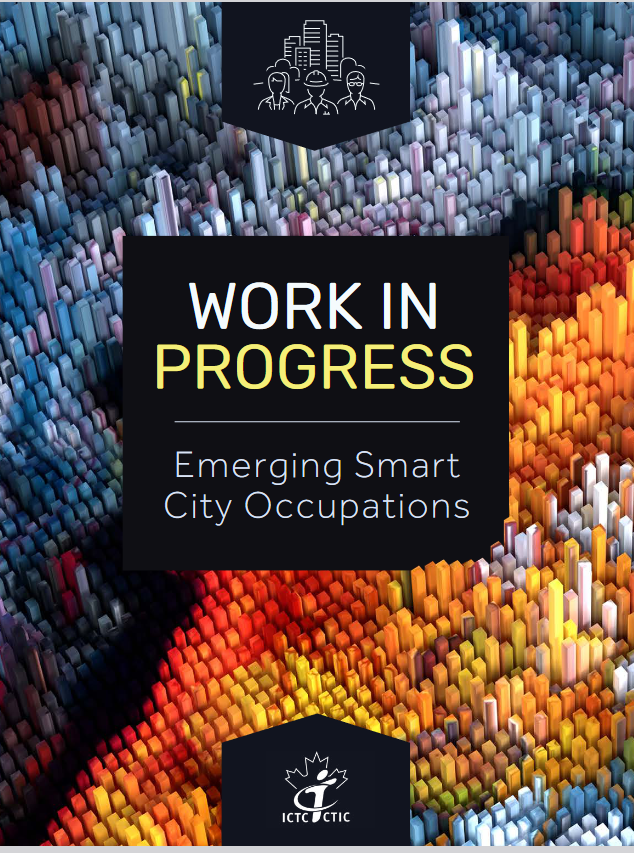
Image generated by incredibly thoughtful prompts from the author and the help of DALL-E The title of this post – projecticity, is a mashup of the words project and ‘electricity’… electricity in the sense of electrifying growth in PM career opportunities. Here, I continue the series on Project Management and Smart Cities. A new guest post is around the corner from Dr. Beverly Pasian, an expert in this area. However, given the projectmanagement.com focus on careers this month, I wanted to provide this post, focused (you guessed it) on the opportunities already here and coming along in the next few years for project managers (and project leaders) in the field of Smart Cities. I found a great resource from the Information and Communications Technology Council, Canada. It’s a summary of research on career roles based on the explosive growth of Smart Cities. Project management features heavily in it. One way that’s made obvious is that the word “project” appears 43 times in this 40-page document! The document (pictured below) can be found here or by clicking on the image below.
From this report, the focus was on five categories of roles:
I would argue that true project leaders are often working all 5 of these roles simultaneously. Like most reports of this nature, it begins with the promising growth of Smart Cities: Revenues from smart city projects worldwide are projected to grow from $116 billion (USD) in 2020 to $241 billion (USD) in 2025. 1 These initiatives, along with globalization, urbanization, and rapid digital disruption, will impact existing jobs and establish a demand for newly defined occupations in smart cities and beyond. In the research, the ICTC interviewed industry leaders in the Smart Cities area, whose overarching message was: “future skill needs will likely be centered around data and digital literacy combined with strong soft skills.” To expound further on this, The skills interviewees sought when building their teams included cross-disciplinary talent with technical skills combined with data analytics knowledge and an awareness of issues around privacy and ethics, and inclusivity and equity in technology design. In discussing cross-disciplinary talent, interviewees pointed to the need to overlap fields of study that have traditionally been more pursued in isolation. The theme of combining fields of study came up multiple times, with interviewees saying that a greater combination of technical and analytical skills and certifications (for example business along with engineering, or civil engineering and data science) would help prepare people for their department. Interviewees from one department had recently begun working on university partnerships, stating that such initiatives “provide students that key level of life experience that they need in the workforce.
In terms of certifications, as expected, Certified PMP® was one of only five certifications listed as desired, along with PE, MBA, Safety Professional and Microsoft Certified Systems Engineer. Amongst the Power Skills listed were (should sound familiar to project managers!):
The report (and others, like this one from BurningGlass, and this one from PMI) said that employers saw their skill requirements focused in the areas of
Listed under these human skills were:
To close this brief post, here’s an actual example of a job posting for a PMO leader for a Smart Cities initiative in Saudi Arabia: Job Title: PMO - Smart Cities Location: Riyadh, Saudi Arabia Overview:
Responsibilities:
|

Bee a Pyramid Climber
Categories:
project leader,
selena gomez,
only murders in the building,
bumblebee,
dna,
DIKW,
project,
research
Categories: project leader, selena gomez, only murders in the building, bumblebee, dna, DIKW, project, research
|
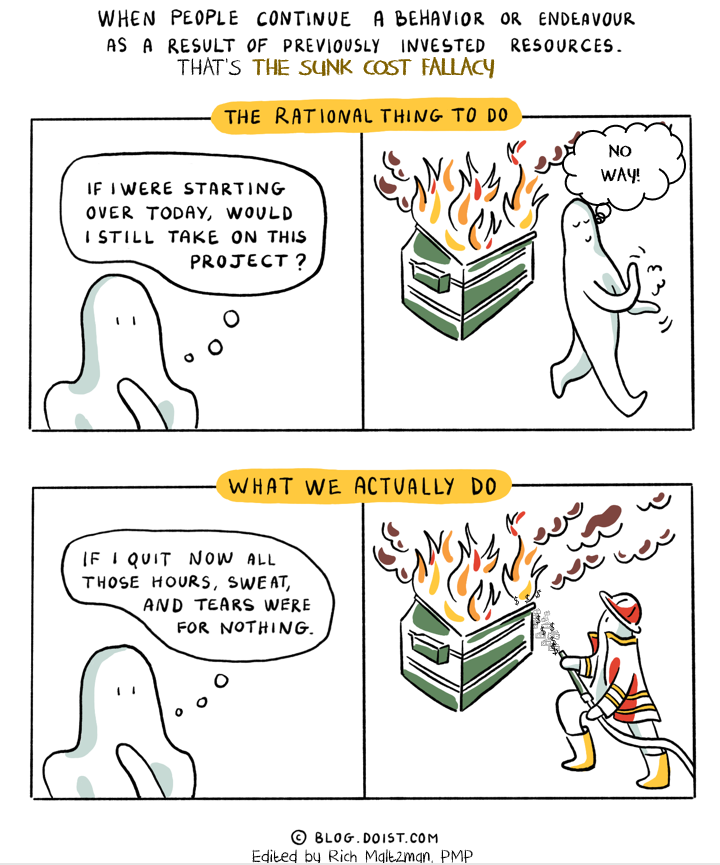
A wing and a leg. Sounds like a chicken dinner, right? Not in this case. This post is about bumblebee wings, bumblebee legs, pyramids, and the advancement of data into information into wisdom, into data. First of all, let’s talk about that advancement of data. In a book I co-authored with Loredana Abramo, entitled Bringing the PM Competency Gap, we describe this advancement using a puzzle as an example, we look at two axes, the vertical being the “Degree of connectedness” of data, and the horizontal axis being the level of understanding we have of that data. When both are low – that is, the data points aren’t connected (at least apparently) with each other, and we don’t have a high level of understanding of the data, it is indeed, just … data. In our example, we are presented with random shapes of random colors – we don’t know if they have anything to do with each other, and we don’t know what they are. As both of these attributes advance, things change. With a little more understanding and a degree of connectedness, we can tell that “wait a second, these are puzzle pieces!” and we can tell that they are meant to be connected. Moving further up to the northeast, with more connectedness and understanding, we can assemble the puzzle pieces but still don’t know what image is on the puzzle. Finally, with a great amount of connectedness (an assembled puzzle) and recognition of the image, we can see that this is a tropical aquarium. “American history is rife with grandiose public works projects, some successful—like interstate highways—others less so…. Some wound up somewhere in purgatory; partially complete, with millions of dollars spent and many more required for completion. One such project is the subway in Cincinnati, Ohio; at more than two miles in length, it could be the longest unused subway system in the world. And more than a century since construction began, some hope remains that it may one day be put into service.” So what is the Sunk-Cost Fallacy? Basically, it’s the drive deep within (adult) humans related to the proverb, “waste not, want not”. As in the figure above, it’s about not ‘losing all of the toil (blood, sweat, tears) you have put into something. So we put MORE effort into it. That’s why the character in the last frame is pouring money into a burning project. Test it out on yourself. Imagine you bought $35 tickets to a new hit movie. Due to the risk of getting COVID-19, you hesitate going. Also, friends who have gone say that it’s really just not that good. In fact, the roads are icy and you’re a little bit tired. But you bought the tickets. And, you go. And…it turns out that your friends were wrong. It’s worse than “not that good”, it’s absolutely terrible. Yes, you have just experienced the Sunk Cost Fallacy. There’s a nice, easy-to-read article about it here: https://thedecisionlab.com/biases/the-sunk-cost-fallacy/. Another excellent post on it (and the source for the excellent image that goes with this post) is here: https://blog.doist.com/sunk-cost-fallacy-comic/ In projects this happens when we spend more money on a project that should have gone through a “phase gate” or “kill point” and should have been stopped right there in its tracks (pun intended again!). The Sunk-Cost Fallacy was first described by Nobel Prize-winning economist Richard Thaler, and more recently described in this slightly embarrassing-to-homo-sapiens article: The sunk cost and Concorde effects: Are humans less rational than lower animals? You can find very easy-to-read articles on the Sunk-Cost Fallacy here or here. The bottom (pun intended) line is that as project managers, we sometimes spend good money after bad. That is, we feel like we should finish a project because ‘so much has already been invested’. This project actually was killed after several years. The timeline is roughly as follows: More detail on the tunnels here from the City of Cincinnati itself: To view a full walkthrough of the Tunnel system from a couple of folks who call themselves The Forbidden Explorers, have a look at this: In Part II, I will discuss the sustainability aspects of the decisions and relate them to some of the challenges facing the US in terms of infrastructure projects. Reference: Arkes, H. R., & Ayton, P. (1999). The sunk cost and Concorde effects: Are humans less rational than lower animals? Psychological Bulletin, 125(5), 591–600. https://doi.org/10.1037/0033-2909.125.5.591 A short but 'power'-ful post. Say watt? No: Watt. As in James Watt. As in the guy for whom the unit of power was named. His LinkedIn profile photo is shown above. As I have pointed out in many prior posts and in my talks to PMI National Conferences with titles like “Giving You The Green Light to Think Past The End of Your Project”, project success is an elusive, hard-to-define, holistic, not-at-the-ribbon-cutting-ceremony measurement. I want to practice what I preach. So I didn’t want to declare our project to add 24 solar panels to our home’s roof a success when the nice folks from Vivint told me that we were generating power. But today, 17 months in, as we cross well over the 10 Megawatt level, and I continue to see the electric meter run backwards, and as we continue to have the electric company pay us each month, I declare project success. It seems appropriate to make this statement in May, which last year (and probably this year) seems to be our best month (see figure below). I will continue to update you from time to time on this blog about the ups and downs, but I feel confident that we can now say we have delivered value to the key stakeholders – ourselves as well as the environment. According to my solar calculator provided by Vivint, it looks like we’ve saved about 9 acres of forest in carbon offset equivalency, and according to the EPA (United States Environmental Protection Agency) calculator (try it for yourself!): https://www.epa.gov/energy/greenhouse-gas-equivalencies-calculator It appears that we have taken the equivalent of 1.5 cars of the road for a year. Not bad. So here’s to you, James Watt! More power to you! "Technology is a gift of God. After the gift of life it is perhaps the greatest of God's gifts. It is the mother of civilizations, of arts and of sciences."
- Freeman Dyson |

 Posted
by
Posted
by