Project Management

People, Planet, Profits & Projects

by ,

About this Blog

RSS

View Posts By:

Richard Maltzman
Dave Shirley

Recent Posts

A citrus fruit schools us on material science and project leadership (Part 2 of 2)

A citrus fruit schools us on material science and project leadership (Part 1 of 2)

Black Tape Over the Engine Light

Saving the Sahel (Part 1)

You Can't Get They-ah From Hee-yah

Categories

6th, 6th Edfition, 6th Edition PMBOK, 7th Edition, 7th Edition PMBOK, 8th Edition PMBOK, 8th Edition PMBOK Guide, Activism, actuarial, actuary, adapt, addition by subtraction, Africa, africa, agriculture, airforce, ajaita, Alaska, amazon, analogous, analytics, ancient, and more power, antarctica, anti-science, apple, apps, architecture, arctic, arrakis, Artificial Intelligence, asch paradigm, Assistant, asthma, astronomy, automobile, automotive, autonomous cars, b, bankhar, Banksy Crypto, basalt, baseball, bats, batter, beauty products, benefit, benefits, Benefits Realization, beyond epica, biases, bicycle, big data, big dfata, big dig, bike, biodiversity, biomedicine, birdhouse, blockchain, blood, blue blood, blue trees, bluefin, bluefin tuna, book review, boston, boston university, Boyce, Brazil, brazil, Breakdown Structures, BS, building, buildings, built environment, built environment, bumblebee, cake, capacitor, car, Carbon, carbon, carbon capture, carbon negative, carbon neutral, carbon pool, carbon sequestration, carbonate, careers, CEO, ChatGPT, chatGPT, chatgpt, chatgpt, chess, China, china, chopsticks, citrus, cli-fi, climate, climate change, climate resilience, climeworks, Clumsy, CO2, co2, CO2 Utilization, coalition, cobalt, coffee pods, cognition, cognitive, Collabortion, colombia, concrete, Conflict, construction 5.0, cool projects xyloscope, cooling, coral, corn, cost of good quality, cost of poor quality, cost of quality, crazy, criticism of project management, cryptocurrency, CSR, csr, data, data analytics, data privacy, datacenter, dataset, death spiral, Decision Making, decomposition, Defense and Climate, definition of a project, deforestation, dependencies, dependency, desert, DIKW, dikw, dimopoulos, disposal, dna, DOD, dogs, dolphins, dream, drilling, drink, dune, dune, dutch, early start, earth, eatlocal, eco-tourism, ecological, economic, economics, EKC, electric grid, electricity, electronics, elysis, embodied carbon, emerging technologies, empower, Energy, energy efficiency, environmental degradation, escalate, escalation, ESG, extreme weather, fallacy, FARC, farming, finance, fish, fish brains, fishing, fix, fixing the earth, flint water, Flint Water Supply, flood, flooding, Food supply chain, food waste, forest, forest for the trees, forestation, forrestgump, frank herbert, Fruitcake, fungus, fusion, Galvao, garage, gas, gasoline, geese, gender equality, gender partnerships, generational differences, Generative AI, gladwell, gold, Goodness, google, Government, GPT, great pacific garbage patch, green, green building, green buildings, green energy, green iguana, green project, green project management, greening, guest post, gyre, harkonnen, Harvesting Benefits, hawasina, hedgehogs, heursitics, historical data, hlb, holitsic, holland, horseshoe crab, human-caused climate change, hydrogen, hydrology, ice, iceland, ignition, iguana, imagery, impact, india, inequality, information, initiatives, injection, insurance, intelligence, interacting risk, internal combustion engine, invasive species, investment, isomer, issue escalation, issues, ITER, jobs, Jupiter, justification, kids, kill point, knowledge, koch brothers, Kuznets, laboratory, LAL, landscape mode, lapampa, launch, LCA, Leadership, Leadership, life cycle analyses, life cycle analysis, lifecycle, Linkedin, liquid, lizard, local, long term, long-term, long-term thinking, look up, loud, maintenance, maker, makermovement, malcolm gladwell, management, marathon, marine biology, market, mars, Martin Luther King, mean, megawatt, MeHg, melting, mercury, metal, Microgrid, microplastics, migration, military, millennial, mindset, minerals, mission, mitigate, MLK, mongolia, museum, museum of london, nature, nematodes, net gain, Net Project Success Score, net zero, netherlands, network, New book, New Jersey, New Practitioners, new york, NFT, nitrogen, noise, noreaster, norway, nova, NPSS, NREL, ocean, ocean cleanup, ocean life, oil rig, oil rigs, oklahoma, oman, only murders in the building, opportunity, overall risk, oxygen, packaging, pareto, PBS, permafrost, persistence, peru, Pharmaceutical, planet, planet.com, planning, plant, plasma, plastic, playground, pm, pm education, pmbok, pmbok guide, pmnetwork, PMXPO-2018, podcast, pollutants, pollution, poop, poor, portfolio, power, power skills, privacy, privacy concerns, professors, program, Program Management, project, project leader, project leadership, project management, project management 3.0, project on fire, project progress, Project Success, project success, projecticity, projectleadership, projectmanagement, projects, psychology, pulse of the profession, purple bacteria, purpose, quiet, rainforest, rationale, reef, refugees, renewable, renewables, Repair, repair, repeatable process, repeatable processes, repurpose, research, resource breakdown strucuture, Resource Management, reversing climate change, revisionist history, rich, rigs2reefs, ripe, risk, risk avoidance, Risk Management, risk mitigation, risk response, risk responses, river, robots, rocks, rules of thumb, rural, rural India, russia, Sarcasm/Irony, satellite, saudi, schedule, sci-fi, Science, science, science-fiction, scientific american, screaming monkeys, sea, sea life, Sea-Level Rise, sea-level rise, seagreens, seawall, seawater, seawater temperature, seaweed. beat;es. farming, secondary risk, selena gomez, sequestration, shipping, skyscraper, SLR, smart cities, smart city, smelting, social, social pressure, soil, solar, solar panels, solar perovkites, solar saheli, sonic, sponge cities, SRI, stage-gate, stagegate, stakeholder, stakeholder management, steward, stewardship, storage, strategy, stupid, success, suffer, sulphur, sunk cost, supercapacitor, supply chain, survey, Sustainability, sustainability, Sustainable Investing, Sustainable Tourism, sybiosis, symbiosis, system 03, TBL, temperature, terraform, terraforming, test, threat, threats, totem, touchscreen, tour, tower, Trains, transparency, transportation, trash, tree, tree species, trees, trillion, triple bottom line, triple constraint, truth to power, UMass, us army corps of engineers, USDA, vacuum, value, venus, vision, voice, voltage optimization, vw scandal, washing machine, waste, wastewater, water, we mean business, whales, Whirlpool, wind, wisdom, women, Women in Project Management, wood wide web, woonerf, Work Breakdown Structures (WBS), world breakdown structure, worms, xian, xylotron, Yale

Date

That old report card of yours...

linkedin twitter facebook Request to reuse this  

Remember that report card you didn’t want your parents to see?   And by “too see” I mean that your best grades were “two Cs”?

Well, forget about that – this post will make your old report card pale in comparison.

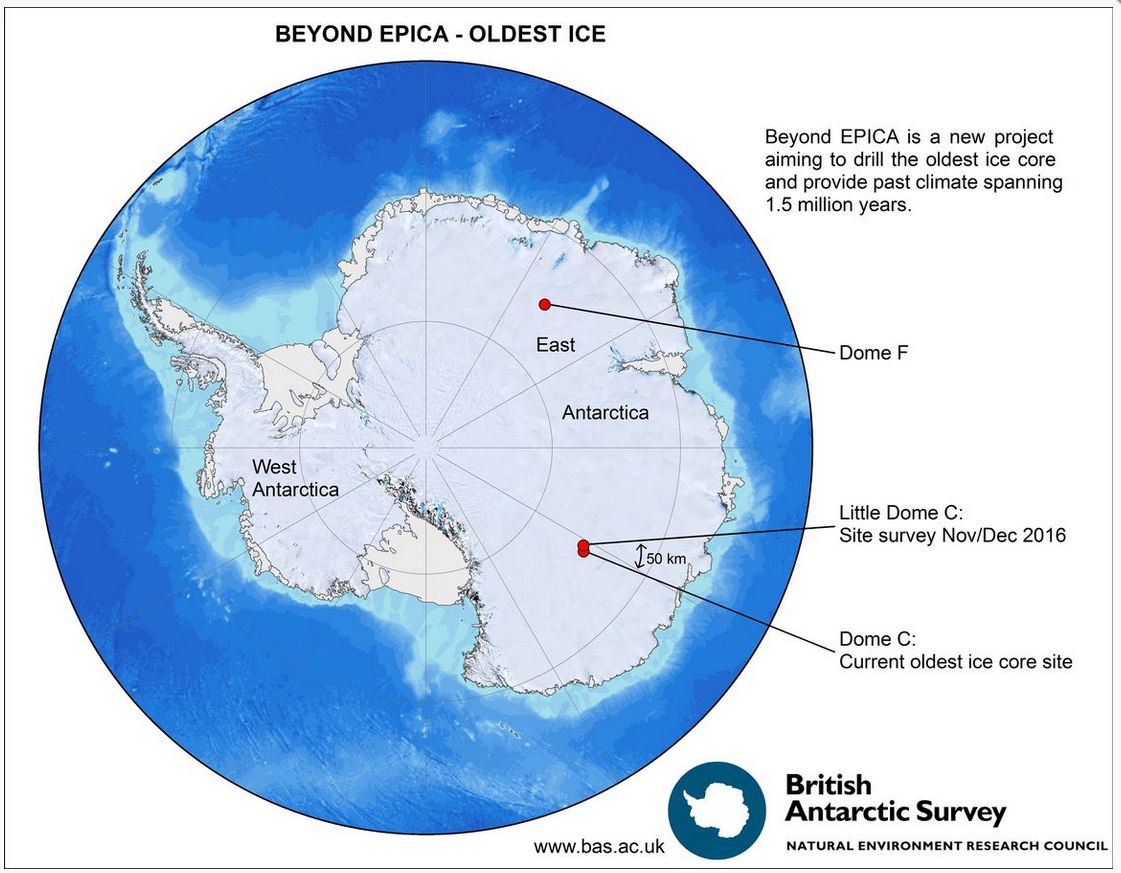
As reported in Nature’s 28-March-2019 issue, a project called “Beyond EPICA” is slated to start in June of this year and it is going to extract a 1.5-million-year-old report card from the ice below a section of Antarctica called Dome C (see map below in case you want to visit).

 EPICA stands for European Project for Ice Coring in Antarctica.  This is a perfect example of a ‘green-by-definition’ project as we describe in our book Green Project Management.

The idea here is to vastly improve our understanding of our climate by getting an undisturbed record (report card!) of our Earth’s ancient atmosphere.  The ice that has accumulated over millennia contains samples of the world’s atmosphere at known dates.  This will help us get a more accurate picture of how climate has changed in the past, allowing us to make scientifically accurate predictions of how climate changes match up with atmospheric levels of greenhouse gasses.

From the Beyond EPICA website:

The Beyond EPICA – Oldest Ice (BE-OI) consortium and its international partners unite a globally unique concentration of scientific expertise and infrastructure for ice-core investigations. BE-OI is an EU Coordination and Support Action (CSA). It delivers the technical, scientific and financial basis for a comprehensive plan to retrieve an ice core up to 1.5 million years old in a future project during the Beyond EPICA – Drilling Phase. This would be an important contribution for the future exploration of Antarctica and promises unique insights about climate and the global carbon fluxes. This knowledge will improve future prognoses of climate development with solid quantitative data and will allow establishing more targeted strategies, to cope with the societal challenges of global change.

This project is following the discipline of project management quite strikingly well (excuse the pun). 

They have set clear objectives:

  • support the site selection through acquisition and synthesis of all necessary information on Antarctic sites through specific geophysical surveys and the use of fast drilling tools to qualify sites and validate the age of their ice;
  • select and evaluate the optimum drill site for the future “Oldest Ice” core project and establish a science and management plan for a future drilling;
  • coordinate the technical and scientific planning to ensure the availability of the technical means to implement suitable drill systems and analytical methodologies for a future ice-core drilling, and of well-trained personnel to operate them successfully;
  • establish the budget and the financial background for a future deep-drilling campaign;
  • embed the scientific aims of an “Oldest Ice” core project within the wider paleoclimate data and modelling communities through international and cross-disciplinary cooperation.

They have broken the project in to work packages (in other words they have created a WBS) as follows.

The  workpackages of BE-OI combine the different methodological aspects and the consecutive implementation based on the two key regions of interest.

The first three workpackages

Logistic support and coordination

Geophysical site definition

Fast drilling tools to qualify sites, age validation

cover the objective to "Prepare for site selection". They will consider the acquisition, analysis and evaluation of new data to create the pre-conditions for site selection. The worckpages

Site selection, and science and management plans

Drilling technology

Cost forecasting and financial frameworks

The international and cross-disciplinary context

are directed towards the planning and implementation of the BE-Drilling Phase.


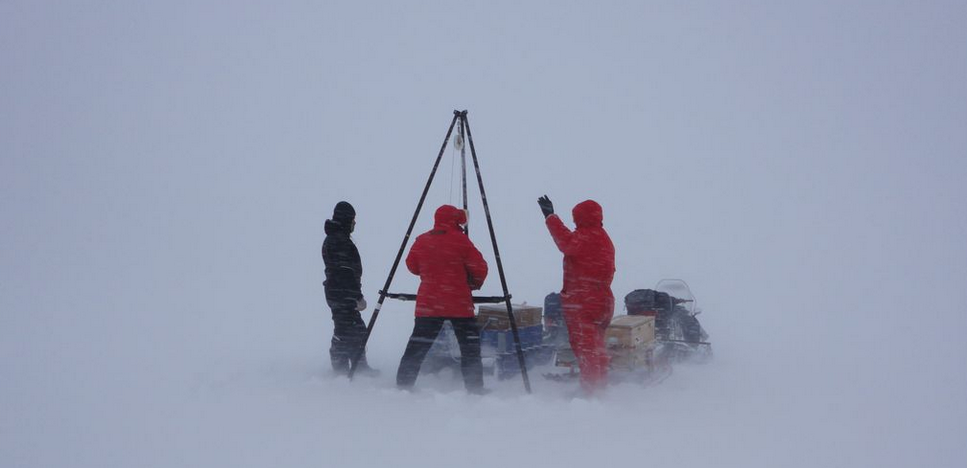
Here's a video that shows the sort of project environment in which EPICA is taking place:

This project team will have a press conference on 9-April (the day after this post), so you can get the latest directly from the source!

Beyond EPICA will present the decision where to drill for 1.5 million year old ice at:

EGU Press Conference
Tuesday, 9 April, 2019 09:00 CET
Beyond EPICA: The quest for a 1.5 Million year ice core

https://www.egu.eu/gamedia/2019/press-conferences/#98

I’m going to tune in.  Maybe it will help me forget about that bad, bad report card from long, long ago.


Posted by Richard Maltzman on: April 08, 2019 10:00 AM | Permalink | Comments (6)

Trouble in Tin City

linkedin twitter facebook Request to reuse this  

This is the first of what will be at least two posts on the effects of climate change on US Department of Defense installations, based on publicly-released documents from the present administration’s own departments.  The focus will be on projects launched because of climate change, recognition of climate change as a driver of projects, and the need for project managers to be well-informed of the facts related to climate change and the facts related to how governments react to the effects of climate change.  One point of this series is that regardless of your view of climate change – whether you believe it is happening or not, and if so, what is causing it – is actually much less important than understanding what governments are doing about it regardless, and what that may mean for projects and project managers.

In this first part, I’ll cover the issue in general and illustrate this with one example of a these effects, and the possibilities for project managers – the example being in Tin City Alaska.  I’ll follow up with a story about a wall, but not one on the border with Mexico, one pretty much on the border with Russia.

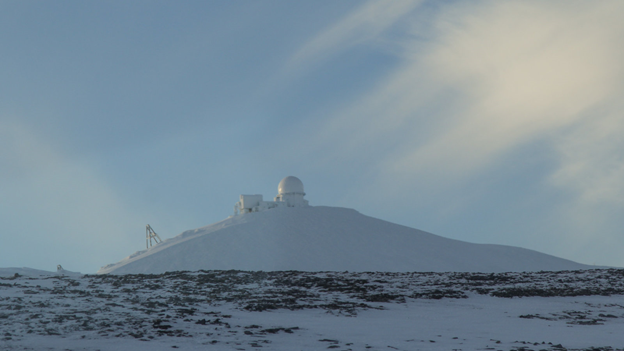
The story that caught my attention was a very short podcast from NPR entitled “How Climate Change Is Affecting Alaska's Military Radar Stations” which you can listen to right here:

The story is that the changing climate poses a threat to the radar installations.  3 out of 15 are facing situations in which shifting ice, based on more-rapidly-than-expected changes in ocean temperatures and sea-level rise, as well as shifts in the way sea ice blocks (or does not block) the approaches of storms, are debilitating those stations, with the other 12 possibly next (excuse this pun) on the radar.

You can read more about the Tin City story in this article:

https://www.alaskapublic.org/2019/01/16/militarys-remote-cold-war-radars-face-a-new-threat-climate-change/

Here’s a sample extract from the story if you don’t care to listen to the podcast:

Running these radar stations has never been easy, but now, it’s getting even less manageable, as coastal erosion nibbles away the land around vital infrastructure supporting the sites.

Col. Lemon is the Air Force commander in charge of remote radar sites stretching from the Pacific to the high Arctic.

“I’m a military officer, so global warming, I dunno,” Col. Lemon said with a shrug during a briefing about the sites. The admission aimed at humility, denying that in his position he had the authority to offer grand scientific explanations.

But for almost a decade, the Defense Department has acknowledged that a rapidly warming climate poses a threat to the military’s installations and operations around the globe, and they’ve initiated plans to cope with it.

“Climate change is happening and there is erosion going on on the North Slope of Alaska. That’s a fact,” Lemon said. “I don’t know what’s causing it, but we have to do something about it, because it’s impacting our mission.”

So far, three radar stations, all of them in the North Slope, are grappling with climate-driven threats to infrastructure. The installation at Tin City is not immediately imperiled by this issue. However, during our visit in mid-November, the Bering Strait, easily visible from throughout the lower camp, was an uninterrupted dark blue, the water completely free of sea ice.

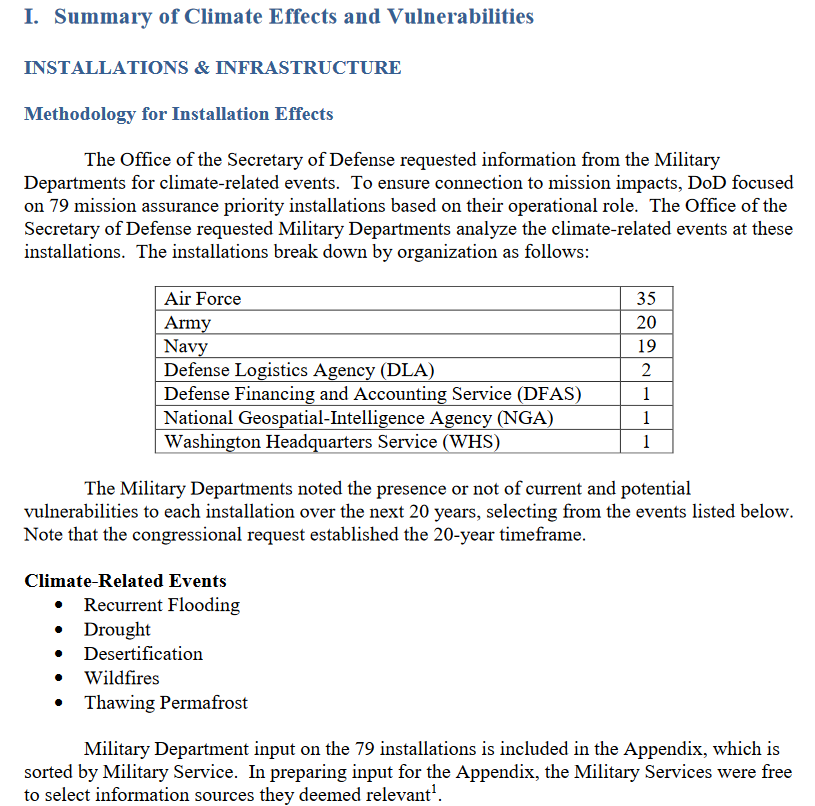
Much of the motivation for the new projects to be discussed in this series comes from a newly-released 2019 report from the US Department of Defense.

Below is the cover, the Background, and a paragraph that shows the main areas of climate-change-related concern from this report from the Trump Administration’s own Department of Defense.


In the next post, I’ll discuss the US$47M seawall project under construction at Cape Lisburne, Alaska.

Posted by Richard Maltzman on: February 28, 2019 11:36 AM | Permalink | Comments (7)
ADVERTISEMENTS

"Judge a man by his questions rather than his answers."

- Voltaire

ADVERTISEMENT

Sponsors