DunEcology - Principle 1


|
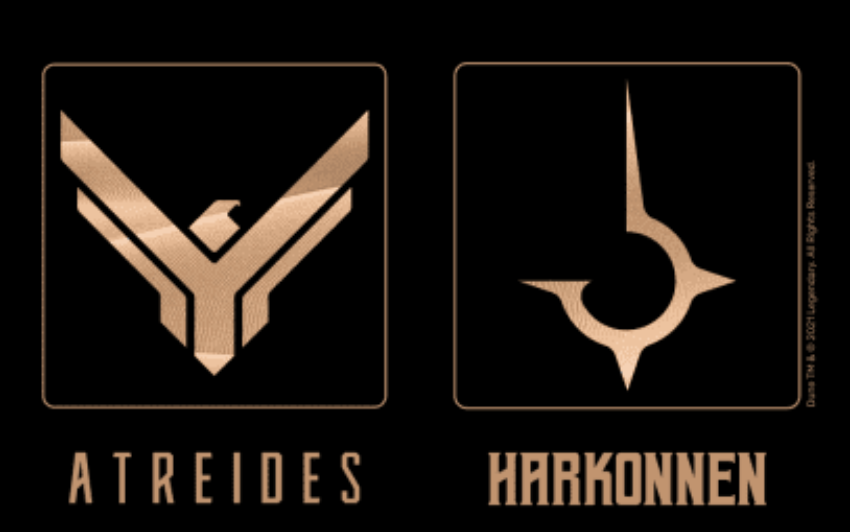
Photo Credit: Warner Bros. In the previously referenced story from Fast Company, we know that “Frank Herbert’s masterpiece also helped Afrofuturist novelist Octavia Butler imagine a future of conflict amid environmental catastrophe; it inspired Elon Musk to build SpaceX and Tesla and push humanity toward the stars and a greener future; and it’s hard not to see parallels in George Lucas’s Star Wars franchise, especially their fascination with desert planets and giant worms. And yet when Herbert sat down in 1963 to start writing Dune, he wasn’t thinking about how to leave Earth behind; he was thinking about how to save it.” This blog series now shifts to discuss how project managers can learn from some of the basic principles from Dune and strives to connect what we do as project managers that can make us project leaders if we apply these principles. Since this blog posting is a series, I am going to hold off on the many ecological aspects and how they connect with project sustainability thinking, and instead focus on a Dune Principle of project leadership. Don’t worry: the environmental themes are too important to leave out – they will be covered! Dune Principle 1: Servant Leadership and Empathy One of the most important themes of the book (and the series, and the movies) is the way that the House Harkonnen rule Dune (the planet Arrakis, where most of the story takes place), compared with the way that the House Atreides operates. For those unfamiliar with Dune, a House is “a dynastic seat of power, sometimes limited to a world and sometimes spanning several worlds. Numerous Houses existed within the imperial hierarchy, and collectively they formed the Landsraad” What’s a Landsraad? It’s basically a council of landowners, except that ‘land” could mean one or more entire planets. The symbols (thanks to Dream Artworks) of the two Houses are shown below.
So how did the two Houses’ leadership styles differ? Ask the Fremen. Or, note the way that the Harkonnens are portrayed in the film. Well, in short, one could say that House Harkonnen used Command and Control, and House Atreides embraced Engage and and Empower – at least in general. Things do change in battle. This whole dynamic is actually the subtitle of good friend Gordon Mackay’s excellent book which I use in my course, Project Communications and Leadership at Boston University. You can find the book here, and as you read it, think of those two Houses. I’ll summarize a little bit below. In his book, Gordon says: “…‘project management’ is, increasingly, a contradiction in terms. Managerial ‘command and control’ does not inspire or, engage, nor does it foster the synergy of collaborative working. The function of delivery to cost, time, quality and scope remains. But, the function in delivery is to adopt a form fit for purpose in increasingly VUCA external and internal delivery environments. This chapter expands on the new function of project leadership – what it seeks to achieve as underpinned by relevant contemporary theory. It is followed by a structured approach for the aspirant and unctiong project leader to apply, in order to establish effective project leadership. The function of project leadership is to empower and facilitate the realisation of individual and team potential, and the emergence of collaborative team synergy. Just as the function and form of ‘stakeholder management’ shifts towards ‘stakeholder engagement’ , so too, now, successful project delivery requires a move from ‘project management ’ to a function and congruent form resulting in a fully ‘engaged’, collaborative team. What ‘engages’ the team, and all project stakeholders? Gordon has been a guest in my courses several times. A further example of his wisdom can be found in this one-hour video: This applies, of course, to project leadership, and it has not gone unnoticed in the world of overall HR and leadership. In fact, I found an excellent blog post which covers the Houses as well as the Bene Gesserit by Luis Querido, right here. Here’s Luis’ summary of the two Houses: “House Atreides exemplifies ethical leadership, characterized by integrity, honor, and a profound sense of justice. Duke Leto Atreides, the patriarch, is revered not only for his strategic acumen but also for his compassionate and principled approach to governance. He places a high value on loyalty, trust, and the well-being of his people, which in turn inspires deep loyalty from his subjects and followers. This leadership style underlines the importance of ethical considerations in decision-making and the long-term benefits of fostering a positive organizational culture.” House Harkonnen represents authoritarian leadership, marked by power, manipulation, and greed. Baron Vladimir Harkonnen’s rule is defined by fear, exploitation, and treachery, focusing on the accumulation of power and wealth at the expense of others. This approach highlights the dangers of leadership that prioritizes personal gain over the collective good, often leading to resentment, rebellion, and eventual downfall. The main character of Dune’s initial trilogy, Paul Atreides, spends much of his time building trust with the Fremen, through logic, authenticity, and empathy. NOTE: those very specific words come from this foundational article on trust-building, team-building, and communications-strengthening from the Harvard Business Review. It is in this way that he is able to build an alliance that will enable House Harkonnen to generate (spoiler alert!) an unlikely victory over House Harkonnen. Can your leadership style evolve from Command and Control to Engage and Empower? Watch the movie (or read the books) and consider if there is some learning there. I assert that there is. |

Projecticity
Categories:
project leader,
project leadership,
projecticity,
smart cities,
smart city,
power skills,
saudi,
jobs,
careers,
project
Categories: project leader, project leadership, projecticity, smart cities, smart city, power skills, saudi, jobs, careers, project
|
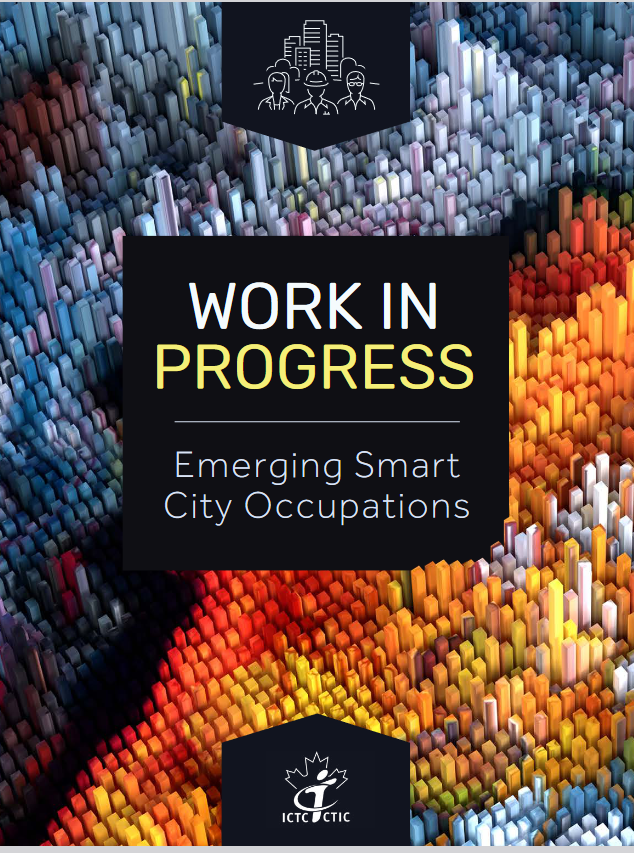
Image generated by incredibly thoughtful prompts from the author and the help of DALL-E The title of this post – projecticity, is a mashup of the words project and ‘electricity’… electricity in the sense of electrifying growth in PM career opportunities. Here, I continue the series on Project Management and Smart Cities. A new guest post is around the corner from Dr. Beverly Pasian, an expert in this area. However, given the projectmanagement.com focus on careers this month, I wanted to provide this post, focused (you guessed it) on the opportunities already here and coming along in the next few years for project managers (and project leaders) in the field of Smart Cities. I found a great resource from the Information and Communications Technology Council, Canada. It’s a summary of research on career roles based on the explosive growth of Smart Cities. Project management features heavily in it. One way that’s made obvious is that the word “project” appears 43 times in this 40-page document! The document (pictured below) can be found here or by clicking on the image below.
From this report, the focus was on five categories of roles:
I would argue that true project leaders are often working all 5 of these roles simultaneously. Like most reports of this nature, it begins with the promising growth of Smart Cities: Revenues from smart city projects worldwide are projected to grow from $116 billion (USD) in 2020 to $241 billion (USD) in 2025. 1 These initiatives, along with globalization, urbanization, and rapid digital disruption, will impact existing jobs and establish a demand for newly defined occupations in smart cities and beyond. In the research, the ICTC interviewed industry leaders in the Smart Cities area, whose overarching message was: “future skill needs will likely be centered around data and digital literacy combined with strong soft skills.” To expound further on this, The skills interviewees sought when building their teams included cross-disciplinary talent with technical skills combined with data analytics knowledge and an awareness of issues around privacy and ethics, and inclusivity and equity in technology design. In discussing cross-disciplinary talent, interviewees pointed to the need to overlap fields of study that have traditionally been more pursued in isolation. The theme of combining fields of study came up multiple times, with interviewees saying that a greater combination of technical and analytical skills and certifications (for example business along with engineering, or civil engineering and data science) would help prepare people for their department. Interviewees from one department had recently begun working on university partnerships, stating that such initiatives “provide students that key level of life experience that they need in the workforce.
In terms of certifications, as expected, Certified PMP® was one of only five certifications listed as desired, along with PE, MBA, Safety Professional and Microsoft Certified Systems Engineer. Amongst the Power Skills listed were (should sound familiar to project managers!):
The report (and others, like this one from BurningGlass, and this one from PMI) said that employers saw their skill requirements focused in the areas of
Listed under these human skills were:
To close this brief post, here’s an actual example of a job posting for a PMO leader for a Smart Cities initiative in Saudi Arabia: Job Title: PMO - Smart Cities Location: Riyadh, Saudi Arabia Overview:
Responsibilities:
|

Bee a Pyramid Climber
Categories:
project leader,
selena gomez,
only murders in the building,
bumblebee,
dna,
DIKW,
project,
research
Categories: project leader, selena gomez, only murders in the building, bumblebee, dna, DIKW, project, research
|
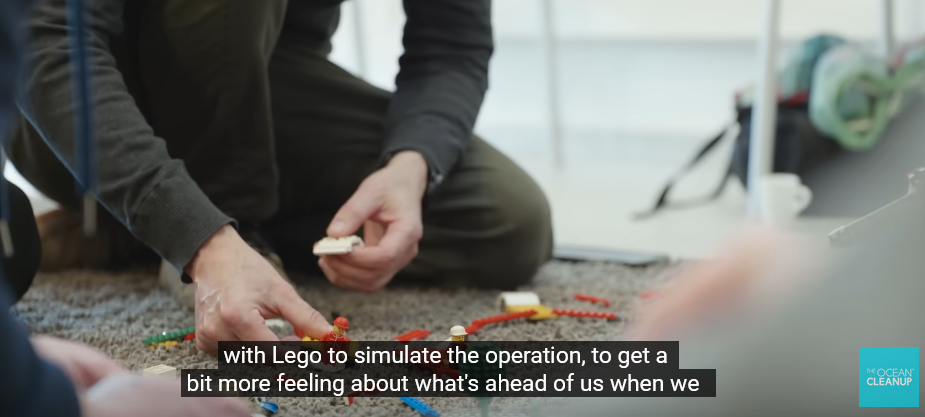
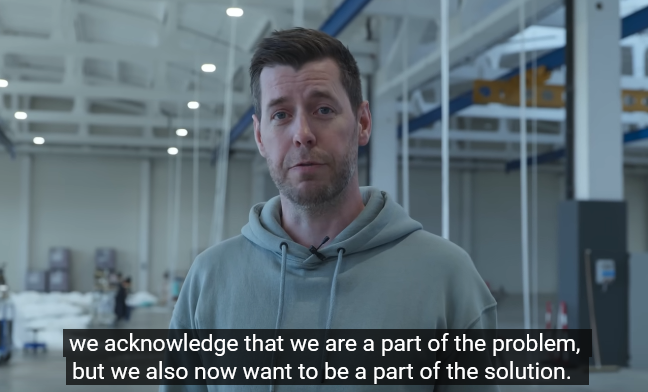
A wing and a leg. Sounds like a chicken dinner, right? Not in this case. This post is about bumblebee wings, bumblebee legs, pyramids, and the advancement of data into information into wisdom, into data. First of all, let’s talk about that advancement of data. In a book I co-authored with Loredana Abramo, entitled Bringing the PM Competency Gap, we describe this advancement using a puzzle as an example, we look at two axes, the vertical being the “Degree of connectedness” of data, and the horizontal axis being the level of understanding we have of that data. When both are low – that is, the data points aren’t connected (at least apparently) with each other, and we don’t have a high level of understanding of the data, it is indeed, just … data. In our example, we are presented with random shapes of random colors – we don’t know if they have anything to do with each other, and we don’t know what they are. As both of these attributes advance, things change. With a little more understanding and a degree of connectedness, we can tell that “wait a second, these are puzzle pieces!” and we can tell that they are meant to be connected. Moving further up to the northeast, with more connectedness and understanding, we can assemble the puzzle pieces but still don’t know what image is on the puzzle. Finally, with a great amount of connectedness (an assembled puzzle) and recognition of the image, we can see that this is a tropical aquarium. OK, so let’s start with that goofy title. It’s supposed to be a reference to that scene (clip below) from the 1939 film, The Wizard of Oz… You probably know what Legos(TM) are (if not, ask a parent, child or grandparent). And there is zero uncertainty around the fact that you know what a zero is. But do you know that the presence or absence of a zero (and not in salary) could actually be an inspiration to a project team? It can. Read on. Gyres You may not know what a gyre is. The US National Oceanic and Atmospheric Administration (NOAA) defines a gyre as a large system of swirling ocean currents. Increasingly, however, it also refers to the garbage patch as a vortex of plastic waste and debris broken down into small particles in the ocean. One of the largest such gyres is the Great Pacific Garbage Patch. I have previously blogged about Ocean Cleanup, the brainchild of Boyan Slat. This program has grown and continues to expand. Have a look at the video below. Really. It's 16 minutes long. Knowing that some of you won't watch it, I’ve also curated some of the key points for project leaders to take away. Much of it has to do with an agile approach to projects and the way teams work best together. There’s also some great nuggets in here about how stakeholders that could easily be opponents were made to be collaborators. Legos In the video you can see the relief on team members’ faces in that they now have a chance to meet face-to-face again. They take advantage of this by using Legos to model the new System 03. This is a large upgrade over Systems 001 and 002. That is not to say that these systes have not been effective. They have removed so far 55 tons of plastics from the Pacific. Note that System 03 has one fewer zero. Which brings us to the next piece, which is: Zeros. Zeros When Ocean Cleanup started, the program directors thought that it would take hundreds of these systems to clean up the Great Pacific Garbage Patch. So, three ‘places’ were held for the digits 001 through perhaps 472 or whatever the number of Systems it would take. With the radical redesign of System 03, it was determined that TENS, not hundreds of systems could handle the cleanup. So, for the simple numerical reason – but also as a motivator and a ‘totem’ of the project, one zero was removed. Do not underestimate the power of project ‘totems’ like this. Other takeaways As you watch the video, please notice some of the other project leadership ideas that this team has adapted, some which come from an agile mindset, some from predictive PM. They have done a great job of applying my three-word solution to the completely non-existent ‘versus’ situation when it comes to which methodology is best: Use What Works. As we saw with the Legos, the team used modeling – in that case physical modelling. However, they also make significant use of mathematical modeling which reportedly has been quite accurate in predicting where and when to launch the System 02 missions. They use what I call "careful KPIs", and a ‘balanced scorecard’ (although they don’t use that term). The KPI (key performance indicator) is cost per kg of plastic removed. They want to clean the ocean, but they want to do it in a fiscally responsible way. As for the balanced scorecard, they are quite aware that their efforts have an impact of their own – the vessels burn fuel, they do intercept some wildlife, and they are not ignoring it – in fact they use that in the measurement of their success, not just the tons of plastics they are removing. When the team encounters a problem (such as plastic escaping over the floating boundaries of the collection system) they use a ‘lockup meeting’ in which the team all gets together to brainstorm and cannot leave until they have a solution. They even make references to ‘locking the door and throwing away the key’. In general note how they have become a 'learning organization' and are allowing themselves to try-and-fail, try-and-fail, so that they can try-and-succeed. One of the most poignant segments of the video is a visit to the firm which is making the collection nets. The firm is a fishing company. Normally they are making nets to catch fish. It turns out that much of what is collected by the Ocean Cleanup is from the fishing industry. So the two groups might naturally be at odds. But each actually stands to gain from the other. The Ocean Cleanup team gets expertise and manufacturing capability for their nets. The fishing firm gets cleaner, ‘greener’ fish and as the interviewee says in the video, a chance to move from being ‘a part of the problem to being part of the solution’. I found this 16-minute video to be inspiring and informative, in particular for project managers who want to become project leaders. What did you think? For our last post of 2021, I am going to leave your head spinning. Almost literally. It’s going to be short and sweet, but I am going to follow up with you in the clean new year. What’s all this about spinning…and cleanliness? I want to end 2021 by sending you to a podcast episode from Malcolm Gladwell. He has an OUTSTANDING podcast series called Revisionist History. I would say every episode is worth a listen. In its own words, here’s what the podcast says about itself: Revisionist History is Malcolm Gladwell’s journey through the overlooked and the misunderstood. Every episode re-examines something from the past — an event, a person, an idea, even a song — and asks whether we got it right the first time. Because sometimes the past deserves a second chance. The particular episode to which I implore that you listen (and then come back early next year for a discussion) is called Laundry Done Right. And yes. It is about washing your clothes. What the (insert bleep here) does this have to do with project management, you ask? Well, for the past 10 years or so, I have been giving talks about sustainability in project management in Italy, Costa Rica, South Africa, Canada, the USA, The Netherlands, Malaysia, and China. And I have been using the analogy of a washing machine as a way to get project managers to – well – to become project leaders, to think about delivering value rather than just producing outputs or outcomes. The analogy (not to give away the punch line) has to do with where the ecological value could come from in improving the whole process of washing your clothes. It's about a cycle, all right - but not a wash cycle - or at least not only a wash cycle. More next year - in other words, in a few days. Gladwell nails it in this episode. Give it a listen and I promise to connect this to sustainability thinking in project management (read that as project leadership) on the other side of 11:59:59PM, 31-December, 2021. Hope you enjoy it. HAPPY NEW YEAR! May all of your projects be successful, and deliver ongoing value! Cheers! Rich Maltzman, PMP Even if you're on the right track, you'll get run over if you just sit there. - Will Rogers |

 Posted
by
Posted
by