View Posts By:
Richard Maltzman
Dave Shirley
Recent Posts
Water to Water, Dust to Dust
Sustainability and Resilience - Bouncing Foward
What is AI doing to the sustainability of our profession???
Stepwells – Insight from a Particularly Valid Angle
Climb-it Change: Pre-Interview Connector
Categories
6th,
6th Edfition,
6th Edition PMBOK,
7th Edition,
7th Edition PMBOK,
8th Edition PMBOK,
8th Edition PMBOK Guide,
Activism,
actuarial,
actuary,
adapt,
addition by subtraction,
Africa,
africa,
agriculture,
airforce,
ajaita,
Alaska,
amazon,
analogous,
analytics,
ancient,
and more power,
antarctica,
anti-science,
apple,
apps,
architecture,
arctic,
arrakis,
Artificial Intelligence,
asch paradigm,
Assistant,
asthma,
astronomy,
automobile,
automotive,
autonomous cars,
b,
bankhar,
Banksy Crypto,
basalt,
baseball,
bats,
batter,
beauty products,
benefit,
benefits,
Benefits Realization,
beyond epica,
biases,
bicycle,
big data,
big dfata,
big dig,
bike,
biodiversity,
biomedicine,
birdhouse,
blockchain,
blood,
blue blood,
blue trees,
bluefin,
bluefin tuna,
book review,
boston,
boston university,
Boyce,
Brazil,
brazil,
Breakdown Structures,
BS,
building,
buildings,
built environment,
built environment,
bumblebee,
cake,
capacitor,
car,
Carbon,
carbon,
carbon capture,
carbon negative,
carbon neutral,
carbon pool,
carbon sequestration,
carbonate,
careers,
CEO,
ChatGPT,
chatGPT,
chatgpt,
chatgpt,
chess,
China,
china,
chopsticks,
citrus,
cli-fi,
climate,
climate change,
climate resilience,
climeworks,
Clumsy,
CO2,
co2,
CO2 Utilization,
coalition,
cobalt,
coffee pods,
cognition,
cognitive,
Collabortion,
colombia,
concrete,
Conflict,
construction 5.0,
cool projects xyloscope,
cooling,
coral,
corn,
cost of good quality,
cost of poor quality,
cost of quality,
crazy,
criticism of project management,
cryptocurrency,
CSR,
csr,
data,
data analytics,
data privacy,
datacenter,
dataset,
death spiral,
Decision Making,
decomposition,
Defense and Climate,
definition of a project,
deforestation,
dependencies,
dependency,
desert,
DIKW,
dikw,
dimopoulos,
disposal,
dna,
DOD,
dogs,
dolphins,
dream,
drilling,
drink,
dune,
dune,
dutch,
early start,
earth,
eatlocal,
eco-tourism,
ecological,
economic,
economics,
EKC,
electric grid,
electricity,
electronics,
elysis,
embodied carbon,
emerging technologies,
empower,
Energy,
energy efficiency,
environmental degradation,
escalate,
escalation,
ESG,
extreme weather,
fallacy,
FARC,
farming,
finance,
fish,
fish brains,
fishing,
fix,
fixing the earth,
flint water,
Flint Water Supply,
flood,
flooding,
Food supply chain,
food waste,
forest,
forest for the trees,
forestation,
forrestgump,
frank herbert,
Fruitcake,
fungus,
fusion,
Galvao,
garage,
gas,
gasoline,
geese,
gender equality,
gender partnerships,
generational differences,
Generative AI,
gladwell,
gold,
Goodness,
google,
Government,
GPT,
great pacific garbage patch,
green,
green building,
green buildings,
green energy,
green iguana,
green project,
green project management,
greening,
guest post,
gyre,
harkonnen,
Harvesting Benefits,
hawasina,
hedgehogs,
heursitics,
historical data,
hlb,
holitsic,
holland,
horseshoe crab,
human-caused climate change,
hydrogen,
hydrology,
ice,
iceland,
ignition,
iguana,
imagery,
impact,
india,
inequality,
information,
initiatives,
injection,
insurance,
intelligence,
interacting risk,
internal combustion engine,
invasive species,
investment,
isomer,
issue escalation,
issues,
ITER,
jobs,
Jupiter,
justification,
kids,
kill point,
knowledge,
koch brothers,
Kuznets,
laboratory,
LAL,
landscape mode,
lapampa,
launch,
LCA,
Leadership,
Leadership,
life cycle analyses,
life cycle analysis,
lifecycle,
Linkedin,
liquid,
lizard,
local,
long term,
long-term,
long-term thinking,
look up,
loud,
maintenance,
maker,
makermovement,
malcolm gladwell,
management,
marathon,
marine biology,
market,
mars,
Martin Luther King,
mean,
megawatt,
MeHg,
melting,
mercury,
metal,
Microgrid,
microplastics,
migration,
military,
millennial,
mindset,
minerals,
mission,
mitigate,
MLK,
mongolia,
museum,
museum of london,
nature,
nematodes,
net gain,
Net Project Success Score,
net zero,
netherlands,
network,
New book,
New Jersey,
New Practitioners,
new york,
NFT,
nitrogen,
noise,
noreaster,
norway,
nova,
NPSS,
NREL,
ocean,
ocean cleanup,
ocean life,
oil rig,
oil rigs,
oklahoma,
oman,
only murders in the building,
opportunity,
overall risk,
oxygen,
packaging,
pareto,
PBS,
permafrost,
persistence,
peru,
Pharmaceutical,
planet,
planet.com,
planning,
plant,
plasma,
plastic,
playground,
pm,
pm education,
pmbok,
pmbok guide,
pmnetwork,
PMXPO-2018,
podcast,
pollutants,
pollution,
poop,
poor,
portfolio,
power,
power skills,
privacy,
privacy concerns,
professors,
program,
Program Management,
project,
project leader,
project leadership,
project management,
project management 3.0,
project on fire,
project progress,
Project Success,
project success,
projecticity,
projectleadership,
projectmanagement,
projects,
psychology,
pulse of the profession,
purple bacteria,
purpose,
quiet,
rainforest,
rationale,
reef,
refugees,
renewable,
renewables,
Repair,
repair,
repeatable process,
repeatable processes,
repurpose,
research,
resource breakdown strucuture,
Resource Management,
reversing climate change,
revisionist history,
rich,
rigs2reefs,
ripe,
risk,
risk avoidance,
Risk Management,
risk mitigation,
risk response,
risk responses,
river,
robots,
rocks,
rules of thumb,
rural,
rural India,
russia,
Sarcasm/Irony,
satellite,
saudi,
schedule,
sci-fi,
Science,
science,
science-fiction,
scientific american,
screaming monkeys,
sea,
sea life,
Sea-Level Rise,
sea-level rise,
seagreens,
seawall,
seawater,
seawater temperature,
seaweed. beat;es. farming,
secondary risk,
selena gomez,
sequestration,
shipping,
skyscraper,
SLR,
smart cities,
smart city,
smelting,
social,
social pressure,
soil,
solar,
solar panels,
solar perovkites,
solar saheli,
sonic,
sponge cities,
SRI,
stage-gate,
stagegate,
stakeholder,
stakeholder management,
steward,
stewardship,
storage,
strategy,
stupid,
success,
suffer,
sulphur,
sunk cost,
supercapacitor,
supply chain,
survey,
Sustainability,
sustainability,
Sustainable Investing,
Sustainable Tourism,
sybiosis,
symbiosis,
system 03,
TBL,
temperature,
terraform,
terraforming,
test,
threat,
threats,
totem,
touchscreen,
tour,
tower,
Trains,
transparency,
transportation,
trash,
tree,
tree species,
trees,
trillion,
triple bottom line,
triple constraint,
truth to power,
UMass,
us army corps of engineers,
USDA,
vacuum,
value,
venus,
vision,
voice,
voltage optimization,
vw scandal,
washing machine,
waste,
wastewater,
water,
we mean business,
whales,
Whirlpool,
wind,
wisdom,
women,
Women in Project Management,
wood wide web,
woonerf,
Work Breakdown Structures (WBS),
world breakdown structure,
worms,
xian,
xylotron,
Yale
Date

Imagine that you are a project manager. It’s November 5, 1913. Without the help of Primavera P6 or Microsoft Project – never mind AI, you’ve just completed a 233-mile aqueduct to bring water to Los Angeles. The construction bond was $23 million (roughly three-quarters of a billion dollars in today’s money). According to the Los Angeles Department of Water and Power (LADWP), the project was completed within its original cost and schedule estimates. And, by the way, it works! It’s an engineering marvel. It will provide lasting benefit to a growing Los Angeles. Water comes cascading down into the Los Angeles Basin. William Mulholland, the chief engineer, utters his famously short speech: “There it is: take it.”
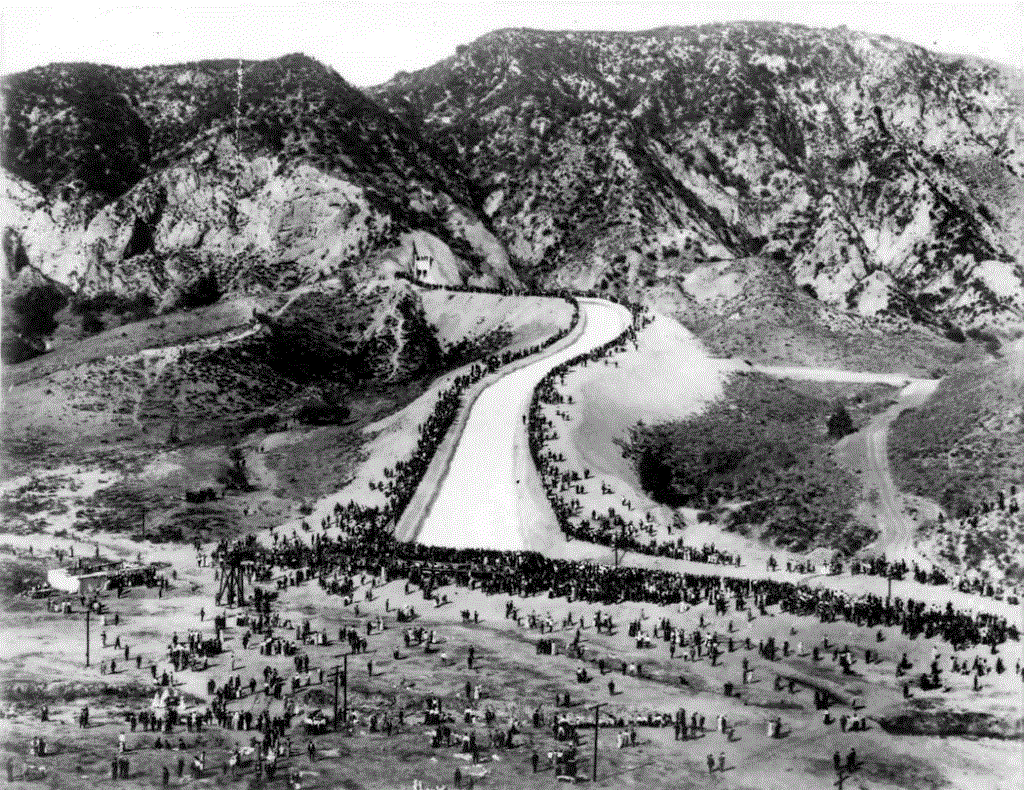
Time to celebrate, capture those lessons learned, archive the project documents, and move on to your next project, right?
Not Quite.I was inspired to write this post by an excellent video from Grady Hillhouse of Practical Engineering,
The Los Angeles Aqueduct is Wild. If you have any interest in infrastructure projects (or, for that matter, in project leadership), I recommend it. Grady takes us upstream, literally, to understand the engineering and some of the less glorious aspects of this project.
Going with the flow
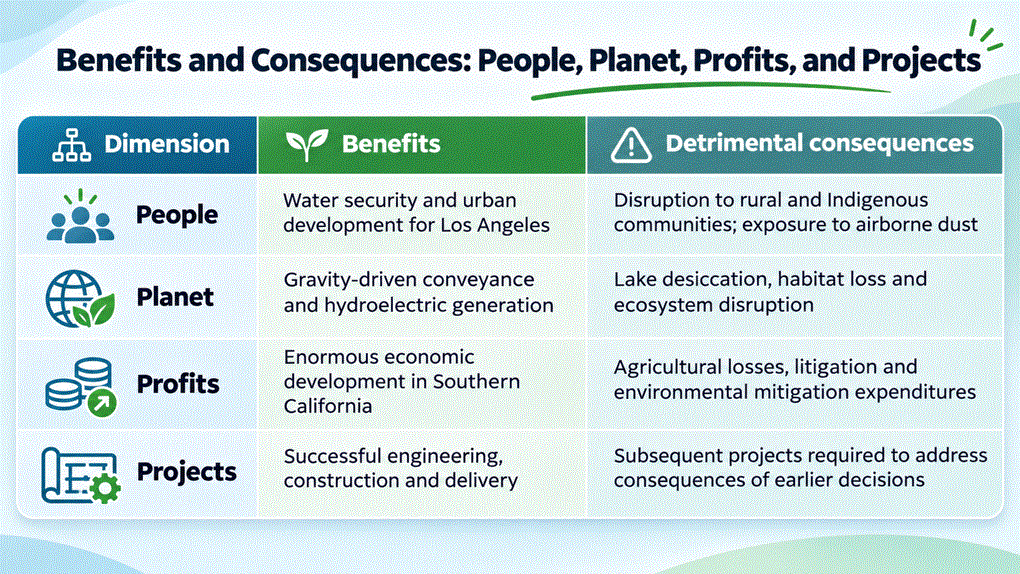
The engineering is amazing. Water travels hundreds of miles by gravity, through canals, tunnels and inverted siphons, and as an extra benefit, generating electricity along the way. No need for pumps to propel it to Los Angeles. The aqueduct helped transform a water-constrained town into a major metropolitan area. Talk about delivering value!
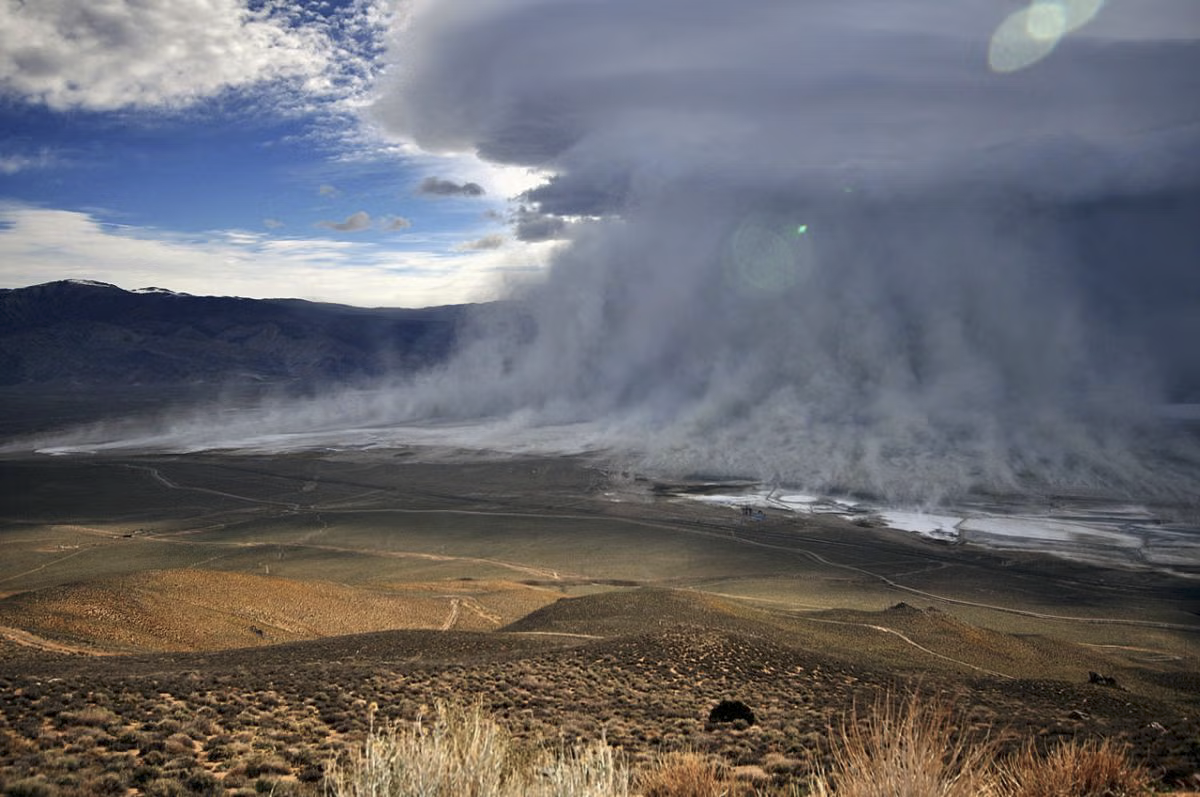
But wait. Value for whom? The water arriving in Los Angeles was water no longer available to the people and ecosystems of the Owens Valley. The acquisition of water rights left a legacy of distrust. Agriculture suffered. Owens Lake largely dried up, exposing fine sediment that could be picked up by the wind and inhaled by residents. And this was not just ordinary dust. Before large-scale dust controls began in 2000, Owens Lake was the largest single source of PM10 pollution in North America. An early EPA estimate put annual emissions at 300,000 tons of fine particulate matter, including 30 tons of arsenic and 9 tons of cadmium. Both are toxic, and inhaling these tiny particles poses serious health risks.
And consider the Nüümü (Paiute) and Newe (Shoshone) people, including the Bishop Paiute, Big Pine Paiute and Lone Pine Paiute-Shoshone tribes. The diversion of water and subsequent land acquisitions further eroded their traditional livelihoods. Ranch jobs disappeared as agriculture declined, and a 1939 land exchange left tribal water rights unresolved. Even projects to control the dust have damaged or threatened ancestral cultural sites and artifacts. LADWP disclosed three lawsuits in 2025 over dust control at a culturally significant site. So, more than a century after project completion, tribal communities are still seeking redress, and LA ratepayers are still exposed to the financial consequences. How do we put a dollar value on any of THAT?
We have, in effect,
moved water AND
moved some of the costs (in the broadest meaning of that word) of delivering that water to other stakeholders. We have also moved them out in time (delayed them). Those costs remain and continue to blossom.
The dust hasn’t settled (well, some of it has)LADWP reports that by 2024 it had spent more than $2.6 billion (with a B) controlling dust from Owens Lake, including replacement water, regulatory fees, construction and maintenance. One of the techniques? Shallow flooding.
Think about that for a moment. Some of the very resource the project was designed to deliver is needed to address a consequence of its delivery.
So, was the project worth it? Here’s a little back-of-the-envelope analysis. Using LADWP’s 2026–27 projected supply volumes and unit costs, replacing aqueduct water with purchased water at the stated rate would cost about $306 million more per year. Subtract roughly $83 million in projected Owens Valley environmental mitigation and related financing expenses (including about $50 million for dust control operations and maintenance), and you still have a potential annual financial advantage of $223 million.
This is not a lifetime ROI calculation. It assumes replacement water is available at the quoted price, applies to the expanded aqueduct system, and leaves many costs and benefits uncounted. The $2.6 billion is a historical cumulative figure, not another annual charge. But it does suggest that the financial case for the aqueduct remains quite strong.
Further, the calculation does not include the massive positive contribution it made to allowing LA to become a major international city, nor does it include the massive negative consequences it has had to people in the Owens Lake area, the effects on wildlife (barely mentioned here but very real). However the calculation does help us consider that there are REAL COSTS that come from operation of the project’s outcome that can – and should – be considered when planning the project.
Since this blog is called People, Planet, Profits & Projects, let’s look at the aqueduct through those four lenses.
From project management to project leadership
I am NOT suggesting that the aqueduct should never have been built. Nor am I suggesting that a project manager in 1913 should have been able to predict everything that would happen in 2026. I am suggesting that there is a difference between delivering an output and delivering value. Outputs lead to Outcomes, which can generate Benefits (and disbenefits), which in turn contribute to Value. OOBV, if you like acronyms.
Could Los Angeles have achieved comparable benefits with fewer detrimental consequences? Could more meaningful engagement with the people of the Owens Valley, different water rights arrangements, or provisions for sustaining the lake have changed the story? Those are questions for project LEADERS. And they are questions best asked while the project is still being conceived and planned.
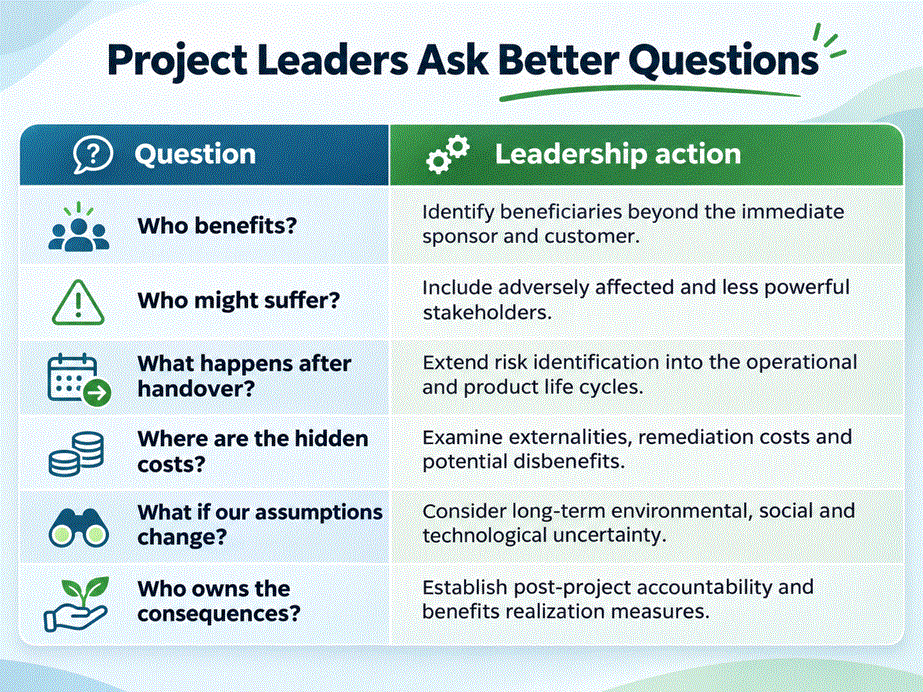
Our projects are temporary. Their consequences are not. This project from 1913 provides over a century of important learning about how to take those consequences into account when planning a ‘temporary’ project, and helps us become project leaders by asking the right questions.
Sources: LADWP history |
Owens Lake |
FY 2026–27 estimates |
Practical Engineering transcript |
EPA dust estimates |
National Academies (2025) |
Owens Valley Indian Water Commission history |
Tribal livelihoods |
LADWP cultural sites litigation |
LADWP 2025 bond disclosure, p. 67 |
National Academies cultural impacts
Posted
by
Richard Maltzman
on: November 25, 2026 11:18 PM |
Permalink


