

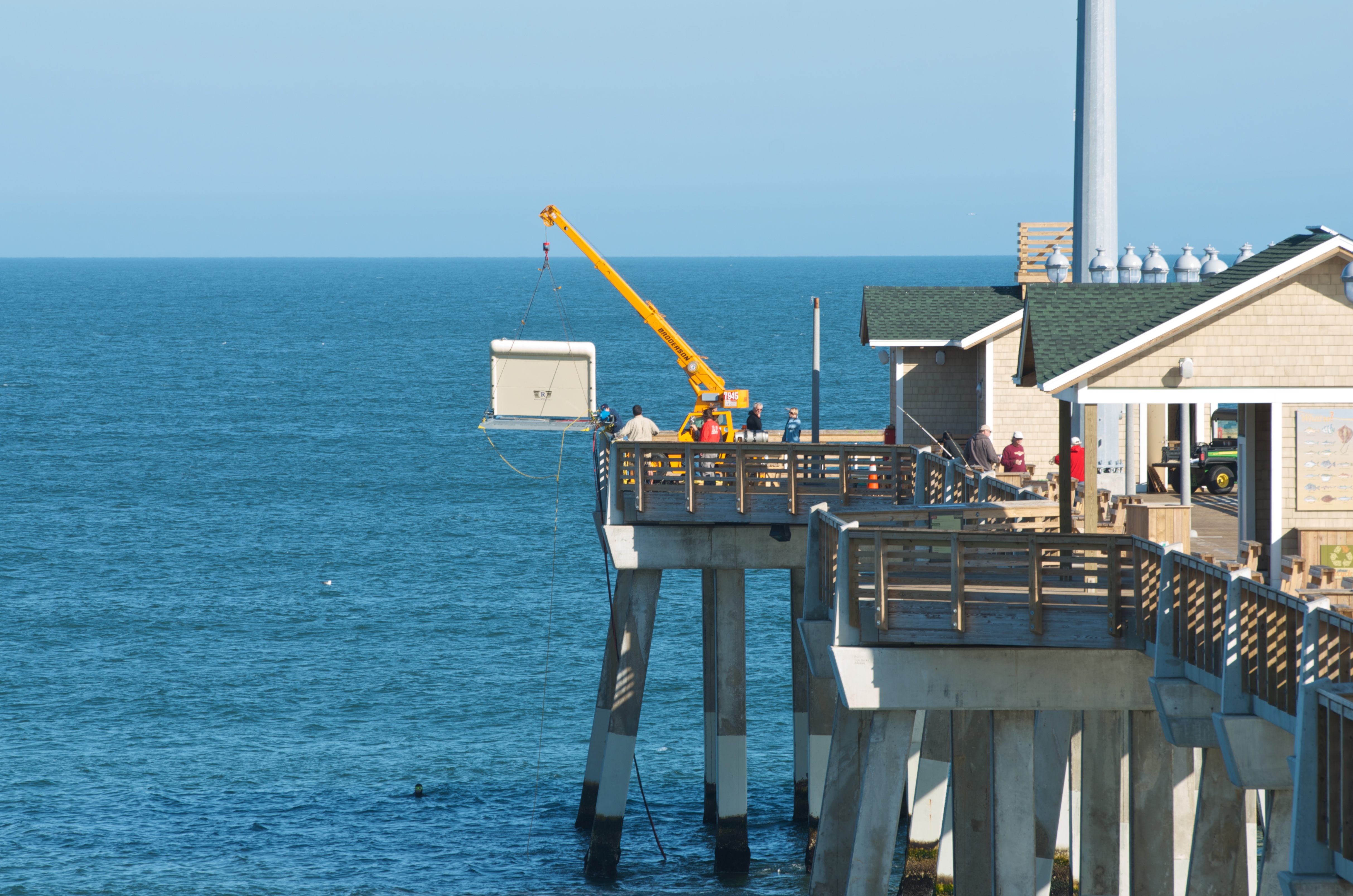
 I picked up a recent copy of National Fisherman magazine. I hadn’t seen a copy in years and I picked it up for a couple of reasons; (1) as a sportfisherman, catch and release, I like to see what the fisheries and commercial fisherman are doing, and this is their magazine, (2) at our post office, if you get a duplicate copy of a magazine or you get one you don’t want to read, you leave it on the counter to see if it might interest another person to pick it up, reuse/recycle, (3) I watch my share of The Deadliest Catch and (4) the subtitle of the magazine is Informed Fishermen-Profitable Fisheries-Sustainable Fish (people, profit, planet – Triple Bottom-line).
 We’ve always said that, while the altruistic reasons for greening up your projects is a good thing, keeping in the spirit of people, planet, profits and projects, money is also good. We’ve also stressed the importance of keeping your ears to the ground for rebates and other incentives to green up your projects and processes. To that end, there is an organization called




Guessing is not a strategy: How to build decision velocity with AI and real-time data
June 10, 2026 | Live Webinar

You Can't Get They-ah From Hee-yah
Floating an idea into reality: the other side of the AI Project Paradox
The Environment of the Built Environment: an AI Paradox
6th, 6th Edfition, 6th Edition PMBOK, 7th Edition, 7th Edition PMBOK, 8th Edition PMBOK, 8th Edition PMBOK Guide, Activism, actuarial, actuary, adapt, addition by subtraction, Africa, africa, agriculture, airforce, ajaita, Alaska, amazon, analogous, analytics, ancient, and more power, antarctica, anti-science, apple, apps, architecture, arctic, arrakis, Artificial Intelligence, asch paradigm, Assistant, asthma, astronomy, automobile, automotive, autonomous cars, b, bankhar, Banksy Crypto, basalt, baseball, bats, batter, beauty products, benefit, benefits, Benefits Realization, beyond epica, biases, bicycle, big data, big dfata, big dig, bike, biodiversity, biomedicine, birdhouse, blockchain, blood, blue blood, blue trees, bluefin, bluefin tuna, book review, boston, boston university, Boyce, Brazil, brazil, Breakdown Structures, BS, building, buildings, built environment, built environment, bumblebee, cake, capacitor, car, Carbon, carbon, carbon capture, carbon negative, carbon neutral, carbon pool, carbon sequestration, carbonate, careers, CEO, ChatGPT, chatGPT, chatgpt, chatgpt, chess, China, china, chopsticks, citrus, cli-fi, climate, climate change, climate resilience, climeworks, Clumsy, CO2, co2, CO2 Utilization, coalition, cobalt, coffee pods, cognition, cognitive, Collabortion, colombia, concrete, Conflict, construction 5.0, cool projects xyloscope, cooling, coral, corn, cost of good quality, cost of poor quality, cost of quality, crazy, criticism of project management, cryptocurrency, CSR, csr, data, data analytics, data privacy, datacenter, dataset, death spiral, Decision Making, decomposition, Defense and Climate, definition of a project, deforestation, dependencies, dependency, desert, DIKW, dikw, dimopoulos, disposal, dna, DOD, dogs, dolphins, dream, drilling, drink, dune, dune, dutch, early start, earth, eatlocal, eco-tourism, ecological, economic, economics, EKC, electric grid, electricity, electronics, elysis, embodied carbon, emerging technologies, empower, Energy, energy efficiency, environmental degradation, escalate, escalation, ESG, extreme weather, fallacy, FARC, farming, finance, fish, fish brains, fishing, fix, fixing the earth, flint water, Flint Water Supply, flood, flooding, Food supply chain, food waste, forest, forest for the trees, forestation, forrestgump, frank herbert, Fruitcake, fungus, fusion, Galvao, garage, gas, gasoline, geese, gender equality, gender partnerships, generational differences, Generative AI, gladwell, gold, Goodness, google, Government, GPT, great pacific garbage patch, green, green building, green buildings, green energy, green iguana, green project, green project management, greening, guest post, gyre, harkonnen, Harvesting Benefits, hawasina, hedgehogs, heursitics, historical data, hlb, holitsic, holland, horseshoe crab, human-caused climate change, hydrogen, hydrology, ice, iceland, ignition, iguana, imagery, impact, india, inequality, information, initiatives, injection, insurance, intelligence, interacting risk, internal combustion engine, invasive species, investment, isomer, issue escalation, issues, ITER, jobs, Jupiter, justification, kids, kill point, knowledge, koch brothers, Kuznets, laboratory, LAL, landscape mode, lapampa, launch, LCA, Leadership, Leadership, life cycle analyses, life cycle analysis, lifecycle, Linkedin, liquid, lizard, local, long term, long-term, long-term thinking, look up, loud, maintenance, maker, makermovement, malcolm gladwell, management, marathon, marine biology, market, mars, Martin Luther King, mean, megawatt, MeHg, melting, mercury, metal, Microgrid, microplastics, migration, military, millennial, mindset, minerals, mission, mitigate, MLK, mongolia, museum, museum of london, nature, nematodes, net gain, Net Project Success Score, net zero, netherlands, network, New book, New Jersey, New Practitioners, new york, NFT, nitrogen, noise, noreaster, norway, nova, NPSS, NREL, ocean, ocean cleanup, ocean life, oil rig, oil rigs, oklahoma, oman, only murders in the building, opportunity, overall risk, oxygen, packaging, pareto, PBS, permafrost, persistence, peru, Pharmaceutical, planet, planet.com, planning, plant, plasma, plastic, playground, pm, pm education, pmbok, pmbok guide, pmnetwork, PMXPO-2018, podcast, pollutants, pollution, poop, poor, portfolio, power, power skills, privacy, privacy concerns, professors, program, Program Management, project, project leader, project leadership, project management, project management 3.0, project on fire, project progress, Project Success, project success, projecticity, projectleadership, projectmanagement, projects, psychology, pulse of the profession, purple bacteria, purpose, quiet, rainforest, rationale, reef, refugees, renewable, renewables, Repair, repair, repeatable process, repeatable processes, repurpose, research, resource breakdown strucuture, Resource Management, reversing climate change, revisionist history, rich, rigs2reefs, ripe, risk, risk avoidance, Risk Management, risk mitigation, risk response, risk responses, river, robots, rocks, rules of thumb, rural, rural India, russia, Sarcasm/Irony, satellite, saudi, schedule, sci-fi, Science, science, science-fiction, scientific american, screaming monkeys, sea, sea life, Sea-Level Rise, sea-level rise, seagreens, seawall, seawater, seawater temperature, seaweed. beat;es. farming, secondary risk, selena gomez, sequestration, shipping, skyscraper, SLR, smart cities, smart city, smelting, social, social pressure, soil, solar, solar panels, solar perovkites, solar saheli, sonic, sponge cities, SRI, stage-gate, stagegate, stakeholder, stakeholder management, steward, stewardship, storage, strategy, stupid, success, suffer, sulphur, sunk cost, supercapacitor, supply chain, survey, Sustainability, sustainability, Sustainable Investing, Sustainable Tourism, sybiosis, symbiosis, system 03, TBL, temperature, terraform, terraforming, test, threat, threats, totem, touchscreen, tour, tower, Trains, transparency, transportation, trash, tree, tree species, trees, trillion, triple bottom line, triple constraint, truth to power, UMass, us army corps of engineers, USDA, vacuum, value, venus, vision, voice, voltage optimization, vw scandal, washing machine, waste, wastewater, water, we mean business, whales, Whirlpool, wind, wisdom, women, Women in Project Management, wood wide web, woonerf, Work Breakdown Structures (WBS), world breakdown structure, worms, xian, xylotron, Yale


|
Most Americans (excepting, of course, New Englanders) are familiah whith the New England accent in which we New Englandahs are known to - shall we say - not fully pronounce our "aahhs". I mean, our Rs, especially when they ahh at the end of a word. So that's why we chose to title this posting Wave Powah. It's about a company called Resolute Marine Energy, and this start-up's efforts to harness wave power but in more of a micro solution than a massive solution. A story about Resolute's efforts appeared in today's Boston Globe. You can read the entire story here. Resolute, based in Newburyport, Massachusetts, has prototype "SurgeWEC" wave-energy converters, which feature a fiberglass paddle that swings back and forth with wave motion to power an electric generator. These generators are only 8 x 6 feet, weigh just over 2 tons (minimal compared to other wave systems) and do not require heavy construction on-site, and they can be deployed in quantity where they are needed. Futhermore, the smaller size allows them to be deployed in conjunction with other marine projects such as desalinization plants. In fact, according to the article, "(These are)of particular interest to places where seawater is pumped ashore for desalinization, Staby said. “The power source and the raw material are already co-located,’’ he said. Resolute is working toward a pilot desalinization project in South Africa in the second quarter of next year, with a $150,000 US Interior Department grant to move its design along." Motivating Resolute's ideas for converting wave power to electric power is the following snippet of statistics from the article: "Using Resolute's technology at a conservative 25 percent conversion efficiency, 1000 meters of Plum Island shore would generate 2.5 megawatts of electricity on average, enough to power 2,000+ homes at a typical US household consumption rate of 1.2 kW, says Cliff Goudey, Resolute Marine Energy, Inc., Senior Engineer" We like to see how the economic stimulus package has triggered a (excuse the pun) waterfall effect here: "Funding has been a combination of angel investors and grants, including $1 million from the US Department of Energy in 2010. Noting that the federal grant was part of the economic stimulus package, Staby (Resolute's chief exectutive) pointed with pride to a wall map identifying nearly two dozen Massachusetts companies that Resolute uses as suppliers. He says Newburyport’s MacDiarmid Machine Corp. and Salisbury’s Wilson Welding have been especially important, although the paddle itself was built by Wilbur Yachts in Southwest Harbor, Maine." Another interesting twist for this type of wave power generator is that Resolute's solution, when used in surf deployments, for example, off the shore of Nantucket, they would take energy from the wave and have a positive impact (a reducing one) on beach erosion. So in addition to providing power, they protect the beach - a nice outcome. As project managers, we need to take note of the inventiveness of these types of solutions, their funding sources, the key stakeholders, and their long-term benefits (as we should with any project). You can learn more about Resolute Marine Energy on their site. In the meantime, we will practice our Rs. R R R R R ... |
|
So reading through the magazine, I came across a short article by Sam Rauch, acting director of the National Marine Fisheries Service (NMFS – “nimfis” as it is know in the marine fisheries arena). The title of the article is “Crossing the border to successfully manage fish stocks.” He starts out by saying “U.S. and Canadian fishermen and natural resources managers face the same challenges.” But he really had me at “Driven by our common interest in sustainability (my emphasis), we have developed a close working relationship over the years with a long record of success.” It only goes to show that we cannot do this alone, even if we wanted to. The resource does not know the boundaries. They just wander all over the place crossing into other jurisdictions, international waters that may have little regulation, or wherever the food supply or migratory patterns take them. A couple of the examples of working together that Mr. Rauch cites are a shared commercial fisheries resource, the yellowtail flounder, and protected species, like the Atlantic sturgeon. As to the yellowtail flounder, joint Canadian/U.S. legislation was passed to increase the U.S. flounder fisherman’s catch limits, while still protecting the transboundary stock. For the sturgeon, there is a developing Canadian caviar industry in the St. Lawrence River, and the U.S. and Canada are planning a strategy to be able to sustain the stock of sturgeons while accommodating this new interest. Mr. Rauch ends the article by saying, “As we face threats from climate change and growing interest in offshore siting of alternative energy projects, a strong working relationship with Canadian fishermen and resource managers will be key to ensuring that marine species and their habitats are protected and fishing opportunities maximized.” It has to be a balance between the factors of the triple bottom-line in order for people, planet or profits to sustain. That message is clear to us, but needs to be shouted from the roof tops or shoreline as the case may be. |
|
The LDI Corporation of Portsmouth, New Hampshire, just received an award of a grant from Green Launching Pad (GLP). LDI manufactures upholstery fabric for architects and designers who are looking for green products for their facilities. According to LDI VP of Sales and Marketing, John Dame, “We have developed an energy efficient environment and environmental-friendly process that will allow us to offer a wide variety of decorative print patterns to our customers. The GLP funding will be used to help us purchase some of the required equipment to launch this new initiative.” Last year LDI experienced a 3o% growth that Dame attributes partially to a changing market place. GLP is an effort funded by federal stimulus funds through the Department if Energy and hosted by the University of New Hampshire. On GLP’s “about” page, they say that they want to be the hub of green activities and under the heading of “community” even has a button for “find a project”. This round of GLP funding was specifically targeted for manufacturing companies. This is a state effort, funded by the feds, and by targeting manufacturers, the message is that manufacturing is an important segment to New Hampshire’s economy. According to John Lynch, New Hampshire’s governor, “It only makes sense to do what we can to bolster this important sector of our economy, and that’s exactly what we are doing by working aggressively….” To LDI, it validates that the work they are doing is important, because there were 18 companies that applied for the grant. The application and review process was rigorous and LDI is one of 3 companies to received a grant Bottom-line or should I say quadruple bottom-line, is that there are grants available out there to help defray some of the costs of greening your company. Make sure that you explore all of the options, local, state, federal, as well as private funding. |
|
Half a trillion dollars. That's a lot of money -a lot of projects - and clearly a lot of opportunity for project managers. And that is the amount of money (about 3 trillion yuan) to be spent over the next 5 years on clean energy initiatives in China, such as a solar power generation system covering 100 counties in the country. According to a nice feature article in PM Network magazine by Sarah Fister Gale, China has the dubious distinction as the leading contributor in the world to CO2 emissions. So it is launching a program to cut its carbon intensity by 16 to 17 percent by 2015. Using a combination approach - both of which launch projects and programs - to reduce pollution and increase efficiency of existing plants (power and otherwise) and to initiate more renewable energy creation, the country is launching projects to:
We suggest you read the whole article here. And, as we have for years, we urge all project managers to develop their conversancy in the area of sustainability - because many of the projects, not just in China, but in the world, will be triggered by efforts such as this. Half a trillion dollars is a pretty good incentive! Or as our Chinese colleagues may say: |
|
In this nifty article from this past Sunday's Boston Globe, you can read about several companies in the Boston area and the projects they've initiated to harness the power of microbes. As you remember from the infamous H. G. Wells story, The War Of The Worlds, microbes have helped us before (in fiction) and now they are helping us again (in fact). These micro-organisms are being engineered and "hired" to clean waste water, produce fuel, or to sterilize hospital equipment. Project development time has increased orders of magnitude, even since the 1990s. Where it used to take 10 or 15 years to develop a new biological product, this can be done "at a much more accelerated pace", challenging not just the scientists and engineers invloved, but of course the project teams and necessarily the project manager. The companies involved here are Manus Biosynthesis, Cambrian Innovation, Ginkgo BioWorks, Novophage, and others. Cambrian, for example, is cultivating colonies of naturally-occurring bacteria that can serve as catalysts for chemical reactions, making them significantly more efficient. They activate with electrical impulses. These microbes were only discovered in 1999. When the microbes are grouped, they can convert CO2 into methane, making it easier to collect and therefore preventing CO2 from escaping into the air, and can also, in turn, generate electricity. Read the story. You can see the implications for large numbers of projects, and it reinforces our assertion that project managers should become more attuned to the language of sustainability and understand the opportunities it provides for PMs in fields such as this. Oh, and one more thing. Don't let the idea of engineered bio-products scare you too much. It was beginning to creep us out a bit as we read through it, but the authors make a really good point. Sitting in your house, or one very close to it, is an example of a genetically-engineered organism. There's a picture of one below:
Yep. Dogs are just genetically-modified wolves. And we (generally) trust these even with our little kids. In any case - check out the article and continue to build your knowledge in sustainability and project management; you may find yourself leading a project just like the ones in the story! |
|
The only people who find what they are looking for in life are the fault finders. - Foster's Law |