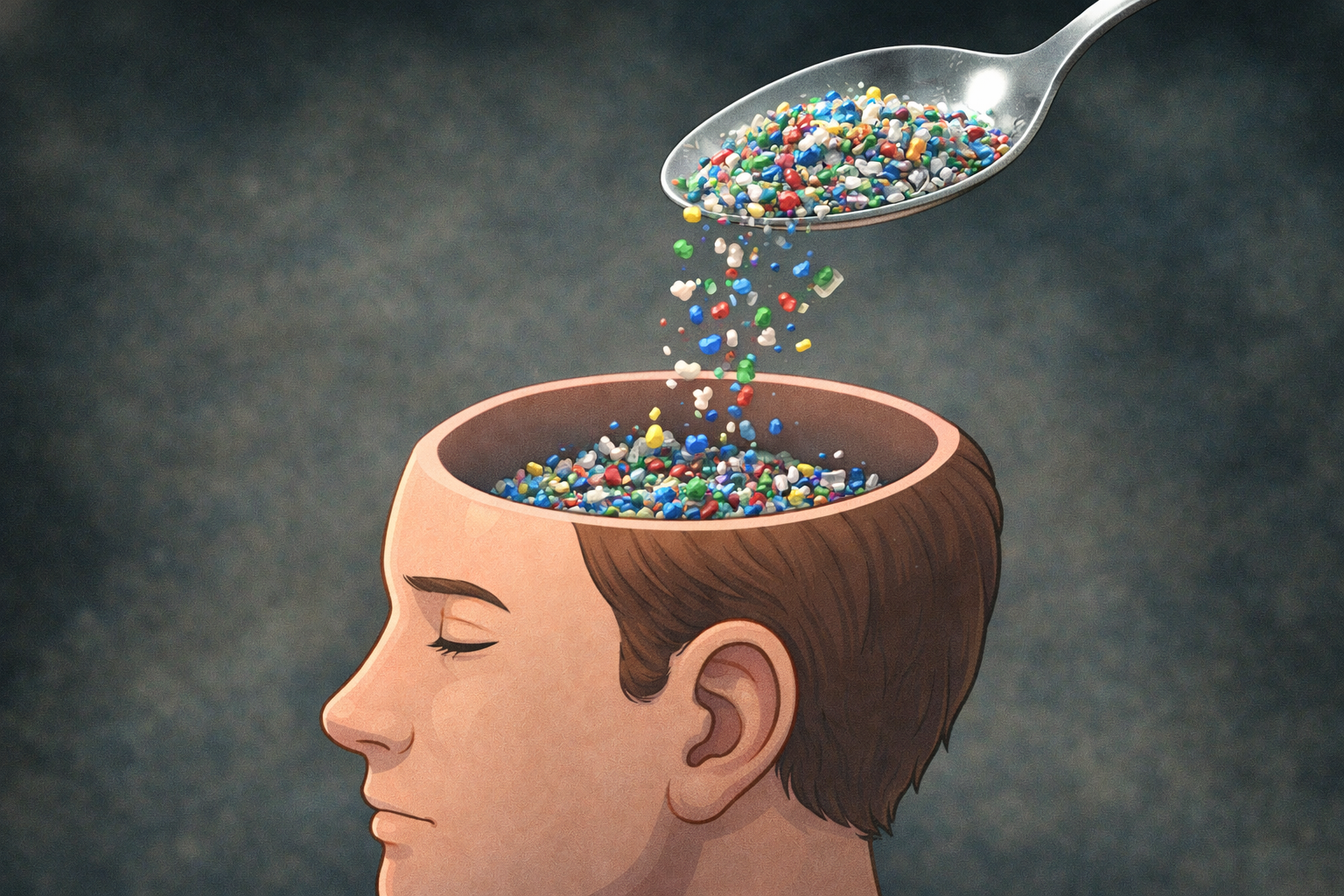
Microplastics have been on my mind lately. I mean that quite literally.
A recent study from Duke University shows that human brains now contain a teaspoon of microplastics (7 grams). Other respected studies reveal significant increases of microplastics in the bones and other parts of the body.
Unlike my recent series on the Great Green Wall, where a major government (China) took on a big problem with huge scope and billions of yuan in funding, this story, based mostly on this article from the Smithsonian Magazine, is about one high school student’s approach to solving (or at least remediating) the microplastics problem, starting locally, but thinking globally.
So, innovative, systems thinking doesn’t always come from billion-dollar portfolios—it can start as a single project, in a high school science fair in Virginia.
Rather than providing all of the detail here, I think it’s best just to watch this short video about the prevalence of microplastics.
So, how did Virginia high school student Mia Heller react to the problem, after reading the local newspaper’s coverage about microplastics in her town’s water supply? Well, she got to work on a science project that sought to find an inexpensive and easy way to remove microplastics. Here she is explaining the system to you:
What are the lessons learned from such an inspiring high school project for us – practitioners of project management in the larger sense?
It’s about empowering young people to express their ideas, providing support and encouragement. It’s about active science education and the support we may be able to lend as project managers.
It’s about the fact that great projects often start not with a top executive proposing a grandiose solution, but rather with a question from someone at an entry-level position.
In summary: 1. Innovation is not hierarchical
It doesn’t require seniority or large budgets
2. Start small—but think big
Prototype locally, envision globally
3. Align projects with meaningful outcomes
Clean water = clear value
Not all projects need or should be expected to generate immediate ROI
So:
What “small project” are you overlooking that could have big impact?
Are you enabling innovation—or constraining it?
What problem in your domain would benefit from a “student mindset”?
"Not all chemicals are bad. Without chemicals such as hydrogen and oxygen, for example, there would be no way to make water, a vital ingredient in beer."