What problems do Smart City Projects Solve?


|
Continuing with the theme of Smart Cities… I have several guest posts pending. In the meantime, I just want to make a resource available for you to help with this post series. https://www3.weforum.org/docs/WEF_Smart_at_Scale_Cities_to_Watch_25_Case_Studies_2020.pdf From this report by the World Economic Forum, this extract should be helpful: What problems do smart city applications solve? Smart city applications are manifold and can address diverse yet similar challenges that cities face around the world. These include congestion, burgeoning populations, gaps in infrastructure, inadequate service delivery, exclusion, poverty, a lack of competitiveness, limited liveability, vulnerability to climate change, and natural and man-made disasters. In some cases, especially in emerging countries, challenges are even greater and affect the very survival of some of these cities. Cities are increasingly implementing projects with smart solutions in waste management, traffic congestion, citizen safety, affordable housing, water resource management, smart buildings, efficient use of energy, renewable energy resources, facilitating navigation of autonomous vehicles, citizen participation and stakeholder consultation, to name a few. The Fourth Industrial Revolution is helping cities leapfrog certain stages of development by harnessing affordable digital solutions. Among these diverse definitions and solutions, the common goals or themes of efficiency, innovation, inclusion and resilience stand out. According to the G20 2019 Japan report Finding New Solutions through Building Smart Cities, a city that uses data and digital technologies effectively to plan and manage its core functions becomes efficient, innovative, inclusive and resilient. Integrating digital technologies, especially AI, into a city’s systems and services presents new and affordable opportunities for a city to solve its challenges. This in turn will help it achieve the Sustainable Development Goals through efficient use of its resources, effective stakeholder engagement, informed decision-making and better governance. Stay tuned for much more on this topic! Thanks. |

Smart Project Leaders: Get Smart on Smart Cities
|
With all of the attention on AI in general, especially in the sense that ‘the robots are coming’ and the panic of the downside of AI, I think it’s time to consider the good that AI – or at least “smart’ contribution that sophisticated software (and hardware) can make to humanity. I came across a really nice post on LinkedIn that summarizes the concept of Smart Cities. It’s from David Cain ( https://www.linkedin.com/in/dccainpc/ ).
In today's rapidly evolving urban landscape, the concept of Smart Cities is becoming increasingly vital. At its core, a Smart City utilizes technology that In today's rapidly evolving urban landscape, the concept of Smart Cities is becoming increasingly vital. At its core, a Smart City utilizes technology to enhance the efficiency and quality of urban services. This includes improving transportation systems, reducing energy consumption, and streamlining waste management. By integrating data and digital technology, Smart Cities aim to optimize city functions and drive economic growth while ensuring sustainability. I really would like the project management readers to note the broader definition of sustainability. Many of you (and you know who you are!) think of sustainability as “save the whales, save the snails” – that is, it’s about ecology and environment only. Not so. Amongst ‘people, planet, profit’, it’s not only about planet. Not even close. Sustainability means much more, including, and perhaps especially the improvement of life for humans (people) and improved effectiveness and efficiency for business (profit). In future posts, I’ll be relying on some experts in the project management area who are focused on smart cities and the projects that enable their creation. Of course, this is part of “the Built Environment”, which, in turn, fits nicely into PMI’s excellent new focus on this area, with a new credential, the PMI-Construction Professional (PMI-CP™). So much (project!) effort will be needed as these smart cities are built up, it behooves project managers to learn about the rationale behind it, and the technologies in it. This is what I intend to cover in following posts. For now, you can watch this introductory video on Smart Cities. Notice how the focus is NOT on 'saving whales', but heavily on making life better for humans. However to learn more about what this means to and for Project Leaders, stay tuned! |

The Clumsy AI-ssistant, Part 2
|
In Part 1 of this blog post, I introduced the idea of, and demonstrated the capabilties of ChatGPT (and by extension Generative AI) at the intersection of PM and Sustainability. ChatGPT did well – not perfect, but well - in that exercise.
In Part 2 of “the Clumsy AI-ssistant”, I am going to get right into a dialogue with ChatGPT in which we see it applied to the construction project: build a birdhouse.
Rich: I am building a birdhouse for local chickadees. Acting as a project manager, can you create a network diagram for this initiative? ChatGPT: Certainly, I can help you create a simplified network diagram for your birdhouse-building project. A network diagram is a visual representation of the project's tasks and their interdependencies. Here's a basic network diagram for your chickadee birdhouse project: Project: Building a Chickadee Birdhouse
This is a simplified network diagram for your chickadee birdhouse project, outlining the sequence of tasks and their dependencies. Each task should be completed before the next one begins. Keep in mind that this is a relatively straightforward project, and the tasks listed are quite high-level. You can further break down these tasks into more detailed subtasks or include additional tasks as needed.
Rich: But, can't some of those tasks be done in parallel?
ChatGPT: Certainly, some of the tasks in your birdhouse project can be performed in parallel to save time and improve project efficiency. Parallel tasks are those that don't have strict dependencies on each other and can be executed simultaneously without one task blocking the other. Here's a revised network diagram that takes parallel execution into account: Project: Building a Chickadee Birdhouse
In this revised network diagram, Task 2 (Gather Materials) can begin as soon as Task 1 (Design Birdhouse) starts. Similarly, Task 5 (Paint or Stain) can begin once Task 4 (Assemble Birdhouse) is in progress. This approach allows for better time management and can potentially shorten the overall project duration by overlapping tasks where possible.
Rich: But you didn't include any safety items. We will be cutting wood. How about safety glasses, gloves, maybe even having a first-aid kit nearby? ChatGPT: You are absolutely correct; safety measures are critical when working on a project that involves cutting and working with materials like wood. Safety equipment and precautions should always be included in any project plan. Here's the updated network diagram for your birdhouse project, including safety measures: Project: Building a Chickadee Birdhouse
Including a safety preparations task at the beginning of the project is a crucial step to ensure that all necessary safety measures and equipment are in place. Safety should always be a top priority when working on any project, especially when it involves potentially hazardous activities like cutting wood.
Rich: For Step 2, wouldn't a predecessor to Design be some research as to what are some best examples and trends in birdhouse construction? ChatGPT: You're absolutely right; conducting research and gathering information about best practices and trends in birdhouse construction is an essential step before proceeding with the design. Research serves as a precursor to the design phase, as it informs the design decisions and ensures that the birdhouse meets the needs of the intended occupants (in this case, the chickadees). Here's the updated network diagram for your birdhouse project: Project: Building a Chickadee Birdhouse
Incorporating a research task as the precursor to the design phase will help ensure that the birdhouse design aligns with the best practices and trends in birdhouse construction, and it takes into consideration the specific needs and preferences of chickadees. This approach will lead to a more effective and bird-friendly design. Rich: Why didn't you think of the safety and research tasks? Why did I have to prompt you for this? It seems you left out some important considerations, and without them, I have incomplete scope for the project! ChatGPT: I appreciate your feedback and understand your concern. You are absolutely correct that safety and research are essential considerations in any project, and they should have been included in the initial network diagram. I apologize for any oversight in the initial response. Your input has helped to identify these important aspects of the project. Creating a comprehensive project plan is vital for the successful execution of any project. I'm here to provide guidance and information, and your feedback is valuable in ensuring that all crucial elements are considered. In building a birdhouse or any other project, safety and research are key components that should be integrated from the beginning to ensure that the project is carried out effectively and safely. Thank you for highlighting these important aspects, and I'm here to assist with any further questions or project planning needs you may have. What do you think of this exchange? I’m really interested in your human feedback here. Do you notice a couple of things, as I did?
This reinforces my point – and actually ChatGPT literally made it for me by saying “I’m here to assist”. It’s an assistant, alright, and can indeed be very helpful, even invaluable. But it is clumsy. So, work with it knowing that it’s a clumsy assistant! |

The Clumsy AI-ssistant, Part 1 of 2
|
I’m smack in the middle of the center of gravity of our discipline of project management. At this moment, although Boston is, of course,The Hub of the Universe, the center of the project management profession is right here in downtown Atlanta, Georgia in the US, thanks to the PMI Global Summit 2023. The theme – and the very atmosphere – at the PMI Global Summit is AI. It’s in the Exhibit Hall, it’s in the sessions, it’s in gigantic letters and imagery on the signage. It is LITERALLY a hot-button. Conventioneers are wearing buttons that say “PMI x AI”.
So I thought I would look at the intersection of AI, PM, and Sustainability by running a little experiment. I asked ChatGPT, which, like all Generative AI systems, I call a “clumsy assistant ™”, to help me as the director of a GPMO, how can I shift the mindset of my PM population to a more holistic, long-term project perspective. And now, I let the experiment unfold before your very “A Eyes”. Rich (the human) enters: I am a director in a global project management office for a large company with over 3000 project managers. I am trying to shift the mindset of our project managers from only thinking of scope, time, and cost, to thinking past the end of their project - thinking about the project's outcome in the steady state. What do you suggest?
CHATGPT SAYS: Shifting the mindset of project managers from a narrow focus on scope, time, and cost to a more holistic perspective that considers the project's outcomes in the steady state is a crucial step for ensuring long-term success and value delivery. Here are some strategies you can employ to help your project managers make this shift:
By implementing these strategies, you can help project managers develop a more comprehensive view of their projects and drive a mindset shift towards achieving and sustaining positive outcomes in the steady state. Then, I told ChatGPT that a “self-proclaimed expert” had given me some advice, and gave ChatGPT its own advice back, asking it to validate it and give its opinion as to how good an answer the self-proclaimed expert (i.e. ChatGPT!) gave me. Here is what I got back: CHATGPT SAYS The advice provided by the self-proclaimed expert is well-rounded and aligns with best practices for shifting project managers' mindsets towards considering long-term outcomes in the steady state. It emphasizes a holistic perspective and offers a comprehensive set of strategies to achieve this shift. Overall, the strategies provided in the expert's response align with best practices for making this important mindset shift within your organization. It's a comprehensive approach that addresses various aspects of the transformation, from communication and education to measurement and culture development. Implementing these strategies should contribute to your goal of ensuring long-term success and value delivery in your projects.
It did make some slight tweaks, but mostly cosmetic and of little impact. But it did make some adjustments. In Part 2, I will share another conversation where we can see that ChatGPT is helpful, but clumsy. This is why I think the best way to work with it is to imagine a brilliant intern helping you in the lab. They think of chemical reactions you would NEVER imagine. They are creative and seem to have tons of chemistry knowledge at their fingertips. However, sometimes they knock over a whole rack of test tubes, and inadvertently create explosive reactions that release toxic fumes (see the blog's main photo above). What is AI? It's a Clumsy Assistant™. In Part 2, I'll continue with a theme that is emerging here at the conference. To stay relevant as AI becomes more 'atmospheric', you, (yes, you, the very person reading this), must be more human.
|

What Wood $1B do? (Part 2)
|
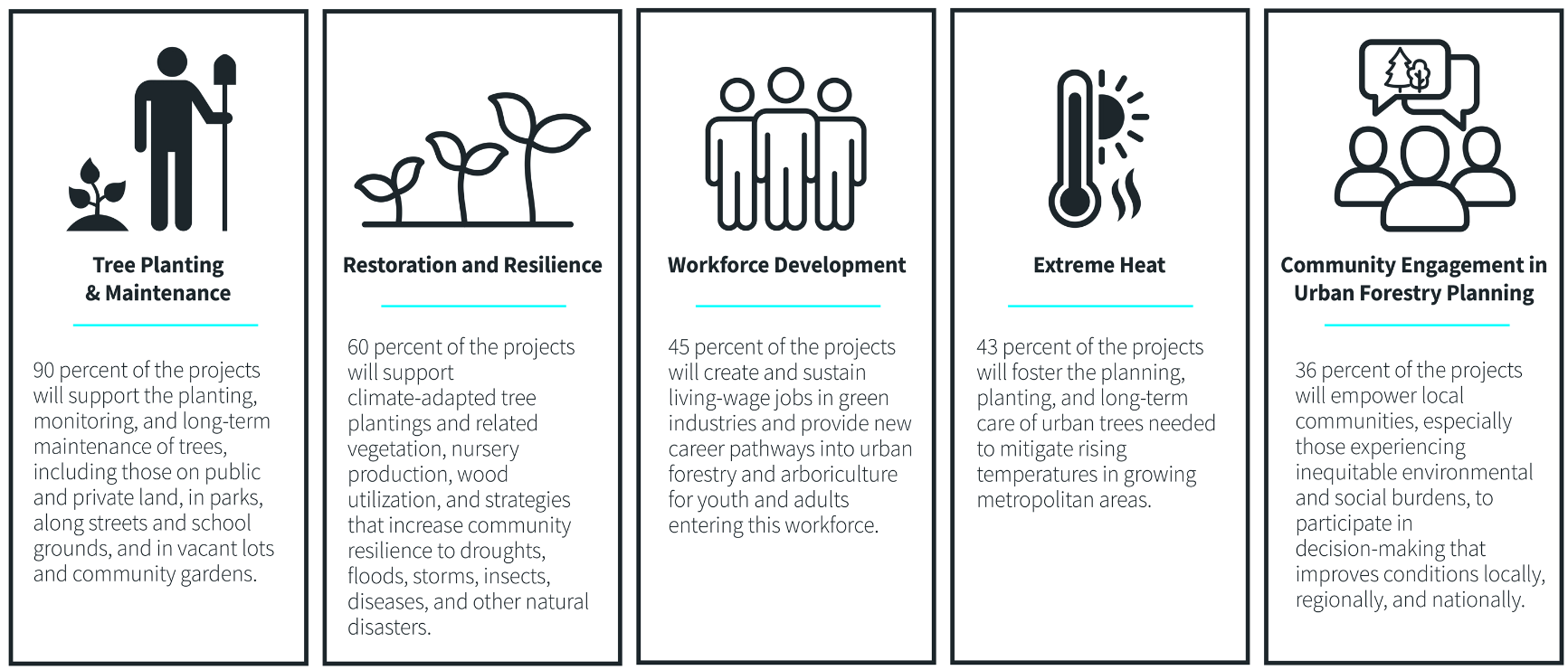
In Part 1, I opened the topic of this $1B tree-planting scheme and focused on the terminology surrounding this effort – whether it was a project, a program, an initiative or some other term. Here I jump back to the topic itself. Referring back to the announcement from the US Forest Service, the breadth of the Program (I’ve decided it is a Program) is amazing. Communities in all 50 states, the District of Columbia, and several U.S. Territories and Tribal Nations are receiving funding – and the funding is expanded greatly from 2022 – by 27 times, in fact. For those interested in the specifics, I found this tremendous resource from SmartCitiesDive. This resource has an interactive map in which you can click on your own state to find how much funding it received for the Program. It also states that “The grant awardees announced Thursday, which include municipal governments and community-based organizations, were selected from a pool of 842 applicants requesting a total of $6.4 billion”. So you can see a project selection process going on in this program. Although large, it could not fund all 842 projects – it settled on 385 of that total. And speaking of project selection, in researching this Program, I found this US Government resource - a tool for project selection called the Climate and Economic Justice Screening tool, loaded with data that shows which communities in which states are underserved. The mapping tool identifies disadvantaged communities that face burdens in the categories of climate, energy, health, housing including nature deprivation, legacy pollution, transportation, water and wastewater, workforce development, and other socioeconomic thresholds. The idea is to make sure that the Program’s benefits flow to the communities with the greatest need. So – what are the projects? This graphic from the US Forest Service shows the way the projects in the program break down amongst the major project types:
I invite you to explore this Program – maybe to see if it opens up opportunities in your part of the US. I also invite those outside the US to compare and comment what your government is doing along these lines. |