
Viewing Posts by Dave Shirley


What the @#&pH is Going On?


|
NOAA’s major concern is with the threat to U.S. fisheries in the region (The North West and Alaska) due to “human-generated carbon emissions” making the ocean’s waters more acidic. According to article, the oceans absorb about 30% of the carbon dioxide we put in the air. Presently, the sea is 30% more acidic that before the industrial revolution, and it is predicted that at the current rate of global carbon emissions, the oceans acidity could “double by 2100.” In other words, pH levels are dropping. The falling pH levels could affect the nervous systems of some species of fish making them more vulnerable to predation, and inhibit the growth of reefs, important nurseries. Some areas are more vulnerable than others. For instance, along the Pacific shelf, deeper water comes up and spills over the shelf. Increasing acidity levels in this water. That increased acidity is killing oyster larvae farmers are growing. Oyster farmers off the coasts of Washington and Oregon recognized this potential issue early and were able to institute projects to to time their intakes of water to reduce the results from this upwelling. As a result, and if we look at the cost-benefit for this project, “a $500,000 investment in pH monitoring equipment, saved the oyster industry $34 million in one year (2011).” That’s a ratio we can certainly live with. The domino effect of these issues is sometimes not so obvious. But in this case, the spat (the term for the oyster larvae) are used by oyster farmers as far away as Homer, Alaska. A loss of those spats has industry wide ramification. Another project spawned (excuse the pun) from the research is the placing of 4 pH monitoring buoys throughout the state of Alaska to study the pH along the Alaskan shoreline. However, it is a fair-and-balanced study. Scientists are also studying the effect of lower pH on surf smelt, a species particularly suited to thrive in lower pH environment, and the Dungeness crab that does not do well in low pH. The Commonwealth of Virginia has funded a project for six shellfish hatcheries to monitor the water chemistry of the Chesapeake Bay to study the effects of fertilizer runoff, another potential for contributing to water acidity. But we think that this statement brings it home, not only to business, but to the microcosm of business we call project management: “When you ask why does ocean acidification matters, often we’re interested because of the fish we eat and the things we make money off of,” said Shallin Busch, a research ecologist at the NOAA’s Northwest Fisheries Science Center in Seattle, Washington. |
 Ocean acidity may conjure up a scene from the Wizard of Oz, when Dorothy throws a bucket of water towards the burning scarecrow and accidently hits the witch, “I’m melting, I’m melting.” But ocean acidity is much more subtle than that. A recent article in the Washington Post on-line headline “
Reefs, Nets, Carpets, Oh My!
|
The article in GreenBiz is about Interface sharing some pointers on how they are achieving sustainability. Being fishermen, what caught our eye was their partnership the Zoological Society of London (ZSL) to address a major problem we’ve seen firsthand, the abundance of discarded fishing nets and nets affect on the oceans fish and wildlife. A couple of years ago, one of EarthPM founders was instrumental in the rescue of an injured Harp Seal that washed up on a beach in southern Maine. The conclusion by the fish and wildlife biologist involved in the rescue was that the seal had been caught in nylon net around its mouth and while it was now free of the net, the fabric caused some abrasions around the seal's mouth casuing an infection. The seal was taken to the Mammal Stranding Center in Woods Hole, MA and was successfully treated and released back into the wild. The problem is not only here in New England, but also worldwide, particularly in some of the poorest nations. Therefore, the Philippines was chosen for the site of the pilot project. From “Turning Old Fish Nets into New Carpet” by Julie Stein “This is a good place to begin since the Philippines is considered the centre of the centre of marine shore fish biodiversity, and Danajon Bank is in the centre of the Philippines. Formed over 6000 years ago, it is one of the few documented double barrier reefs in the world. The discarded fishing net problem is acute here. The Bank sprawls across nearly 130 kilometers and it is estimated that the nets discarded each year here could cover the length of the Danajon Bank 400 times over.” Interestingly enough, the nylon used to make some of the fishing nets is the same as the nylon used to make carpeting. It doesn’t seem to be much of a stretch to think that the net nylon can be recycled into carpet fiber. It might be that the original project, designing and manufacturing efficient and effective fishing nets, could have benefited from the long term approach we advocate. In other words, perhaps the project could have been made more successful by thinking of the ultimate disposal of the nets during the upfront planning, thereby having the recycling effort in place when needed. We know that is a little controversial as the traditional project management thinking is that once the project is handed over to operations (steady state) that the project manager’s job is done. We advocate a slightly different philosophy, one we believe is more sustainable, but that’s a discussion for another day. To return to “Net-Works,” as the pilot effort in the Philippines is called. It also addresses the triple bottom line: people, planet, profits in that the project seeks to protect the fragile reefs, provide local jobs during the cleanup effort and by using recycled material, help Interface’s bottom line. As we see it, it is a win-win! |
 A recent article on
 Ethical (and Sustainable) Decision Making
|
Looking through the document, we don’t see many overt references to sustainable project management, and we see it covertly referenced throughout the document. The framework lists five EDMF steps, Assessment, Alternatives, Analysis, Application and Action. Let’s looks at a couple of examples. Granted, we may be looking at this through a “green/environmental or sustainability lens”, but that’s okay. We asset that a project manager should add that lens to his or her repertoire. As an example, “Assessment: Make sure you have all the facts about the ethical dilemma and ask these questions:
In other words, does it take into account environmental rules and regulations, is it connected to the organization’s mission vision (their code of conduct perhaps), and does it meet stakeholders expectations of sustainability? While you can read it yourself at http://www.pmi.org/About-Us/Ethics/~/media/PDF/Ethics/Ethical%20Decision%20Making%20Framework%20-%20FINAL.ashx and draw your own conclusions, we’d like to offer a couple of more examples of our interpretation. Let’s just look for a moment at the Horizon Deepwater (BP's Macondo Well) disaster that occurred in the Gulf of Mexico in 2010 to illustrate some of the principles of the Framework. Did they truly consider the pros and cons of their decision to drill where they were drilling and to drill the way they were drilling. We always asserted that we weren’t in the room when these decisions were made, but we know that they did not even consider any environmental risks in their risk register for the (Macondo Well) project. You can verify that for yourself at http://www.boemre.gov/pdfs/maps/AppendixJ_RiskRegister.pdf. One of the overt mentions of sustainability occurs in the Analysis step; “Will your candidate decision have a positive impact or prevent harm to ....the environment or future generations.” In our book we reference the Bruntland definition of sustainability as “…meeting the needs of the present without compromising the ability of future generations to meet their own needs.” This question seems to address that. One of our favorite questions in this section is “Looking back, will this decision seem like a good idea a year from now?” We don’t think we have anything to add here. That question says it all. Not that they all aren’t great questions, and again, we urge you to read the entire framework on PMI’s site, other great (sustainability) questions include; “Would you choice result in the greatest good? (Application Step) and “Could you make your decision public and feel good about it?” (Action Step) We applaud PMI’s effort in capturing a decision making framework that addresses ethics. It is a great first step in understanding what it takes to be responsible in your decision making processes and from our point of view, to use this framework in conjunction with a “green lens” for the best project decision that consider sustainability. Note: We first saw the term "Environmenal Lens" while reading Esty and Winston's book, Green to Gold |
 PMI™ has published their “Ethical Decision-Making Framework” (EDMF), and are we excited! You may ask – “Well how does that fit with sustainable project management? Isn’t sustainable project management where your focus is? “ And we say, glad you asked.
Choosing Sustainability
Categories:
Pharmaceutical
Categories: Pharmaceutical
|
Because if the huge impact of IT on energy use, we have a particular interest in it; specifically how the “greening” of IT can positively affect a reduction in energy. While we believe that one person can make a difference, a significant impact can be achieved by policy. We not saying that the establishment of policies is the end-all-be-all for sustainability, just those policies can provide a “guideline”, albeit forced at times, for project decision making. A recent report by Green Grid provides information on energy policies in Europe, Middle East and Africa (EMEA), and how those policies “that informs business decisions and prepares data centers for the effects of current and pending changes in the regulatory environment and ensures they can budget for and exploit these policies to gain a competitive advantage." One of the primary duties of a project manager is risk management, identifying and assessing the impact of risks in order to prepare for managing and controlling risks. Failure to include the sustainability aspects of a project, in this case the “legislation, regulations, costs” (or policies if you will) relevant to data centers can have a detrimental effect on you data center projects. While 2012 shows some decrease in spending for data center projects according to Steve Wexler (http://www.networkcomputing.com/data-center/240002548) “data center equipment sales in the first quarter surged 17% year over year - that was still a 6% drop from the fourth quarter. Data center network equipment revenue for the first quarter came in at $2.2 billion.” 2011 spending is predicted to be $98.9 billion up 12% from 2011 (http://www.gartner.com/it/page.jsp?id=1822214). That’s a lot of money for data center projects. By giving attention to energy policies, that money can be better spent on equipment, rather than addressing any "surprise" regulatory or legislative issues. Just a reminder, Green Grid is “a non-profit, open industry consortium of end-users, policy-makers, technology providers, facility architects, and utility companies collaborating to improve resource efficiency in information technology and data centers. With more than 175 member companies around the world, The Green Grid seeks to unite global industry efforts, create a common set of metrics, and develop technical resources and educational tools to further its goals.” |

Plug or Play
|
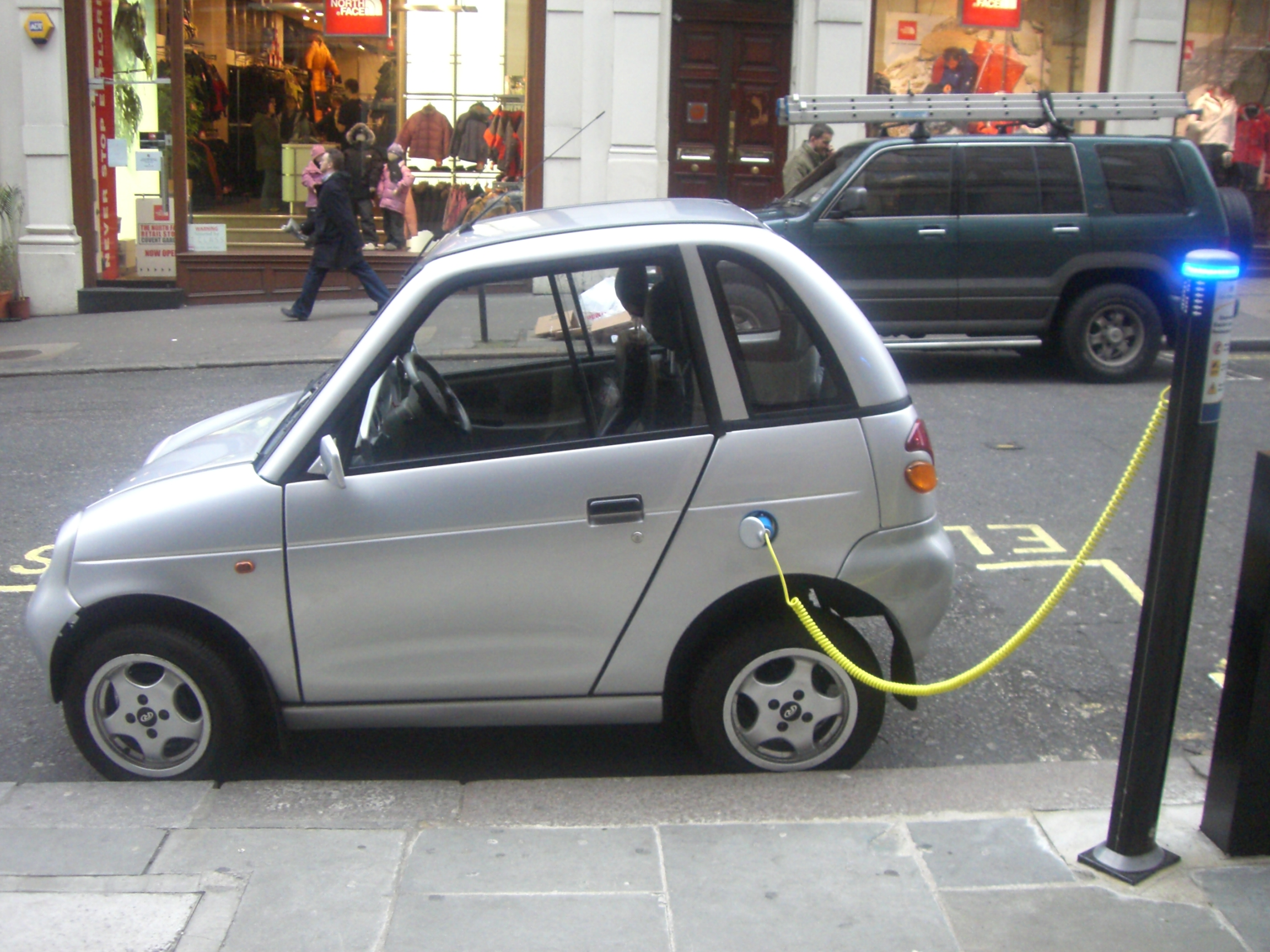
According to Cl There are pilot cities that are participating in the deployment. It just so happens that there is a recent (May 2012) publication called the EV City Casebook, A Look at the Global Electric Car Movement. It highlights cities like Amsterdam, Berlin and Hamburg, Portland, Oregon, New York City, LA, Shanghai, and areas like the Research Triangle in North Carolina, Goto Islands, Japan, and North East England as being on the leading edge. That’s the good news. However, looking closer at the Casebook it shows that to date there is little progress toward the goal. The US is looking to put 1 million electric cars on the road by 2015. In a report in Forbes in June, the number 3.5 million by 2015 is being floated. 3.5 million is a long way from 20 million. However, the EV City Casebook does a great job looking into the individual cities and their relationship to sustainability. For instance, take Amsterdam. There is an expectation that by 2040, “nearly all kilometersdriven will be powered with electricity generated by windmills, solar panels and biomass plants. The canals will be filled with silent electric boats. Cargo will be transported over the road and water using electric power. The city will even smell better and sound quieter thanks to electric transport. Fossil fuels will be unnecessary when travelling in the city. Harmful emissions will be dramatically reduced, as will the costs of electric transport. All of this will make Amsterdam an attractive city in which to live, work and play —all thanks to developments that are being put in motion today.” Amsterdam, with a population of 780,000+ expects to have 10,000 EVs on the road by 2015. One thing that particularly caught my eye in the section on the city of Hamburg, Germany, was a highlighting of the lessons learned;
The electric car, or should I say an electric car, has been designed, developed, and implemented, but the project does not end there. There has to be a wider spread acceptance. Countries are looking into various incentives to encourage the purchase and usage of EVs. Perhaps one day we will be able to have better smelling and quieter cities. And remember, we think that part of the project should be to consider the effects and methods of generating the power so that there is something coming down the line when the EVs are plugged in to charge. We also think that the project include the ultimate method of disposal of all of the EV after its useful life (batteries included in this case). |
 I recently saw an advertisement from our local electric utility. It showed electrical plugs being plugged into power strips, outlets, etc. The message was that electric usage will be here for a long time. The message certainly wasn’t about energy conservation as it was about the fact that we will continue using a lot of it. What caught my eye, though, was in the last scene, the worker, with hard hat and all, is shown plugging in a Chevy Volt with the utilities name emboldened on the door. It got me thinking about electric cars and the polarized factions for and against. So I wondered, what is really happening with electric cars worldwide.
 ean Energy Ministerial

