Project Management

A citrus fruit schools us on material science and project leadership (Part 1 of 2)

From the People, Planet, Profits & Projects Blog
by ,

About this Blog

RSS

View Posts By:

Richard Maltzman
Dave Shirley

Recent Posts

A citrus fruit schools us on material science and project leadership (Part 1 of 2)

Black Tape Over the Engine Light

Saving the Sahel (Part 1)

You Can't Get They-ah From Hee-yah

Floating an idea into reality: the other side of the AI Project Paradox

Categories

6th, 6th Edfition, 6th Edition PMBOK, 7th Edition, 7th Edition PMBOK, 8th Edition PMBOK, 8th Edition PMBOK Guide, Activism, actuarial, actuary, adapt, addition by subtraction, Africa, africa, agriculture, airforce, ajaita, Alaska, amazon, analogous, analytics, ancient, and more power, antarctica, anti-science, apple, apps, architecture, arctic, arrakis, Artificial Intelligence, asch paradigm, Assistant, asthma, astronomy, automobile, automotive, autonomous cars, b, bankhar, Banksy Crypto, basalt, baseball, bats, batter, beauty products, benefit, benefits, Benefits Realization, beyond epica, biases, bicycle, big data, big dfata, big dig, bike, biodiversity, biomedicine, birdhouse, blockchain, blood, blue blood, blue trees, bluefin, bluefin tuna, book review, boston, boston university, Boyce, Brazil, brazil, Breakdown Structures, BS, building, buildings, built environment, built environment, bumblebee, cake, capacitor, car, Carbon, carbon, carbon capture, carbon negative, carbon neutral, carbon pool, carbon sequestration, carbonate, careers, CEO, ChatGPT, chatGPT, chatgpt, chatgpt, chess, China, china, chopsticks, citrus, cli-fi, climate, climate change, climate resilience, climeworks, Clumsy, CO2, co2, CO2 Utilization, coalition, cobalt, coffee pods, cognition, cognitive, Collabortion, colombia, concrete, Conflict, construction 5.0, cool projects xyloscope, cooling, coral, corn, cost of good quality, cost of poor quality, cost of quality, crazy, criticism of project management, cryptocurrency, CSR, csr, data, data analytics, data privacy, datacenter, dataset, death spiral, Decision Making, decomposition, Defense and Climate, definition of a project, deforestation, dependencies, dependency, desert, DIKW, dikw, dimopoulos, disposal, dna, DOD, dogs, dolphins, dream, drilling, drink, dune, dune, dutch, early start, earth, eatlocal, eco-tourism, ecological, economic, economics, EKC, electric grid, electricity, electronics, elysis, embodied carbon, emerging technologies, empower, Energy, energy efficiency, environmental degradation, escalate, escalation, ESG, extreme weather, fallacy, FARC, farming, finance, fish, fish brains, fishing, fix, fixing the earth, flint water, Flint Water Supply, flood, flooding, Food supply chain, food waste, forest, forest for the trees, forestation, forrestgump, frank herbert, Fruitcake, fungus, fusion, Galvao, garage, gas, gasoline, geese, gender equality, gender partnerships, generational differences, Generative AI, gladwell, gold, Goodness, google, Government, GPT, great pacific garbage patch, green, green building, green buildings, green energy, green iguana, green project, green project management, greening, guest post, gyre, harkonnen, Harvesting Benefits, hawasina, hedgehogs, heursitics, historical data, hlb, holitsic, holland, horseshoe crab, human-caused climate change, hydrogen, hydrology, ice, iceland, ignition, iguana, imagery, impact, india, inequality, information, initiatives, injection, insurance, intelligence, interacting risk, internal combustion engine, invasive species, investment, isomer, issue escalation, issues, ITER, jobs, Jupiter, justification, kids, kill point, knowledge, koch brothers, Kuznets, laboratory, LAL, landscape mode, lapampa, launch, LCA, Leadership, Leadership, life cycle analyses, life cycle analysis, lifecycle, Linkedin, liquid, lizard, local, long term, long-term, long-term thinking, look up, loud, maintenance, maker, makermovement, malcolm gladwell, management, marathon, marine biology, market, mars, Martin Luther King, mean, megawatt, MeHg, melting, mercury, metal, Microgrid, microplastics, migration, military, millennial, mindset, minerals, mission, mitigate, MLK, mongolia, museum, museum of london, nature, nematodes, net gain, Net Project Success Score, net zero, netherlands, network, New book, New Jersey, New Practitioners, new york, NFT, nitrogen, noise, noreaster, norway, nova, NPSS, NREL, ocean, ocean cleanup, ocean life, oil rig, oil rigs, oklahoma, oman, only murders in the building, opportunity, overall risk, oxygen, packaging, pareto, PBS, permafrost, persistence, peru, Pharmaceutical, planet, planet.com, planning, plant, plasma, plastic, playground, pm, pm education, pmbok, pmbok guide, pmnetwork, PMXPO-2018, podcast, pollutants, pollution, poop, poor, portfolio, power, power skills, privacy, privacy concerns, professors, program, Program Management, project, project leader, project leadership, project management, project management 3.0, project on fire, project progress, Project Success, project success, projecticity, projectleadership, projectmanagement, projects, psychology, pulse of the profession, purple bacteria, purpose, quiet, rainforest, rationale, reef, refugees, renewable, renewables, Repair, repair, repeatable process, repeatable processes, repurpose, research, resource breakdown strucuture, Resource Management, reversing climate change, revisionist history, rich, rigs2reefs, ripe, risk, risk avoidance, Risk Management, risk mitigation, risk response, risk responses, river, robots, rocks, rules of thumb, rural, rural India, russia, Sarcasm/Irony, satellite, saudi, schedule, sci-fi, Science, science, science-fiction, scientific american, screaming monkeys, sea, sea life, Sea-Level Rise, sea-level rise, seagreens, seawall, seawater, seawater temperature, seaweed. beat;es. farming, secondary risk, selena gomez, sequestration, shipping, skyscraper, SLR, smart cities, smart city, smelting, social, social pressure, soil, solar, solar panels, solar perovkites, solar saheli, sonic, sponge cities, SRI, stage-gate, stagegate, stakeholder, stakeholder management, steward, stewardship, storage, strategy, stupid, success, suffer, sulphur, sunk cost, supercapacitor, supply chain, survey, Sustainability, sustainability, Sustainable Investing, Sustainable Tourism, sybiosis, symbiosis, system 03, TBL, temperature, terraform, terraforming, test, threat, threats, totem, touchscreen, tour, tower, Trains, transparency, transportation, trash, tree, tree species, trees, trillion, triple bottom line, triple constraint, truth to power, UMass, us army corps of engineers, USDA, vacuum, value, venus, vision, voice, voltage optimization, vw scandal, washing machine, waste, wastewater, water, we mean business, whales, Whirlpool, wind, wisdom, women, Women in Project Management, wood wide web, woonerf, Work Breakdown Structures (WBS), world breakdown structure, worms, xian, xylotron, Yale

Date

linkedin twitter facebook Request to reuse this  


A recent video ‘short’ from Boston University, which features dropping a citrus fruit – a pomelo – from the roof of a university building – caught my attention. This video focuses on the possible connection between the pomelo and better phone cases, but keep in mind that the implications are much bigger (literally and figuratively) than phone cases.

Click on the picture or the link for the short video.
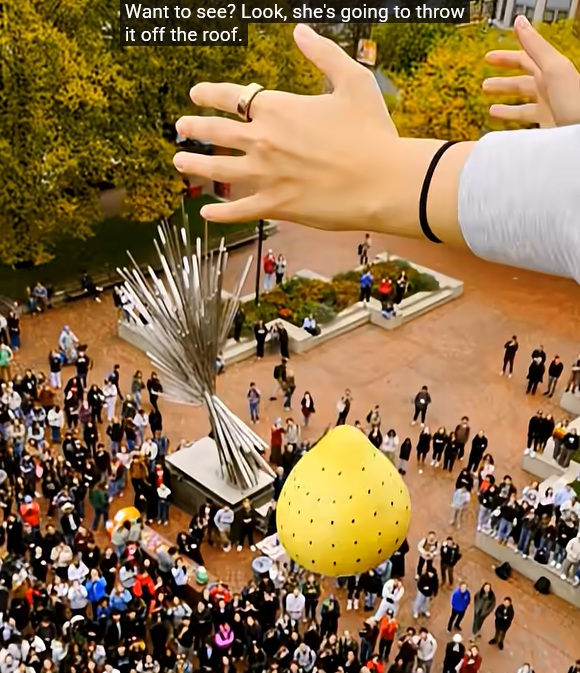

Click here for video.


Since it caught my interests as a good example of applying biomimicry in design, I followed some of the research, and I am glad I did – on top of the biomimicry here, it has some good lessons on project leadership.
The way I am approaching this blog post is to break it into to two parts. The first focuses on the science. Since this is about biomimicry, and since I fell into the rabbit-hole while trying to understand this myself, I thought I would share the ‘bio’ part first, and then go into the ‘mimicry’ and leadership piece with that well in hand.
I know…this is going to seem a bit science-geeky, but I promise that this will connect to the intersection of project leadership and sustainability, and if you don’t want the science piece, you can wait for part 2 which should be available in a week or two.

So let’s cut to the chase – literally, by looking at a cross-section of a pomelo:
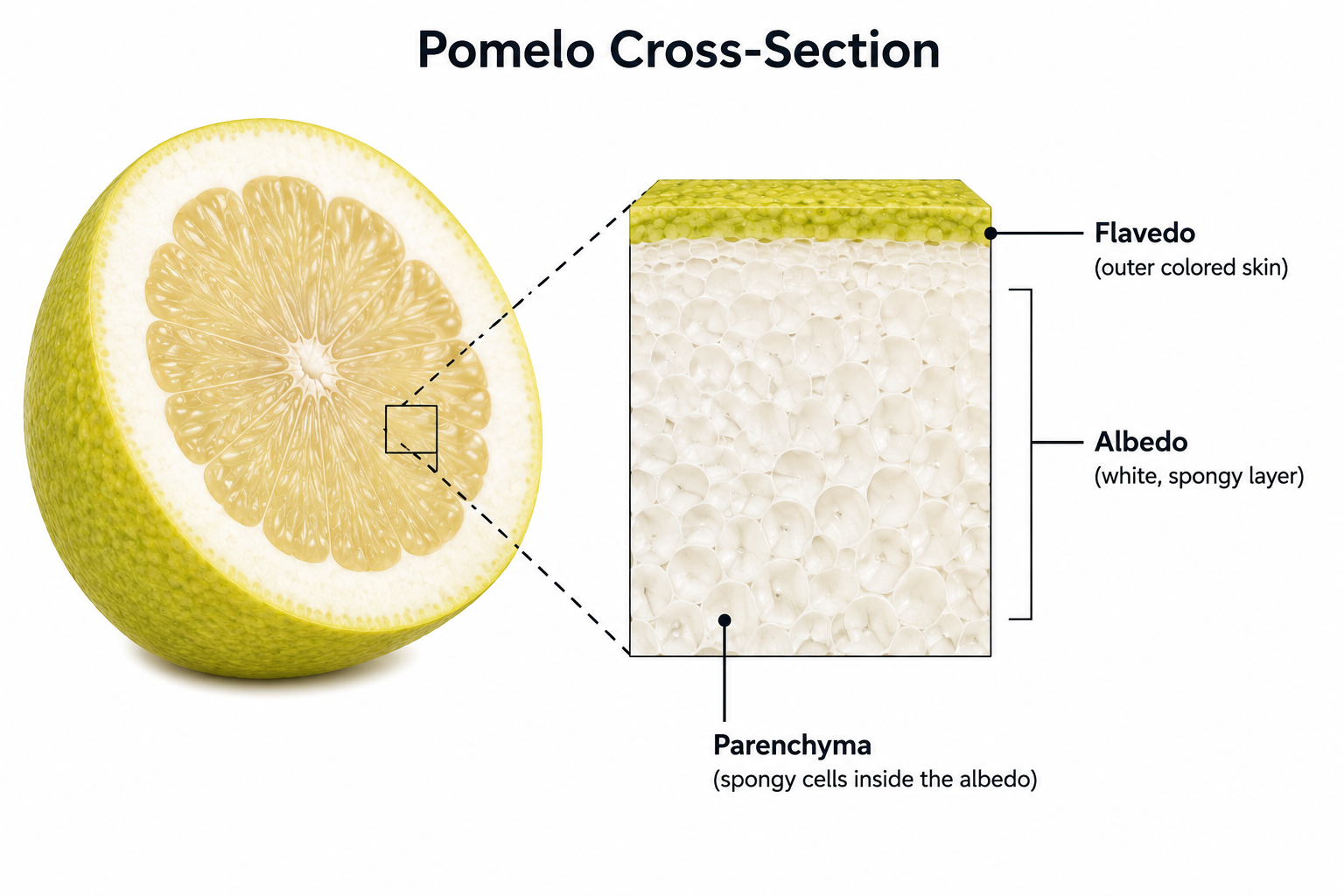

The albedo – the piece involved in the biomimicry - is effectively a natural, porous foam. Its parenchyma cells have intercellular air spaces that help dissipate energy when a fruit falls, protecting the internal pulp and seeds. The parenchyma refers to the soft, living plant tissues that make up this layer
Researchers at Boston University and Texas A&M University and beyond have studied this for several years.
Their work focused on the pomelo peel's unique gradient porosity—small pores near the outside, larger pores in the middle, and finer pores again near the fruit. They developed finite-element models and Voronoi-based foam structures that replicated this architecture. Their simulations showed improved energy dissipation and impact resistance compared with conventional uniform foams.
Wait a second, you say. What’s this about Voronoi-based foam structures? What’s that about? I couldn’t help myself, I had to follow that rabbit-hole as well.

Voronoi structures are patterns that naturally divide space into many adjoining regions, each centered around a particular point. They were first described mathematically by the Russian mathematician Georgy Voronoi, but similar structures are found throughout nature.It’s not an actual Voronoi structure but a giraffe’s coat pattern gives you the basic idea.  Whether in biological tissues, mineral formations, animal markings, or cellular materials, Voronoi-like patterns often emerge when space is filled efficiently and neighboring regions grow until they meet.

The function of a Voronoi structure is to organize space into distinct territories with minimal gaps and overlaps. In biological systems, these structures can help explain how cells pack together, occupy available space efficiently, or distribute forces. That last part – about distributing forces – is key here.Shock absorption is precisely about that!
To bring this back to the pomelo, I used a simple example of five PMI Exam test centers first, and then expanded that to 2,000 sites so you can see the similarity to the pomelo’s albedo.
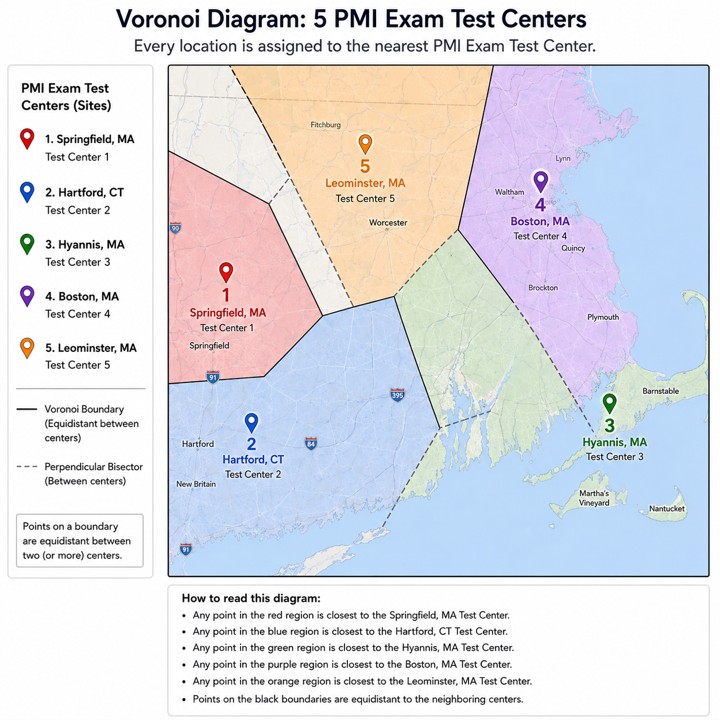


Now let's expand that by a couple of orders of magnitude...
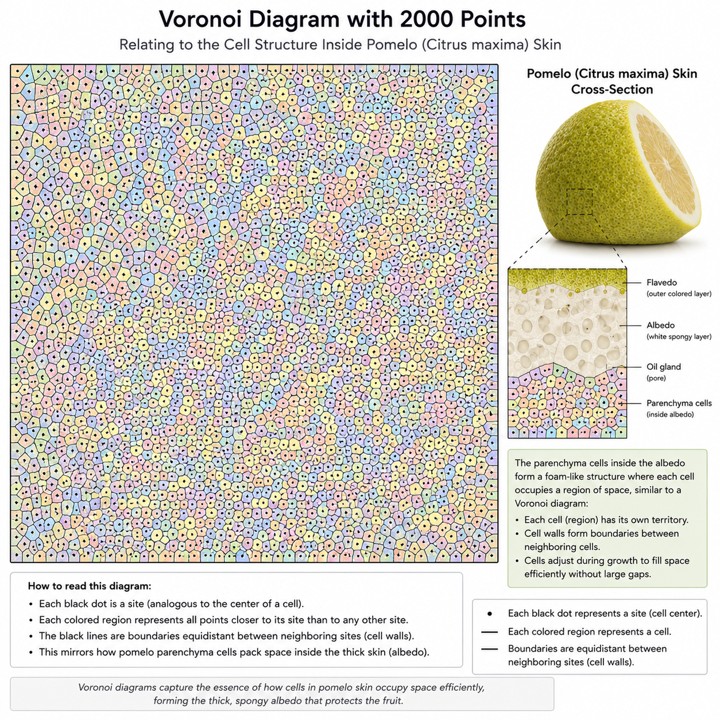


OK, so now that you know what a Voronoi structure is… let’s continue with how this very real fruit exhibiting Voronoi structures is telling us.
Researchers have noted potential applications including:
  • Vehicle crash protection
  • Packaging (like the phone case in the video short)
  • Protective equipment
  • High-speed impact mitigation systems


Boston University: Navy-Funded Follow-On Research
The research is funded in part by the US Navy, which, of course, is interested in materials that mitigate impact, shock, and blast loading.
Potential applications include:

  • Naval vessel hull protection
  • Shock-resistant structures
  • Blast mitigation systems
  • Electronics protection
  • Civilian packaging and consumer products
The Navy-funded project team combines:
  • Biology
  • Materials science
  • Computational mechanics
to reproduce the pomelo's energy-absorption mechanisms at engineering scales. Can you see a project leadership connection? Multiple functional groups, needing to work together towards a common goal. 
So what is biomimicry? In project management terms, it's leveraging nature's ultimate continuous-improvement program—a process refined through millions of years of iterative experimentation, adaptation, and learning (we could call that evolution). Nature has been running Agile sprints long before humans coined the term, testing countless prototypes, discarding what doesn't work, and scaling what does.

I will pick up on the project leadership and sustainability piece of this in Part 2.
Posted by Richard Maltzman on: June 17, 2026 02:40 PM | Permalink

Comments (0)

Please login or join to subscribe to this item


Please Login/Register to leave a comment.

ADVERTISEMENTS

"The higher up you go, the more mistakes you are allowed. Right at the top, if you make enough of them, it's considered to be your style."

- Fred Astaire

ADVERTISEMENT

Sponsors


