Project Management

Black Tape Over the Engine Light

From the People, Planet, Profits & Projects Blog
by ,

About this Blog

RSS

View Posts By:

Richard Maltzman
Dave Shirley

Recent Posts

Black Tape Over the Engine Light

Saving the Sahel (Part 1)

You Can't Get They-ah From Hee-yah

Floating an idea into reality: the other side of the AI Project Paradox

The Environment of the Built Environment: an AI Paradox

Categories

6th, 6th Edfition, 6th Edition PMBOK, 7th Edition, 7th Edition PMBOK, 8th Edition PMBOK, 8th Edition PMBOK Guide, Activism, actuarial, actuary, adapt, addition by subtraction, Africa, africa, agriculture, airforce, ajaita, Alaska, amazon, analogous, analytics, ancient, and more power, antarctica, anti-science, apple, apps, architecture, arctic, arrakis, Artificial Intelligence, asch paradigm, Assistant, asthma, astronomy, automobile, automotive, autonomous cars, b, bankhar, Banksy Crypto, basalt, baseball, bats, batter, beauty products, benefit, benefits, Benefits Realization, beyond epica, biases, bicycle, big data, big dfata, big dig, bike, biodiversity, biomedicine, birdhouse, blockchain, blood, blue blood, blue trees, bluefin, bluefin tuna, book review, boston, boston university, Boyce, Brazil, brazil, Breakdown Structures, BS, building, buildings, built environment, built environment, bumblebee, cake, capacitor, car, Carbon, carbon, carbon capture, carbon negative, carbon neutral, carbon pool, carbon sequestration, carbonate, careers, CEO, ChatGPT, chatGPT, chatgpt, chatgpt, chess, China, china, chopsticks, citrus, cli-fi, climate, climate change, climate resilience, climeworks, Clumsy, CO2, co2, CO2 Utilization, coalition, cobalt, coffee pods, cognition, cognitive, Collabortion, colombia, concrete, Conflict, construction 5.0, cool projects xyloscope, cooling, coral, corn, cost of good quality, cost of poor quality, cost of quality, crazy, criticism of project management, cryptocurrency, CSR, csr, data, data analytics, data privacy, datacenter, dataset, death spiral, Decision Making, decomposition, Defense and Climate, definition of a project, deforestation, dependencies, dependency, desert, DIKW, dikw, dimopoulos, disposal, dna, DOD, dogs, dolphins, dream, drilling, drink, dune, dune, dutch, early start, earth, eatlocal, eco-tourism, ecological, economic, economics, EKC, electric grid, electricity, electronics, elysis, embodied carbon, emerging technologies, empower, Energy, energy efficiency, environmental degradation, escalate, escalation, ESG, extreme weather, fallacy, FARC, farming, finance, fish, fish brains, fishing, fix, fixing the earth, flint water, Flint Water Supply, flood, flooding, Food supply chain, food waste, forest, forest for the trees, forestation, forrestgump, frank herbert, Fruitcake, fungus, fusion, Galvao, garage, gas, gasoline, geese, gender equality, gender partnerships, generational differences, Generative AI, gladwell, gold, Goodness, google, Government, GPT, great pacific garbage patch, green, green building, green buildings, green energy, green iguana, green project, green project management, greening, guest post, gyre, harkonnen, Harvesting Benefits, hawasina, hedgehogs, heursitics, historical data, hlb, holitsic, holland, horseshoe crab, human-caused climate change, hydrogen, hydrology, ice, iceland, ignition, iguana, imagery, impact, india, inequality, information, initiatives, injection, insurance, intelligence, interacting risk, internal combustion engine, invasive species, investment, isomer, issue escalation, issues, ITER, jobs, Jupiter, justification, kids, kill point, knowledge, koch brothers, Kuznets, laboratory, LAL, landscape mode, lapampa, launch, LCA, Leadership, Leadership, life cycle analyses, life cycle analysis, lifecycle, Linkedin, liquid, lizard, local, long term, long-term, long-term thinking, look up, loud, maintenance, maker, makermovement, malcolm gladwell, management, marathon, marine biology, market, mars, Martin Luther King, mean, megawatt, MeHg, melting, mercury, metal, Microgrid, microplastics, migration, military, millennial, mindset, minerals, mission, mitigate, MLK, mongolia, museum, museum of london, nature, nematodes, net gain, Net Project Success Score, net zero, netherlands, network, New book, New Jersey, New Practitioners, new york, NFT, nitrogen, noise, noreaster, norway, nova, NPSS, NREL, ocean, ocean cleanup, ocean life, oil rig, oil rigs, oklahoma, oman, only murders in the building, opportunity, overall risk, oxygen, packaging, pareto, PBS, permafrost, persistence, peru, Pharmaceutical, planet, planet.com, planning, plant, plasma, plastic, playground, pm, pm education, pmbok, pmbok guide, pmnetwork, PMXPO-2018, podcast, pollutants, pollution, poop, poor, portfolio, power, power skills, privacy, privacy concerns, professors, program, Program Management, project, project leader, project leadership, project management, project management 3.0, project on fire, project progress, Project Success, project success, projecticity, projectleadership, projectmanagement, projects, psychology, pulse of the profession, purple bacteria, purpose, quiet, rainforest, rationale, reef, refugees, renewable, renewables, Repair, repair, repeatable process, repeatable processes, repurpose, research, resource breakdown strucuture, Resource Management, reversing climate change, revisionist history, rich, rigs2reefs, ripe, risk, risk avoidance, Risk Management, risk mitigation, risk response, risk responses, river, robots, rocks, rules of thumb, rural, rural India, russia, Sarcasm/Irony, satellite, saudi, schedule, sci-fi, Science, science, science-fiction, scientific american, screaming monkeys, sea, sea life, Sea-Level Rise, sea-level rise, seagreens, seawall, seawater, seawater temperature, seaweed. beat;es. farming, secondary risk, selena gomez, sequestration, shipping, skyscraper, SLR, smart cities, smart city, smelting, social, social pressure, soil, solar, solar panels, solar perovkites, solar saheli, sonic, sponge cities, SRI, stage-gate, stagegate, stakeholder, stakeholder management, steward, stewardship, storage, strategy, stupid, success, suffer, sulphur, sunk cost, supercapacitor, supply chain, survey, Sustainability, sustainability, Sustainable Investing, Sustainable Tourism, sybiosis, symbiosis, system 03, TBL, temperature, terraform, terraforming, test, threat, threats, totem, touchscreen, tour, tower, Trains, transparency, transportation, trash, tree, tree species, trees, trillion, triple bottom line, triple constraint, truth to power, UMass, us army corps of engineers, USDA, vacuum, value, venus, vision, voice, voltage optimization, vw scandal, washing machine, waste, wastewater, water, we mean business, whales, Whirlpool, wind, wisdom, women, Women in Project Management, wood wide web, woonerf, Work Breakdown Structures (WBS), world breakdown structure, worms, xian, xylotron, Yale

Date

linkedin twitter facebook Request to reuse this  


I’m going to combine three things in this post, and it is going to end up getting a bit political, but I think for a good project leadership lesson.

The three things:

  1. A story about a mysterious “cold blob” in the North Atlantic Ocean
  2. Some deadly cuts to an ocean monitoring program in the US
  3. A beloved Boston-based car repair radio show called Car Talk.

A story broke this week on CNN that stopped me in my tracks. Here’s the teaser for the story.
In the North Atlantic Ocean, south of Greenland and Iceland, a large patch of water is doing something very strange. While the rest of the ocean heats up, it’s been getting colder. A new study says it has the answer to this mystery — and it’s an ominous sign the world is hurtling toward one of the most alarming climate tipping points.
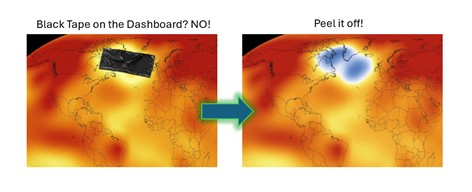
There is an image of the 'cold blog' below - with and without the black tape.

Turns out that scientists have been puzzling for years over a mysterious "cold blob" in the North Atlantic — a patch of ocean south of Greenland that has been cooling while the rest of the world's oceans warm. A new study, just published in Geophysical Research Letters, has now confirmed what many suspected: it's a fingerprint of a weakening AMOC — the Atlantic Meridional Overturning Circulation — the vast ocean conveyor belt that moves warm water from the tropics northward and keeps the Northern Hemisphere's climate in balance.

Why should project managers care? Because an AMOC shutdown would mean accelerated sea level rise on the U.S. East Coast, a deep freeze across Europe, and prolonged droughts from disrupted monsoons in Africa. Planetary-scale consequences. And, it’s another indicator of why this is called ‘climate change’ and not ‘global warming’. Here’s the real point: we only know this threat exists because of decades of painstaking ocean temperature monitoring.

Now here's the part that should make every project leader wince.

We are actively dismantling the systems that told us this and can tell us about such threats in the future. And I think you can begin to see the connection to black tape over the engine light. More on that later.

The Trump administration had already cut nearly $100 million from NOAA's research arm — described internally by the administration as a "down payment" on plans to eliminate the office entirely. On May 21 of this year, the National Science Foundation (NSF) has announced the decommissioning of the Ocean Observatories Initiative, a network of 900 deep-sea instruments tracking ocean temperature, salinity, and chemistry across the Atlantic and Pacific. One researcher called it "the end of a federal commitment to basic scientific research that has served this nation well for 70 years."

Now let's put on our Project Leadership hats.
In project (or program, or portfolio) risk management, we distinguish between (1) informed risk acceptance — where a team deliberately decides a threat's probability or impact (or the combination) is tolerable — and (2) what I'd call risk acceptance by ignorance. The first (1) – informed acceptance of risk - is a legitimate strategy, and a good one, because it lets us focus on the threats that have a high combination of probability and impact. The second (2) is just blindness - due to being overly focused on the budget of the moment – or even thinking of that particular threat as a hoax. In any case, it certainly doesn't make the threat - in this case, a big one - go away.

The cold blob is a textbook early warning signal. It's exactly the kind of trigger you build into a risk register — a leading indicator that something larger and more serious may be developing. The AMOC story only exists because instruments were in the water, collecting data, year after year, long before anyone knew what they were looking for.

Remove those instruments, and the next warning signal goes undetected. You don't retire the risk. You just lose your only chance at a timely response.

If we think of the Earth — its climate, oceans, ecosystems, and inhabitants — as a long-running program (the ultimate long-running program!), then NOAA's monitoring network is its status reporting system. Its dashboard. And no project leader, facing budget pressure, or scared of a threat, or thinking the threat may be a hoax, starts by unplugging the dashboard or covering up the nasty bits by turning off sensors or covering them with black tape. You might reduce scope. You might defer features. But you protect and keep scanning the sensors of your project or program - because without them, you're not managing the project anymore. You're just hoping.

People, Planet, and Profit all suffer here. People lose warning systems for hurricanes and floods. The Planet loses its ability to detect accelerating changes before they become irreversible. And Profits — fisheries, insurance, coastal real estate, agriculture — all depend on the data these systems provide.

The cold blob is a gift, in a way. It's nature handing us an early warning signal, right on schedule, exactly as our monitoring systems were designed to catch it. It’s a “Check Engine” light. And that brings us to Boston (Cambridge, actually) and a beloved show called Car Talk (which unfortunately has gone silent after many years). Learn about the history of The Car Talk Guys here. It’s worth a side trip.
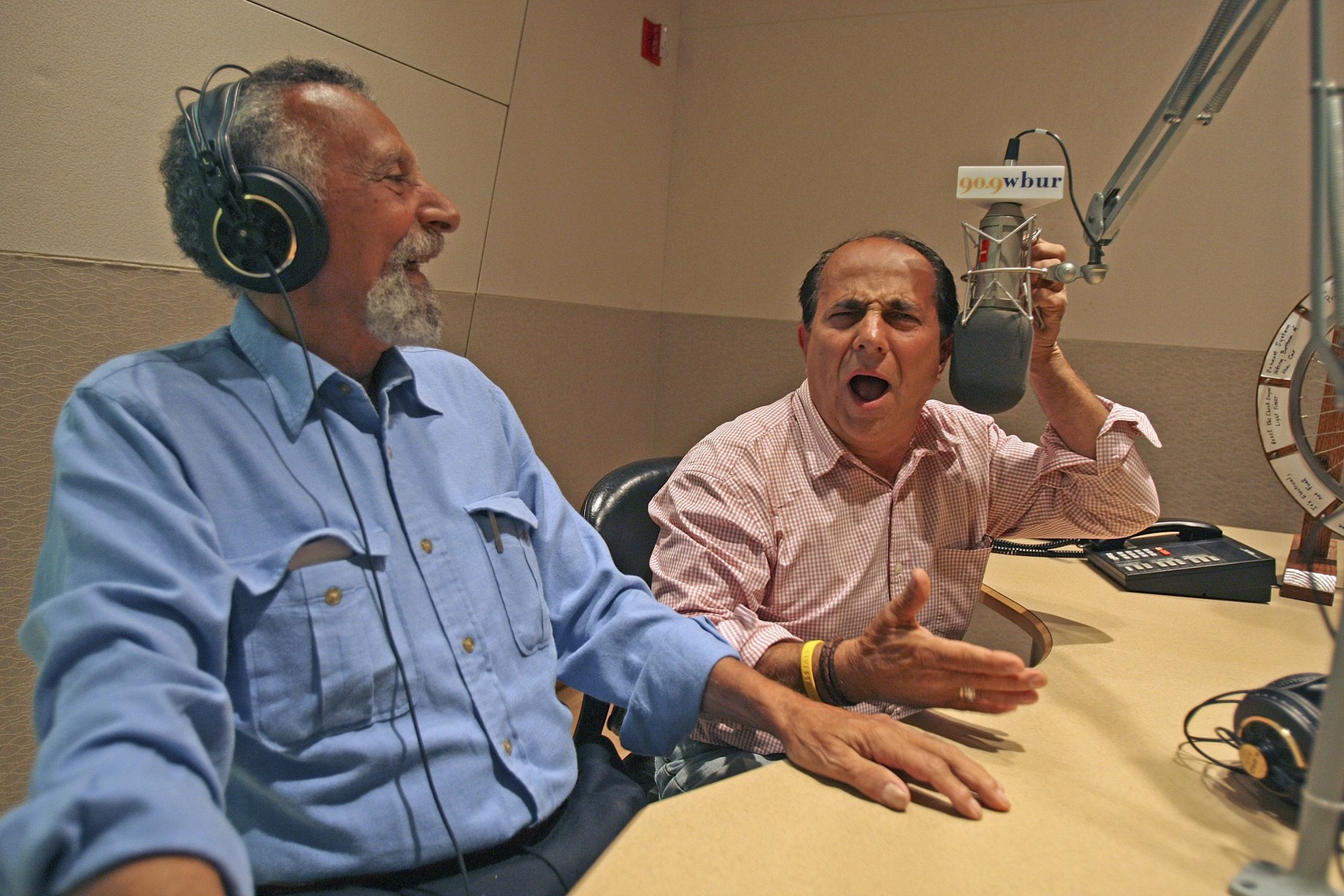


Fans of this late, great NPR show Car Talk will remember that Click and Clack (wacky but brilliant brothers Tom and Ray Magliozzi, MIT graduates and car repair shop owners, pictured above) had a running joke about the "check engine" light. Callers would describe their dashboard warning lights and wonder what to do about it. The brothers' tongue-in-cheek solution? Black tape. Just cover it up. They even sold their own branded Car Talk Black Tape — the ultimate solution to any dashboard warning light, guaranteed to make the problem invisible.

It's funny because it's absurd. Everyone knows that putting tape over the check engine light doesn't fix the engine. The threat is still there. You've just made yourself blissfully unaware of it.

And yet…

Defunding NOAA's ocean monitoring network is black tape at planetary scale. The AMOC doesn't care about our budget process. It doesn’t care whether we think climate change is real. The cold blob doesn't disappear because we stopped measuring it. We've just taped over our check engine light. I hope we peel it off soon.

Posted by Richard Maltzman on: June 14, 2026 07:53 PM | Permalink

Comments (0)

Please login or join to subscribe to this item


Please Login/Register to leave a comment.

ADVERTISEMENTS

"I'm sick and tired of hearing things from uptight, short-sighted, narrow-minded hypocrites. All I want is the truth. Just gimme some truth."

- John Lennon

ADVERTISEMENT

Sponsors


