


Bioretention Projects - Part 1 of 2


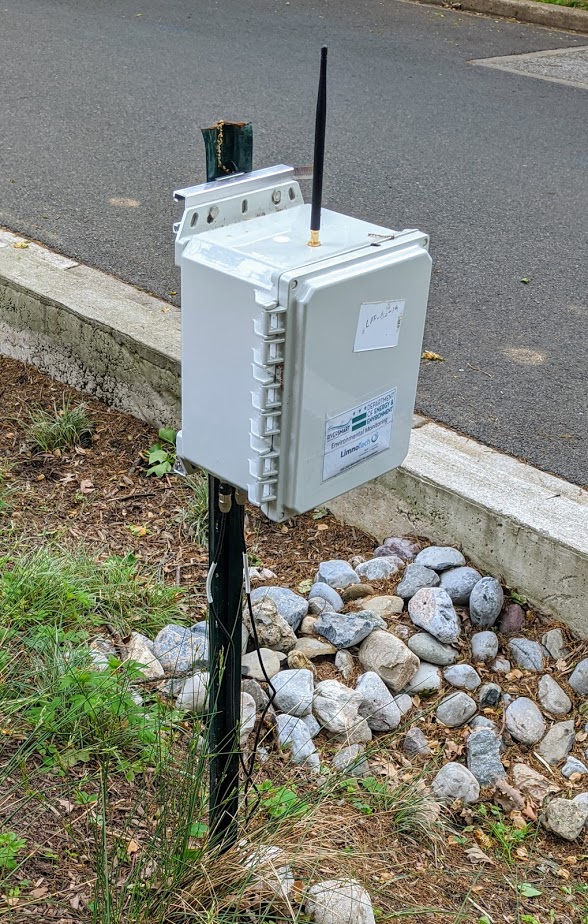
| A day or two ago, I was walking with my wife and grandson here in Northwest Washington DC, where I’m spending my COVID-19 time for now, and I came across this electronic gizmo on a post, with an antenna.
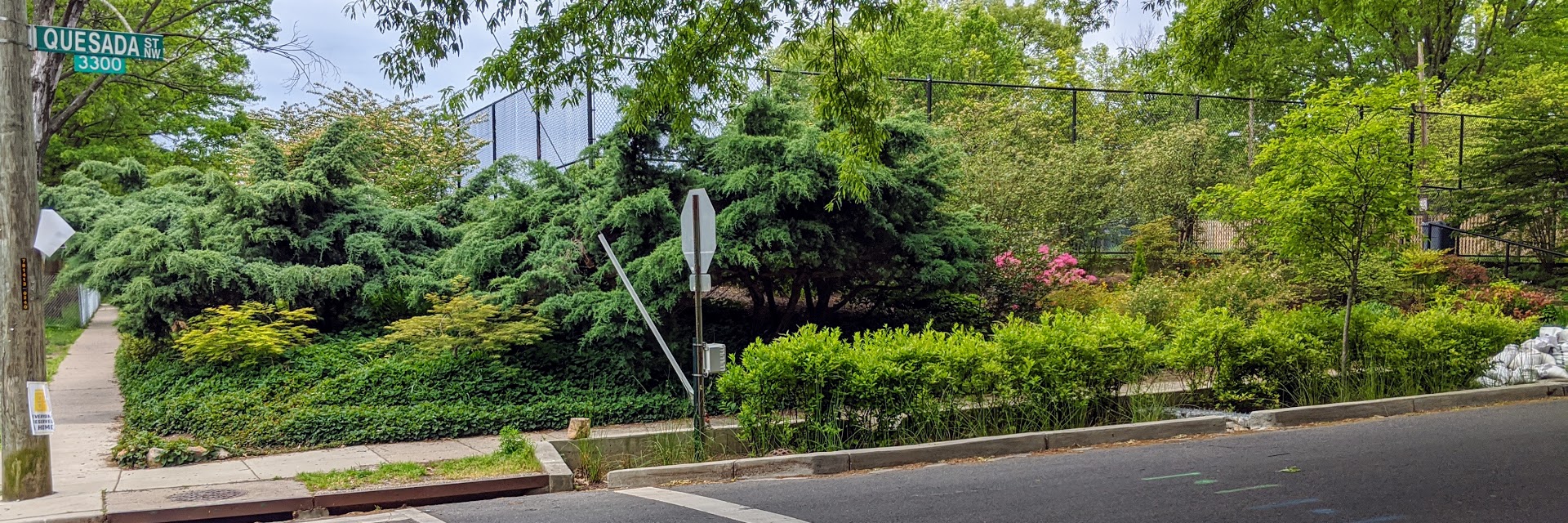
It is in an area that has some vegetation – almost a sort of sidewalk garden (see below). It has some sidewalk-style barriers and doesn’t look like much, but the little device with the antenna…what WAS that?
You can see where the device is mounted, on the post of the stop sign near the center of this photo. As a project manager and a tinkerer this got my retention, er... attention. Double-time. I needed to find out what this was, and what sort of project this belonged to. It HAD to be a project, right? It was unique, it seemed temporary, and on top of it all, it seemed to be connected to some sort of sustainability initiative (it had a “RiverSmart” sticker on it).
RiverSmart is a portfolio of programs “to reduce stormwater runoff that harms the District’s waterways and the Chesapeake Bay. RiverSmart programs provide financial incentives to help District property owners install green infrastructure such as rain barrels, green roofs, rain gardens, permeable pavers, shade trees, and more. These practices allow rainwater to stay on site and soak into the ground, where natural processes help remove pollutants.” It is part of the District of Columbia’s Department of Energy and Environment (DoEE). It turns out that what I saw was part of one of these programs - a bioretention project, which is why I had that "attention - retention" play on words above. What’s bioretention? Turns out it’s relatively new and quite interesting. The following description comes from a Massachusetts DEP (Depertment of Environmental Protection) Clean Water Toolkit site. Bioretention areas (also referred to as bioretention cells or rain gardens) use soil, plants and microbes to treat stormwater before it is infiltrated or discharged. Bioretention areas are shallow depressions filled with sandy soil, topped with a thick layer of mulch, and planted with dense vegetation.
To learn more about this, I started doing some research and found these great summary videos, the first from Alberta, Canada, and the second from Clemson University:
In Part 2, I’ll provide you with a more in-depth view of the RiverSmart project and the companies, products, and project stakeholders behind this particular bioretention cell. I actually had a chance to talk to the company partnering with DoEE to execute this project. I’m looking forward to finishing that piece in the next few days. |

The People Part of P,P,P&P
|
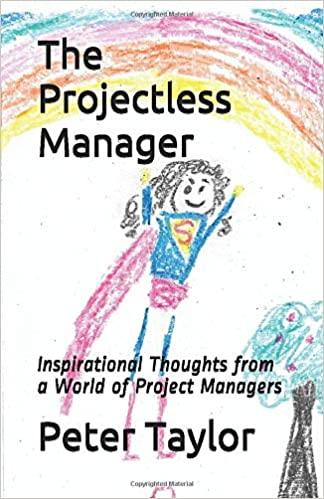
Normally the focus of this blog is on Sustainability. Sustainability can be thought of in terms of its components: lasting economic benefit, lasting social benefit, and lasting ecological benefit - or at least minimizing negative impacts to the so-called Triple Bottom Line of economic, social, and ecological measures. This short post focuses on the first P of P, P, P & P - People. Not just any people, though - project managers in particular, and project managers who are in an otherworldly COVID-19 world right now. Together. Many of them are "projectless" - their projects are on hold. Some are busier than ever. Either way, 56 of them got together under a 21-day challenge issued by Peter Taylor, the unlazy Lazy Project Manager, to write a book providing insight and hopefully inspiration during this otherworldly time. And, speaking of 'world', the authors hail from 20 different countries. It's already published and available on Amazon. For a worldwide perspective of the human side of project management as viewed by a spectrum of different project managers, check it out. Disclaimer: I get no benefit from the sale of this book - I just think it's worth reading! |
Urban Sustainability Excellence in Action
| Note: I am honored to present a guest blog post by MBA student Nicole Pamani. Nicole's post was graciously sent to me by Kristina Kohl, Faculty at Bard MBA in Sustainability, author of "Becoming a Sustainable Organization" and a speaker at Boston University's upcoming Project Management in Practice (PMiP) conference. Here's Nicole:
...and here is her guest post...
Sustainable Jersey City Hosts Certificate Program In Urban Sustainability Sustainable Jersey City (SJC), a nonprofit organization, was started in 2011 by Debra Italiano and a small group of project managers local to Jersey City. Originally launched as a modest education organization, SJC has grown over time into a robust virtual community green team hub for volunteers and businesses to come together and build a more sustainable and resilient place to live and work for the City of Jersey City. “People understood that although sustainability could be very abstract, it could also be a very personal experience used to design your life and workplace,” said Italiano. “However, when we started, folks didn’t understand the systems perspective - that all these various systems – buildings, transportation, waste, green infrastructure, social networks, governance, economics - are all inter-connected and decisions have cascading consequences. One of our primary goals is to teach systems thinking and how it relates to sustainability and resiliency planning, and ultimately to the quality of our lives.” The organization focuses on engaging individuals, neighborhood associations, and other organizations in direct outreach programs as well as facilitating volunteer-based community projects on topics such as plastic & materials recycling, composting, community solar, energy efficiency, green infrastructure, and urban forestry. Once a project team has been formed, SJC guides the team to document the steps taken so that the project can be replicated across Jersey City. In doing so, SJC effectively converts volunteers into local sustainability champions and proactive environmental stewards.
Most recently, the organization kicked off its seventh annual flagship program, SJC's Certificate Program In Urban Sustainability. The objectives of the program are to give local activists an opportunity to take a deep dive into the program’s climate action topics – Emissions, Green Infrastructure, and Waste Streams. The program extends for 10 consecutive Monday evenings each spring and is taught by a team of volunteer industry, academic, and NGO experts. Participants gain insights into key drivers that have been impacting their communities and workplaces. Additionally, participants are trained in strategic project management skills and the use of simple tools that can be applied to the programs and projects that they are planning in real time. The goal of the immersion course is to provide a working knowledge of sustainability, resiliency, and adaptive management. Most importantly, the program generates actionable project plan ideas and individuals who are more effective leaders that can drive change in their respective communities. “People initially signed up to take the Certificate Program to pursue their own agendas, as either a local organizer, a local community group board member, a neighborhood resident who is interacting with a city official, or a business executive that wants to get employees involved in community activities,” said Italiano. “This program transforms their understanding of what’s happening on the ground by offering alternative systems insights into issues related to the projects that are described to us. It’s not unusual for folks to actually have a paradigm shift while taking the course as regards their views. For example, people with a high-level understanding of a sustainability concept were missing stakeholder perspectives, or in reverse, folks with a deep understanding of what was happening in their immediate ‘backyard’ were missing the big picture, so people come out of our course with a more wholistic understanding of how to approach matters.” The course brings together the expertise of 9 Instructors and runs for 10 weeks. It is further broken down into 5 Tracks – 2 Sessions each:
The 2020 Certificate Program happened to launch at the time of year when the City of Jersey City was about to finalize its Climate Action Plan (CAP), which has been put on a temporary hold in light of COVID-19. The CAP’s intent targets 80% emissions reduction by 2050 across Building Energy, Transportation, and Waste sectors reflected in the City’s GHG 2016 Benchmark Inventory Report. As part of the CAP development process, recommendations for priority actions were presented to a Steering Committee (and the public via a survey) by four working groups representing those sectors, plus an Equity working group to moderate consideration of the impact of action recommendations on the low and moderate income (LMI) sector. SJC had seven of its Core Team Members participating in this process and there were a total of 56 Action Items recommended by the working groups for the City of Jersey City to incorporate into the CAP. Although Jersey City’s government has its own Sustainability Office, SJC’s role as an educational outreach, advocacy, and innovative demonstration projects organization has remained autonomous. Currently, SJC is seeking to roll up its series of demonstration projects and program activities into campaigns that support the Jersey City CAP, consistent with the work the organization has been doing for years. The organization feels that the time has come to scale up its grassroots efforts and for community networks to engage more widely in local-meets-regional sustainability actions. “Climate change is upon us and as I shared at last week’s jointly sponsored Solve Climate By 2030, with the Center for Sustainability at Ramapo College of NJ, Sustainable JC and the Bard Center For Environmental Policy, accelerating municipal action plans can lead the way to regional change and unlock state level inertia, creating mandates for change sooner than later,” said Italiano. SJC’s ongoing work and their Certificate Program touch on six major Sustainable Development Goals, as defined by the United Nations:
By bringing together individuals, local business owners, and community leaders, SJC is using its platform and this certificate program to increase education on sustainability issues, train the next generation of sustainability leaders, and build more resilient communities. |


Footprints of Innovation
|
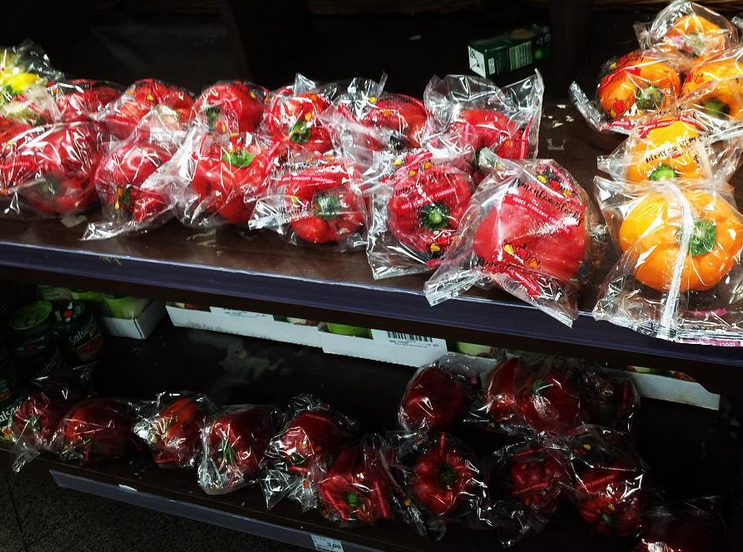
First and foremost, People, Planet, Profits, and Projects wishes you and your family the utmost in terms of staying healthy and well. We will recover from the COVID-19 crisis, and perhaps we will be more focused on things that can be considered threats to the entire planet when we do. I plan to blog on that topic but as comedians often say…. Too soon. So I will continue featuring projects which embed sustainability thinking, projects aimed at sustainability as an outcome, and organizations which establish themselves around sustainability and the ‘triple bottom line’. Case in point is Footprint – recently featured by FastCompany Magazine as one of the Most Innovative Companies, for leading business toward plastic alternatives. I think that their start-up story is amazing. Paraphrasing from the FastCompany article: Footprint was started by Troy Swope in 2013 with Yoke Chung, a close friend and now the company’s chief technology officer. Their mission: tackle food packaging’s environmental and human-health problems. They started by doing what some of do whenever we’re in a supermarket (actually now I long for those days)… looking through the aisles for over-use of plastic— toothbrush boxes, packaged wine, fruit (see photo below). Then, these two would simply cold-call the manufacturer in hopes of business.
What’s their business? Let’s let them tell you themselves! Right: they are working on a plastic-free world. So basically, it’s a materials-science company, applying that science to packaging. To see a short video from FastCompany about Footprint, view below: Okay here comes the part I like best about this story, and why I write this blog called People, Planet, Profit and Projects. This touches all of the bases. Turns out that the founders both worked at Intel. They believed that the way Intel was packaging its semiconductors wasn’t optimal. One of the world’s most advanced tech companies was shipping half-million-dollar bundles of microchips in plastic containers that leached—or “outgassed”—volatile organic compounds. Swope got permission to form a department with the sole task of innovating packaging. His team used advanced polymers developed for aerospace to protect wafers (the flat sheet of silicon upon which a microchip is built) from moisture, oxygen, and other contaminants, ultimately saving Intel $350 million over a four-year period. So, people, focused on the planet, started a project which helped Intel make more profit. Better yet, it helped launch a company now recognized by a top magazine as being one of the most innovative companies of 2020. It’s all there! How are they innovating? How about this: (Footprint now makes a packing) product that’s been used by Target and Walmart to protect TVs from damage during shipment. Over the past six years, Footprint secured nine patents that cover 125 distinct inventions, including a biodegradable six-pack ring that has more give than its dolphin-entangling polymer counterpart but degrades in saltwater after 12 hours. I’m impressed and happy to read about their sustainability-oriented success. At a minimum it’s a great distractor from the bombardment of bad news we’re getting every day. So read more about it in the full article from FastCompany and tool around the Footprint website for inspiration. Maybe you could launch a sustainability-oriented project at your company and the next thing you know, you’ll be featured in an international business magazine!
|
A Trillion Ton Matchmaker
|
Tinder. Uber. Indeed. These companies are really matchmakers. Like Yente, from Fiddler on the Roof. Another company you may not have heard of, Indigo has started an initiative – I’ll call it a project – which is also a sort of matchmaker. Indigo caught my attention because it showed up as #22 in FastCompany’s Most Innovative Companies, 2020. Here’s a link to their section on Indigo. If you had heard of Indigo, it may have been because of their introduction of a biocoating for seeds which reduces the need for fertilizers which are harmful to the environment. You can read about that in this article from Forbes, which states in part, Indigo Agriculture, a tech startup in Boston, Massachusetts, makes seed treatments that help plants grow. The technology involves coating the seeds of corn, rice, soybeans and wheat with natural microbes. The result? Plants thrive like they're supposed to. The private company also appears to be thriving, and recently announced $250 million in new venture capital investments along with a new digital marketplace for buying and selling grain. Indigo Ag was founded in 2014 by Flagship Pioneering, a Cambridge biotech investment firm, and reportedly has crops growing on about 1 million acres across the United States. You can learn about the process with this video. That’s some background on indigo. Now on to that matchmaking Terraton Inititative. It’s about connecting farmers to regenerative farming techniques. The plan aims to eventually pay farmers in this program $15 to $20 per ton of carbon that they sequester using tools like no-till and cover crops, aiming to sequester 1 trillion tons of carbon into the earth. Payments could tally an estimated $30 to $60 per acre. The techniques for such sequestration, according to David Perry, CEO of Indigo, are (from an excellent article in agriculture.com):
The initiative is also summarized in this video by Indigo Is this catching on? Well, Indigo had hoped to enroll about 1.5 acres of farmland in the first six months of the initiative. Instead, farmers with more than 15 million acres have expressed interest. Now that’s a great start to a great initiative. So we’re talking about a pretty good matchmaker! Yente would be proud. |



