The ChatGPT Educator's Quandary


|
Three project management professors, Ros Lishman, Nigel Williams and Rich Maltzman, have a non-profit video podcast called PM WorldSavers. We've had a few episodes so far in which we interview leaders of programs and projects that are determined to make a difference - a positive difference in our lives and on the environment. Last week, and in line with my last post, we had - and recorded - a casual conversation on how ChatGPT can be viewed, used, feared, or not feared, from the perspective of educators of project leaders. It's a pseudo-episode of PM Worldsavers. I'm sharing it here since there is so much 'buzz' on ChatGPT and other AI systems. This is an interesting angle in and of itself and you can, from this conversation, gain some insight as to how we are considering it. Click HERE to watch the discussion. ...and we'd appreciate your feedback...
|

ChatGPT Ate My Brain
Categories:
ChatGPT,
projectmanagement,
projectleadership,
green,
Sustainability,
Artificial Intelligence
Categories: ChatGPT, projectmanagement, projectleadership, green, Sustainability, Artificial Intelligence
|
Many of us are hearing about ChatGPT and its impact on the world. This morning I read an article about ChatGPT writing real-estate postings. The agents are wowed by the results. I thought I'd try it out, so I made some real-estate available in my schedule and logged in. While by no means perfect, the system is scary-good. This brings up a whole bunch of ethical issues especially with respect to education. That's not in scope for this post. Here, I want to share with you the result of a conversation (that's the best way to put it) with ChatGPT about Sustainability in Project Management. Then I want to conclude by letting you see how it insulted me at the end of the conversation. I asked a series of questions in a variety of formats to ChatGPT. The real art and science of dealing with it is how you engage it in conversation. Yes, you can say, "write an essay about General Lafayette" and it will do that, but you get more thoughtful answers if you frame your questions more creatively. Let me start with one that absolutely amazed me. I asked it to compare two project managers' results based on their approach to sustainability thinking: Two project managers are working on large IT projects. One spends extra time and effort assuring that the project will have a more responsible, ecologically-sound long-term result, and overspends the budget and brings the project in a bit late. The other project manager focuses on the budget and stays under the budget, and delivers the project on time, but does not consider the project's outcome in its steady state. Compare the two projects. It almost sounds like a PMP(R) question stem, doesn't it? Anyway, here's how ChatGPT answered it: A comparison between the two projects would consider both the short-term and long-term outcomes. The first project manager, who focused on a responsible, ecologically-sound outcome, may have overspent the budget and brought the project in a bit late. However, the long-term benefits of a more sustainable project may outweigh the initial costs and delay. The project's positive impact on the environment, reputation, and stakeholder satisfaction can lead to increased support and profits in the future. On the other hand, the second project manager who focused only on the budget and delivered the project on time may have saved costs in the short-term. However, if the project has a negative impact on the environment or stakeholders, it could lead to decreased support and financial losses in the long run. In conclusion, while staying within the budget is important, it should not be the sole focus of a project manager. A balanced approach that considers both short-term and long-term outcomes, including sustainability, is crucial for the success of a project in the long run. Pretty, pretty, pretty, good, n'est pas? I went on to ask some other questions in different ways, and although not perfect, nor even totally consistent, there is wisdom (drawn, I think, from human minds) here. Have a look at the rest of the conversation (I will use italics for my question and purple text for the answers): Why should a project manager care what happens after the project is complete? A project manager should care about what happens after the project is complete for several reasons:
By considering the long-term outcomes of a project, a project manager can demonstrate their commitment to responsible and effective project management, and ensure that the project delivers positive outcomes for all stakeholders. As a project manager, can you give examples of projects where failing to consider the long-term caused problems after the project was handed over to operations? Yes, here are some examples of projects where failing to consider the long-term caused problems after the project was handed over to operations:
In all of these cases, considering the long-term outcomes of the project could have prevented these problems and ensured that the project delivered positive outcomes over the long term. As someone who wants to convey the importance of thinking long-term to an audience of project managers, can you give three examples of disastrous projects in which failing to consider the long-term led to problems? Yes, here are three examples of disastrous projects where failing to consider the long-term led to problems:
These examples demonstrate the importance of considering the long-term outcomes of a project and taking a responsible and proactive approach to project management, to ensure that the project delivers positive outcomes over the long term and does not result in disastrous consequences. Is there value for a project manager to think beyond the end date of their project? Yes, there is significant value for a project manager to think beyond the end date of their project. Some of the key benefits of thinking long-term include:
Overall, considering the long-term implications of a project can help project managers deliver more effective and sustainable outcomes, and increase the likelihood of success for their projects. Thinking as a program manager or PMO director who wants to help project managers think in the long term, what roadblocks exist to this effort? As a program manager or PMO director, the following roadblocks may exist in the effort to encourage long-term thinking amongst project managers:
Overcoming these roadblocks requires a strategic approach, including leadership support, communication and collaboration, training and development, and the development of metrics and incentives to support long-term thinking. Next, I got personal. I asked ChatGPT if it had an environmental impact: What is the environmental impact of ChatGPT? The environmental impact of ChatGPT is primarily associated with the energy consumption and carbon emissions associated with running the vast amounts of computer hardware required to train and run the model. This energy usage contributes to climate change, a major environmental issue. It is important for organizations using AI technology to consider energy-efficient practices and sustainable energy sources in their operations. Then, I got personal from my side: Who is Richard Maltzman? I am not aware of any notable person by the name of Richard Maltzman.
OK, ChatGPT, well, then, fine, I am not aware of any notable person by the name of ChatGPT! But I am now aware that this is going to have an impact on search technology, research, education, and (despite its closing slap in my face), a pretty good understanding of how sustainability connects with project management! What are your thoughts? No fair asking ChatGPT. I want your actual thoughts. |


Fusion Powering PM (Part 2 of 2)
|
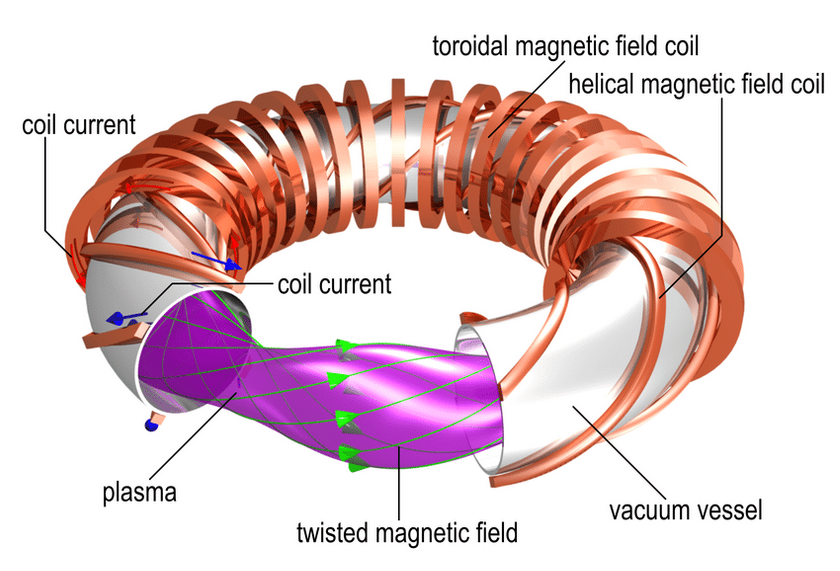
stellarator pic: 2: A schematic classical stellarator, figure courtesy of C. Brandt In the prior post, I discussed the recent breakthrough at Lawrence Livermore Labs regarding a ‘net gain’ event in the development of fusion power. You can go back to Part 1, or alternatively let one of my favorite people, Neil deGrasse Tyson review the breakthrough – see video below.
As promised at the end of Part 1, here I will talk more about the mysterious Tokamak, a rival technology called the Stellarator, and about the private companies that are working on projects to be first to reach commercial viability, and most pragmatically, the opportunities (jobs, careers) that already abound and will continue to grow for project leaders.
The Tokamak
The Tokamak – sounding to me like a word from Aleut, is actually a sort of acronym from the Russian words (Toroidalnaya Kamera i Magnitnaya Katushka)(in Cyrillic - Тороидальная Камера и Магнитная Катушка) which effectively means toroidal magnetic chamber or confinement) was developed in the mid-1960s by Soviet physicists. It can produce some of the highest plasma temperatures, densities, and confinement durations of any confinement device. As a reminder from Part 1, plasma is ‘the fourth state of matter’. It’s a gas in which many of its particles are ionized, meaning they have lost or gained electrons. Plasma is found in many stars, lightning, and some types of flames. You are seeing light emitted by plasma when you look at an illuminated neon sign.
Let’s get a definition from the US Department of Energy’s site: A tokamak is a machine that confines a plasma using magnetic fields in a donut shape that scientists call a torus. Fusion energy scientists believe that tokamaks are the leading plasma confinement concept for future fusion power plants. In a tokamak, magnetic field coils confine plasma particles to allow the plasma to achieve the conditions necessary for fusion. One set of magnetic coils generates an intense “toroidal” field, directed the long way around the torus. A central solenoid (a magnet that carries electric current) creates a second magnetic field directed along the “poloidal” direction, the short way around the torus. The two field components result in a twisted magnetic field that confines the particles in the plasma. A third set of field coils generates an outer poloidal field that shapes and positions the plasma. The first tokamak, T-1, began operation in Russia in 1958. Subsequent advances led to the construction of the Tokamak Fusion Test Reactor at Princeton Plasma Physics Laboratory and Joint European Torus in England, both of which achieved record fusion power in the 1990s. These successes motivated 35 nations to collaborate on the superconducting ITER tokamak (covered in Part 1), which aims to explore the physics of burning plasmas. But the Tokamak has a challenger – the Stellarator. Here’s an outstanding video that reveals the beauty of the Stellarator – which literally is a quite twisted idea: The Stellarator
And here, again courtesy of the US Department of Energy, is a better explanation of the Stellarator than I could ever give you:
Fusion power may be able to provide the world with safe, clean, and renewable power. The stellarator is one of the technologies scientists believe could lead to real-world fusion power. A stellarator is a machine that uses magnetic fields to confine plasma in the shape of a donut, called a torus. These magnetic fields allow scientists to control the plasma particles and create the right conditions for fusion reactions. Stellarators use extremely strong electromagnets to generate twisting magnetic fields that wrap the long way around the donut shape. Stellarators have several advantages over tokamaks, the other main technology that scientists are exploring for fusion power. Stellarators require less injected power to sustain the plasma, have greater design flexibility, and allow for simplification of some aspects of plasma control. However, these benefits come at the cost of increased complexity, especially for the magnetic field coils. To advance Stellarator design, scientists have turned to high performance computing and state-of-the-art plasma theory. These tools have helped researchers optimize the Helically Symmetric Experiment (HSX) stellarator in Wisconsin and the Wendelstein 7-X stellarator in Germany.
As a side note, I have been increasingly interested in AI-based research, including ChatGPT (and GPTZero, which can detect AI-generated text). So I asked ChatGPT to tell me the difference between a Stellarator and a Tokamak. From ChatGPT A stellarator and a tokamak are both devices used to confine and heat plasma in order to create conditions suitable for nuclear fusion, but they use different methods to achieve this. A tokamak uses magnetic fields to confine the plasma in a toroidal (doughnut-shaped) shape, while a stellarator uses a complex arrangement of magnetic coils to create a similar confinement. In general, tokamaks are simpler and more widely used, but stellarators have the potential to be more stable and efficient.
The good news: The answer generated by AI was good. The better news – as an educator, we can tell whether or not an essay or essay segement is generated by AI:
GPTZero was able to determine: Your text is most likely to be AI generated! Now back to what this means to project leaders... What does this mean for project leaders? One word: Opportunities! I did a little research on two companies that are working on Stellarator versions of fusion power: GeneralFusion in Canada and Helion in the USA. Aside from the project management job opportunities in the research area, there are jobs blossoming in the commercialization of fusion power as well. Here’s an example from General Fusion: Career opportunity, General Fusion, Canada: Manager, Targeted Compression Testbeds - https://workforcenow.adp.com/mascsr/default/mdf/recruitment/ Key Responsibilities:
The DOE recently sponsored a conference and there are several downloads of presentations about the PPPs (Public-Private Partnerships) underway in the fusion area. Click here for those downloads.
Of course, many of these jobs are going to want technical knowledge in the area. You won’t necessarily have to be a nuclear scientist, but it would help to build some knowledge in the area. These two blog posts are not the answer, certainly not in and of themselves! But they may tickle your interest in the topic – and that’s a start.
|
Fusion Powering PM (and vice-versa)
|
Lawrence Livermore National Laboratory via AP
This blog post starts with a press release from the Lawrence Livermore National Laboratory: “…the National Nuclear Security Administration (NNSA) and Lawrence Livermore National Labs (LLNL) announced that scientists performing an inertial confinement fusion (ICF) experiment at the National Ignition Faclility (NIF) just after 1 a.m. on Dec. 5 produced more energy from the self-sustaining fusion reaction than they put in to create the reaction: a condition known as ignition. … speakers at the stunning announcement celebrated the achievement as the culmination of 60 years of exploration and experimentation in ICF by generations of scientists at LLNL and collaborators in industry, academia and other DOE national labs, including Los Alamos and Sandia. Officials from the DOE (US Department of Energy) and the OSTP (Office of Science and Technology Policy) congratulated researchers on the milestone and said replicating ignition in the lab could set the stage for fusion to someday become a viable clean-energy option. ‘Last week, at the Lawrence Livermore National Laboratory in California, scientists at the National Ignition Facility achieved fusion ignition — creating more energy from fusion reactions than the energy used to start the process,’ said DOE Secretary Jennifer M. Granholm. ‘It's the first time it has ever been done in a laboratory anywhere in the world — simply put, this is one of the most impressive scientific feats of the 21st century.’” The entire concept of fusion power has always been fascinating to me. It also has a huge connection to project management, since the development of fusion power itself could be considered a collaborative program (note the number of organizations above just in the US working on this successful ignition). Many international efforts are also underway (more about that later in this Part 1 and in Part 2 of this post). In this post, I just want to provide you with the background and whet your appetite for more about fusion projects and why you may want to be interested in it as a human and a project leader (they are not mutually exclusive!). The 22-minute video below is most definitely worth a watch, although I will try to summarize it below. The video starts by rationalizing all this effort with the simple statement that fusion is probably the only single source that can replace fossil fuels. Other forms of clean energy can, and must, contribute to the solution until then, because it will likely be decades before fusion power is commercially viable (although the LLNL proved that it is possible to generate a ‘net gain’ or ‘ignition’ as it was called in the announcement above). Next, the video goes through some of the other international efforts to prove feasibility of fusion power; the Joint European Torus (JET) in Oxford, and the much larger ITER in the south of France. ITER itself is worth discovering check out this video below:
The Bloomberg video continues – it does a tremendous job explaining the science behind fusion power, using a (literally) glowing example we see (almost) every day – the sun. In the sun, hydrogen atoms are moving about very fast and crash into each other from time to time at high speeds, combining (or fusing) to form helium atoms. When they do, they lose a tiny bit of mass – and when they lose even this small amount of mass, it generates a whole bunch of energy. And this is happening millions of times. If this sounds a little like Albert Einstein, it should: The combined hydrogen isotopes smash together to form a helium nuclei. Since the mass of the helium nuclei is slightly less than the combined mass of two fusing hydrogen nuclei, this extra mass is released as energy according to Einstein’s famous equation E=mc2. To attempt to duplicate what the Sun does all day long (even at night) here on Earth is tough. We don’t have the mass of the sun to provide that smashing power to cause fusion, so we need to get to the fourth state of matter – plasma. We all can think of ice (solid), water (liquid), steam (gas). Plasma is that fourth state – examples are lightning and neon gas when electrified, or the jagged line of blue that you see in a Jacob’s ladder. The thing about plasma is that it has to be contained and controlled. Tupperware® won’t work. What’s needed are extremely strong magnets. More about this in Part 2. For now, you can see the effects of magnets on plasma in this video: To get fusion here on earth, we need to get to temperatures of 100 to 200 million degrees (ten times hotter than the Sun). It’s going to take plasma and a lot of energy input to get to those high temperatures. Now you can begin to see where ‘net gain’ comes into play. Just as in a project budget, it makes no sense to spend $300,000,000 if the project is only going to have a lifetime benefit of $250,000,000. And this what makes the recent announcement from the US on ‘net gain’ so important. The promise of fusion power is that it is clean and is fueled by hydrogen, which is the most abundant element in the universe and of course quite available on Earth (in the form of seawater). So: a clean, (eventually) cheap, renewable source of power? Yes, please. In the next post I will back up and talk more about the mysterious Tokamak, about the private companies that are working on projects to be first to reach commercial viability, and most pragmatically, the opportunities (jobs, careers) that already abound and will continue to grow for project leaders. Stay fused! I mean…stay tuned! |

Building Sustainable Value
|
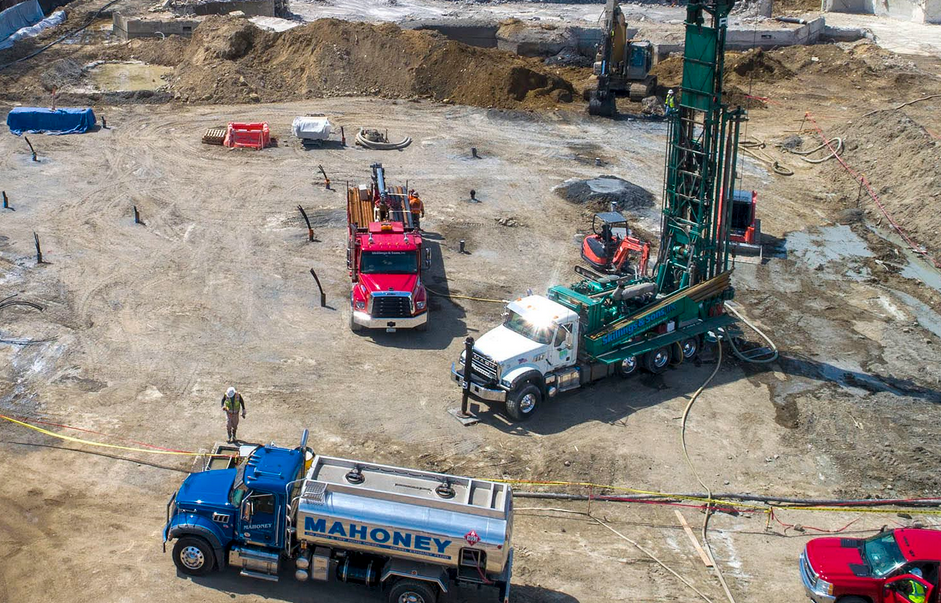
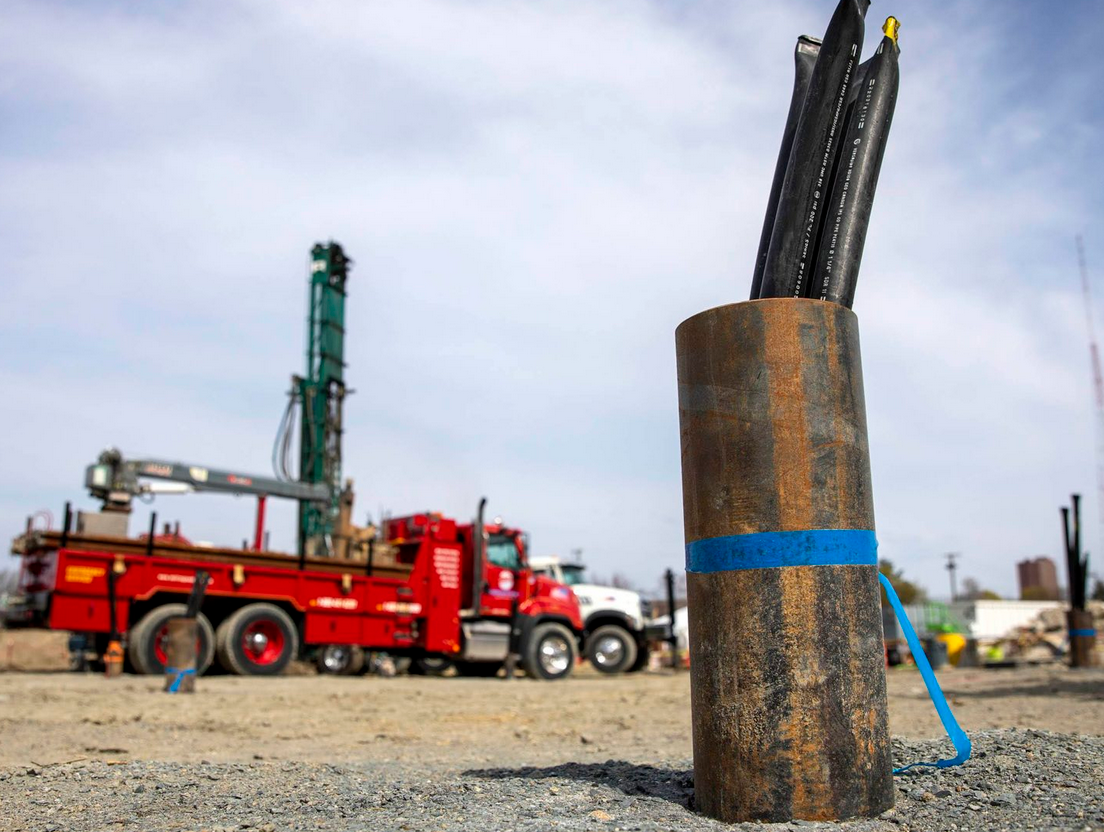
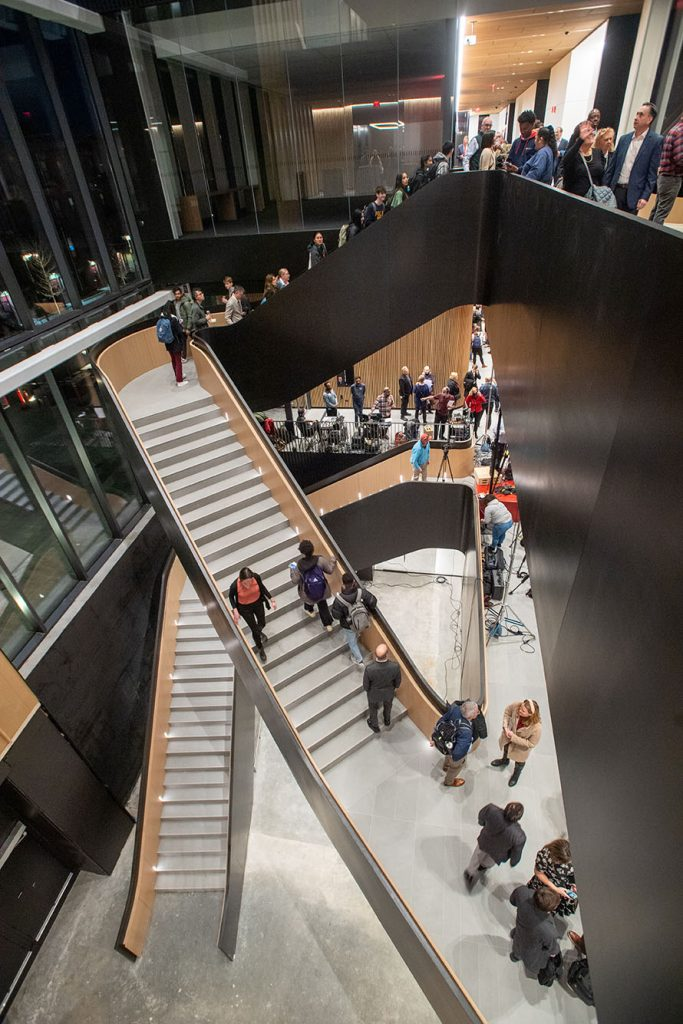
One of the key trends in project management now (as it should be!) is the idea of value delivery. The 7th Edition PMBOK® Guide has a chapter called “A System for Value Delivery”. Thought leaders like Alexandra Chapman, Dr. Harold Kerzner, and Carlos Serra have been talking about this for countless years. It seems that their thoughts have finally been brought to action. One aspect of value delivery is the idea that projects need to be firmly linked to the mission, vision, and values of an organization. This post is about building sustainable value. Emphasis on building. Let’s take Boston University as an example. For reference, Boston University is a large organization – a student body of nearly 37,000, approaching a half-million alumni, over 10,000 employees, including over 4,000 faculty. It’s big. It’s an organization. I’ll be borrowing from a recent article published by BU Today in this blog post. The title is intriguing: “No Gas. No Fuels. No Emissions. BU’s Greenest Building Ever”. The Link Boston University has published a Climate Action Plan, which aims to reduce the University’s carbon emissions to net zero by 2040. That’s a University-wide goal, tied to the University’s mission statement. “We envision a sustainable and equitable future where environmental, social, and economic conditions foster health and well-being for all people and the natural world, where all living beings have the resources they need to thrive. Boston University will reflect these conditions by serving as a model, locally and globally, through its leadership in climate action and knowledge sharing.’ So that’s the foundation here. And I use the word foundation quite intentionally and dad-joke-ingly. The Project The project to which I am referring is a building needs not only an aspirational foundation but a physical foundation. And as you’ll see, it’s also what’s UNDER the foundation that counts. The project is Boston University’s Center for Computing and Data Sciences, pictured below.
Here are six features that help this project’s outcome – a building – deliver value that is linked to the organization’s mission.
These are the sustainability-related features but what are the overall characteristics of the building? From Boston University’s own website, here’s the lowdown: Designed by KPMB Architects in Toronto to serve BU’s sustainability goals, and built by Suffolk Construction, the $305 million center is 19 stories (or 305 feet) tall and has nearly 350,000 square feet of floor space. What most people talk about is its unusual and controversial profile of cantilevered sections rising above the campus and the Charles River like a giant stack of books (BU leadership’s preference) or a precarious game of Jenga (everyone else’s). The Value Some like it – some hate it – but aside from the unique appearance, you cannot deny that it is an example of building sustainable value! |