Becoming a Climate Change Leader (Part 3 of 3)


|
In Part 1, I promised that in Part 2, I would continue an analysis of Bruce Harpham's article. But Andy Jordan posted another excellent article, which became Part 2, so this becomes Part 3. Carry the 2, divide by the square root of -1, and here we are at Part 3. Bruce Harpham's post, Climate Change: Micro and Macro Opportunities for Project Managers, does an excellent job categorizing and making actionable the things that project leaders can do. I changed the word MANAGERS to LEADERS for reasons that I have explained in past posts and will continue to harp(ham) on in the future. The bottom line is that our title is incorrect. We are not project managers. We are project leaders. If you don't think so, have a look at this Harvard Business School post on the topic. You tell me which better describes what you do (or aspire to do) in your projects. In any case, what Bruce does in his post is to first break down the types of opportunities into micro and marco. I would offer my opinion that in this case, micro really does mean tiny. These are the things I first encountered when people were promoting "green" project management. They included things like using recyclable forks in your project office kitchenette. Yes, they contribute, and make incremental improvements but they are not at all what we really need to do if we want to make the transformative changes we need to make as project leaders. Bruce defines micro opportunities as being focused on decisions you can make as an individual project manager - and here they are: 1. Encourage remote work You indeed can do this for your project team, but often, this is an organizational guideline or policy. There is also a hidden danger here, as Jim Stewart and I will discuss in our upcoming book Great Meetings Build Great Teams: A Guide for Project Leaders and Agilists, it sometimes can make your project more efficient (less rework) if your team does have at least an initial face-to-face meeting. The impact of having the team together to build rapport can be worth it in the long run. 2. Change project procurement criteria This is a good one, and my only advice here is to escalate this beyond the project level to the organizational level. If you find a great 'sustainability-oriented' vendor, yes, use them for your project but also make this finding available for other projects and for the broader operational use! 3. Add a granular, specific interpretation of climate change to your risk register I would suggest that this could be easily made into a Macro Opportunity because this is process-related. If you consciously identify and respond to risks that involve long-term effects (not only climate change but also social impacts and long-term economic impacts), you are changing your mindset (see Part 2 of this series). That's Macro! Macro Opportunities 1. Seek out different projects at your organization This is good advice. Vote with your feet. Look for projects that are either aimed at a triple-bottom-line solution or have already integrated long-term thinking into their planning. 2. Get involved in carbon disclosure projects Again, this is a means of voting with your feet. Seek out these career opportunities! 3. Change companies I know what Bruce is saying here. Move to a company which has adopted a sustainability-oriented philosophy. It's as I say above - voting with your feet. However, there's nothing wrong with being a change agent at your current organization. As project leaders (there I go again) we are change agents by definition. I want to thank Bruce Harpham and Andy Jordan for their excellent contributions to projectmanagement.com. After writing the book Green Project Management* 4,308 years ago (actually only 13), it is rewarding to see the attention - the proper attention - the macro attention - that sustainability thinking in PM is finally getting. In fact, the term should be Sustainability Oriented Project Leadership or Value System Project Leadership, because 'green' implies a sort of 'save the whales, save the snails' *** focus, when in fact (although saving species is important) this is much more about long-term thinking than only about all creatures great and small. Your thoughts? Your long-term thoughts? ***This reference, by the way, to 'whales and snails', is the inspiration for the image that goes with the post. The late, great George Carlin talks here (language warning) sarcastically about going too far down a path of environmentalism. Remember: it's sarcasm.
|
Becoming a Climate Change Leader - Part 2 (of 3)
|
I was going to make Part 2 a continuation of Part 1, based on Bruce Harpham’s post. And indeed, I will continue discussing Bruce’s article as covered in Part 1, but I will do it in a new Part 3. I’ve chosen to use Part 2 to amplify the even-more-recent post by Andy Jordan. Andy starts out as follows: Project managers as green catalysts However, what is happening is that project managers are continuing to be given more autonomy over how they deliver their projects. PMs and teams are enjoying greater freedom around scope and approach in order to ensure that projects can adapt and evolve to shifting operating needs, customer expectations, and so on. This creates opportunity. Project managers can encourage their teams and stakeholders to be more environmentally conscious in their approach to their work.
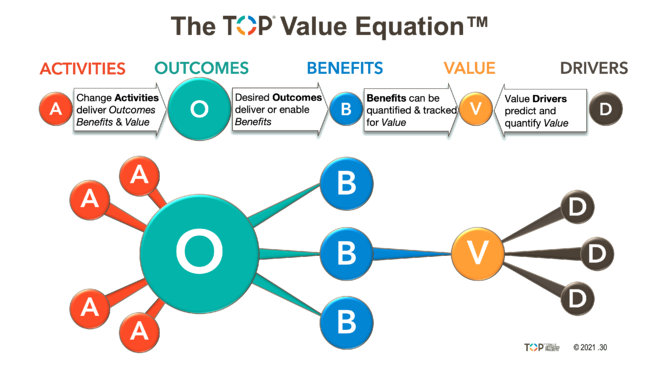
Here is the key part. It’s not about saving paper while you run the project or turning down the office lights as you run the project. It’s about the steady state. It’s about the operation of the product of your project. It’s years away from the ribbon-cutting ceremony and yet you do have the opportunity to affect that product or service in its steady-state as a project leader. It may not be easy, but you DO have that power. You have had it all along, like Dorothy in The Wizard of Oz. And it’s getting easier to click your heels three times and say, “there’s no place like a sustainable project outcome”. Andy says it so well: (Project managers) can influence stakeholders to be more considerate of green factors in the solutions that are developed, and so on. As project management influence increases in organizations, so it becomes easier for project managers to champion worthwhile approaches and concerns. YES! He nailed it. It’s about the solutions. It’s about the project’s outcomes. It’s about the benefits that the PRODUCT of the project generates, which of course will produce value in the long term, but also may produce other impacts – social, environmental, and economic, that are long-lasting and may be negative. I refer you to the excellent model that my colleague Alexandra Chapman, of Totally Optimized Projects (TOP) has been using for a long time (see below, courtesy of TOP).
By considering this up-front, and not after the project’s product is (and these are all real – and perhaps recognizable - examples):
This focus on the steady state – on the long-term operation of whatever it is you are delivering – has to become part of the culture of an organization if it is to have purchase. As Andy says: Don’t discount the value of a sustainability victory. Unless organizations and their stakeholders recognize the value of those environmentally conscious adjustments, they won’t become a core part of how business gets done.
Keeping the Oz theme, I have previously written about the “Three-Click Challenge”. Consider the fact that your organization is very likely (and you can and should check this out yourself) making all sorts of statements to the world about its efforts to be a good corporate citizen, to respect the UN Sustainable Development Goals, to focus on ESG (Environment, Social and Governance). If you need a rationale and ‘source of power’ for changes you’d like to make to your project’s product, and you are limited by very ‘local’ project constraints, click three times in your organization’s website structure, seeking their statements on ESG, CSR, sustainability efforts. That’s where you can help align your project to what your organization is telling the world.
|

Becoming a Climate Change Project Leader - Part 1
|
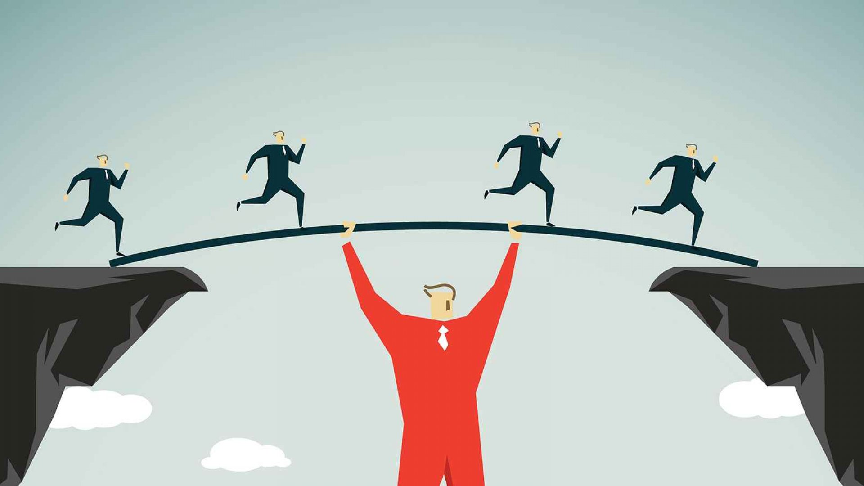
Image: Inc. Magazine In this two-part series of posts, I would like to point you to an excellent post made right here on Projectmanagement.com by Bruce Harpham. It’s entitled Climate Change: Micro and Macro Opportunities for Project Managers It begins: Climate change has arrived, and it is wreaking havoc across our world. The question now becomes: What can we do about it? There is no single correct answer to this complex question. The first step to coming up with solutions starts with understanding our situation. Bruce goes on to talk about the disappointment some of us share that although global warming or climate change has been a topic of discussion for a long time, not much has been done about it. Who are we? We are project managers*! Get-r-done people. Don’t you find this lack of action reprehensible? I do. I think that we as “Executors” (see Dr. Barbara Trautlein’s wonderful book on Change Intelligence) want to get stuff done. But there is an ironic twist here. We executors like to get things done on time, accomplishing scope, and doing all of this within budget. That often blinds us to thinking about the product of our project in the long-term - see the video at the end of this post for an example. Whatever it is that we build – whether it’s an app or a bridge or a new house-cleaning service, we want it to go live, carry traffic, and clean houses. Once that has started to happen, we do the old “wipe our hands” gesture and say, “now give me my next project!”. That means we have not thought through to the operation of our project’s outcome. Just that simple mind exercise, perhaps when doing risk identification, would make such a big difference in terms of making project outcomes sustainable.
But there’s a catch! Many of the changes to the product or service we may want to make, which consider sustainability and impact (social, economic, or ecological) have to please our sponsors and may, on their surface, seem to be too expensive, or may delay the release of the project. The project manager may be hesitant to raise these suggestions, partially due to a culture in an organization that makes it unsafe to speak up. This topic is enough for an entire series of blog posts, and in fact is an entire chapter in an upcoming DeGruyter book, The Handbook of Responsible Project Management. So I won’t follow that thread here; suffice it to say that it will take courage, supported by facts, supported by likely high-level commitments at the corporate level to Corporate Social Responsibility, to make these suggestions and, yes, perhaps delay the project or make the product or service more expensive, but to move the needle a little bit in terms of (for example) climate change.
In Part 2, I will take a look at Bruce’s point-by-point list of things we can do as project leaders and, for what it’s worth, add my opinion and angle on how you can make those a reality in your projects.
*I prefer (and am starting to assert the use of)"Project Leader" instead of project manager. Look up the list of traits and attributes associated with manager, then do the same for leader. You’ll see. Your title should be Project Leader. |
Hot Boston: Part 3
|
In the first two parts of this series, I have discussed the Boston Heat Plan, its inception, and its focus on stakeholder engagement. The focus is on being resilient to the Heat*. In this part, I will focus on the way the overall Plan is organized, particularly in terms of an implementation roadmap. The City calls the entire resilience plan a project but then goes on to define projects within the project. My PMO background and experience tells me that really the Plan is a Program, not a project, but that’s a geeky PM view so I think we can forgive them for calling it a project. They further breakdown the resilience strategies into different categories. From the Report: "The implementation of heat resilience strategies is organized into catalytic projects, near-term projects, and long-term solutions. The plan’s strategies provide a framework for improved heat resilience across Boston. The timing of implementation considers the impact of each strategy, as represented by the evaluation criteria, the level of coordination needed, ownership and jurisdiction, regulatory review, and other factors. Community priorities, articulated by the CAB and through feedback from broader community engagement as well as ongoing and future City initiatives, informed the proposed implementation timeline." As I spelled out in Part 1 of the series, there are 26 strategies organized into workstreams.
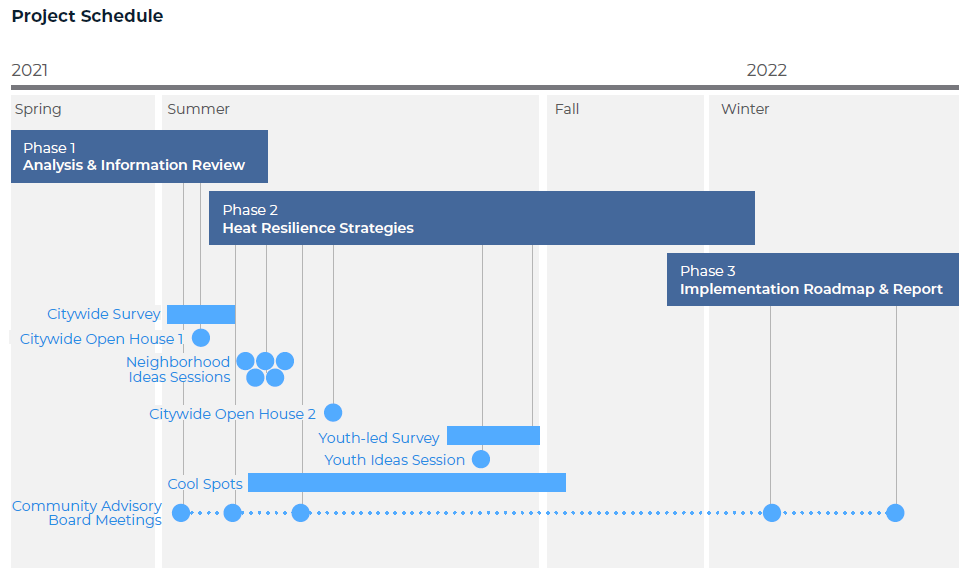
The project’s phases (as shown above) are:
In this short post I want to demonstrate how the City shows the implementation timeline for the 8 workstreams. They’ve done a good job in showing – at an executive level – what types of projects make up the Program, when they take place, and (via color code) whether it is a Catalytic Project, part of Design, Development, and Pilots, Implementation, or ongoing program, monitoring or evaluation. This smacks of the long-term view I’ve long espoused, putting “ongoing” on the timeline. We tend to shy away from this as project managers. We really, REALLY love that black diamond milestone that says DONE at the end of our project. We want to have that pizza party (who doesn’t?) and get on to our next project. The longer-term view considers the project as an important means to, well not to end, but to a new beginning – an ongoing operation or result that was enabled by our project. Here are those timelines:
In Part 4, I will continue the long-term theme and focus on the way the Plan considers Benefits as the raison d'être of the Plan.
*if you are a fan of the National Basketball Association (NBA), our Boston Celtics have already taken care of that this year. |


Hot Boston: Part 2
|
In Part 1 of this series, I introduced the Boston Heat Plan, and marveled a bit at its thorough planning section. In Part 2, I take you on a quick tour of the Stakeholder Engagement section. Notable even in name, this section doesn’t discuss stakeholder management because (as PMI has recognized) we don’t manage stakeholders, we need to do a great job of identifying them and engaging (communicating, listening, partnering, understanding) them. Clearly one of the most obvious stakeholders are the people of Boston. Which type of people and communities are impacted by heat? From the City of Boston website: Who heat impacts: Extreme heat affects us all but does not affect us all equally. More impacted groups include:
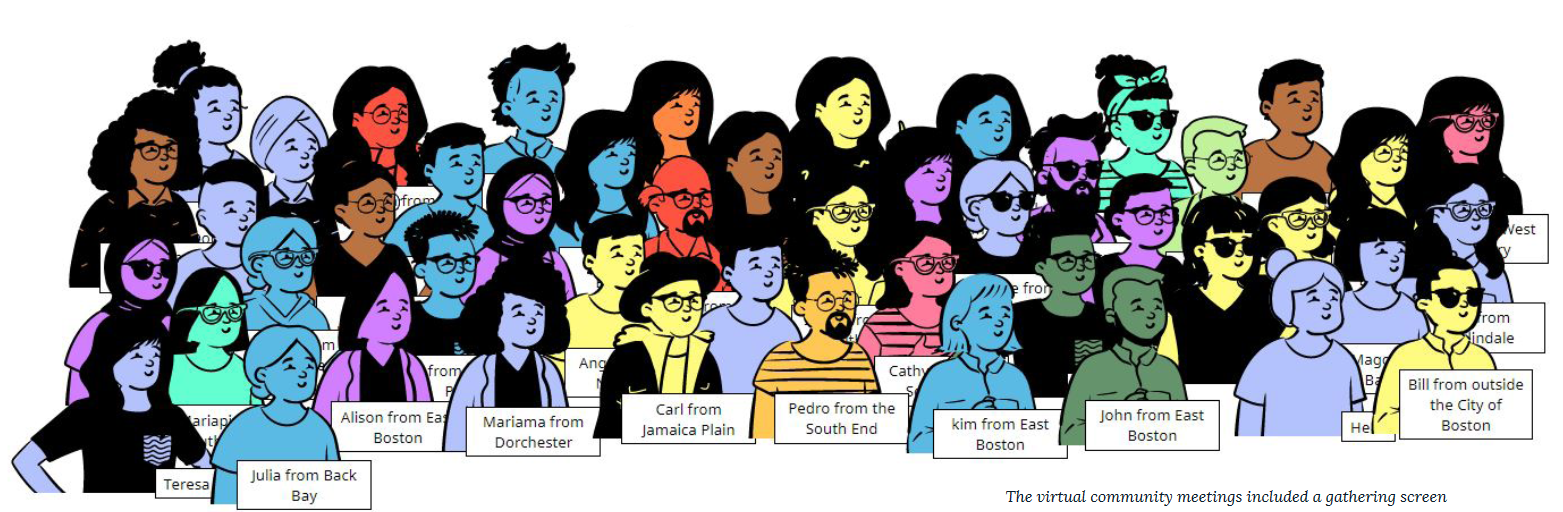
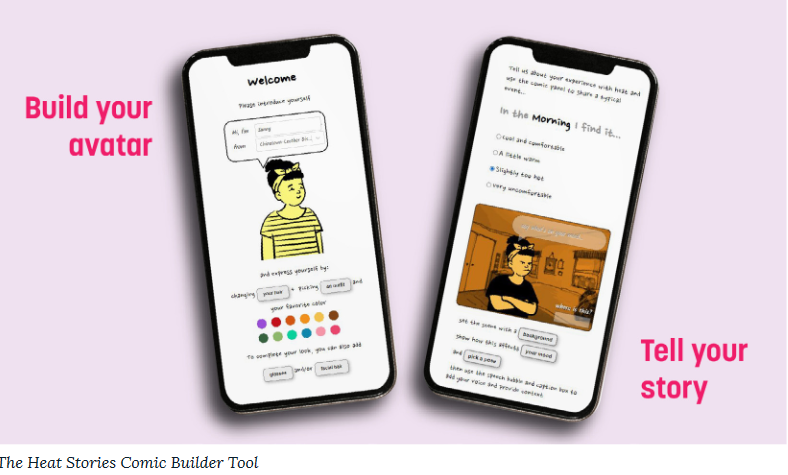
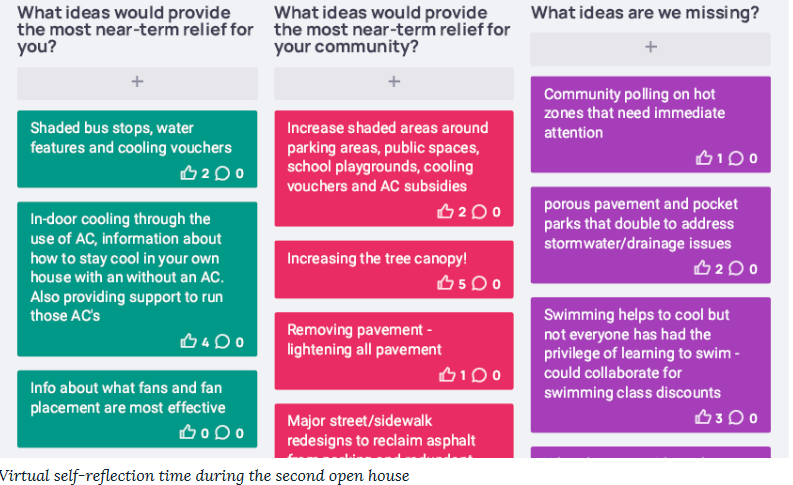
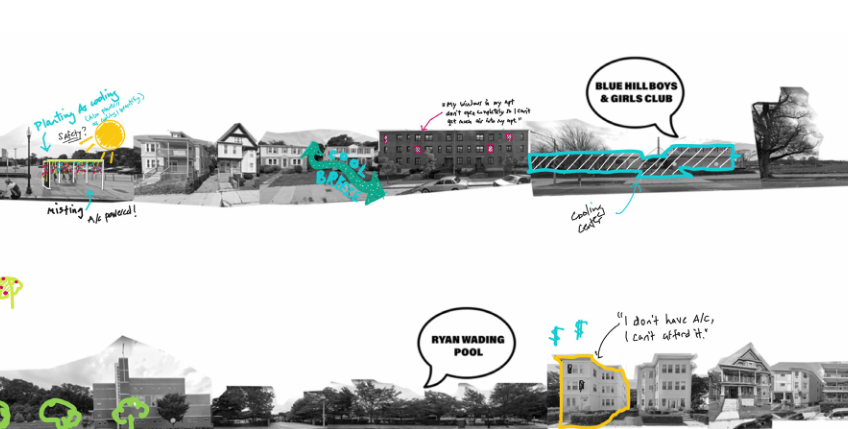
The planners did an outstanding and creative job (in my opinion) in coming up with ways to elicit input from the residents of various communities of Boston. Note: some of the text below comes directly from the report. Participants in the process shared perspectives from their lived experience in Boston with heat and access to cooling. Community feedback directly shaped the heat resilience strategies included in this plan. The City’s approach to community engagement included a range of ways for residents to engage including the following methods: Considering that this was done during the peak of the COVID-19 Pandemic, virtual meetings were used to engage discussion and collaborative strategy development. The planners used innovative techniques for the meetings themselves, including live sketching sessions where people could draw their ideas collaboratively onto a cityscape and build off others’ ideas – in real time. Below are some images from the report showing the creativity they used – a “comic builder” to make avatars, virtual self-reflection, the sketching tool mentioned above, and a “gathering screen” (the blog post header image above) taking advantage of those avatars.
Meetings (virtual, due to the Pandemic) included two open houses, five neighborhood ideas sessions, and a forum specifically designed for youth. These sessions were recorded and made available on the project website to provide more opportunities for ongoing feedback in response to the same questions discussed in the live event. In addition to the meetings, the planners also used citywide surveys, neighborhood idea sessions, and a special youth-led survey. Although not many details were provided, the planners also identified other stakeholders with whom they would engage. They include:
…and more. As I preach to my project management students, “broad and deep” is the way to identify stakeholders. Broad – meaning all categories of stakeholders, and deep – meaning all of the possible stakeholders in that category. In Parts 3 and 4, I’ll shift to discussing the roadmap they established and their plan for benefits realization of the heat plan project. |