Forest for the Trees (Part 1 of 3)


|
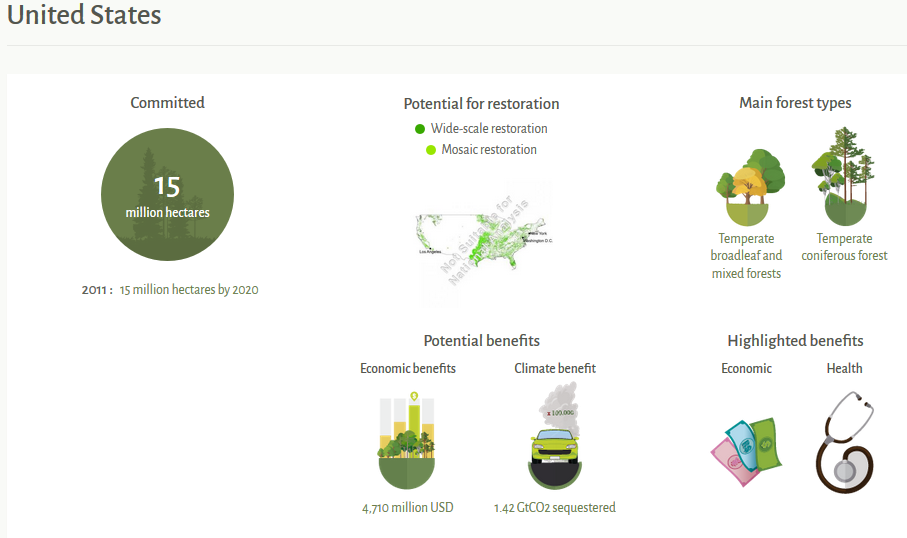
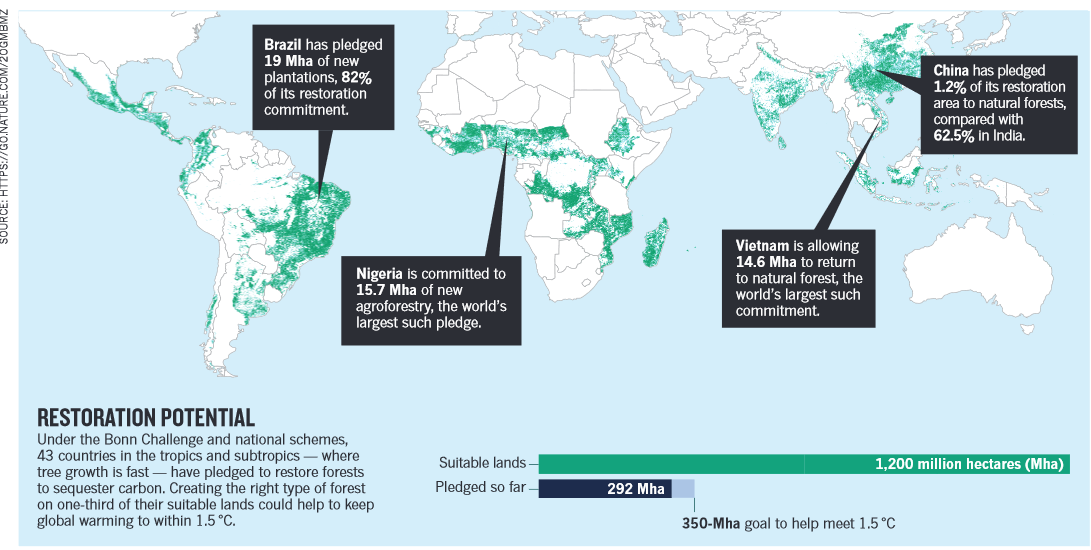
(Flickr photo/Joshua Mayer) Projects (and/or programs) are sometimes about launching new software, building bridges, or researching a new technology. Many of my most recent posts have been about the ocean – here we return to solid ground. This article is about a program to create new natural forests to store carbon. In a recent issue of Nature, the “Comment” section is about the need to keep global warming below 1.5 degrees C to avoid dangerous changes in climate. The IPCC (Intergovernmental Panel on Climate Change) says that around 73o billion tons of CO2 must be taken out of the atmosphere by the end of this century to achieve this goal. To put this amount in context, we’re talking about an amount of CO2 equal to that produced since the industrial revolution from the following countries: The US, the UK, Germany, and China. Using forests to sequester CO2 is not only safe and proven, it also has the benefit of providing jobs, aiding in water management, and preserving biodiversity. But how? First of all, and this should seem pretty obvious, if more forest is needed, deforestation must stop. In addition, significant efforts to allow natural forestation must be launched. And one has. It’s called the Bonn Challenge (see http://www.bonchallenge.org). From their web page: The Bonn Challenge is a global effort to restore 150 million hectares of the world's degraded and deforested lands by 2020 and 350 million hectares by 2030. It is overseen by the Global Partnership on Forest Landscape Restoration, with the International Union for Conservation of Nature as its Secretariat. For a review of this Challenge, you can view this video: You can look up your own country’s commitment levels by going to the “Commitments” section of the webpage. Here is the detail on the US: http://www.bonnchallenge.org/content/united-states
But there’s a threat to this project. Half of the pledged area in the full set of commitments is set to become plantations of commercial trees, not natural forest. Plantations end up releasing the carbon back into the atmosphere approximately 15 years, as opposed to a natural forest which will sequester carbon for many decades.
Where should the forests be created? According to the article, they should be planted in the tropics and subtropics. In Part 2, I’ll discuss the “how” of reforesting, and in Part 3 I’ll cover some of the governance (and enforcement) issues of deforestation. |

Shhhh! (Part 2 of 2)
|
I started this two-part series with a short post about noisy seas – a different sort of ‘pollution’ that doesn’t get as much attention as the other important changes taking place in the ocean (microplastics, warming temperatures). It started with a very interesting article from Nature, called The Quest for Quieter Seas, which is published online here. That post focused on
In this post I’ll continue on into the study of effects and potential remedies. The US National Oceanic and Atmospheric Administration (NOAA) has suggest a rule of thumb that pulses of sound above 160dB can cause marine mammals to actually make significant changes in their behavior, and if the noise is continuous (not pulses), even 120dB can change the behavior of marine mammals. The previous post had a nice reference chart that showed how these levels of noise compare to more familiar sounds, like jet engines. So – when it comes to these behavior changes, are they temporary inconveniences, or does this possibly cause something more permanently damaging to the ocean ecosystem? Data on killer whales found off of Canada’s west coast indicates that resident whales spend 18-25% less time feeding when surrounded by boat noise. The population of these whales is about 75 (you read that correctly, under 100), and they are already dealing with a lowered food supply. Noise pollution complicates this problem and perhaps magnifies it. We know from our project management work that risks can interact with each other in a spiraling fashion (for example… lower budget ► less effective contractor ► more errors ► more draw-down from already-low budget). It appears that there are some spiraling effects here as well. So what can we do about this? Has anyone tried anything to make changes in the causes of ocean noise? The answer, fortunately, is yes. In the shipping lanes off of Vancouver Island, responding to a request by Vancouver’s ECHO (Enhancing Cetacean Habitat and Observation Program), container ships voluntarily slowed their speed to 11 knots from 18 knots. This did add 30 minutes to their journey, but the reduced engine noise was significant, dropping 24% in intensity. This gave the whales a better chance at feeding and helps prevent the reduction of this limited population of orcas. Have a look at the ECHO program’s website here. How can we implement these sort of changes? We can use the wisdom of Vilfredo Pareto and his 80-20 rule. Studies show that in a modern fleet of 1,500 ships, 50% of the noise came from 15% of the fleet. So yes, the Pareto principle is just that – a principle. Nobody is holding Vilfredo to exactly 80.000% and 20.00000%. In any case, these “Paretoed-out” ships could be targeted, and we can avoid a drastic measure of retrofitting entire fleets with new engines or restricting the speed of a 1000-plus vessel fleets. Earlier I discussed air guns, used in seismic surveys, often to search for deposits of oil and gas. These air guns can be functionally replaced with underwater vibrators that create much smaller footprints. Engines of ships can be elevated off the ship floor, and redesigned to reduce cavitation (the creation of popping bubbles – which sound innocent but when they pop in huge quantities, this quickly becomes noise pollution. Cavitation, by the way, is actually a fascinating principle. Watch this short video to learn more. And here’s the kicker: reducing noise in ocean-going vessels usually goes hand-in-hand with fuel efficiency. So the conclusion of this story is that there’s a “kill-two-birds-with-one-stone” effect. Or maybe the more appropriate expression would be, “save two mammals with one initiative”. |

Shhhhh! (Part 1 of 2)
|
Here’s a story about protecting ocean life that – in a twist – does not involve acidification, plastic, chemical pollution, melting ice, or climate change. Those things are still all threats to ocean life, of course, but this post, which has some intriguing connections to project management, is about noise. It started with a very interesting article from Nature, called The Quest for Quieter Seas, which is published online here. The connections to project management have to do with:
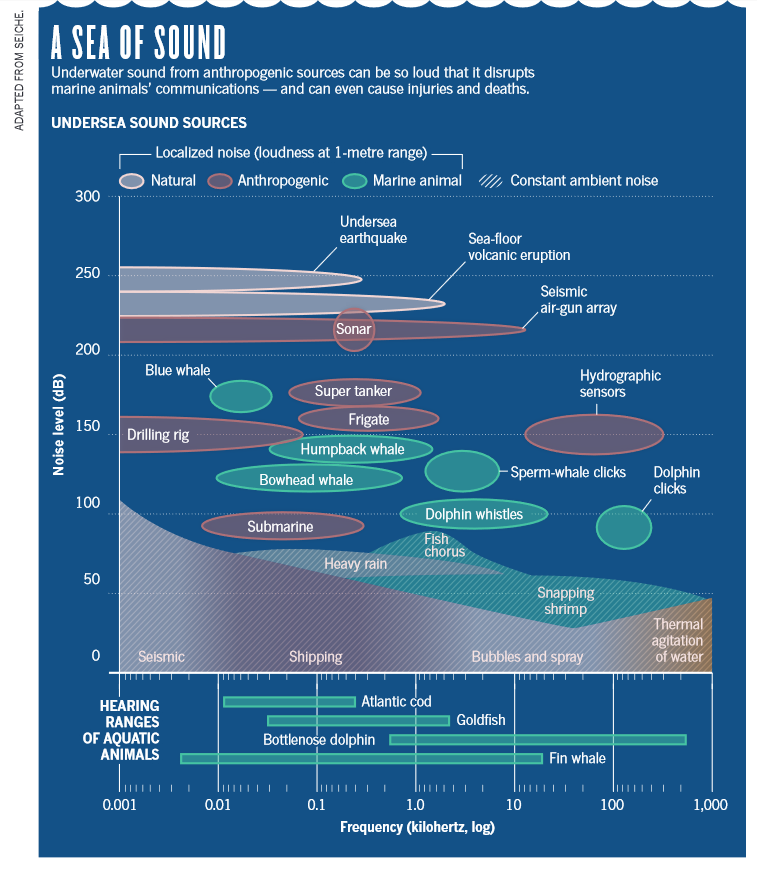
…see if you can find these connections here. Who’s making all of that noise? First, let’s start with the sources of noise in our oceans. Of course, some if it is quite natural and has always been around; things like dolphin whistles and clicks, whales’ songs, rainfall, snapping shrimp, and the rumbling of an undersea earthquake. But some of the noise is most definitely anthropogenic (caused by humans), such as sonar, oil drilling rigs, vehicles (everything from frigates and supertankers to submarines), hydrographic mapping sensors, and seismic air-gun arrays. See the chart below to place these in volume level and against the hearing frequency ranges of various forms of ocean life.
(From Nature, Volume 568, 11-April-2019) The article expresses the need for a baseline so well, I’ll let it speak for itself: Because noise is so pervasive, it is hard to study the impact as it ramps up. It isn’t clear whether marine systems can work around or adapt to it – or whether it will drive crashes in already-stressed populations. So researchers are becoming acoustic prospectors, searching for quite zones and noisy habitats in efforts to chronicle what exactly happens when sound levels change. Efforts (projects) range from natural experiments on the effects of a plan to reroute shipping lanes in the Baltic Sea, to investigate the impact of a trial scheme in Canada to reduce ship speed in coastal waters off Vancouver. Complicating matters is the fact that there are other new and concurrent stressors on marine life, such as the aforementioned acidification and warming ocean temperatures. The effects are not simply arithmetically added, though. A plus B is not a simple equation. The interactions are often causing a negative effect greater than the sum of its parts – also known as synergy. So how much are we adding to the not-so-silent seas, in terms of noise? Based on the amount of noise contributed by an average ship and looking at the number of ships (this does not include sonar and other items mentioned above) the sound contribution has risen about 3 dB per decade. If you know your decibels, you know this is a logarithmic increase – a doubling of sound levels each decade. Seismic air blasts, used to map the sea floor for possible oil or gas drilling opportunities, can be audible for hundreds of kilometers (think Boston to New York or Amsterdam to Dusseldorf). These are causes. What are the effects? It’s beginning to become obvious that loud marine noises can cause a panic dive in cetaceans (whales, dolphins, porpoises), as indicated by the increase in ‘beaching’. These panic dives have the secondary effect of causing hemorrhages in the animals’ brains and hearts. Research projects have also shown that loud waterborne noises can damage the ears and cause hearing loss (as you may expect). In part II I’ll discuss more about the effects and the research and other projects that are being implemented to remedy ocean noise and make the oceans a little quieter. As you can tell from the above, this is not a simple ‘quality of life’ issue – it’s life itself. |

That old report card of yours...
|
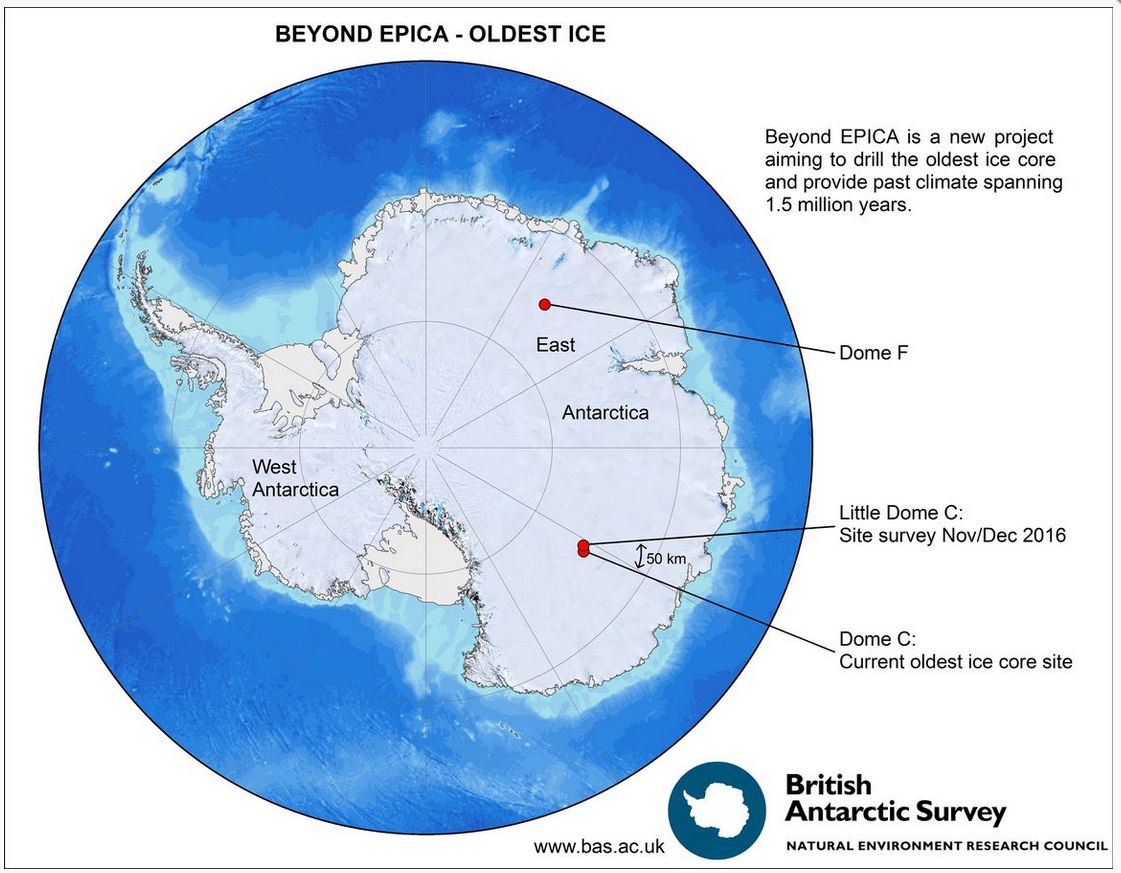
Remember that report card you didn’t want your parents to see? And by “too see” I mean that your best grades were “two Cs”? Well, forget about that – this post will make your old report card pale in comparison. As reported in Nature’s 28-March-2019 issue, a project called “Beyond EPICA” is slated to start in June of this year and it is going to extract a 1.5-million-year-old report card from the ice below a section of Antarctica called Dome C (see map below in case you want to visit).
EPICA stands for European Project for Ice Coring in Antarctica. This is a perfect example of a ‘green-by-definition’ project as we describe in our book Green Project Management.
The idea here is to vastly improve our understanding of our climate by getting an undisturbed record (report card!) of our Earth’s ancient atmosphere. The ice that has accumulated over millennia contains samples of the world’s atmosphere at known dates. This will help us get a more accurate picture of how climate has changed in the past, allowing us to make scientifically accurate predictions of how climate changes match up with atmospheric levels of greenhouse gasses.
From the Beyond EPICA website: The Beyond EPICA – Oldest Ice (BE-OI) consortium and its international partners unite a globally unique concentration of scientific expertise and infrastructure for ice-core investigations. BE-OI is an EU Coordination and Support Action (CSA). It delivers the technical, scientific and financial basis for a comprehensive plan to retrieve an ice core up to 1.5 million years old in a future project during the Beyond EPICA – Drilling Phase. This would be an important contribution for the future exploration of Antarctica and promises unique insights about climate and the global carbon fluxes. This knowledge will improve future prognoses of climate development with solid quantitative data and will allow establishing more targeted strategies, to cope with the societal challenges of global change. This project is following the discipline of project management quite strikingly well (excuse the pun). They have set clear objectives:
They have broken the project in to work packages (in other words they have created a WBS) as follows. The workpackages of BE-OI combine the different methodological aspects and the consecutive implementation based on the two key regions of interest. The first three workpackages Logistic support and coordination Fast drilling tools to qualify sites, age validation cover the objective to "Prepare for site selection". They will consider the acquisition, analysis and evaluation of new data to create the pre-conditions for site selection. The worckpages Site selection, and science and management plans Cost forecasting and financial frameworks The international and cross-disciplinary context are directed towards the planning and implementation of the BE-Drilling Phase.
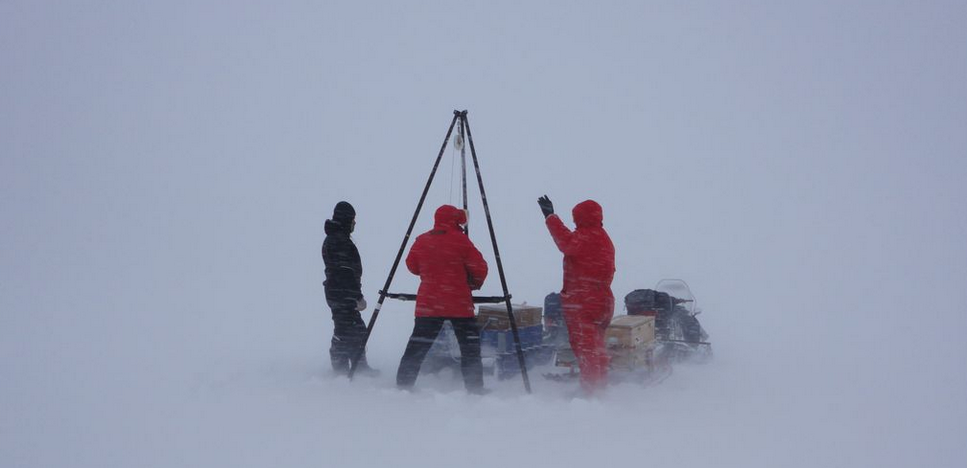
Here's a video that shows the sort of project environment in which EPICA is taking place: This project team will have a press conference on 9-April (the day after this post), so you can get the latest directly from the source! Beyond EPICA will present the decision where to drill for 1.5 million year old ice at: EGU Press Conference https://www.egu.eu/gamedia/2019/press-conferences/#98 I’m going to tune in. Maybe it will help me forget about that bad, bad report card from long, long ago.
|


April Fuel!
|
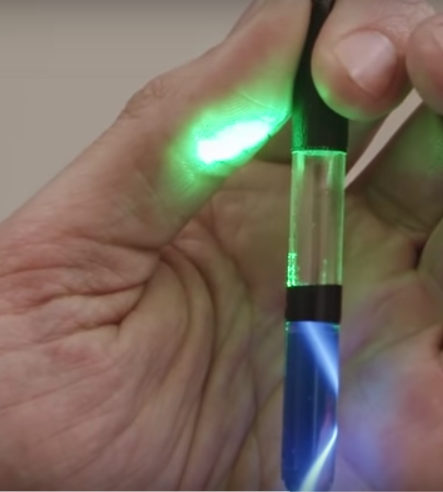
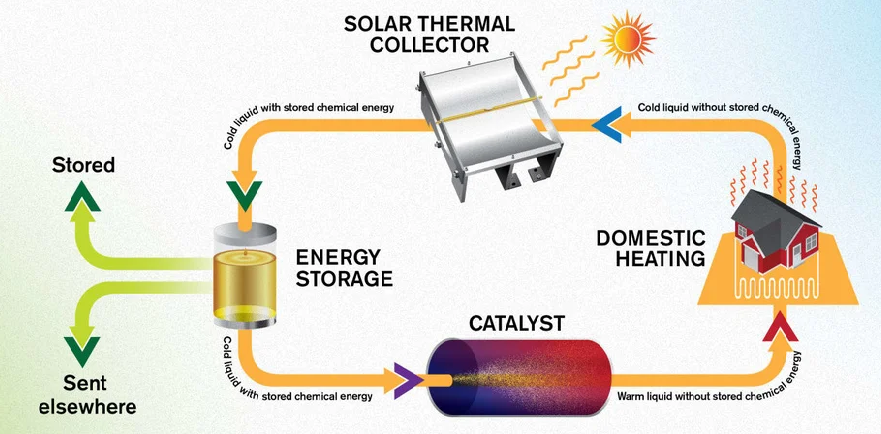
I avoid posting on April 1, since it’s likely that all-y’all may not take the posting seriously. So this is posted on April 2. Because it's good news - serious good news. My last post was about ammonia as potential ‘liquid battery’, a means to store renewable energy in liquid form. It turns out that this is not the only liquid under investigation with this potential. Let’s back up a moment and review why we’re even talking about this here on People, Planet, Profits & Projects. First of all, any of these efforts to do apply research to reality is, by definition, a project. Then, implementing the result into (in this case) using the ‘liquid storage’ will be a project. The focus here is the intersection of sustainability in PM, which sometimes is directly dealing with ‘green’ topics, environmental protection or renewable energy or reducing carbon, or saving species, but sometimes is the integration of sustainable thinking – long-term thinking – into project planning. This post is more on the former. An article from MNN caught my attention. It opens as follows: It's hard to believe that we still use climate change-inducing fossil fuels when we have a sun that's bombarding our planet with plentiful, clean renewable energy on a daily basis. But fossil fuels do have one oft-overlooked advantage over solar power that has long prevented solar from truly emerging: they're a fuel. That’s right. As a fuel, fossil fuels (think gasoline) are easy to transport, deliver, and store. Not so with energy from a wind farm. We need a huge leap forward in battery technology (there will be posts on this as well here on this blog) and/or another method to store, transport, and deliver that renewable energy to users of energy. This post, like the one before it, is about a means to do just that. Again, from the article: Researchers in Sweden have discovered a specialized fluid that works like a rechargeable battery. Shine sunlight on it, and the fluid traps it. Then, at a later date, that energy can be released as heat just by adding a catalyst. It's quite remarkable, and it could be how we power our homes by 2030. Made up of molecules of carbon, hydrogen and nitrogen, this liquid reacts to sunlight by reconfiguring atomic bonds, transforming the structure of the molecules into a sort of container that holds energy from the sunlight within itself. And here’s the part that I thought you’d see as an April Fuel’s joke: even when the liquid cools back down to room temperature, the energy remains stored within the liquid. A cobalt-based catalyst (cobalt phthalocyanine) is used to release the energy when it is wanted. Does it work? Early results have demonstrated that once the fluid is passed through the catalyst, it warms up by 113 degrees Fahrenheit. But researchers believe that with the right manipulations, they can increase that output to 230 degrees Fahrenheit or more. Already, the system can double the the energy capacity of Tesla's reputed Powerwall batteries. Needless to say, this has drawn the interest of numerous investors. Even better, researchers have tested the fluid through as many as 125 cycles, and the molecule has shown almost no degradation. In other words, it's a rechargeable battery that continues to take a charge without losing much capacity over many uses. The technology seems to allow the storage of energy in such a liquid for up to 18 years. The image below is courtesy of Chalmers University of Technology (Sweden).
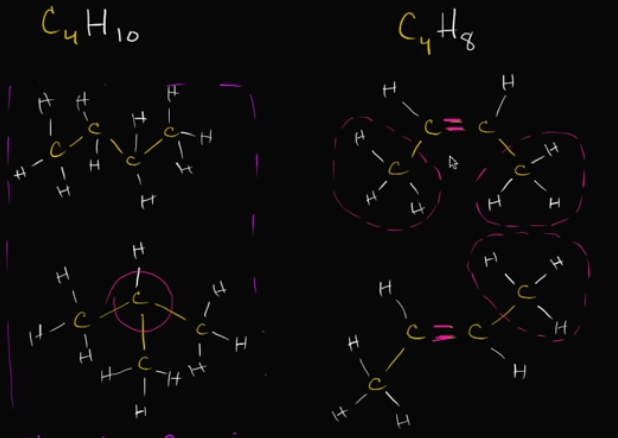
I felt this needed validation and further research so I dug in and found this article which indicates that the researches have published their results in four respected journals. The name for the molecule that stores the energy is an isomer - a molecule made of the same atoms, but bound together differently. If you want a quick review of isomers (like I did) click here.
The storage capability is called (by the researchers) MOST (Molecular Solar Thermal Energy Storage). For those of you who are scientifically inclined, here’s the abstract from the paper published in the highly-ranked journal, Energy and Environmental Science, published by the UK’s Royal Society of Chemistry. The entire article is available as a PDF here. The development of solar energy can potentially meet the growing requirements for a global energy system beyond fossil fuels, but necessitates new scalable technologies for solar energy storage. One approach is the development of energy storage systems based on molecular photoswitches, so-called molecular solar thermal energy storage (MOST). Here we present a novel norbornadiene derivative for this purpose, with a good solar spectral match, high robustness and an energy density of 0.4 MJ kg−1. By the use of heterogeneous catalyst cobalt phthalocyanine on a carbon support, we demonstrate a record high macroscopic heat release in a flow system using a fixed bed catalytic reactor, leading to a temperature increase of up to 63.4 °C (83.2 °C measured temperature). Successful outdoor testing shows proof of concept and illustrates that future implementation is feasible. The mechanism of the catalytic back reaction is modelled using density functional theory (DFT) calculations rationalizing the experimental observations. So: No April Fool situation but rather a very promising technology to further enable renewable energy and to reduce our dependence on problematic and limited fossil fuels. And project managers like you and I may be the ones making this a reality within the decade! |