
Viewing Posts by Richard Maltzman


China: Dubious Distinction Drives Plethora of Projects and Programs


|
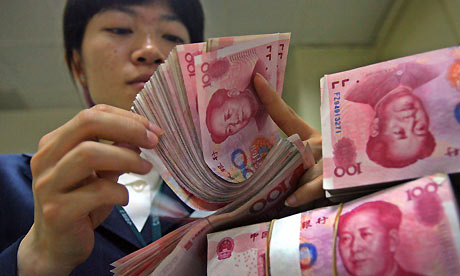
Half a trillion dollars. That's a lot of money -a lot of projects - and clearly a lot of opportunity for project managers. And that is the amount of money (about 3 trillion yuan) to be spent over the next 5 years on clean energy initiatives in China, such as a solar power generation system covering 100 counties in the country. According to a nice feature article in PM Network magazine by Sarah Fister Gale, China has the dubious distinction as the leading contributor in the world to CO2 emissions. So it is launching a program to cut its carbon intensity by 16 to 17 percent by 2015. Using a combination approach - both of which launch projects and programs - to reduce pollution and increase efficiency of existing plants (power and otherwise) and to initiate more renewable energy creation, the country is launching projects to:
We suggest you read the whole article here. And, as we have for years, we urge all project managers to develop their conversancy in the area of sustainability - because many of the projects, not just in China, but in the world, will be triggered by efforts such as this. Half a trillion dollars is a pretty good incentive! Or as our Chinese colleagues may say: |
Projects that have microbes doing our dirty work
|
In this nifty article from this past Sunday's Boston Globe, you can read about several companies in the Boston area and the projects they've initiated to harness the power of microbes. As you remember from the infamous H. G. Wells story, The War Of The Worlds, microbes have helped us before (in fiction) and now they are helping us again (in fact). These micro-organisms are being engineered and "hired" to clean waste water, produce fuel, or to sterilize hospital equipment. Project development time has increased orders of magnitude, even since the 1990s. Where it used to take 10 or 15 years to develop a new biological product, this can be done "at a much more accelerated pace", challenging not just the scientists and engineers invloved, but of course the project teams and necessarily the project manager. The companies involved here are Manus Biosynthesis, Cambrian Innovation, Ginkgo BioWorks, Novophage, and others. Cambrian, for example, is cultivating colonies of naturally-occurring bacteria that can serve as catalysts for chemical reactions, making them significantly more efficient. They activate with electrical impulses. These microbes were only discovered in 1999. When the microbes are grouped, they can convert CO2 into methane, making it easier to collect and therefore preventing CO2 from escaping into the air, and can also, in turn, generate electricity. Read the story. You can see the implications for large numbers of projects, and it reinforces our assertion that project managers should become more attuned to the language of sustainability and understand the opportunities it provides for PMs in fields such as this. Oh, and one more thing. Don't let the idea of engineered bio-products scare you too much. It was beginning to creep us out a bit as we read through it, but the authors make a really good point. Sitting in your house, or one very close to it, is an example of a genetically-engineered organism. There's a picture of one below:
Yep. Dogs are just genetically-modified wolves. And we (generally) trust these even with our little kids. In any case - check out the article and continue to build your knowledge in sustainability and project management; you may find yourself leading a project just like the ones in the story! |

State of the Green Business Report
|
Earlier this week, US President Barak Obama gave the annual "State of the Union Address", which you can read about here. Timed to go along with this, is the GreenBiz.org "State of the Green Business Report". The report, which measures 20 aspects of environmental performance, from carbon emissions to paper use and recycling, and attempts to answer the question, "Are we bringing a green economy into being?" The news for 2012: not so good. The report shows a slowing of momentum -- or even steps in the backwards direction, in some cases -- on some of the indicators. Among the downgraded topics include investments in clean technology innovations, overall energy intensity, certifications of LEED buildings, and paper use and recycling. We stress that project managers by virtue of their "Change Agent" mindset need to bring sustainability issues (economic, ecological and social) to the forefront. Heck, it's even in the name of our blog - People, Planet, Profits, & Projects - so we think we as Project Managers should be stepping up here, and reversing this negative trend, getting the momentum back - all in the positive direction. We suggest that an informed PM is the best PM. You can download the full report here. Want some good news? There is a short video clip from Joel Makower here, which explains how the CFOs of organizations are starting to take sustainability on as a traditional ongoing measure of success. Of course if you want to be informed we also would recommend our Cleland Award-winning book... The facts remain: good progress has been made. Looks like we slipped a little over the past year, but we can regain this momentum and you as project managers play a key role in bringing sustainability thinking to the forefront. |

Fighting Carbon with Carbon
|
Photo: Creative Commons copyright by James Hedberg Find some really cool physics animations and photos by James here.
What would it be like if we could make roofing surfaces - even wildly irregular roofing surfaces - into highly-efficient solar collectors? First of all, for those of you who are a little science-minded (and we're guessing there are a few of you here) you'll want to learn a little more about a new "wonder maerial" called graphene. Graphene is a one-atom-thick layer of carbon. Want to spend a moment to learn about it? You know you do. Have a look at this really nice video from Creative Science, an organization from the UK:
So now that you're familiar with the material, you see there are all sorts of possiblities (read that projects) for what we can do with it. Especially if the material happens to create electricity when it's sturck by light. Oh wait! It does that. See this link. Or see this link. OK, you can see that this has some carbon-fighting applications. So it's potentially "green". What does that have to do with project management? Well, it's actually very simple. The number of research projects and then actual application-based projects are huge. This 'wonder material' has reminded those of us old enough to remember, of the advance of silicon as a wonder material, and the cavalcade of electronics that followed that, employing literally millions of project managers and engineers. So we think this is worth your attention as a project manager. Stay tuned to this blog - we'll have more. |

Prelude to a Resolution - Conclusion
|
You may remember that before we sent 2011 off into the sunset and wished it good bye (or good riddance), we played devil's advocate. Below are some of the objections we hear to planning in sustainability to your projects. All are real, and all actually have some virtue (it's the ying and yang of PM, we suppose). We promised that early in 2012 we would play angel's advocate and explain why these objections to resolutions oughtn't, shouldn't, and mightn't make a (negative) difference to you, your projects, planet, people, and profits. So, as promised, below we repeat the 5 reasons to NOT consider sustainability in projects and now provide our reasoning (shown in vibrant purple) as to why – in fact – it IS VERY important to make sustainability a key consideration.
---------
5. My project has its own needs and must not be hampered by corporate or other enterprise 'weights'. I have enough to worry about with my project alone. We’d actually turn this one right onto its head. We’d say that if you DON’T take the time to connect your project to the strategic goals of your enterprise, you risk having an “outlier” project which has “success” unto itself, but because of its disconnectedness, is not really contributing towards enterprise success. Furthermore, your own success as PM and your own career path count on you knowing what’s important to the enterprise. We suggest you change your thinking. These sustainability considerations are not weights – okay, well they do carry some weight - think of them as jetpacks which can help power your project and energize your career. 4. I don't want to worry about how my project's product/service will be used in the long term - what a bother! I am a PM – my projects have defined beginnings and endings, and I work in the here and now. Yes. You work in the here and now. And yes, we have to keep our focus on what PMI calls “progressive elaboration” and “rolling wave planning” – where we use the near term to adjust the medium term. But don’t forget the long term. And don’t forget the holistic view of your project’s product. It will help you identify issues and risk you’d be blind to if not considered upfront. We have real, specific examples of where failing to do this has caused significant failure of the project itself. We’ve shared these on our blog in the past and will continue to do so in the future. 3. Since my project only runs for a short time, I don't need to run 'the project itself' efficiently. I just need to get it done. The operations people can worry about the steady-state. First of all, we have to give the obligatory answer that “every bit helps”, so that if you do make sustainability improvements within the project, it will contribute, even if in a small way, to the overall global effort. But the other piece is this. You are a project manager – that’s a change agent. Projects are about change, by definition. So what you do sets a sort of behavioral model for the company. So even if your efforts to be sustainability-focused are limited, they are likely to be emulated by others you touch in your organization. It is true that the steady-state of the project is owned by the operations people. But you know what? It’s very much your job as a project manager to empower the operations people to do their job efficiently – you set them up for success, including sustainability success. Again, if you stay tuned to EarthPM and/or read our book, you will find solid, real examples of these situations. 2. Any money or effort spent to 'green up' my project is money NOT spent on my REAL project. We’re all splitting one pie, so there is only so much to go around. The view expressed in this assertion indicates a win-lose situation. Only thing is…this is not a win-lose situation. The “pie” – if you wan to keep this analogy – is expandable. Just as we can give you many examples of how sustainability can enhance an enterprise’s bottom line, there are examples of how a project can actually benefit from money spent to make the project more efficient or ecologically responsible. 1. They've begun to find planets with similar characteristics to Earth. So, with regards to the earth and "using it up" - it's replaceable! So, what, me worry? Although this philosophy (assumption, really) that the earth has limitless resources has been the basis for much of our carelessness with regards to ecological sustainability (or the lack thereof). Let’s use this silly assertion above as a way to remind us that as planets go, right now we really only have the one. And, we reiterate: Have a very pleasant, safe, and fun New Year's and best of wishes to you, your people, projects, profits, and planets in 2012! |



