







Guessing is not a strategy: How to build decision velocity with AI and real-time data
June 10, 2026 | Live Webinar

You Can't Get They-ah From Hee-yah
Floating an idea into reality: the other side of the AI Project Paradox
The Environment of the Built Environment: an AI Paradox
6th, 6th Edfition, 6th Edition PMBOK, 7th Edition, 7th Edition PMBOK, 8th Edition PMBOK, 8th Edition PMBOK Guide, Activism, actuarial, actuary, adapt, addition by subtraction, Africa, africa, agriculture, airforce, ajaita, Alaska, amazon, analogous, analytics, ancient, and more power, antarctica, anti-science, apple, apps, architecture, arctic, arrakis, Artificial Intelligence, asch paradigm, Assistant, asthma, astronomy, automobile, automotive, autonomous cars, b, bankhar, Banksy Crypto, basalt, baseball, bats, batter, beauty products, benefit, benefits, Benefits Realization, beyond epica, biases, bicycle, big data, big dfata, big dig, bike, biodiversity, biomedicine, birdhouse, blockchain, blood, blue blood, blue trees, bluefin, bluefin tuna, book review, boston, boston university, Boyce, Brazil, brazil, Breakdown Structures, BS, building, buildings, built environment, built environment, bumblebee, cake, capacitor, car, Carbon, carbon, carbon capture, carbon negative, carbon neutral, carbon pool, carbon sequestration, carbonate, careers, CEO, ChatGPT, chatGPT, chatgpt, chatgpt, chess, China, china, chopsticks, citrus, cli-fi, climate, climate change, climate resilience, climeworks, Clumsy, CO2, co2, CO2 Utilization, coalition, cobalt, coffee pods, cognition, cognitive, Collabortion, colombia, concrete, Conflict, construction 5.0, cool projects xyloscope, cooling, coral, corn, cost of good quality, cost of poor quality, cost of quality, crazy, criticism of project management, cryptocurrency, CSR, csr, data, data analytics, data privacy, datacenter, dataset, death spiral, Decision Making, decomposition, Defense and Climate, definition of a project, deforestation, dependencies, dependency, desert, DIKW, dikw, dimopoulos, disposal, dna, DOD, dogs, dolphins, dream, drilling, drink, dune, dune, dutch, early start, earth, eatlocal, eco-tourism, ecological, economic, economics, EKC, electric grid, electricity, electronics, elysis, embodied carbon, emerging technologies, empower, Energy, energy efficiency, environmental degradation, escalate, escalation, ESG, extreme weather, fallacy, FARC, farming, finance, fish, fish brains, fishing, fix, fixing the earth, flint water, Flint Water Supply, flood, flooding, Food supply chain, food waste, forest, forest for the trees, forestation, forrestgump, frank herbert, Fruitcake, fungus, fusion, Galvao, garage, gas, gasoline, geese, gender equality, gender partnerships, generational differences, Generative AI, gladwell, gold, Goodness, google, Government, GPT, great pacific garbage patch, green, green building, green buildings, green energy, green iguana, green project, green project management, greening, guest post, gyre, harkonnen, Harvesting Benefits, hawasina, hedgehogs, heursitics, historical data, hlb, holitsic, holland, horseshoe crab, human-caused climate change, hydrogen, hydrology, ice, iceland, ignition, iguana, imagery, impact, india, inequality, information, initiatives, injection, insurance, intelligence, interacting risk, internal combustion engine, invasive species, investment, isomer, issue escalation, issues, ITER, jobs, Jupiter, justification, kids, kill point, knowledge, koch brothers, Kuznets, laboratory, LAL, landscape mode, lapampa, launch, LCA, Leadership, Leadership, life cycle analyses, life cycle analysis, lifecycle, Linkedin, liquid, lizard, local, long term, long-term, long-term thinking, look up, loud, maintenance, maker, makermovement, malcolm gladwell, management, marathon, marine biology, market, mars, Martin Luther King, mean, megawatt, MeHg, melting, mercury, metal, Microgrid, microplastics, migration, military, millennial, mindset, minerals, mission, mitigate, MLK, mongolia, museum, museum of london, nature, nematodes, net gain, Net Project Success Score, net zero, netherlands, network, New book, New Jersey, New Practitioners, new york, NFT, nitrogen, noise, noreaster, norway, nova, NPSS, NREL, ocean, ocean cleanup, ocean life, oil rig, oil rigs, oklahoma, oman, only murders in the building, opportunity, overall risk, oxygen, packaging, pareto, PBS, permafrost, persistence, peru, Pharmaceutical, planet, planet.com, planning, plant, plasma, plastic, playground, pm, pm education, pmbok, pmbok guide, pmnetwork, PMXPO-2018, podcast, pollutants, pollution, poop, poor, portfolio, power, power skills, privacy, privacy concerns, professors, program, Program Management, project, project leader, project leadership, project management, project management 3.0, project on fire, project progress, Project Success, project success, projecticity, projectleadership, projectmanagement, projects, psychology, pulse of the profession, purple bacteria, purpose, quiet, rainforest, rationale, reef, refugees, renewable, renewables, Repair, repair, repeatable process, repeatable processes, repurpose, research, resource breakdown strucuture, Resource Management, reversing climate change, revisionist history, rich, rigs2reefs, ripe, risk, risk avoidance, Risk Management, risk mitigation, risk response, risk responses, river, robots, rocks, rules of thumb, rural, rural India, russia, Sarcasm/Irony, satellite, saudi, schedule, sci-fi, Science, science, science-fiction, scientific american, screaming monkeys, sea, sea life, Sea-Level Rise, sea-level rise, seagreens, seawall, seawater, seawater temperature, seaweed. beat;es. farming, secondary risk, selena gomez, sequestration, shipping, skyscraper, SLR, smart cities, smart city, smelting, social, social pressure, soil, solar, solar panels, solar perovkites, solar saheli, sonic, sponge cities, SRI, stage-gate, stagegate, stakeholder, stakeholder management, steward, stewardship, storage, strategy, stupid, success, suffer, sulphur, sunk cost, supercapacitor, supply chain, survey, Sustainability, sustainability, Sustainable Investing, Sustainable Tourism, sybiosis, symbiosis, system 03, TBL, temperature, terraform, terraforming, test, threat, threats, totem, touchscreen, tour, tower, Trains, transparency, transportation, trash, tree, tree species, trees, trillion, triple bottom line, triple constraint, truth to power, UMass, us army corps of engineers, USDA, vacuum, value, venus, vision, voice, voltage optimization, vw scandal, washing machine, waste, wastewater, water, we mean business, whales, Whirlpool, wind, wisdom, women, Women in Project Management, wood wide web, woonerf, Work Breakdown Structures (WBS), world breakdown structure, worms, xian, xylotron, Yale


|
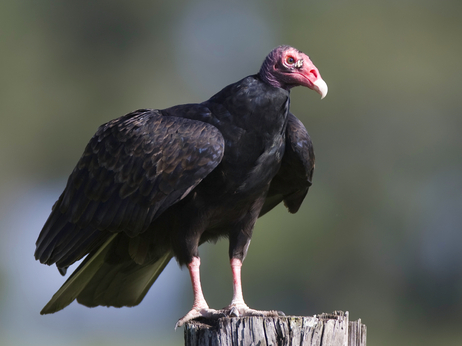
When you think about recycling, you probably think about an empty water bottle, an egg carton, and today's newspaper. The remains of the day, so to speak. But you could also think about one of nature's best recyclers - the vulture. And they are pretty good at recycling the 'remains of the day'. In an excellent posting on an excellent blog - "Krulwich Wonders" - Robert Krulwich writes about these amazing birds and their ability to reduce the remaining meat from dead animals to nearly nothing and to return nutrients back to the Earth. Krulwich says: "the bulk of the cleanup goes to the hero of my tale, nature's prize janitor — hard-working, efficient, unbeloved, unadmired and now down on its luck. I am talking about the vulture. The vulture needs a little bit of love ... ... not only because these busy birds clean up giraffes (and hippos and gazelles and lions in Africa) weighing, by one estimate, about 12 million kilograms, or the weight of about 200,000 men — but because they do it all over the world, gobbling up dead goats, cows, deer, rats at no charge, recycling that flesh back into other living things and then into the Earth. They are built for this work. They will spot a corpse from high in the sky, swoop down, then cautiously approach, while tens, then hundreds of other vultures, seeing a gathering, will join in. If the meat is getting a little skanky, they don't care. The have a digestive system that can handle bacterial biotoxins. Rotten meat doesn't make them sick. And if they get covered in blood and body parts, that's a plus, because the odor keeps lions and other enemies away. What's more, because their diet probably makes them taste bad, says biologist Bernd Heinrich, "few animals eat them." However, there's a problem. And it has to do with the product of a project. This particular project was to introduce the drug diclofenac for agricultural use in protecting cows in India and Pakistan from immflamatory diseases. The drug had been used in humans for decades without a problem but things changed when it was used on livestock. Again, from Krulwich: But the worst news is that vultures now have a drug problem. In Asia, where (in Hindu countries) cows are allowed to roam and die, where there are elephants, goats, monkeys and rats, vultures have held on, especially the white-rumped vulture. For centuries, the vulture was everywhere, living comfortably near human cities. Then, 20 years ago, very suddenly, it began to vanish. The collapse was so sudden, by the 1990s, biologists counted fewer than 10,000 individuals, mostly in Cambodia. What happened? It turns out that an American drug developed to protect cattle had become popular in Asia. It's an anti-inflammatory medicine called diclofenac. When vultures descended onto a diclofenac-infused cow, many of them suffered kidney failure. So many vultures feast on a single cow that just one feed can poison hundreds and hundreds of birds. The decline in the vulture population is one of the steepest ever seen in any bird. And here is some reinforcing info from a news story on this subject form Bird Life: In India, vultures have traditionally disposed of carcasses in cities, villages and the countryside, reducing the risk of disease and helping with sanitation. With the vultures gone, carcasses are likely to take much longer to be stripped, increasing the risk to health. Feral dogs are filling the scavenging void, and their growing numbers also increase risks to human health and safety: they are carriers of rabies. Here we see that the problem comes back and (excuse the pun) bites us humans, not only in the remvoal of an important piece of the mechanism nature uses to return nutrients to the Earth but also with the secondary risks of the un-eaten carcasses and new problems introduced by feral dogs. So what does this have to do with project managment and sustainability? The connections are there on two levels. First, there are the direct project implications of finding new drugs that will work with cows but still have low, or no, impact on the vulture population; and there is the direct connection in terms of research projects to narrow the cause to diclofenac. But there is also the higher level connection with regards to the product of the project - which was to expand the use of diclofenac to livestock. Did the project take into account the long-term use of the drug and its ramifications? Did the project take into account the entire natural system in which it was to be deployed? These are the questions that we assert that project managers need to ask. If you will allow us a bit of humor in this very serious topic, we need to think about the way that the project's product will - ahem - carrion. |
| The intersection of project management and sustainability that we began exploring several years ago is sometimes subtle. There are times when we have to delicately sift through - if you will excuse the expression - fifty shades of gray - to find and demonstrate how intimately the filaments of these two topics (sustainabiilty and PM) are gracefully intertwined. And then there are the times that it smacks us in the face.Like today. As this is being written, some 50,000 visitors from 190 countries are visiting Brazil for the Rio +20 United Nations Conference on Sustainable Development.
As visitors arrive here, according to this story from the Associated Press: "the problems visitors will see in Rio alone are daunting. Take the bay. Twenty years ago, when the last UN Earth Summit was held here, promises were made to clean it up. Since then, seven waste treatment stations have been built, but due to poor planning and corruption, only three of them work, and at a fraction of capacity. Even on Governor's Island, which houses both the international airport and the federal university of Rio de Janeiro, waste water pours unfiltered into the environment. The treatment plant there doesn't work either". Step back and think about that for a moment. Seven waste treatment plants. Three of them work. The four failures are attributed to "poor planning and corruption".
In this photo taken on Friday, June 15, 2012, a pig eats from a trash-ridden creek that runs towards the conference center where the United Nations Conference on Sustainable Development, or Rio+20, takes place in Rio de Janeiro, Brazil. The throngs streaming into Rio for the Earth summit may be dreaming of white-sand beaches and clear, blue waters, but what they are first likely to notice as they leave the airport is not the salty tang of ocean in the breeze, but the stench of raw sewage. (AP Photo/Victor R. Caivano)Not quite the image of Rio you expected, right? Let's see. Which discipline is it that creates a unique deliverable with a specified start and finsh time, applies a code of ethics and professional responsiblitiy, and gets things done? Like, for example, say, turning over a waste treatment plant that runs properly? I'm pretty sure you'll come up with the same answer that we did: project management. And what is the purpose of the seven waste treatment plant projects? To provide a more sustainable aquifer and water supply for Brazil's people. 50,000 attendees from 190 countries are seeing the results of failed projects. Four out of seven waste treatment plants not working. Project management - or the lack of it - right in their face. So here is an in-your-face example of how the two concepts are sometimes quite directly related. And 50,000 ecology-minded individuals are seeing firsthand what happens when the project management discipline isn't successful (although to be fair, we're sure that there are other disciplines who have 'helped' in these failures). These examples of Green By Definition1 Projects quite strikingly demonstrate the intersection of PM and sustainability. We hope it will increase the awareness in the PM community to look for the sustainability aspects of their proejcts which likely do not have the direct environmental impact of a waste treatment plant. And we hope also that it will reiterate the importance of providing whatever deliverable(s) your own project was meant to deliver.
1 Green Project Management, Maltzman and Shirley 2011 |
|
The first word our blog's title is People. And it's been said that project managers don't manage projects, they manage people - who then execute projects. We often focus on the other three elements (planet, profits, and projects),but this post shows that good work done in the "people" area flows easily to the other aspects of the QBL (Quadruple Bottom Line). This post is about the Corporate Social Responsiblity (CSR) efforts of a couple of companies - about how they are initiating projects that help people. We start with New Balance. Ane we'd like to have you start with a look at this brief editorial from today's Boston Globe: "Lately, the notion that commuter rail can reliably meet the needs of local employers often seems in doubt amid the MBTA’s money troubles, and efforts to promote bicycling as a serious means of commuting sound to skeptics like an urban planner’s pipe dream. Which make the role that New Balance, the local athletic-shoe maker, is playing in the local transportation landscape all the more noteworthy. New Balance has for the last two years paid for the shoveling of the Charles River bicycle and running paths during the winter months. Last year, the company also became the corporate sponsor of the Hubway bike-sharing system. Promoting outdoor activity is good PR for a Boston-based company that makes athletic apparel. But the company’s willingness to tie its name to bicycling also has a legitimizing effect on an insurgent form of transportation. Meanwhile, New Balance’s commitment to pay for a new rail stop near its planned mixed-use development is another significant statement. The MBTA has been under siege in recent years as its financial woes have deepened, and recently approved price hikes are bound to discourage some riders. The New Brighton Landing stop, as the facility will be known, will fill a need in an underserved neighborhood. It’s also a clear vote of confidence in the viability of the rail system. If this is a self-interested move on New Balance’s part, well, so much the better: The company’s presumption that rail service for its employees is worth millions of its own dollars sends a strong message to everyone else." What we see here is a company doing the right thing - funding portfolios of projects that align with its overall mission statement, and enhancing its brand name to the point where a major newspaper is effectively helping it advertise its image. And we see that by doing the right thing, they are doing things right - one of the 5 Assertions that form the foundation of our book Green Project Management. From New Balance's web page, here is a fairly inspirational statement: ---
We are catalysts for movement.
Working together. Building momentum.
This is how we move.
---
New Balance is aligning its strategy with its projects, and using its projects to help project its brand and stay true to its mission. We think this is a great example, and it's reassuring to see them get some good public press from their project efforts. That good press helps their image. A good image drives sales - and revenues - and profits. This builds morale. Visibility of projects like these helps project managers with a bent for sustainability and CSR link their 'workaday" projects to the more lofty goals. It's then up to the individual project managers to make that connection. When companies do what New Balance is doing, it's much easier. And it's not just consumer product companies; we've seen a similar effort from Alcatel-Lucent and its contribution with the creation of the non-profit GreenTouch consortium and their recent breakthrough in huge energy savings in the telecom/IT world with their Bit-Interleaved Passive Optical Network protocol. Visible programs such as those by Alcatel-Lucent and New Balance help the project manager who is working on a new optical product release, or a new atheletic shoe, connect their project's 'sustainability goals' to corporate goals.
Take a lesson from these companies. If you're a corporate executive, note the good press they're getting, sense the way it makes their employees (including project managers) feel. If you're a project manager, find out what similar efforts your company has undertaken. Use them as inspirations for your projects and use them to help demonstrate why you are 'psyched' about sustaianbility elements in your project, and how they go do indeed serve but also go beyond altruism; it really is about People, Planet, Profits, and Projects. |
|
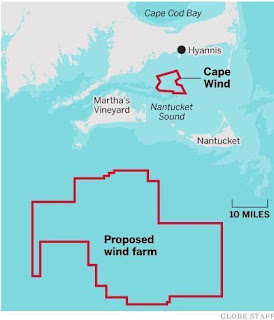
Yeah, okay, okay, so it's Rhode Island. Still, Today's Boston Globe is reporting that ten developers are lined up to potentially build what would be a wind energy area larger than the US State of Rhode Island. We blog about this for two main reasons. 1. This is huge. Literally. Many project managers may gain employment from the project as it is conceived and built. 2. The connection to PM planning - especially in light of the Cape Wind project and its delays, this is huge. Figuratively. Number 1 above is so obvious, given the cpacity of 4 Gigawatts of power, that we'll leave that to your imagination.
Here is what we do not want to leave to your imagination: the importance of stakeholder management and its deep connection to project risk identification, analysis, and response. See, you thought this post was going to be all about renewable energy and Mother Earth, and butterflies and unicorns, didn't you? But there are hardcore PM lessons to be learned in the area of sustainability and PM, and many of them are in play based on this article alone. Here is an introductory snippet from the article: "The wind farms would be built in an expanse of federal waters larger than Rhode Island, about 14 miles south of Martha’s Vineyard and identified by the US Bureau of Ocean Energy Management as an ideal place for such development. After more than two years of talks with local and state officials, environmentalists, fishermen, and tribal leaders..." You see? The tribal leaders were included up front, as were environmentalists and the fishing industry. This was not the case with Cape Wind. Here is another piece: Developers say wind energy areas will also be the proving ground for the next generation of wind turbines, each capable of generating 5- to 7-megawatts worth of power and being located far enough offshore so they would not be visible to many people. The prospect of turbine towers visible to Cape Cod landowners sparked much of the opposition to Cape Wind. Our favorite overall quote is here - indicating the benefit of long-term thinking when identifying risk and stakeholders, and how the two go hand-in-hand: “The federal government is working with the state to try and ensure that by investing a lot of their energy on the front end, it will be easier for a company to take a project through the permitting and approval process". What they are saying is that by doing a thorough job of identifying a wide variety of stakeholders, and through that expanded list of stakeholders fully and deeply identifying their areas of concern, we have a more intelligenlty articulated set of risks (both threats and opportunities) that we can analyze and respond to properly, rather than uncover haphazardly as we start (trying to do) the construction of the project. Note the comments from Tommy Beaudreau, director of the Bureau of Ocean Energy Management: "one of the main goals of designating the wind energy areas is to streamline the approval process for offshore wind projects". Beaudreau’s agency was particularly deliberate in determining the wind energy area off Massachusetts in an effort to minimize conflicts like those experienced by Cape Wind, which faced a decade of opposition and legal fights before winning federal and state approval in 2010. The project still faces appeals. “It’s really about trying to design or make available areas up front that have buy-in from the states and communities,’’ Beaudreau said. “There are a lot of takeaways from Cape Wind.’’ We're sure you read that like we did. Takeaways = Lessons Learned. Do a better job of stakeholder identification. This will enable you to do an exponentially better job of risk identification, which will yield a significantly better job of risk analysis and response. And what that means is that the project - whether it be something as important as this and as large as a US state - or a new deck for your back yard, has a much better chance of getting done, and getting done properly. |
|
We were recent guests of The Sustainability Learning Centre - a partner of the prestigious Network for Business Sustainability. We gave a 45-minute presentation and took some questions. And they captured the whole thing on WebEx, for you to view for absolutely free – here . Rather than a long blog post - we invite you to let the webinar literally speak for itself! |
|
"Brevity is the soul of lingerie." - Dorothy Parker |