


What's the role of government in boosting renewable energy projects?
Categories:
Government
Categories: Government


|
Leapfrogging from our last post, "Plug or Play", in which the electric utilities communicate to their customers that electric use will be around for a long time, and keeping in mind that moving to electric vehicles (although a good thing) will also transfer a large load of electric demand on the generation of electricity, what's being done to make sure that the electric utilities generate their power from renewables, rather than fossil fuels? And, what role does - or should - government have in that motivation? They're unlikely to do it themselves, especially if the profit margins are lower and/or they have to charge us more for their product, right? With that in mind, we'd like to draw your attention to an article from today's Cape Cod Times - a short one - and have you read that and let us know what role you think the government should have in 'persuading' electric utilities to move towards renewables. As you see from the article, this generates (excuse the pun) work for project managers. Here is the link. Please read the article, "Green Energy Gets a Boost", and come back here when done. (Humming sound from author) (A little more humming, follwed by a tapping of fingers on the desktop) (More humming, and a yawn...) Oh, good. You're back! You read the article, right? *Sigh*, if you didn't read the article (tsk, tsk), here is a snippet that will help you finish this post with at least some sense of satisfaction: The bills, now before a conference committee, increase the amount of electricity from renewable energy projects that can be sold back into the grid. Both require a more than doubling of the renewable energy utilities must buy. Buying the power would require competitive bidding, a measure that is considered a response to the noncompetitive process used by Cape Wind to sell more than 75 percent of the power from the proposed Nantucket Sound wind farm to NStar — now owned by Northeast Utilities — and National Grid. When Cape Wind entered into contracts with the two utilities it was allowed to do so without going out to bid. So, what do you think? Is this a good role for government? Do you think, that as we wait for renewable energy sources to come down in price, the government should incentivize the utilities to buy renewable energy? Should the government, instead, be incentivizing companies to work on new ways to generate renewable energy more inexpensively? Or both? We'd love to hear from you. If you have the energy. |

Plug or Play
|
According to Cl There are pilot cities that are participating in the deployment. It just so happens that there is a recent (May 2012) publication called the EV City Casebook, A Look at the Global Electric Car Movement. It highlights cities like Amsterdam, Berlin and Hamburg, Portland, Oregon, New York City, LA, Shanghai, and areas like the Research Triangle in North Carolina, Goto Islands, Japan, and North East England as being on the leading edge. That’s the good news. However, looking closer at the Casebook it shows that to date there is little progress toward the goal. The US is looking to put 1 million electric cars on the road by 2015. In a report in Forbes in June, the number 3.5 million by 2015 is being floated. 3.5 million is a long way from 20 million. However, the EV City Casebook does a great job looking into the individual cities and their relationship to sustainability. For instance, take Amsterdam. There is an expectation that by 2040, “nearly all kilometersdriven will be powered with electricity generated by windmills, solar panels and biomass plants. The canals will be filled with silent electric boats. Cargo will be transported over the road and water using electric power. The city will even smell better and sound quieter thanks to electric transport. Fossil fuels will be unnecessary when travelling in the city. Harmful emissions will be dramatically reduced, as will the costs of electric transport. All of this will make Amsterdam an attractive city in which to live, work and play —all thanks to developments that are being put in motion today.” Amsterdam, with a population of 780,000+ expects to have 10,000 EVs on the road by 2015. One thing that particularly caught my eye in the section on the city of Hamburg, Germany, was a highlighting of the lessons learned;
The electric car, or should I say an electric car, has been designed, developed, and implemented, but the project does not end there. There has to be a wider spread acceptance. Countries are looking into various incentives to encourage the purchase and usage of EVs. Perhaps one day we will be able to have better smelling and quieter cities. And remember, we think that part of the project should be to consider the effects and methods of generating the power so that there is something coming down the line when the EVs are plugged in to charge. We also think that the project include the ultimate method of disposal of all of the EV after its useful life (batteries included in this case). |
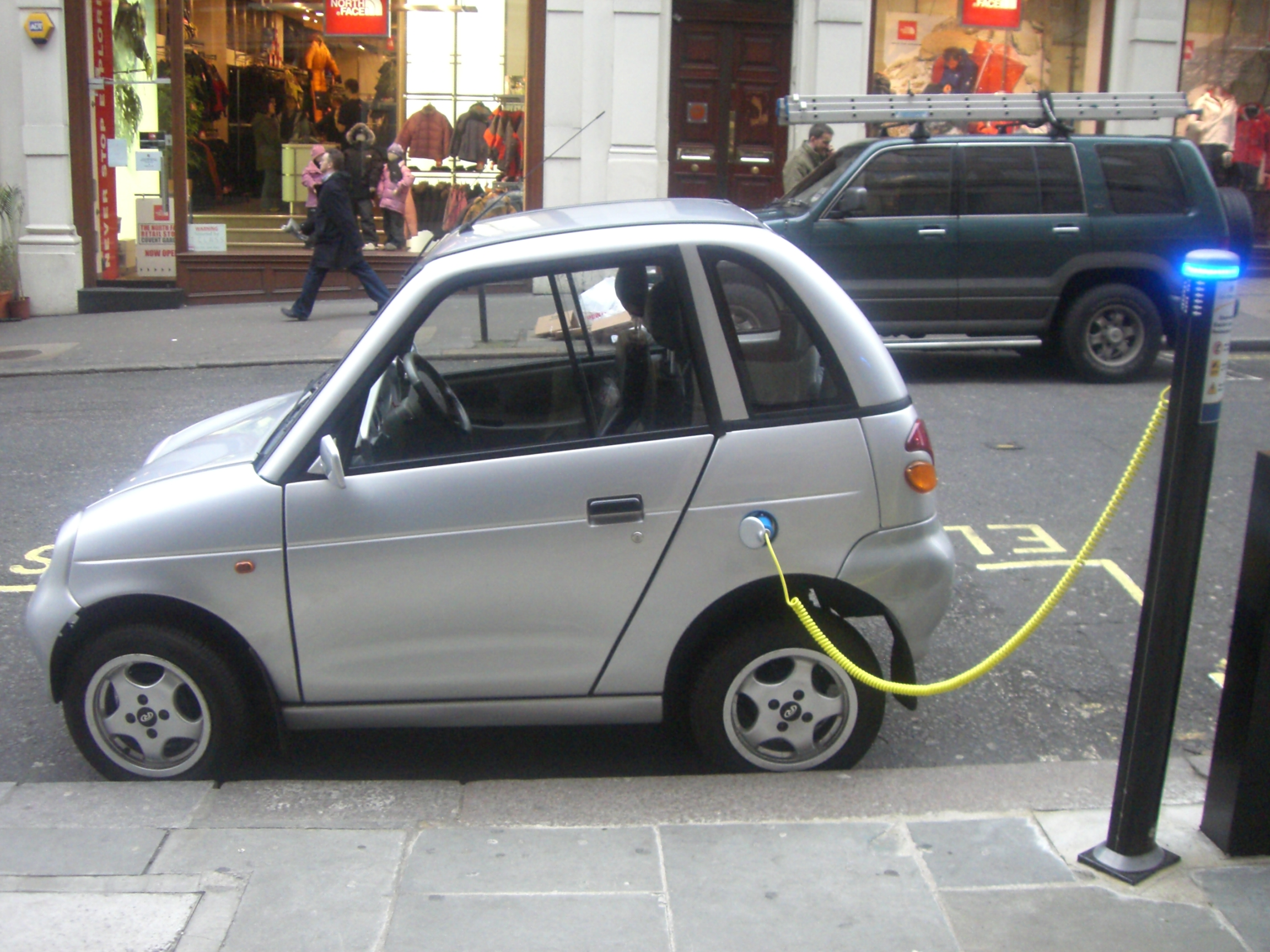
 I recently saw an advertisement from our local electric utility. It showed electrical plugs being plugged into power strips, outlets, etc. The message was that electric usage will be here for a long time. The message certainly wasn’t about energy conservation as it was about the fact that we will continue using a lot of it. What caught my eye, though, was in the last scene, the worker, with hard hat and all, is shown plugging in a Chevy Volt with the utilities name emboldened on the door. It got me thinking about electric cars and the polarized factions for and against. So I wondered, what is really happening with electric cars worldwide.
 ean Energy Ministerial
The Vulture, The Cow, and The Diclofenac
Categories:
Pharmaceutical
Categories: Pharmaceutical
|
When you think about recycling, you probably think about an empty water bottle, an egg carton, and today's newspaper. The remains of the day, so to speak. But you could also think about one of nature's best recyclers - the vulture. And they are pretty good at recycling the 'remains of the day'. In an excellent posting on an excellent blog - "Krulwich Wonders" - Robert Krulwich writes about these amazing birds and their ability to reduce the remaining meat from dead animals to nearly nothing and to return nutrients back to the Earth. Krulwich says: "the bulk of the cleanup goes to the hero of my tale, nature's prize janitor — hard-working, efficient, unbeloved, unadmired and now down on its luck. I am talking about the vulture. The vulture needs a little bit of love ... ... not only because these busy birds clean up giraffes (and hippos and gazelles and lions in Africa) weighing, by one estimate, about 12 million kilograms, or the weight of about 200,000 men — but because they do it all over the world, gobbling up dead goats, cows, deer, rats at no charge, recycling that flesh back into other living things and then into the Earth. They are built for this work. They will spot a corpse from high in the sky, swoop down, then cautiously approach, while tens, then hundreds of other vultures, seeing a gathering, will join in. If the meat is getting a little skanky, they don't care. The have a digestive system that can handle bacterial biotoxins. Rotten meat doesn't make them sick. And if they get covered in blood and body parts, that's a plus, because the odor keeps lions and other enemies away. What's more, because their diet probably makes them taste bad, says biologist Bernd Heinrich, "few animals eat them." However, there's a problem. And it has to do with the product of a project. This particular project was to introduce the drug diclofenac for agricultural use in protecting cows in India and Pakistan from immflamatory diseases. The drug had been used in humans for decades without a problem but things changed when it was used on livestock. Again, from Krulwich: But the worst news is that vultures now have a drug problem. In Asia, where (in Hindu countries) cows are allowed to roam and die, where there are elephants, goats, monkeys and rats, vultures have held on, especially the white-rumped vulture. For centuries, the vulture was everywhere, living comfortably near human cities. Then, 20 years ago, very suddenly, it began to vanish. The collapse was so sudden, by the 1990s, biologists counted fewer than 10,000 individuals, mostly in Cambodia. What happened? It turns out that an American drug developed to protect cattle had become popular in Asia. It's an anti-inflammatory medicine called diclofenac. When vultures descended onto a diclofenac-infused cow, many of them suffered kidney failure. So many vultures feast on a single cow that just one feed can poison hundreds and hundreds of birds. The decline in the vulture population is one of the steepest ever seen in any bird. And here is some reinforcing info from a news story on this subject form Bird Life: In India, vultures have traditionally disposed of carcasses in cities, villages and the countryside, reducing the risk of disease and helping with sanitation. With the vultures gone, carcasses are likely to take much longer to be stripped, increasing the risk to health. Feral dogs are filling the scavenging void, and their growing numbers also increase risks to human health and safety: they are carriers of rabies. Here we see that the problem comes back and (excuse the pun) bites us humans, not only in the remvoal of an important piece of the mechanism nature uses to return nutrients to the Earth but also with the secondary risks of the un-eaten carcasses and new problems introduced by feral dogs. So what does this have to do with project managment and sustainability? The connections are there on two levels. First, there are the direct project implications of finding new drugs that will work with cows but still have low, or no, impact on the vulture population; and there is the direct connection in terms of research projects to narrow the cause to diclofenac. But there is also the higher level connection with regards to the product of the project - which was to expand the use of diclofenac to livestock. Did the project take into account the long-term use of the drug and its ramifications? Did the project take into account the entire natural system in which it was to be deployed? These are the questions that we assert that project managers need to ask. If you will allow us a bit of humor in this very serious topic, we need to think about the way that the project's product will - ahem - carrion. |

The Last Dam Summer
|
This is the largest dam removal project in history, estimated to cost $350 million. However, included in that cost is; a new water purification system for Port Angeles, a nursery for native plants to restore the shoreline of the reservoir behind the dams, a $16 million tribal fish hatchery and extensive scientific research and monitoring. While controversial (there are factions that are unhappy with having hatchery fish compete with wild populations), a large part of the LEKT tribal income if derived from fishing. The hatchery is intended to supplement or at least maintain a fishery until wild populations take over. There continues to be an ongoing battle between the advocates against the hatchery and the pro-hatchery advocates. That will probably be played out in court. So the profit aspect of the 3 Ps is less obvious, and it’s not always about money (although it helps). For more information see the article in the Jan/Feb 2012 issue of American Angler magazine and visit the website of the National Park Service for their perspective and update. |
 So as not to discriminate between the right coast and the left coast, I want to talk about a west coast project. “The Last Dam Summer” is the slogan adopted by Olympic National Park for the months preceding the removal of two dams on the Elwha River in Washington State. The Olympic Peninsula is a large arm in the western part of the state across Puget Sound from Seattle. The people aspect affected by the removal of the dams is very diverse. Affected are various sporting groups who advocate the creation of a barrier free environment for anadromous fish, like salmon that need to return to freshwater to spawn, state and federal agencies who will help fund and oversee the project, and the Lower Elwha Klallam Tribe (LEKT), a group of native Americans who home was at the mouth of the river for thousands of years.
  The planet aspect of the affected by the dam removal project is more straightforward, more or less anyway. The LEKT has been struggling for two decades to bring migratory fish back into the 70 miles of mainstream river and tributaries. The removal of the dam will open up some of the most pristine fish habitat in the Lower 48. Prior to the construction of the two hydroelectric dams, Glines Canyon and Elwha Dams, the Elwha River hosted large runs of North American Pacific salmon, summer and winter steelhead (a sea run rainbow trout), and Chinook salmon in excess of 100 pounds in weight. It also had a healthy population of native rainbow trout. The dams changed the ecosystem. Bug life, so important to the fish, was drastically altered by the change from free running water to still water behind the dam. As a result, fish population dwindled, coupled with the inability of the anadromous fish to breach the dam, the fishery went into a severe decline. Even after the dams are removed the recovery isn't a quick process. Optimistically, it could take as little as 5 years to see significant recover, but it may take as long as 30 years. At least there is a chance, now.
In their face!
| The intersection of project management and sustainability that we began exploring several years ago is sometimes subtle. There are times when we have to delicately sift through - if you will excuse the expression - fifty shades of gray - to find and demonstrate how intimately the filaments of these two topics (sustainabiilty and PM) are gracefully intertwined. And then there are the times that it smacks us in the face.Like today. As this is being written, some 50,000 visitors from 190 countries are visiting Brazil for the Rio +20 United Nations Conference on Sustainable Development.
As visitors arrive here, according to this story from the Associated Press: "the problems visitors will see in Rio alone are daunting. Take the bay. Twenty years ago, when the last UN Earth Summit was held here, promises were made to clean it up. Since then, seven waste treatment stations have been built, but due to poor planning and corruption, only three of them work, and at a fraction of capacity. Even on Governor's Island, which houses both the international airport and the federal university of Rio de Janeiro, waste water pours unfiltered into the environment. The treatment plant there doesn't work either". Step back and think about that for a moment. Seven waste treatment plants. Three of them work. The four failures are attributed to "poor planning and corruption".
In this photo taken on Friday, June 15, 2012, a pig eats from a trash-ridden creek that runs towards the conference center where the United Nations Conference on Sustainable Development, or Rio+20, takes place in Rio de Janeiro, Brazil. The throngs streaming into Rio for the Earth summit may be dreaming of white-sand beaches and clear, blue waters, but what they are first likely to notice as they leave the airport is not the salty tang of ocean in the breeze, but the stench of raw sewage. (AP Photo/Victor R. Caivano)Not quite the image of Rio you expected, right? Let's see. Which discipline is it that creates a unique deliverable with a specified start and finsh time, applies a code of ethics and professional responsiblitiy, and gets things done? Like, for example, say, turning over a waste treatment plant that runs properly? I'm pretty sure you'll come up with the same answer that we did: project management. And what is the purpose of the seven waste treatment plant projects? To provide a more sustainable aquifer and water supply for Brazil's people. 50,000 attendees from 190 countries are seeing the results of failed projects. Four out of seven waste treatment plants not working. Project management - or the lack of it - right in their face. So here is an in-your-face example of how the two concepts are sometimes quite directly related. And 50,000 ecology-minded individuals are seeing firsthand what happens when the project management discipline isn't successful (although to be fair, we're sure that there are other disciplines who have 'helped' in these failures). These examples of Green By Definition1 Projects quite strikingly demonstrate the intersection of PM and sustainability. We hope it will increase the awareness in the PM community to look for the sustainability aspects of their proejcts which likely do not have the direct environmental impact of a waste treatment plant. And we hope also that it will reiterate the importance of providing whatever deliverable(s) your own project was meant to deliver.
1 Green Project Management, Maltzman and Shirley 2011 |




