


El nuevo perfil del Director de Proyectos. / The new profile of the Project Director.


| El nuevo perfil del Director de Proyectos. Ya no va más un director de orquesta. Definitivamente el mundo de hoy tiene un comportamiento bastante acelerado y con actores en el mercado con otras cualidades y necesidades. Partiendo de mi experiencia en proyectos de transformación digital en los dos últimos años, así como considerando las tendencias en dirección de proyectos que nombré en mi blog anterior y que invito a que lo lean (https://www.projectmanagement.com/blog-post/50254/Tendencias-en-Direcci-n-de-Proyectos-para-el-a-o-2019---Trends-in-Project-Management-for-the-year-2019), todo indica que los negocios y los proyectos cada vez más entra en el mundo VUCA (siglas en ingles que significa: volátil, incierto, complejo y ambiguo), lo cual hace que el perfil del Director de Proyectos también se ajuste a las nuevas necesidades del mercado.
Donde su guía es importante para el desarrollo y culminación con éxito del producto y/o servicio final. Donde la planificación y acciones a seguir se basa mucho de la experiencia del director de proyecto o se sigue una partitura (planificación) rígida y muy predictiva. El mercado laboral ha cambiado, hoy en día existe un porcentaje alto de fuerza laboral millennials, donde sus principales características son: 1. Son nativos digitales 2. Tienen mayor capacidad multitarea 3. Están más y mejor preparados 4. Son hijos de la globalización 5. Son menos conformistas Este mercado millennials al no ser conformistas y estar mejor preparados, no buscan en los trabajos jefes que les den ordenes y/o indicaciones; buscan retos, buscan crecer, buscan tener oportunidades de aportar y buscan ser considerados en la toma de decisiones. Todo este entorno y perfil del mercado laboral hace que el Director de Proyecto también cambie su estrategia de trabajo, ya no se ve como un director de orquesta, sino como una BRUJULA. No se aparta de lo básico y siempre necesario de un Director de Proyectos, pero si debe contar con otras habilidades y comportamientos necesarios en este entorno. Los nuevos comportamientos que creo que debe tener un Director de Proyectos en este nuevo entorno son: 1. Ser un priorizador. Una de las funciones principales del Director de Proyectos hoy en día es priorizar las actividades a los colaboradores, dar ese norte que necesita el colaborar en momentos en los cuales tiene varias acciones que hacer. Ya no se le dice que hacer, sino cuál es la prioridad y el colaborar si siente más a gusto para poder tomar las decisiones y acciones de acuerdo con esa prioridad. 2. Ser un Servant Leader, es decir, un líder basado en el servicio. Ya no se busca ser un líder guía, fuerte, luchador; las cuales son buenas cualidades, pero hoy en día se busca ser un líder servicial, donde su principal función es eliminar los bloqueantes que puedan tener los colaboradores y que no le permitan realizar sus funciones de la manera adecuada. En segunda instancia queda la pregunta ¿Cómo van?, ahora la principal pregunta es ¿En qué puedo colaborar? ¿Qué bloqueante tienes? 3. Ser un desarrollar de colaboradores, aunque este no es un tema nuevo se vuelve más crítico en un ambiente donde los colabores desean crecer de manera exponencial, donde estar en lo mismo en periodos continuos los aburre y buscan nuevos rumbos. Un director de proyectos debe siempre buscar mecanismos de crecimiento para sus colaboradores, ellos crecen… todos crecemos. 4. Ser un desarrollar de autonomía, cada vez más los equipos tendrán una mayor autonomía, como células vivas y auto organizadas. Si bien la autonomía permite que los colaboradores participen en la toma de decisiones, la misma debe ser desarrollada de una manera controlada y teniendo en claro el norte completo del equipo y proyecto. Creo firmemente que debe existir una planificación macro y desarrollo autónomos, cuyo alcance de autonomía dependerá del tipo de proyecto. 5. Ser un padre, debe alejarse, creo que es lo más difícil, uno que está acostumbrado a estar siempre en la toma de decisiones, debe aprender a dar el espacio suficiente para que el equipo pueda aplicar nuevas ideas, temas de innovación, business intelligence, inteligencia artificial, etc. Acá hago un símil como si uno fuera un padre, aunque nos gustaría tomar todas las decisiones de nuestros hijos, para evitar que sufran daño, es necesario permitir que ellos mismos tomen sus decisiones y en muchos casos son mejores que las que nosotros hubiésemos tomados. Este enfoque del nuevo perfil del Director de Proyecto es independiente del acercamiento que se desea dar a la gestión del proyecto, ya sea más ágil o predictivo, el director de proyecto seguirá siendo una parte fundamental de los mismos, pero debe también aprender a desarrollar al equipo y así desarrollarse a sí mismo. El director de Proyecto es una brújula, siempre necesario para mantener el norte, pero no indispensable para dar un paso.
English Version. The new profile of the Project Director. It is no longer going to be like an Orchestra Director. Definitely the world today has a fairly fast behavior and with actors in the market with other qualities and needs. Based on my experience in digital transformation projects in the last two years, as well as considering the trends in project management that I named in my previous blog and that I invite you to read (https://www.projectmanagement.com/blog- post / 50254 / Trends-in-Project-Direction-for-the-year-2019 --- Trends-in-Project-Management-for-the-year-2019), everything indicates that business and Projects increasingly enters the world VUCA (acronym in English meaning: volatile, uncertain, complex and ambiguous), which makes the profile of the Project Manager also meets the new market needs. Back already the Project Director was seen as an Orchestra Director, where his main function was to indicate at what time was the entrance or exit of each project specialist in order to harmonize the team, seen as a leader with which the orchestra She feels safe and calm, being the person who should always give the solution and face the problems directly. Where your guide is important for the development and successful completion of the product and / or final service. Where the planning and actions to be followed is based a lot on the experience of the project manager or a rigid and highly predictive score (planning) is followed. The labor market has changed, today there is a high percentage of millennials labor force, where its main characteristics are: 1. They are digital natives 2. They have a greater ability to multitask 3. They are more and better prepared 4. They are children of globalization 5. They are less conformist This market millennials not to be conformist and be better prepared, do not look for in the chief works that give them orders and / or indications; They look for challenges, seek to grow, seek opportunities to contribute and seek to be considered in decision making. All this environment and profile of the labor market makes the Project Manager also change his work strategy, he no longer looks like an orqueta director, but as a COMPASS. It does not depart from the basic and always necessary of a Project Director, but must have other skills and behaviors necessary in this environment. The new behaviors that I believe a Project Director should have in this new environment are: 1. Be a priority. One of the main functions of the Project Manager today is to prioritize the activities to the collaborators, to give that north that he needs to collaborate in moments in which he has several actions to do. He is no longer told what to do, but what is the priority and collaborate if he feels more at ease to be able to make decisions and actions in accordance with that priority. 2. Being a Servant Leader, that is, a leader based on the service. It is no longer sought to be a leader leader, strong, fighter; which are good qualities, but today seeks to be a servant leader, where its main function is to eliminate blockers that may have collaborators and not allow him to perform their duties in the right way. In the second instance, the question remains: How are they going? Now the main question is: How can I collaborate? What blocker do you have? 3. Being a collaborator, although this is not a new topic, becomes more critical in an environment where collaborators want to grow exponentially, where being in the same in continuous periods bores them and they look for new directions. A project manager must always look for growth mechanisms for their collaborators, they grow ... we all grow. 4. Being a development of autonomy, more and more teams will have greater autonomy, as living cells and self-organized. Although autonomy allows collaborators to participate in decision-making, it must be developed in a controlled manner and keeping in mind the complete north of the team and project. I firmly believe that there must be autonomous macro planning and development, whose scope of autonomy will depend on the type of project. 5. Being a father, must move away, I think it is the most difficult, one that is used to being always in decision making, must learn to give enough space for the team to apply new ideas, innovation topics, business intelligence, artificial intelligence, etc. Here I make a simile as if one were a father, although we would like to make all the decisions of our children, to avoid that they suffer damage, it is necessary to allow them to make their own decisions and in many cases they are better than what we would have taken. This approach of the new profile of the Project Director is independent of the approach that one wishes to give to the management of the project, be it more agile or predictive, the project manager will continue to be a fundamental part of them, but he must also learn to develop the team and thus develop itself. The project director is a compass, always necessary to maintain the north, but not indispensable for him to take a step. |
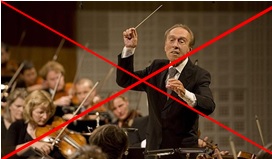 Atrás ya quedo el Director de Proyectos visto como un Director de Orquesta, donde su principal función era indicar en qué momento era la entrada o salida de cada especialista del proyecto con el fin de armonizar al equipo, visto como un líder con el cuál la orquesta se siente segura y tranquila, siendo la persona que siempre debía dar la solución y enfrentar los problemas directamente.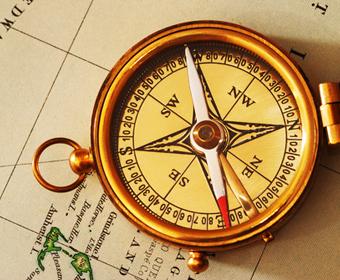
Tendencias en Dirección de Proyectos para el año 2019. ¿En Ecuador qué? / Trends in Project Management for the year 2019. In Ecuador what?
| Para el año 2019, de acuerdo al informe de La Comisión Económica para América Latina y el Caribe (Cepal) presentado el 20 de diciembre del 2018, se espera un crecimiento económico del 0.9% para Ecuador y del 1.7% para toda la región. Esta proyección en el entorno económico permite prever que no habría un repunte de grandes proyectos en nuestro país. Sin embargo, a lo antes indicado, es claro que los proyectos son el único mecanismo que pueden producir los cambios que nuestra sociedad y empresas necesitan y por otro lado que nuestra cultura de proyectos se encuentra retrasada con nuestros vecinos Colombia y Perú en al menos 15 años. En el año 2019, Ecuador ya cuenta con dos Capítulos oficiales del Project Management Institute – PMI®, lo cuál catalizará la cultura de Dirección de Proyectos y la profesión del Director de Proyecto en todo el país. De acuerdo a lo antes indicado las cuatro principales tendencias que estarán en nuestro país son:
Al igual que la tendencia a nivel mundial, las habilidades blandas serán un nuevo foco de atención en las capacitaciones. Conceptos con Servant Leadership (liderazgo basado en el servicio), comunicación efectiva, trabajo en equipo, serán principales necesidades de capacitación.
De la mano de la transformación digital que algunos segmentos económicos han comenzado a incursionar en el 2018, tendremos cada vez más entornos ágiles con las principales opciones mundiales antes presentadas.
De acuerdo con estadística del PMI® en Ecuador menos del 0.1% del total de la población cuentan con alguna de su certificación internacional en Dirección de Proyectos. Se espera que en el 2019 este número comience a crecer de manera exponencial alineado a las tendencias mundiales de profesionalismo, rol estratégico que los Directores de Proyectos y en sí la cultura de Dirección de Proyectos está obteniendo.
La importancia de las métricas es cada vez más clara en Ecuador, la falta de estadística e información sobre los proyectos de una empresa, segmento de mercado y del mismo Ecuador nos está llevando a la necesidad de contar cada vez con mejores herramientas de registro y gestión de Proyectos. La presencia de Plataformas de Gestión de Proyectos, PPM (Portafolio and Project Management), para llevar todas las métricas que se presenten durante todo el ciclo de vida del proyecto, programa y/o portafolio de la empresa, serán clave en el 2019.
De acuerdo a la encuesta mundial realizado por el PMI® en el 2018, aquellas empresas que tienen un bajo nivel de madurez en Dirección de Proyectos, sólo el 56% de la gestión de sus proyectos cumplen con los objetivos planteados. De allí la importancia de invertir en el desarrollo de cultura, conocimiento, herramientas y sistemas en gestión de proyectos que permitan mejorar el desarrollo de los proyectos durante todo su ciclo de vida, siendo eficientes con los recursos y ampliando los beneficios que la empresa pueden lograr con una correcta gestión y desarrollo de los mismos. Una vez más deseo enfatizar que no existe una manera lineal del desarrollo de la Dirección de Proyectos, pero el conocer de estas tendencias mundiales y locales nos van a permitir prepararnos para el futuro.
English Version
Trends in Project Management for the year 2019 In Ecuador what? For the year 2019, according to the report of the Economic Commission for Latin America and the Caribbean (ECLAC), presented on December 20, 2018, an economic growth of 0.9% is expected for Ecuador and 1.7% for the entire region. This projection in the economic environment allows us to foresee that there would not be a rebound of major projects in our country. However, as indicated above, it is clear that projects are the only mechanism that can produce the changes that our society and companies need and on the other hand that our project culture is delayed with our neighbors Colombia and Peru in at least 15 years. In 2019, Ecuador already has two official Chapters of the Project Management Institute - PMI®, which will catalyze the Project Management culture and the profession of the Project Director throughout the country. According to the above, the four main trends that will be in our country are: 1. Emphasis on soft skills - "SoftSkills". Like the global trend, soft skills will be a new focus of training. Concepts with Servant Leadership (service-based leadership), effective communication, teamwork, will be the main training needs. 2. Increase in agile environments. Hand in hand with the digital transformation that some economic segments have begun to venture into in 2018, we will have more and more agile environments with the main global options previously presented. 3. Increase in professionalism and International Certification. According to PMI® statistics in Ecuador less than 0.1% of the total population have any of their international certification in Project Management. It is expected that in 2019 this number will begin to grow exponentially in line with the global trends of professionalism, a strategic role that Project Managers and the Project Management culture itself is obtaining. 4. Increase in the use of metrics in projects - Project Management Platforms The importance of metrics is increasingly clear in Ecuador, the lack of statistics and information on the projects of a company, market segment and Ecuador itself is leading to the need to have increasingly better registration and management tools of Projects. The presence of Project Management Platforms, PPM (Portfolio and Project Management), to bring all the metrics that are presented throughout the life cycle of the project, program and / or portfolio of the company, will be key in 2019.
According to the global survey conducted by the PMI® in 2018, those companies that have a low level of maturity in Project Management, only 56% of the management of their projects meet the objectives set. Hence the importance of investing in the development of culture, knowledge, tools and systems in project management to improve the development of projects throughout their life cycle, being efficient with resources and expanding the benefits that the company can achieve with proper management and development of them. Once again I want to emphasize that there is no linear way of the development of Project Management, but knowing these global and local trends will allow us to prepare for the future. |
Tendencias en Dirección de Proyectos para el año 2019 / Trends in Project Management for the year 2019
| Existen 10 tendencias que convergen a nivel mundial, pero que deben ser analizadas con detenimiento y deben ser personalizadas a la madurez de la dirección de proyectos y a los factores ambientales que tenga cada continente, país, ciudad y/o sector donde se desee implementar. Las 10 tendencias en Dirección de Proyectos son:
Desarrollar habilidades de liderazgo, negociación, manejo de conflictos, comunicación, motivación, etc. … ayuda al Director de Proyecto a dirigir los esfuerzos del equipo de trabajo y su desarrollo hacia el logro de los objetivos. De hecho, gran parte de la Dirección de Proyectos se ve afectada o beneficiada por la interacción entre personas y el ¿Cómo? se hacen las cosas.
Se trata de un conjunto de metodologías para el desarrollo de proyectos, que se caracterizan, como su nombre indica, por su rapidez y flexibilidad en sus procesos. La experta Rachel Burger también opina que el que viene será el año del Negocio Ágil. Como este año aumentará la fuerza laboral de la generación más joven, es seguro que los métodos que utilizamos cambien con su llegada.
Actualmente, la gestión de proyectos afronta una serie de grandes desafíos relacionados con los trabajos a desempeñar en los proyectos. Trabajos y profesiones que están creciendo rápidamente, y que requieren de un alto grado de profesionalidad que muchos casos son materializados por medio de una maestría o certificación internacional.
El trabajo remoto se está convirtiendo en todo un estándar en lo que a gestión de proyectos se refiere. La facilidad que te proporciona tener a los mejores profesionales para tu proyecto conectados a través de un dispositivo, sin importar donde esté, es asombrosa. Incluso el concepto de outsourcing del rol del Director del Proyecto es una buena opción, lo verdaderamente importante es unificar objetivos.
Los Millennials tendrán entre 15 y 37 años en el 2019, ahora pueden reclamar suficiente experiencia laboral para ser administradores de proyectos calificados; vienen con energía, buenas y nuevas ideas, aprenden rápido y son nativos digitales. Serán los Project Managers del mañana.
Las métricas tienen dos funciones principales, la primera es servir como cuadro de mando del director del proyecto, y la segunda es ser una herramienta con la que la organización pueda reportar y controlar de forma simple el estado general del proyecto; aunque las métricas actuales son muy buenas, se espera que las empresas realicen avances en las técnicas de medición.
Por mucho tiempo las decisiones en los proyectos estaban reservadas sólo para los ejecutivos y para los niveles superiores de la administración, así que se tenía una confianza muy limitada hacia los gerentes de proyectos (PM).
La tendencia a partir de ahora será en un rol más participativo y estratégico del Director de Proyecto. Ya no vale con sólo dominar una metodología, se hace necesario saber al menos una tradicional y una ágil y hacer un híbrido para obtener los mejores resultados.
Muy ligada el punto anterior, cada vez se está dando más valor a la Dirección de Proyectos en las organizaciones. Las mejores prácticas y conceptos de gestión de proyectos están siendo adoptados por áreas que no son las tradicionales asociadas al mismo, como por ejemplo marketing, ventas, logística…
Su uso será clave, ya que es una herramienta que permitirá realizar estimaciones de costos y tiempos, así como la elaboración de planes de contingencia, basados en datos de proyectos reales.
Una vez más deseo enfatizar que no existe una manera lineal del desarrollo de la Dirección de Proyectos, pero el conocer de estas tendencias mundiales y locales nos van a permitir prepararnos para el futuro.
English Version
Trends in Project Management for the year 2019 There are 10 trends that converge worldwide, but that must be analyzed carefully and must be customized to the maturity of the project management and to the environmental factors that each continent, country, city and / or sector where it is desired to implement. The 10 trends in Project Management are: 1. Emphasis on SoftSkills or "Soft Skills". 2. Increase in agile environments. 3. Increase in professionalism 4. Equipment distribution and Remote work. 5. Millennials - Become project managers. 6. Increase in the use of metrics in projects - Project Management Platforms. 7. There will be more confidence in project managers eliminating the type of business. 8. Strategic role of the Project Manager 9. Dissemination of Project Management. 10. Big Data - Business Intelligence in Project Management
1. Emphasis on soft skills - "SoftSkills". Develop leadership skills, negotiation, conflict management, communication, motivation, etc. ... helps the Project Director to direct the efforts of the work team and its development towards the achievement of the objectives. In fact, a large part of the Project Management is affected or benefited by the interaction between people and the How? things are done. 2. Increase in agile environments. It is a set of methodologies for the development of projects, which are characterized, as their name indicates, by their speed and flexibility in their processes. The expert Rachel Burger also thinks that the next one will be the year of the Agile Business. Since this year will increase the workforce of the younger generation, it is certain that the methods we use will change with their arrival. 3. Increase in professionalism and International Certification. Currently, project management faces a series of major challenges related to the work to be carried out in projects. Jobs and professions that are growing rapidly, and that require a high degree of professionalism that many cases are materialized through a master's degree or international certification. 4. Equipment distribution and Remote work. Remote work is becoming a standard in project management. The ease that gives you having the best professionals for your project connected through a device, no matter where it is, is amazing. Even the concept of outsourcing the role of the Project Director is a good option, what is really important is to unify objectives. 5. Millennials - Become project managers. Millennials will be between 15 and 37 years old in 2019, now they can claim enough work experience to be qualified project managers; They come with energy, good and new ideas, they learn fast and they are digital natives. They will be the Project Managers of tomorrow. 6. Increase in the use of metrics in projects - Project Management Platforms The metrics have two main functions, the first is to serve as the control panel of the project director, and the second is to be a tool with which the organization can report and control in a simple way the general state of the project; Although current metrics are very good, companies are expected to make advances in measurement techniques. 7. There will be more confidence in project managers eliminating the type of business. For a long time the decisions in the projects were reserved only for the executives and for the superior levels of the administration, so there was a very limited confidence towards the project managers (PM). 8. Strategic role of the Project Manager The trend from now on will be in a more participatory and strategic role of the Project Director. It is no longer valid just to master a methodology, it is necessary to know at least one traditional and one agile and make a hybrid to obtain the best results. 9. Dissemination of Project Management. Closely linked the previous point, is increasingly giving more value to the Project Management in organizations. The best practices and concepts of project management are being adopted by areas that are not traditional associated with it, such as marketing, sales, logistics ... 10. Big Data - Business Intelligence in Project Management Its use will be key, since it is a tool that will allow estimating costs and times, as well as the elaboration of contingency plans, based on real project data.
Once again I want to emphasize that there is no linear way of the development of Project Management, but knowing these global and local trends will allow us to prepare for the future. |
Un Director de Proyecto puede ser un Líder Servicial / A Project Manager can be a Servant Leader
Categories:
SOFT SKILL
Categories: SOFT SKILL
| Cuando hablamos de Servant Leadership hay que tener en cuenta que es una filosofía de Vida, es un enfoque de trabajo en el que se mira más al equipo y menos al líder. Considerando los puntos antes indicado de lo que es Servant Leadership, podemos definir los 7 puntos clave del Servant Leadership:
Para analizar que tanto el Servant Leadership puede ser utilizado por un Director de Proyectos, coloqué una pregunta en ProjectManagement.com, Can a project manager be a servant leader?, (https://www.projectmanagement.com/discussion-topic/107596/Can-a-project-manager-be-a-servant-leader-). De esta discusión rescato los siguientes puntos:
De manera general, podemos inferir que el Servant Leadership es el camino adecuado para la gestión de cualquier tipo de proyecto, pero depende de variables culturales, geográficas, del sector industrial, entre otras. Es posible que sea necesario aplicar varios tipos de liderazgo durante el ciclo de vida del proyecto, pero se recomiendo que en la mayor parte del mismo se enfoque en el Servant Leadership. Ustedes que opinan? English Versión When we talk about Servant Leadership, we must bear in mind that it is a philosophy of Life, it is a work approach in which we look more at the team and less at the leader. Considering the points indicated above of Servant Leadership, we can define the 7 key points of the Servant Leadership: 1. Embrace more We, less me 2. Invest in the development of people 3. Give credit and accept responsibility 4. Share information and power 5. Listen first, talk last, especially when brainstorming 6. Prioritize the practice of presence 7. Savor the significance of small acts To analyze how much the Servant Leadership can be used by a project manager, I placed a question in ProjectManagement.com, Can a project manager be a servant leader ?, (https://www.projectmanagement.com/discussion-topic/107596 / Can-a-project-manager-be-a-servant-leader-). From this discussion I rescue the following points: 1. The leadership of the server is the way to empower the team to allow the best performance of the same. 2. It is usually visualized that Servant Leadership is more appropriate for project under agile approach, they have more in mind that the role of leadership roles in agile context must approach the team under a Servant Leadership model 3. There are still many sectors where the Project Director does not have sufficient empowerment to lead the work teams. 4. A Project Director should strive to be a Servant Leader, since a good Servant Leader brings out the best in his people. 5. The type of leadership assumed by a Project Director depends very much on the culture of the organization, geography, industry, among other variables. In general, we can infer that the Servant Leadership is the right way to manage any type of project, but it depends on cultural, geographical, industrial sector variables, among others. It is possible that it is necessary to apply several types of leadership during the life cycle of the project, but it is recommended that most of it focus on the Servant Leadership. What do you think?
|
¿Cuándo colocar el freno a un proyecto? / When to put the brake on a project?
| Cuando manejamos proyectos estamos enfocados en muchas variables y principalmente en alcance, costo y tiempo. Tanto es la concentración en mantener adecuadamente el desarrollo de los proyectos, cumpliendo con las restricciones que nos define el sponsor, que muchas veces no nos damos cuenta que todo lo que pasa a nuestro alrededor. El tiempo personal y familiar muchas veces se diluye, los momentos importantes de los colaborares pasan desapercibido, las necesidades de los clientes no se consideran, las prioridades se distorsionan y al final el proyecto no culmina. De allí que comencé a investigar ¿Cuándo debemos poner un freno a los proyectos?, ¿es factible primeramente pensar en colocar un freno?... En base a nuestros conceptos, se indica que la ejecución no es más que el desarrollo de lo planificado; pero al mismo tiempo se menciona que la planificación no está escrita en piedra, sino en arena. Desde mi punto de vista el director del proyecto es el encargado de verificar como va todo el entorno del mismo y definir si es necesario aplicar el freno en coordinación con el sponsor. De allí que existe cinco puntos de cuando colocar un freno a un proyecto.
1. El equipo siente que no avanza.- El proyecto se asemeja a un espejismo en le desierto, por mas que corramos no llegamos a ese oasis que se ve en el horizonte. Cuando el equipo se siente cansado y frustrado que las cosas no están saliendo, que el trabajo que hacen no avanza sustancialmente al proyecto o que simplemente la carga de trabajo es superior a los resultados obtenidos... detente.
2. El enfoque del proyecto cambio del objetivo original.- Hay momentos en un proyecto donde el enfoque cambia, cuando ya no se habla de los entregables del proyecto o de sus avances, sino de aspectos no relevantes y que no permite avanzar... detente.
3. El plan original no se puede seguir.- Si te encuentra con un plan cuyo desvío es más del 30% y que no puedes aplicar técnicas de compresión de cronograma, ya sea porque solo te queda la ruta crítica a seguir o porque las limitantes de recursos no te permite, entonces en ese momento... detente.
4. El director de proyecto siente un desorden.- Si te encuentras en un momento en el proyecto donde las actividades planificas no se pueden ejecutar o que te encuentras con muchos frentes de trabajo que no te permite controlarlos y analizarlos, entonces... detente.
5. La calidad de los entregables se ven afectados.- Cuando la calidad de los entregables que están desarrollando se están viendo afectados y/o los números de defectos es superior al 30% de los arreglos que están enviando, debes buscar el mecanismo de no continuar afectando a la imagen del equipo y la confianza del sponsor, por lo tanto... detente.
Es muy importante que un director de proyecto tome las decisiones más adecuadas para el proyecto y el equipo. No siempre correr es la opción, siempre puede existir un momento para detenerse, analizar, prepararse y regresar con las mejores actitudes, fuerzas y acciones. Esto me recuerda a una parábola: “El leñador y el hacha”, les dejo el link para que la puedan ver y mi pregunta es ¿Cuando fue la última vez que afilaron su hacha en el proyecto?
Versión español: https://youtu.be/l-_tX2JN8ks
Versión ingles: https://youtu.be/Dc_zGd91V6c
Si tienes más de tres de los cinco puntos antes mencionados, frena, analiza, afila tu hacha y regresa al proyecto.
Version in English
When we manage projects we are focused on many variables and mainly on scope, cost and time. So much is the concentration in maintaining properly the development of the projects, complying with the restrictions that the sponsor defines, that many times we do not realize that everything that happens around us.
Personal and family time is often diluted, the important moments of the collaborators go unnoticed, the needs of the clients are not considered, the priorities are distorted and in the end the project does not end.
That's why I started to investigate when should we put a brake on projects? Is it feasible to think about putting a brake on first?
Based on our concepts, it is indicated that the execution is nothing more than the development of the planned; but at the same time it is mentioned that planning is not written in stone, but in sand.
From my point of view the project manager is in charge of verifying how the whole environment is going and defining if it is necessary to apply the brake in coordination with the sponsor. Hence, there are five points of when to put a brake on a project.
The team feels that it is not advancing.- The project resembles a mirage in the desert, no matter how hard we run, we do not reach that oasis that is seen on the horizon. When the team feels tired and frustrated that things are not coming, that the work they do does not substantially advance the project or that simply the work load is superior to the results obtained ... stop.
2. The focus of the project change of the original objective.- There are moments in a project where the focus changes, when the project deliverables or their advances are no longer discussed, but aspects that are not relevant and that do not allow progress ... stop.
3. The original plan can not be followed. - If you find a plan whose deviation is more than 30% and you can not apply schedule compression techniques, either because you only have the critical path to follow or because the constraints of resources does not allow you, then in that moment ... stop.
4. The project manager feels a mess.- If you are at a moment in the project where the planned activities can not be executed or you find yourself with many work fronts that do not allow you to control and analyze them, then ... stop .
5. The quality of the deliverables are affected.- When the quality of the deliverables that are being developed are being affected and / or the number of defects is greater than 30% of the arrangements they are sending, you should look for the mechanism of not continue to affect the image of the team and the confidence of the sponsor, therefore ... stop.
It is very important that a project manager makes the most appropriate decisions for the project and the team. Running is not always the option, there can always be a moment to stop, analyze, prepare and return with the best attitudes, strengths and actions.
This reminds me of a parable: "The woodcutter and the ax", I leave the link so you can see it and my question is: When was the last time you sharpened your ax in the project?
Spanish version: https://youtu.be/l-_tX2JN8ks
English version: https://youtu.be/Dc_zGd91V6c
If you have more than three of the five points mentioned above, stop, analyze, sharpen your ax and return to the project.
|


