
View Posts By:
Richard Maltzman
Dave Shirley
Recent Posts
What is AI doing to the sustainability of our profession???
Stepwells – Insight from a Particularly Valid Angle
Climb-it Change: Pre-Interview Connector
Climb-it Change: New Relevance for the Stepwells of India
A PATH to more equitable health - via AI project leadership
Categories
6th,
6th Edfition,
6th Edition PMBOK,
7th Edition,
7th Edition PMBOK,
8th Edition PMBOK,
8th Edition PMBOK Guide,
Activism,
actuarial,
actuary,
adapt,
addition by subtraction,
Africa,
africa,
agriculture,
airforce,
ajaita,
Alaska,
amazon,
analogous,
analytics,
ancient,
and more power,
antarctica,
anti-science,
apple,
apps,
architecture,
arctic,
arrakis,
Artificial Intelligence,
asch paradigm,
Assistant,
asthma,
astronomy,
automobile,
automotive,
autonomous cars,
b,
bankhar,
Banksy Crypto,
basalt,
baseball,
bats,
batter,
beauty products,
benefit,
benefits,
Benefits Realization,
beyond epica,
biases,
bicycle,
big data,
big dfata,
big dig,
bike,
biodiversity,
biomedicine,
birdhouse,
blockchain,
blood,
blue blood,
blue trees,
bluefin,
bluefin tuna,
book review,
boston,
boston university,
Boyce,
Brazil,
brazil,
Breakdown Structures,
BS,
building,
buildings,
built environment,
built environment,
bumblebee,
cake,
capacitor,
car,
Carbon,
carbon,
carbon capture,
carbon negative,
carbon neutral,
carbon pool,
carbon sequestration,
carbonate,
careers,
CEO,
ChatGPT,
chatGPT,
chatgpt,
chatgpt,
chess,
China,
china,
chopsticks,
citrus,
cli-fi,
climate,
climate change,
climate resilience,
climeworks,
Clumsy,
CO2,
co2,
CO2 Utilization,
coalition,
cobalt,
coffee pods,
cognition,
cognitive,
Collabortion,
colombia,
concrete,
Conflict,
construction 5.0,
cool projects xyloscope,
cooling,
coral,
corn,
cost of good quality,
cost of poor quality,
cost of quality,
crazy,
criticism of project management,
cryptocurrency,
CSR,
csr,
data,
data analytics,
data privacy,
datacenter,
dataset,
death spiral,
Decision Making,
decomposition,
Defense and Climate,
definition of a project,
deforestation,
dependencies,
dependency,
desert,
DIKW,
dikw,
dimopoulos,
disposal,
dna,
DOD,
dogs,
dolphins,
dream,
drilling,
drink,
dune,
dune,
dutch,
early start,
earth,
eatlocal,
eco-tourism,
ecological,
economic,
economics,
EKC,
electric grid,
electricity,
electronics,
elysis,
embodied carbon,
emerging technologies,
empower,
Energy,
energy efficiency,
environmental degradation,
escalate,
escalation,
ESG,
extreme weather,
fallacy,
FARC,
farming,
finance,
fish,
fish brains,
fishing,
fix,
fixing the earth,
flint water,
Flint Water Supply,
flood,
flooding,
Food supply chain,
food waste,
forest,
forest for the trees,
forestation,
forrestgump,
frank herbert,
Fruitcake,
fungus,
fusion,
Galvao,
garage,
gas,
gasoline,
geese,
gender equality,
gender partnerships,
generational differences,
Generative AI,
gladwell,
gold,
Goodness,
google,
Government,
GPT,
great pacific garbage patch,
green,
green building,
green buildings,
green energy,
green iguana,
green project,
green project management,
greening,
guest post,
gyre,
harkonnen,
Harvesting Benefits,
hawasina,
hedgehogs,
heursitics,
historical data,
hlb,
holitsic,
holland,
horseshoe crab,
human-caused climate change,
hydrogen,
hydrology,
ice,
iceland,
ignition,
iguana,
imagery,
impact,
india,
inequality,
information,
initiatives,
injection,
insurance,
intelligence,
interacting risk,
internal combustion engine,
invasive species,
investment,
isomer,
issue escalation,
issues,
ITER,
jobs,
Jupiter,
justification,
kids,
kill point,
knowledge,
koch brothers,
Kuznets,
laboratory,
LAL,
landscape mode,
lapampa,
launch,
LCA,
Leadership,
Leadership,
life cycle analyses,
life cycle analysis,
lifecycle,
Linkedin,
liquid,
lizard,
local,
long term,
long-term,
long-term thinking,
look up,
loud,
maintenance,
maker,
makermovement,
malcolm gladwell,
management,
marathon,
marine biology,
market,
mars,
Martin Luther King,
mean,
megawatt,
MeHg,
melting,
mercury,
metal,
Microgrid,
microplastics,
migration,
military,
millennial,
mindset,
minerals,
mission,
mitigate,
MLK,
mongolia,
museum,
museum of london,
nature,
nematodes,
net gain,
Net Project Success Score,
net zero,
netherlands,
network,
New book,
New Jersey,
New Practitioners,
new york,
NFT,
nitrogen,
noise,
noreaster,
norway,
nova,
NPSS,
NREL,
ocean,
ocean cleanup,
ocean life,
oil rig,
oil rigs,
oklahoma,
oman,
only murders in the building,
opportunity,
overall risk,
oxygen,
packaging,
pareto,
PBS,
permafrost,
persistence,
peru,
Pharmaceutical,
planet,
planet.com,
planning,
plant,
plasma,
plastic,
playground,
pm,
pm education,
pmbok,
pmbok guide,
pmnetwork,
PMXPO-2018,
podcast,
pollutants,
pollution,
poop,
poor,
portfolio,
power,
power skills,
privacy,
privacy concerns,
professors,
program,
Program Management,
project,
project leader,
project leadership,
project management,
project management 3.0,
project on fire,
project progress,
Project Success,
project success,
projecticity,
projectleadership,
projectmanagement,
projects,
psychology,
pulse of the profession,
purple bacteria,
purpose,
quiet,
rainforest,
rationale,
reef,
refugees,
renewable,
renewables,
Repair,
repair,
repeatable process,
repeatable processes,
repurpose,
research,
resource breakdown strucuture,
Resource Management,
reversing climate change,
revisionist history,
rich,
rigs2reefs,
ripe,
risk,
risk avoidance,
Risk Management,
risk mitigation,
risk response,
risk responses,
river,
robots,
rocks,
rules of thumb,
rural,
rural India,
russia,
Sarcasm/Irony,
satellite,
saudi,
schedule,
sci-fi,
Science,
science,
science-fiction,
scientific american,
screaming monkeys,
sea,
sea life,
Sea-Level Rise,
sea-level rise,
seagreens,
seawall,
seawater,
seawater temperature,
seaweed. beat;es. farming,
secondary risk,
selena gomez,
sequestration,
shipping,
skyscraper,
SLR,
smart cities,
smart city,
smelting,
social,
social pressure,
soil,
solar,
solar panels,
solar perovkites,
solar saheli,
sonic,
sponge cities,
SRI,
stage-gate,
stagegate,
stakeholder,
stakeholder management,
steward,
stewardship,
storage,
strategy,
stupid,
success,
suffer,
sulphur,
sunk cost,
supercapacitor,
supply chain,
survey,
Sustainability,
sustainability,
Sustainable Investing,
Sustainable Tourism,
sybiosis,
symbiosis,
system 03,
TBL,
temperature,
terraform,
terraforming,
test,
threat,
threats,
totem,
touchscreen,
tour,
tower,
Trains,
transparency,
transportation,
trash,
tree,
tree species,
trees,
trillion,
triple bottom line,
triple constraint,
truth to power,
UMass,
us army corps of engineers,
USDA,
vacuum,
value,
venus,
vision,
voice,
voltage optimization,
vw scandal,
washing machine,
waste,
wastewater,
water,
we mean business,
whales,
Whirlpool,
wind,
wisdom,
women,
Women in Project Management,
wood wide web,
woonerf,
Work Breakdown Structures (WBS),
world breakdown structure,
worms,
xian,
xylotron,
Yale
Date
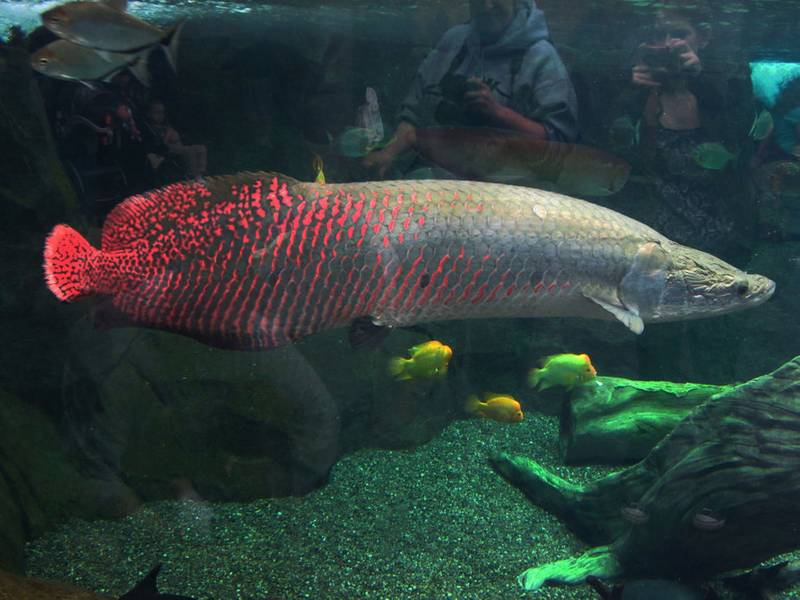
This is the first part of a two-part series that is inspired by a tremendous BBC podcast called “30 Animals That Made Us Smarter”. The real theme here is biomimicry – which is defined by the Biomimicry Institute as “a practice that learns from and mimics the strategies found in nature to solve human design challenges — and find hope along the way”.
For project managers, the overall takeaway is one of innovation. Actually, not really innovation but rather, learning. When you think of it, biomimicry is not that different from a project lessons-learned meeting.
This particular podcast episode is very short - and yet inspired me to do follow up ‘fishing around’ on the topic, which in this case was about a fish - the Arapaima Giga - that is impervious to the attack of the infamous piranha. From a recent Reuters story:
Researchers from the University of California, San Diego and University of California, Berkeley on Wednesday described the unique structure and impressive properties of the dermal armor of the fish, called Arapaima gigas. They said their findings can help guide development of better body armor for people as well as applications in aerospace design.
The fish, also known as pirarucu, gets up to 10 feet (3 meters) long and weighs up to 440 pounds (200 kg). Arapaima, a fish that can breathe air and survive up to a day outside of the water, inhabits rivers in Brazil, Guyana and Peru infested with piranhas, known for razor-sharp teeth, incredible bite strength and deadly feeding frenzies.
It's all about the design of the scales. Millions of years of evolution have developed a ‘best-practice’ combination of materials. Humans can learn from – and take advantage of – this evolution. From the story:
The scales, (scientists) found, have a hard, mineralized outer layer to resist penetration that is bound to a tough-but-flexible inner layer by collagen – the main structural protein in skin and other connective tissues in the body.
This structure means the scales can become deformed when bitten by a piranha but are not torn, broken or pierced, protecting the fish from injury.
Of course, this has immediate use in human body armor, so of course this story caught the attention of this industry, as described in this article from Body Armor News.
For those interested in the detailed science of the giga’s body armor, there is a feast of information in this article from Sci-News. Below is a diagram from the article showing the structure of the scale design.
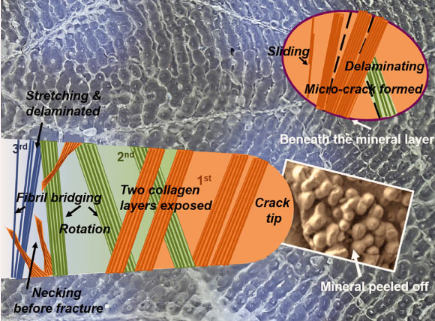
Image credit: Yang et al, doi: 10.1016/j.matt.2019.09.014.
Since the study was funded by the US Air Force, the research is publicly available here:
For those of us just more curious about what this giant fish looks like, I suggest this video from NatGeo.
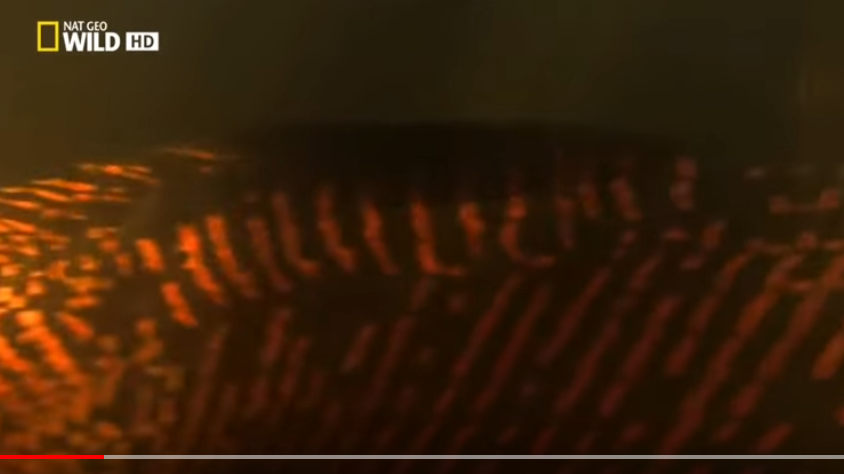
In it, we learn that this fish has adapted in another way: it has developed an air sac – akin to a lung – and can gulp oxygen from the air. As oxygen in its habitat begins to decline due to climate change, this may give it another advantage over other fish.
If you’d like to see one being caught (and released) you can click on the image below.

But the focus here is on its body armor and the way in which we can learn from its evolution.
In Part 2 of this series, we will go from the water to the air as we study a butterfly whose markings may lead to a huge breakthrough in solar power.
Posted
by
Richard Maltzman
on: October 30, 2021 08:45 PM |
Permalink


 Community Champion

