Project Management

Gyres and Legos and Zeros, Oh My!

From the People, Planet, Profits & Projects Blog
by ,

About this Blog

RSS

View Posts By:

Richard Maltzman
Dave Shirley

Recent Posts

Saving the Sahel (Part 1)

You Can't Get They-ah From Hee-yah

Floating an idea into reality: the other side of the AI Project Paradox

The Environment of the Built Environment: an AI Paradox

Is plastic on your mind?

Categories

6th, 6th Edfition, 6th Edition PMBOK, 7th Edition, 7th Edition PMBOK, 8th Edition PMBOK, 8th Edition PMBOK Guide, Activism, actuarial, actuary, adapt, addition by subtraction, Africa, africa, agriculture, airforce, ajaita, Alaska, amazon, analogous, analytics, ancient, and more power, antarctica, anti-science, apple, apps, architecture, arctic, arrakis, Artificial Intelligence, asch paradigm, Assistant, asthma, astronomy, automobile, automotive, autonomous cars, b, bankhar, Banksy Crypto, basalt, baseball, bats, batter, beauty products, benefit, benefits, Benefits Realization, beyond epica, biases, bicycle, big data, big dfata, big dig, bike, biodiversity, biomedicine, birdhouse, blockchain, blood, blue blood, blue trees, bluefin, bluefin tuna, book review, boston, boston university, Boyce, Brazil, brazil, Breakdown Structures, BS, building, buildings, built environment, built environment, bumblebee, cake, capacitor, car, Carbon, carbon, carbon capture, carbon negative, carbon neutral, carbon pool, carbon sequestration, carbonate, careers, CEO, ChatGPT, chatGPT, chatgpt, chatgpt, chess, China, china, chopsticks, citrus, cli-fi, climate, climate change, climate resilience, climeworks, Clumsy, CO2, co2, CO2 Utilization, coalition, cobalt, coffee pods, cognition, cognitive, Collabortion, colombia, concrete, Conflict, construction 5.0, cool projects xyloscope, cooling, coral, corn, cost of good quality, cost of poor quality, cost of quality, crazy, criticism of project management, cryptocurrency, CSR, csr, data, data analytics, data privacy, datacenter, dataset, death spiral, Decision Making, decomposition, Defense and Climate, definition of a project, deforestation, dependencies, dependency, desert, DIKW, dikw, dimopoulos, disposal, dna, DOD, dogs, dolphins, dream, drilling, drink, dune, dune, dutch, early start, earth, eatlocal, eco-tourism, ecological, economic, economics, EKC, electric grid, electricity, electronics, elysis, embodied carbon, emerging technologies, empower, Energy, energy efficiency, environmental degradation, escalate, escalation, ESG, extreme weather, fallacy, FARC, farming, finance, fish, fish brains, fishing, fix, fixing the earth, flint water, Flint Water Supply, flood, flooding, Food supply chain, food waste, forest, forest for the trees, forestation, forrestgump, frank herbert, Fruitcake, fungus, fusion, Galvao, garage, gas, gasoline, geese, gender equality, gender partnerships, generational differences, Generative AI, gladwell, gold, Goodness, google, Government, GPT, great pacific garbage patch, green, green building, green buildings, green energy, green iguana, green project, green project management, greening, guest post, gyre, harkonnen, Harvesting Benefits, hawasina, hedgehogs, heursitics, historical data, hlb, holitsic, holland, horseshoe crab, human-caused climate change, hydrogen, hydrology, ice, iceland, ignition, iguana, imagery, impact, india, inequality, information, initiatives, injection, insurance, intelligence, interacting risk, internal combustion engine, invasive species, investment, isomer, issue escalation, issues, ITER, jobs, Jupiter, justification, kids, kill point, knowledge, koch brothers, Kuznets, laboratory, LAL, landscape mode, lapampa, launch, LCA, Leadership, Leadership, life cycle analyses, life cycle analysis, lifecycle, Linkedin, liquid, lizard, local, long term, long-term, long-term thinking, look up, loud, maintenance, maker, makermovement, malcolm gladwell, management, marathon, marine biology, market, mars, Martin Luther King, mean, megawatt, MeHg, melting, mercury, metal, Microgrid, microplastics, migration, military, millennial, mindset, minerals, mission, mitigate, MLK, mongolia, museum, museum of london, nature, nematodes, net gain, Net Project Success Score, net zero, netherlands, network, New book, New Jersey, New Practitioners, new york, NFT, nitrogen, noise, noreaster, norway, nova, NPSS, NREL, ocean, ocean cleanup, ocean life, oil rig, oil rigs, oklahoma, oman, only murders in the building, opportunity, overall risk, oxygen, packaging, pareto, PBS, permafrost, persistence, peru, Pharmaceutical, planet, planet.com, planning, plant, plasma, plastic, playground, pm, pm education, pmbok, pmbok guide, pmnetwork, PMXPO-2018, podcast, pollutants, pollution, poop, poor, portfolio, power, power skills, privacy, privacy concerns, professors, program, Program Management, project, project leader, project leadership, project management, project management 3.0, project on fire, project progress, Project Success, project success, projecticity, projectleadership, projectmanagement, projects, psychology, pulse of the profession, purple bacteria, purpose, quiet, rainforest, rationale, reef, refugees, renewable, renewables, Repair, repair, repeatable process, repeatable processes, repurpose, research, resource breakdown strucuture, Resource Management, reversing climate change, revisionist history, rich, rigs2reefs, ripe, risk, risk avoidance, Risk Management, risk mitigation, risk response, risk responses, river, robots, rocks, rules of thumb, rural, rural India, russia, Sarcasm/Irony, satellite, saudi, schedule, sci-fi, Science, science, science-fiction, scientific american, screaming monkeys, sea, sea life, Sea-Level Rise, sea-level rise, seagreens, seawall, seawater, seawater temperature, seaweed. beat;es. farming, secondary risk, selena gomez, sequestration, shipping, skyscraper, SLR, smart cities, smart city, smelting, social, social pressure, soil, solar, solar panels, solar perovkites, solar saheli, sonic, sponge cities, SRI, stage-gate, stagegate, stakeholder, stakeholder management, steward, stewardship, storage, strategy, stupid, success, suffer, sulphur, sunk cost, supercapacitor, supply chain, survey, Sustainability, sustainability, Sustainable Investing, Sustainable Tourism, sybiosis, symbiosis, system 03, TBL, temperature, terraform, terraforming, test, threat, threats, totem, touchscreen, tour, tower, Trains, transparency, transportation, trash, tree, tree species, trees, trillion, triple bottom line, triple constraint, truth to power, UMass, us army corps of engineers, USDA, vacuum, value, venus, vision, voice, voltage optimization, vw scandal, washing machine, waste, wastewater, water, we mean business, whales, Whirlpool, wind, wisdom, women, Women in Project Management, wood wide web, woonerf, Work Breakdown Structures (WBS), world breakdown structure, worms, xian, xylotron, Yale

Date

linkedin twitter facebook Request to reuse this  


OK, so let’s start with that goofy title.  It’s supposed to be a reference to that scene (clip below) from the 1939 film, The Wizard of Oz


You probably know what Legos(TM) are (if not, ask a parent, child or grandparent).  And there is zero uncertainty around the fact that you know what a zero is.  But do you know that the presence or absence of a zero (and not in salary) could actually be an inspiration to a project team?  It can.  Read on.


Gyres

You may not know what a gyre is.  The US National Oceanic and Atmospheric Administration (NOAA) defines a gyre as a large system of swirling ocean currents. Increasingly, however, it also refers to the garbage patch as a vortex of plastic waste and debris broken down into small particles in the ocean.

 One of the largest such gyres is the Great Pacific Garbage Patch.

I have previously blogged about Ocean Cleanup, the brainchild of Boyan Slat.  This program has grown and continues to expand.


Have a look at the video below.  Really.  It's 16 minutes long.  Knowing that some of you won't watch it,  I’ve also curated some of the key points for project leaders to take away.  Much of it has to do with an agile approach to projects and the way teams work best together.  There’s also some great nuggets in here about how stakeholders that could easily be opponents were made to be collaborators.

Legos

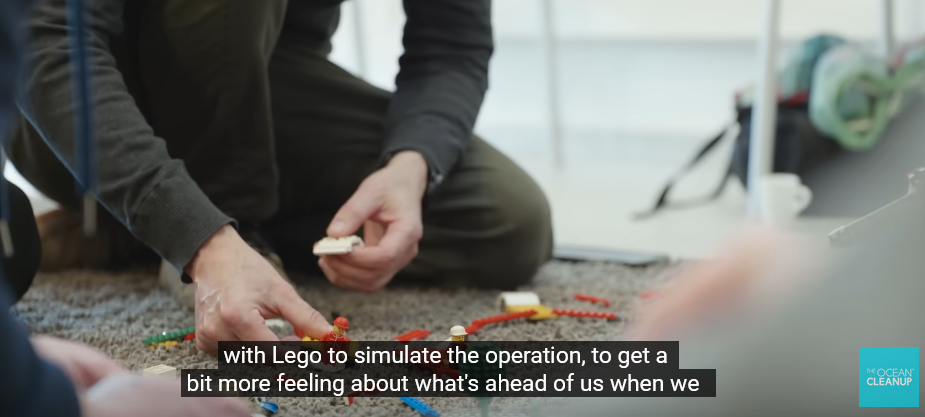
In the video you can see the relief on team members’ faces in that they now have a chance to meet face-to-face again.  They take advantage of this by using Legos to model the new System 03.  This is a large upgrade over Systems 001 and 002.  That is not to say that these systes have not been effective.  They have removed so far 55 tons of plastics from the Pacific. 

Note that System 03 has one fewer zero.  Which brings us to the next piece, which is: Zeros.

Zeros

When Ocean Cleanup started, the program directors thought that it would take hundreds of these systems to clean up the Great Pacific Garbage Patch.  So, three ‘places’ were held for the digits 001 through perhaps 472 or whatever the number of Systems it would take.  With the radical redesign of System 03, it was determined that TENS, not hundreds of systems could handle the cleanup.  So, for the simple numerical reason – but also as a motivator and a ‘totem’ of the project, one zero was removed.  Do not underestimate the power of project ‘totems’ like this.

Other takeaways

As you watch the video, please notice some of the other project leadership ideas that this team has adapted, some which come from an agile mindset, some from predictive PM.  They have done a great job of applying my three-word solution to the completely non-existent ‘versus’ situation when it comes to which methodology is best: Use What Works.

As we saw with the Legos, the team used modeling – in that case physical modelling. However, they also make significant use of mathematical modeling which reportedly has been quite accurate in predicting where and when to launch the System 02 missions. 

They use what I call "careful KPIs", and a ‘balanced scorecard’ (although they don’t use that term).  The KPI (key performance indicator) is cost per kg of plastic removed.  They want to clean the ocean, but they want to do it in a fiscally responsible way.  As for the balanced scorecard, they are quite aware that their efforts have  an impact of their own – the vessels burn fuel, they do intercept some wildlife, and they are not ignoring it – in fact they use that in the measurement of their success, not just the tons of plastics they are removing.

When the team encounters a problem (such as plastic escaping over the floating boundaries of the collection system) they use a ‘lockup meeting’ in which the team all gets together to brainstorm and cannot leave until they have a solution.  They even make references to ‘locking the door and throwing away the key’.

In general note how they have become a 'learning organization' and are allowing themselves to try-and-fail, try-and-fail, so that they can try-and-succeed.

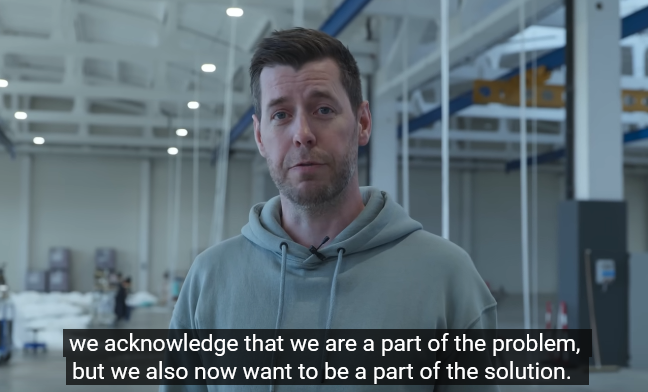
One of the most poignant segments of the video is a visit to the firm which is making the collection nets.  The firm is a fishing company.  Normally they are making nets to catch fish.  It turns out that much of what is collected by the Ocean Cleanup is from the fishing industry.  So the two groups might naturally be at odds.  But each actually stands to gain from the other.  The Ocean Cleanup team gets expertise and manufacturing capability for their nets.  The fishing firm gets cleaner, ‘greener’ fish and as the interviewee says in the video, a chance to move from being ‘a part of the problem to being part of the solution’.

I found this 16-minute video to be inspiring and informative, in particular for project managers who want to become project leaders.

What did you think?


Posted by Richard Maltzman on: August 09, 2022 03:33 PM | Permalink

Comments (2)

Please login or join to subscribe to this item
avatar
Stéphane Parent Self Employed / Semi-retired| Leader Maker Prince Edward Island, Canada
Thanks for the update on theis project, Richard!

avatar
Semon Haines Louisville, Ky, United States
The 'use what works' approach is often overlooked. Forcing square pegs into round holes, not fully getting buy in, and then often the PM is surprised when there are overdue tasks or missed milestones. Take some time to meet your team where they are and help them grow to where they should be comes to mind when I reflect on the 'use what works' example in this article.

Please Login/Register to leave a comment.

ADVERTISEMENTS

"You can't have everything. Where would you put it?"

- Steven Wright

ADVERTISEMENT

Sponsors