That’s not a typo. The word play is on the phrase concrete thinker – but this is about tinkering with concrete to make it do more than…sit there.
I’d like to transition from the DunEcology series to regular (if you can call my posts “regular”!) posts. This one still involves sand, so there is still a connection to Dune. However, this sand is in the mix of a material we all know: concrete.
What we may NOT know is that concrete may be a source of power.
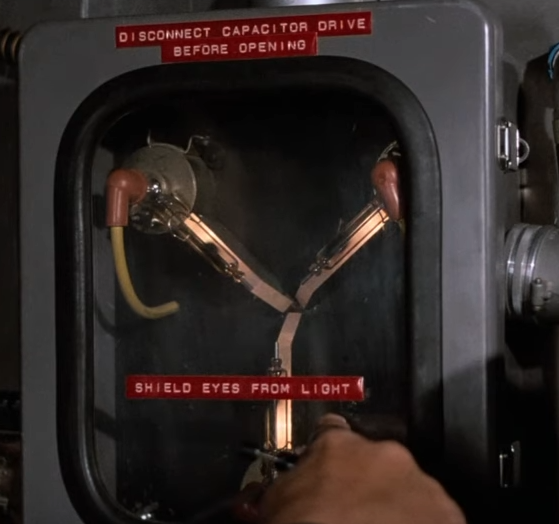
Previously I have blogged about the idea of using roads (well, the pavement on roads) to power vehicles. It was a two-part series, recalling the fantastical "flux capacitor", called "Doc Brown Would Be Proud". Side note: could THAT be a real thing? See this video.
Now back from Hollywood, California to Cambridge, Massachusetts...
This is about the use of concrete as a potential power source. It’s about supercapacitors, a much, much larger version of the little disc-like or cylindrical components (you know them if you are a ham radio enthusiast, electronics engineer or general-purpose tinkerer) that force us to unplug our routers for 20 seconds because there is a stored charge.
Quoting the article’s interview with MIT researcher Damian Stefaniuk: carbon-cement supercapacitors could make an important contribution to efforts to decarbonize the global economy. "If it can be scaled up, the technology can help solve an important issue – the storing of renewable energy," he says.
Don’t get your expectations too high now, though. The concrete supercapacitor can store around 0.3 KwH per cubic yard – enough to power a 10-watt LED lightbulb for 30 hours. You won’t be running your AC system on that. However, there is plenty of promise with the technology.
According to the article, a foundation with 1,060-1,410 cubic feet of concrete could be sufficient to meet the daily energy needs of a residential house", says Stefaniuk. "Given the widespread use of concrete globally, this material has the potential to be highly competitive and useful in energy storage."
And that’s with the current materials. Developments in material science and a focus on the Built Environment may yield leaps and bounds in the storage capacity of concrete and other building materials.
To be fair, I’d like to present two views of this idea, one from the MIT researcher Damian Stefaniuk, and one from the (amazingly named Thinker and Tinker) video channel Robert Murray-Smith, who sees this only as a headline-grabber.
Being the arbitrator that I am, I appreciate both views and imagine that the truth is somewhere in the middle.
Here is the optimistic view by the researchers:
And here is the ‘debunk’, by Robert Murray-Smith:
I invite you to decide. Either way, there is a lot to learn and anticipate in terms of energy storage, the role of research, and the contributions to energy storage from the Built Environment.



 Community Champion


