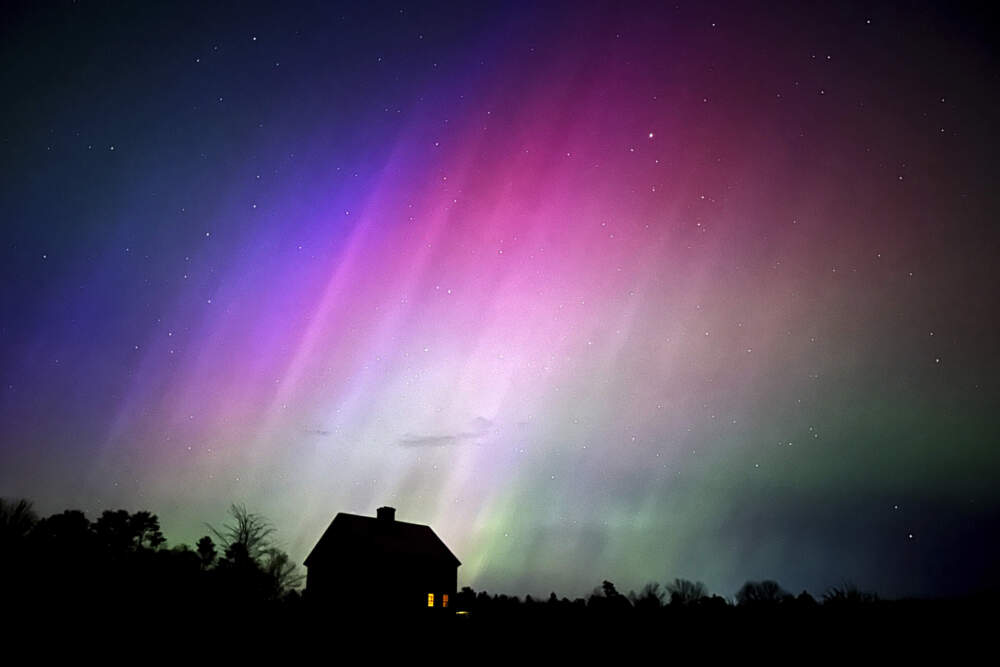
Several things come together for this particular post.
First, I’ve been a longtime fan of a ‘prog-rock’ group called Renaissance. They’ve been around since 1969 and are currently in their Farewell In Gratitude tour - and I went to see them in Boston. One of their most popular songs is Northern Lights. Here they are in their early days, performing this song – and I have to say that 45 years later they still perform it pretty well, with lead singer Annie Haslam still hitting those super-high notes.
Secondly, recent solar storms have triggered astounding Northern Lights in our area (New England, USA), making the sky bright magenta and aqua for a few nights in row. The blog feature image above is pretty much what many of us in New England were able to see (although our phone cameras did better than our eyes in capturing the images).
And finally, I saw a news item regarding new funding for Arctic sustainable development – and that’s what put me ‘over the top’ to write this post.
setting norms for environmental and social protection
In turn, these goals serve as the basis for the launch of projects – some quite large – which will need project leaders. Billions of euros are involved in this funding program.
Examples of projects, which will require a wide set of knowledge and skills, including, of course, project management skills, are:
The first sea-floor fiber-optic cable to cross the Arctic
fighting illegal fishing
preserving forests
providing improved connectivity and security
Copernicus – an Earth observation program, with its constellation of EU-owned satellites, known as 'Europe’s eyes on Earth
Copernicus is particularly noteworthy. It’s worth a visit to its website. It’s the Earth observation component of the European Union’s Space program, “looking at our planet and its environment to benefit all European citizens. It offers information services that draw from satellite Earth Observation and in-situ (non-space) data.
At the heart of Copernicus is a constellation of satellites – the Sentinels – that make a huge number of daily observations of the Earth ecosystem. The technological prowess of Copernicus, especially in terms of availability and accessibility, has made Copernicus the largest space data provider in the world.
Health Hub - The Copernicus Health Hub brings together all the Copernicus environmental data and products pertinent to Health, including that related to physical health, mental health and well-being.
Coastal Hub - The Copernicus Coastal Hub provides open and free access to a selection of coastal Earth observation data from the Copernicus Sentinel satellites and all Copernicus Services.
Energy Hub - Copernicus Energy Hub: Connecting environmental data and Earth Observations to the green energy transition.
Arctic Hub - The Copernicus Arctic Hub provides access to data and information in the Arctic. Explore interactive maps and thematic use cases and empower decision-making and sustainable practices.
This video summarizes the data capabilities provided by Copernicus.
So as you look up at the Northern Lights, know that a network of Sentinels is looking back at YOU. And perhaps that’s a reminder that project leadership opportunities abound above, below, and all around you!
Being aware of and focused on the intersection of project management and sustainability may just be not only the right thing to do – but the right thing for you.