The Desert Is Getting Fruitful
From the People, Planet, Profits & Projects Blog
by Richard Maltzman,
Dave Shirley

View Posts By:
Richard Maltzman
Dave Shirley
Recent Posts
What is AI doing to the sustainability of our profession???
Stepwells – Insight from a Particularly Valid Angle
Climb-it Change: Pre-Interview Connector
Climb-it Change: New Relevance for the Stepwells of India
A PATH to more equitable health - via AI project leadership
Categories
6th,
6th Edfition,
6th Edition PMBOK,
7th Edition,
7th Edition PMBOK,
8th Edition PMBOK,
8th Edition PMBOK Guide,
Activism,
actuarial,
actuary,
adapt,
addition by subtraction,
Africa,
africa,
agriculture,
airforce,
ajaita,
Alaska,
amazon,
analogous,
analytics,
ancient,
and more power,
antarctica,
anti-science,
apple,
apps,
architecture,
arctic,
arrakis,
Artificial Intelligence,
asch paradigm,
Assistant,
asthma,
astronomy,
automobile,
automotive,
autonomous cars,
b,
bankhar,
Banksy Crypto,
basalt,
baseball,
bats,
batter,
beauty products,
benefit,
benefits,
Benefits Realization,
beyond epica,
biases,
bicycle,
big data,
big dfata,
big dig,
bike,
biodiversity,
biomedicine,
birdhouse,
blockchain,
blood,
blue blood,
blue trees,
bluefin,
bluefin tuna,
book review,
boston,
boston university,
Boyce,
Brazil,
brazil,
Breakdown Structures,
BS,
building,
buildings,
built environment,
built environment,
bumblebee,
cake,
capacitor,
car,
Carbon,
carbon,
carbon capture,
carbon negative,
carbon neutral,
carbon pool,
carbon sequestration,
carbonate,
careers,
CEO,
ChatGPT,
chatGPT,
chatgpt,
chatgpt,
chess,
China,
china,
chopsticks,
citrus,
cli-fi,
climate,
climate change,
climate resilience,
climeworks,
Clumsy,
CO2,
co2,
CO2 Utilization,
coalition,
cobalt,
coffee pods,
cognition,
cognitive,
Collabortion,
colombia,
concrete,
Conflict,
construction 5.0,
cool projects xyloscope,
cooling,
coral,
corn,
cost of good quality,
cost of poor quality,
cost of quality,
crazy,
criticism of project management,
cryptocurrency,
CSR,
csr,
data,
data analytics,
data privacy,
datacenter,
dataset,
death spiral,
Decision Making,
decomposition,
Defense and Climate,
definition of a project,
deforestation,
dependencies,
dependency,
desert,
DIKW,
dikw,
dimopoulos,
disposal,
dna,
DOD,
dogs,
dolphins,
dream,
drilling,
drink,
dune,
dune,
dutch,
early start,
earth,
eatlocal,
eco-tourism,
ecological,
economic,
economics,
EKC,
electric grid,
electricity,
electronics,
elysis,
embodied carbon,
emerging technologies,
empower,
Energy,
energy efficiency,
environmental degradation,
escalate,
escalation,
ESG,
extreme weather,
fallacy,
FARC,
farming,
finance,
fish,
fish brains,
fishing,
fix,
fixing the earth,
flint water,
Flint Water Supply,
flood,
flooding,
Food supply chain,
food waste,
forest,
forest for the trees,
forestation,
forrestgump,
frank herbert,
Fruitcake,
fungus,
fusion,
Galvao,
garage,
gas,
gasoline,
geese,
gender equality,
gender partnerships,
generational differences,
Generative AI,
gladwell,
gold,
Goodness,
google,
Government,
GPT,
great pacific garbage patch,
green,
green building,
green buildings,
green energy,
green iguana,
green project,
green project management,
greening,
guest post,
gyre,
harkonnen,
Harvesting Benefits,
hawasina,
hedgehogs,
heursitics,
historical data,
hlb,
holitsic,
holland,
horseshoe crab,
human-caused climate change,
hydrogen,
hydrology,
ice,
iceland,
ignition,
iguana,
imagery,
impact,
india,
inequality,
information,
initiatives,
injection,
insurance,
intelligence,
interacting risk,
internal combustion engine,
invasive species,
investment,
isomer,
issue escalation,
issues,
ITER,
jobs,
Jupiter,
justification,
kids,
kill point,
knowledge,
koch brothers,
Kuznets,
laboratory,
LAL,
landscape mode,
lapampa,
launch,
LCA,
Leadership,
Leadership,
life cycle analyses,
life cycle analysis,
lifecycle,
Linkedin,
liquid,
lizard,
local,
long term,
long-term,
long-term thinking,
look up,
loud,
maintenance,
maker,
makermovement,
malcolm gladwell,
management,
marathon,
marine biology,
market,
mars,
Martin Luther King,
mean,
megawatt,
MeHg,
melting,
mercury,
metal,
Microgrid,
microplastics,
migration,
military,
millennial,
mindset,
minerals,
mission,
mitigate,
MLK,
mongolia,
museum,
museum of london,
nature,
nematodes,
net gain,
Net Project Success Score,
net zero,
netherlands,
network,
New book,
New Jersey,
New Practitioners,
new york,
NFT,
nitrogen,
noise,
noreaster,
norway,
nova,
NPSS,
NREL,
ocean,
ocean cleanup,
ocean life,
oil rig,
oil rigs,
oklahoma,
oman,
only murders in the building,
opportunity,
overall risk,
oxygen,
packaging,
pareto,
PBS,
permafrost,
persistence,
peru,
Pharmaceutical,
planet,
planet.com,
planning,
plant,
plasma,
plastic,
playground,
pm,
pm education,
pmbok,
pmbok guide,
pmnetwork,
PMXPO-2018,
podcast,
pollutants,
pollution,
poop,
poor,
portfolio,
power,
power skills,
privacy,
privacy concerns,
professors,
program,
Program Management,
project,
project leader,
project leadership,
project management,
project management 3.0,
project on fire,
project progress,
Project Success,
project success,
projecticity,
projectleadership,
projectmanagement,
projects,
psychology,
pulse of the profession,
purple bacteria,
purpose,
quiet,
rainforest,
rationale,
reef,
refugees,
renewable,
renewables,
Repair,
repair,
repeatable process,
repeatable processes,
repurpose,
research,
resource breakdown strucuture,
Resource Management,
reversing climate change,
revisionist history,
rich,
rigs2reefs,
ripe,
risk,
risk avoidance,
Risk Management,
risk mitigation,
risk response,
risk responses,
river,
robots,
rocks,
rules of thumb,
rural,
rural India,
russia,
Sarcasm/Irony,
satellite,
saudi,
schedule,
sci-fi,
Science,
science,
science-fiction,
scientific american,
screaming monkeys,
sea,
sea life,
Sea-Level Rise,
sea-level rise,
seagreens,
seawall,
seawater,
seawater temperature,
seaweed. beat;es. farming,
secondary risk,
selena gomez,
sequestration,
shipping,
skyscraper,
SLR,
smart cities,
smart city,
smelting,
social,
social pressure,
soil,
solar,
solar panels,
solar perovkites,
solar saheli,
sonic,
sponge cities,
SRI,
stage-gate,
stagegate,
stakeholder,
stakeholder management,
steward,
stewardship,
storage,
strategy,
stupid,
success,
suffer,
sulphur,
sunk cost,
supercapacitor,
supply chain,
survey,
Sustainability,
sustainability,
Sustainable Investing,
Sustainable Tourism,
sybiosis,
symbiosis,
system 03,
TBL,
temperature,
terraform,
terraforming,
test,
threat,
threats,
totem,
touchscreen,
tour,
tower,
Trains,
transparency,
transportation,
trash,
tree,
tree species,
trees,
trillion,
triple bottom line,
triple constraint,
truth to power,
UMass,
us army corps of engineers,
USDA,
vacuum,
value,
venus,
vision,
voice,
voltage optimization,
vw scandal,
washing machine,
waste,
wastewater,
water,
we mean business,
whales,
Whirlpool,
wind,
wisdom,
women,
Women in Project Management,
wood wide web,
woonerf,
Work Breakdown Structures (WBS),
world breakdown structure,
worms,
xian,
xylotron,
Yale
Date

When I started out investigating and writing about the intersection of project management and sustainability, it was a bit of a desert. There were no references at all in project management standards, a few articles a book here or there, but it was a topic that project managers considered (ironically) out of scope. Some still do.
But what I’ve found is an accelerated ‘take’ for the idea of considering a much broader set of aspects when planning a project, and a willingness to think past the end of the project – to a time when the project’s product (its outcome) in in use, and even (dare I say it) to that time when the project’s product is no longer needed and is being disassembled, made defunct, terminated, disposed of, jettisoned, ditched, scrapped… choose your own word here.
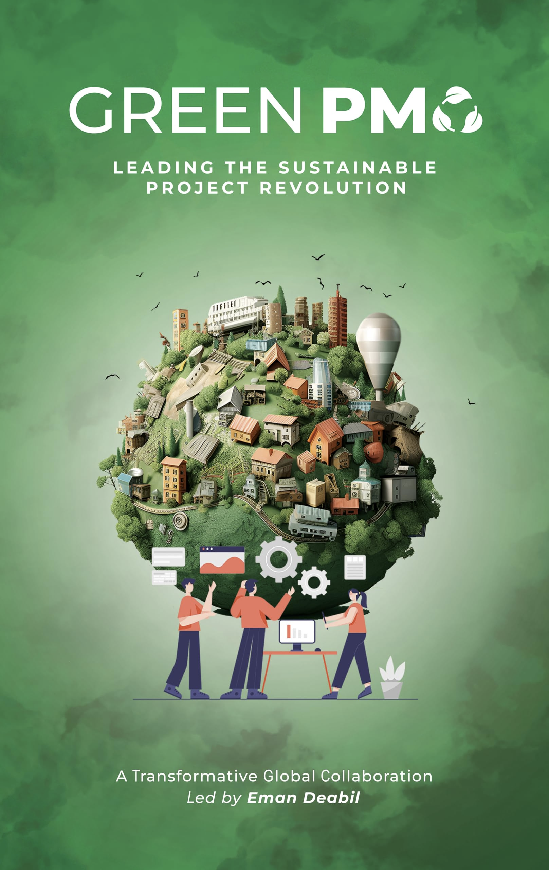
As examples, I’d like to (again) mention the Green PMO book recently published by Sentiente and led so well by Eman Deabil, with 333 pages of articles by 37 authors covering a wide range of topics but all themed around holistic, thoughtful, long-range thinking in project management.
I also would point you to the APM’s recent post by Hugo Minney: Navigating the path to sustainability and regeneration: Tools, barriers and incentives.
What I really like about this post and its ‘attitude’ is that it combines two of my favorite (and related, I assert) themes – the aforementioned sustainability thinking in PM, and the idea that PM is actually the wrong name for our profession.
The “M” in PM is Management. Are we really ‘Managers’? Do we hire and fire employees? Do we monitor when they ‘punch in’ for work and ‘punch out’? Do we oversee their salaries and do performance reviews? Well, we may if it’s a heavily projectized organization but most likely our project team is made up of those NOT reporting to us. We’re not managing this (functionally-diverse) team, but we are leading them – inspiring and influencing them to do the work of the project and to bring business value to our organization.
So that’s why I was happy to see how this blog post worked.
It takes on a Servant Leader attitude. Servant leaders remove barriers.
From the post:
Barriers to including sustainability and regeneration in project success criteria
Despite the clear benefits, several barriers often prevent organisations from fully integrating sustainability into their project success criteria:
- Lack of clear sustainability metrics or KPIs: It can be challenging to quantify sustainability outcomes, especially when they occur over long time horizons.
- Short-term financial pressures: The focus on immediate financial returns can overshadow longer-term sustainability considerations.
- Insufficient knowledge or training: Many project managers lack specific training in sustainable practices and may struggle to implement them effectively.
- Resistance to change: Organisational inertia and entrenched practices can make it difficult to introduce new sustainability-focused approaches.
- Perceived cost: There's often a misconception that sustainable practices are inherently more expensive, despite evidence of medium- and long-term cost savings.
Overcoming barriers: The role of soft skills (Comment from Rich: I would call these Power Skills)
While technical knowledge is crucial, overcoming these barriers often requires well-developed soft skills:
- Communication: effectively articulating the benefits of sustainability to diverse stakeholders is key to gaining buy-in.
- Leadership: championing sustainability initiatives and inspiring others to embrace change is essential for driving organisational shifts.
- Systems thinking: understanding the interconnections between various project elements and their wider impacts helps in making more sustainable decisions.
- Adaptability: being flexible and open to new approaches is crucial in the rapidly evolving field of sustainability.
- Collaboration: working effectively across disciplines and departments is often necessary to implement comprehensive sustainability strategies.
That’s right! We are acting as Project Leaders when we bring sustainability thinking into the picture; and actually there is no way we will get buy-in to these ideas which are sometimes seen as ‘too much’ without the use of power skills and taking on the true role – I would argue the true title – of our profession.
The desert is not so barren anymore. I see that it’s bearing fruit. Sustainability thinking has caught on, and hopefully so is the idea of Project Leadership.
The blog post is so well-written that I will conclude mine with the conclusion of the post by Hugo Minney:
“As project professionals, we have a unique opportunity — and responsibility — to drive sustainable and regenerative practices through our work. By understanding the complexities of the systems we operate in, developing our soft skills and leveraging available incentives and best practices, we can overcome barriers and make sustainability a core component of project success.
The path to sustainability and regeneration is not always straightforward, but it’s undoubtedly necessary. By embracing this challenge, we not only contribute to a more sustainable future but also deliver more resilient, valuable and impactful projects.”
Posted
by
Richard Maltzman
on: October 25, 2024 03:22 PM |
Permalink
Comments (4)
Please login or join to subscribe to this item

Kwiyuh Michael Wepngong
 Community Champion
Financial Management Specialist | US Peace Corps
Yaounde, Centre, Cameroon
Besides the hard evidences of climate change, leveraging soft skills will be very helpful in relaying some truths....
Thanks for this article
Quite surprised to see people still discussing green construction, whilst we already know it is not cost-efficient.

Reshma Rizvi
Scientific Project Manager| University Of Saskatchewn
Saskatoon, Saskatchewan, Canada
I think sustainability and environmental costs should be in the balance sheet of any project -- even digital ones have a cost with regard to heat, electricity, server processing, etc. Many people overlook sustainability when the project is outside the construction realm.
Please Login/Register to leave a comment.