Project Manager Power!
From the People, Planet, Profits & Projects Blog
by Richard Maltzman,
Dave Shirley

View Posts By:
Richard Maltzman
Dave Shirley
Recent Posts
What is AI doing to the sustainability of our profession???
Stepwells – Insight from a Particularly Valid Angle
Climb-it Change: Pre-Interview Connector
Climb-it Change: New Relevance for the Stepwells of India
A PATH to more equitable health - via AI project leadership
Categories
6th,
6th Edfition,
6th Edition PMBOK,
7th Edition,
7th Edition PMBOK,
8th Edition PMBOK,
8th Edition PMBOK Guide,
Activism,
actuarial,
actuary,
adapt,
addition by subtraction,
Africa,
africa,
agriculture,
airforce,
ajaita,
Alaska,
amazon,
analogous,
analytics,
ancient,
and more power,
antarctica,
anti-science,
apple,
apps,
architecture,
arctic,
arrakis,
Artificial Intelligence,
asch paradigm,
Assistant,
asthma,
astronomy,
automobile,
automotive,
autonomous cars,
b,
bankhar,
Banksy Crypto,
basalt,
baseball,
bats,
batter,
beauty products,
benefit,
benefits,
Benefits Realization,
beyond epica,
biases,
bicycle,
big data,
big dfata,
big dig,
bike,
biodiversity,
biomedicine,
birdhouse,
blockchain,
blood,
blue blood,
blue trees,
bluefin,
bluefin tuna,
book review,
boston,
boston university,
Boyce,
Brazil,
brazil,
Breakdown Structures,
BS,
building,
buildings,
built environment,
built environment,
bumblebee,
cake,
capacitor,
car,
Carbon,
carbon,
carbon capture,
carbon negative,
carbon neutral,
carbon pool,
carbon sequestration,
carbonate,
careers,
CEO,
ChatGPT,
chatGPT,
chatgpt,
chatgpt,
chess,
China,
china,
chopsticks,
citrus,
cli-fi,
climate,
climate change,
climate resilience,
climeworks,
Clumsy,
CO2,
co2,
CO2 Utilization,
coalition,
cobalt,
coffee pods,
cognition,
cognitive,
Collabortion,
colombia,
concrete,
Conflict,
construction 5.0,
cool projects xyloscope,
cooling,
coral,
corn,
cost of good quality,
cost of poor quality,
cost of quality,
crazy,
criticism of project management,
cryptocurrency,
CSR,
csr,
data,
data analytics,
data privacy,
datacenter,
dataset,
death spiral,
Decision Making,
decomposition,
Defense and Climate,
definition of a project,
deforestation,
dependencies,
dependency,
desert,
DIKW,
dikw,
dimopoulos,
disposal,
dna,
DOD,
dogs,
dolphins,
dream,
drilling,
drink,
dune,
dune,
dutch,
early start,
earth,
eatlocal,
eco-tourism,
ecological,
economic,
economics,
EKC,
electric grid,
electricity,
electronics,
elysis,
embodied carbon,
emerging technologies,
empower,
Energy,
energy efficiency,
environmental degradation,
escalate,
escalation,
ESG,
extreme weather,
fallacy,
FARC,
farming,
finance,
fish,
fish brains,
fishing,
fix,
fixing the earth,
flint water,
Flint Water Supply,
flood,
flooding,
Food supply chain,
food waste,
forest,
forest for the trees,
forestation,
forrestgump,
frank herbert,
Fruitcake,
fungus,
fusion,
Galvao,
garage,
gas,
gasoline,
geese,
gender equality,
gender partnerships,
generational differences,
Generative AI,
gladwell,
gold,
Goodness,
google,
Government,
GPT,
great pacific garbage patch,
green,
green building,
green buildings,
green energy,
green iguana,
green project,
green project management,
greening,
guest post,
gyre,
harkonnen,
Harvesting Benefits,
hawasina,
hedgehogs,
heursitics,
historical data,
hlb,
holitsic,
holland,
horseshoe crab,
human-caused climate change,
hydrogen,
hydrology,
ice,
iceland,
ignition,
iguana,
imagery,
impact,
india,
inequality,
information,
initiatives,
injection,
insurance,
intelligence,
interacting risk,
internal combustion engine,
invasive species,
investment,
isomer,
issue escalation,
issues,
ITER,
jobs,
Jupiter,
justification,
kids,
kill point,
knowledge,
koch brothers,
Kuznets,
laboratory,
LAL,
landscape mode,
lapampa,
launch,
LCA,
Leadership,
Leadership,
life cycle analyses,
life cycle analysis,
lifecycle,
Linkedin,
liquid,
lizard,
local,
long term,
long-term,
long-term thinking,
look up,
loud,
maintenance,
maker,
makermovement,
malcolm gladwell,
management,
marathon,
marine biology,
market,
mars,
Martin Luther King,
mean,
megawatt,
MeHg,
melting,
mercury,
metal,
Microgrid,
microplastics,
migration,
military,
millennial,
mindset,
minerals,
mission,
mitigate,
MLK,
mongolia,
museum,
museum of london,
nature,
nematodes,
net gain,
Net Project Success Score,
net zero,
netherlands,
network,
New book,
New Jersey,
New Practitioners,
new york,
NFT,
nitrogen,
noise,
noreaster,
norway,
nova,
NPSS,
NREL,
ocean,
ocean cleanup,
ocean life,
oil rig,
oil rigs,
oklahoma,
oman,
only murders in the building,
opportunity,
overall risk,
oxygen,
packaging,
pareto,
PBS,
permafrost,
persistence,
peru,
Pharmaceutical,
planet,
planet.com,
planning,
plant,
plasma,
plastic,
playground,
pm,
pm education,
pmbok,
pmbok guide,
pmnetwork,
PMXPO-2018,
podcast,
pollutants,
pollution,
poop,
poor,
portfolio,
power,
power skills,
privacy,
privacy concerns,
professors,
program,
Program Management,
project,
project leader,
project leadership,
project management,
project management 3.0,
project on fire,
project progress,
Project Success,
project success,
projecticity,
projectleadership,
projectmanagement,
projects,
psychology,
pulse of the profession,
purple bacteria,
purpose,
quiet,
rainforest,
rationale,
reef,
refugees,
renewable,
renewables,
Repair,
repair,
repeatable process,
repeatable processes,
repurpose,
research,
resource breakdown strucuture,
Resource Management,
reversing climate change,
revisionist history,
rich,
rigs2reefs,
ripe,
risk,
risk avoidance,
Risk Management,
risk mitigation,
risk response,
risk responses,
river,
robots,
rocks,
rules of thumb,
rural,
rural India,
russia,
Sarcasm/Irony,
satellite,
saudi,
schedule,
sci-fi,
Science,
science,
science-fiction,
scientific american,
screaming monkeys,
sea,
sea life,
Sea-Level Rise,
sea-level rise,
seagreens,
seawall,
seawater,
seawater temperature,
seaweed. beat;es. farming,
secondary risk,
selena gomez,
sequestration,
shipping,
skyscraper,
SLR,
smart cities,
smart city,
smelting,
social,
social pressure,
soil,
solar,
solar panels,
solar perovkites,
solar saheli,
sonic,
sponge cities,
SRI,
stage-gate,
stagegate,
stakeholder,
stakeholder management,
steward,
stewardship,
storage,
strategy,
stupid,
success,
suffer,
sulphur,
sunk cost,
supercapacitor,
supply chain,
survey,
Sustainability,
sustainability,
Sustainable Investing,
Sustainable Tourism,
sybiosis,
symbiosis,
system 03,
TBL,
temperature,
terraform,
terraforming,
test,
threat,
threats,
totem,
touchscreen,
tour,
tower,
Trains,
transparency,
transportation,
trash,
tree,
tree species,
trees,
trillion,
triple bottom line,
triple constraint,
truth to power,
UMass,
us army corps of engineers,
USDA,
vacuum,
value,
venus,
vision,
voice,
voltage optimization,
vw scandal,
washing machine,
waste,
wastewater,
water,
we mean business,
whales,
Whirlpool,
wind,
wisdom,
women,
Women in Project Management,
wood wide web,
woonerf,
Work Breakdown Structures (WBS),
world breakdown structure,
worms,
xian,
xylotron,
Yale
Date

I had promised to give you an update on our solar power installation and I will shortly. In fact, here’s a tidbit: we have produced 700KwH of power in just our first 2.5 months. We're on our way to our first megawatt hour of power!
But I want to wait until I start seeing the economic benefit. As soon as I see what this does to our electric bill, I’ll be back to you with more. For now, I want to talk about power but of a very different kind: the power we use to run our PROJECTS. Human power. Project management power! So this is a bit of a departure from the sustainability subject. Or is it? Don’t we want to make a difference? Don’t we want that ability to make a difference to be long-lasting? So, I could easily make an argument that this IS a posting about sustainability in perhaps an even more meaningful sense.
Much of this post originates in – or at least the thinking behind it was stimulated by an article https://www.brainpickings.org/2016/09/28/power-paradox-dachter-keltner/ which in turn comes from a book called, “The Power Paradox” by Dacher Keltner.
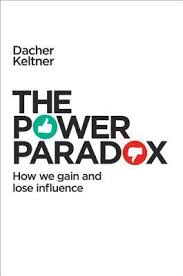
What is "power" in the world of humans, and therefore in the world of project management?
From the book:
Power defines the waking life of every human being. It is found not only in extraordinary acts but also in quotidian (blogger’s confession: I had to look this word up – it means ‘everyday’) acts, indeed in every interaction and every relationship, be it an attempt to get a two-year-old to eat green vegetables or to inspire a stubborn colleague to do her best work. It lies in providing an opportunity to someone, or asking a friend the right question to stir creative thought, or calming a colleague’s rattled nerves, or directing resources to a young person trying to make it in society. Power dynamics, patterns of mutual influence, define the ongoing interactions between fetus and mother, infant and parent, between romantic partners, childhood friends, teens, people at work, and groups in conflict. Power is the medium through which we relate to one another. Power is about making a difference in the world by influencing others.
So that actually should make sense to you – it did to me. But there is a problem, and thus the ‘power paradox’.
The power paradox is this: we rise in power and make a difference in the world due to what is best about human nature, but we fall from power due to what is worst. We gain a capacity to make a difference in the world by enhancing the lives of others, but the very experience of having power and privilege leads us to behave, in our worst moments, like impulsive, out-of-control sociopaths.
How we handle the power paradox guides our personal and work lives and determines, ultimately, how happy we and the people we care about will be. It determines our empathy, generosity, civility, innovation, intellectual rigor, and the collaborative strength of our communities (Blogger’s note: also our PROJECTS) and social networks. Its ripple effects shape the patterns that make up our families, neighborhoods, and workplaces, as well as the broader patterns of social organization that define societies and our current political struggles
As project managers, I think this next quote will ‘move’ you a bit. Read it carefully, perhaps even read it twice, slowly:
Our influence, the lasting difference that we make in the world, is ultimately only as good as what others think of us. Having enduring power is a privilege that depends on other people continuing to give it to us.
WOW.
We gain power (and the ability to influence) by improving how others think about us, whether it’s good-natured-ness, or competence, or expertise. But watch out, project managers, we can lose this power easily, because…
…another paradox lives inside the power paradox — the more powerful a person becomes, the busier and more rushed she is, which cuts her off from the very qualities that define the truly powerful. What would the studies Keltner cites look like if we controlled not only for power, but for time — for the perception of being rushed and demand-strained beyond capacity?
Does that sound familiar, busy project managers?
I plan on covering this a bit more in Part 2, including any feedback from all of you all, and some definitions of Power, Status, Control, and even Social Class.
That means I would like to influence you to respond to this post with your observations and reflections on how you have successfully made a difference in your projects by using your personal project management power. Will you help? Sure, you will! Do it now while you are thinking about it! Your comments may appear powerfully in powerful part 2!
Posted
by
Richard Maltzman
on: March 08, 2020 09:48 PM |
Permalink
Comments (3)
Please login or join to subscribe to this item

Michael Delaney
Partner| Delaney Management LLC
West Chester, Pa, United States
Richard, an interesting question. I expect I rely more competence and camaraderie by establishing a mutual respect and shared passion for the goal.
Fundamentally, projects come to existence to make an impact on society through various means using the change to provide product/service or result.
However, positive or negative impact is in the "eyes of beholder" and that is where stakeholder engagement, communication comes into play.
Where one can communicate on the subject, once can use "domain knowledge expertise" as an influence/ power and how the change can impact with "what is in it for me" (WIIFM).
In some situations, one has to use "sheer position power" to turn things around and at all times one should practice mutual respect, ethical approach to influence. OF course, this takes time and that is where stakeholder analysis and communication facilitates in convincing stakeholders.
Good Article. Thanks for sharing !
Please Login/Register to leave a comment.
|
"Bad artists always admire each other's work."
- Oscar Wilde
|




