

Climb-it Change: New Relevance for the Stepwells of India


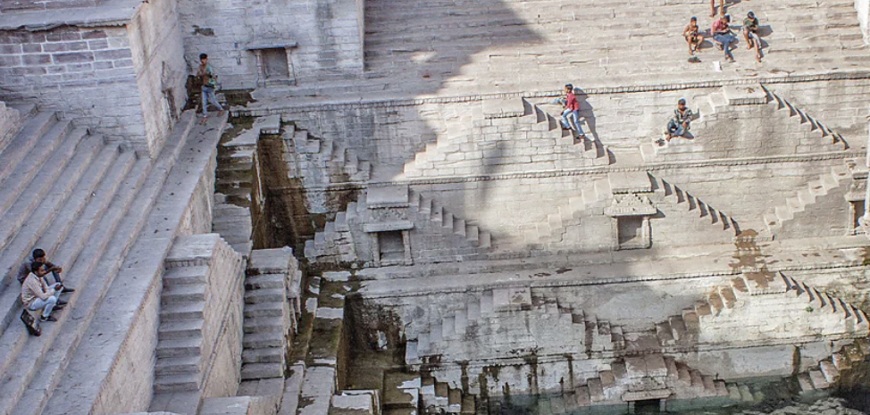 A recent BBC Future article, “India is turning to ancient water systems as modern ones run dry,” is what prompted me to take a closer look at one of India’s most remarkable forms of infrastructure: the ancient stepwell.These are also called baolis or vavs. These are striking, ingenious architectural projects going back 1500 years. And there are lessons for today’s construction project managers – and really any project leaders – here. The premise of the article is startling. Climate change is driving parts of India into a struggle with water scarcity. Modern water systems have come under increasing pressure – so engineers, communities, and project planners are reconsidering technologies that were developed centuries ago. The renewed interest is not based on nostalgia. It is based on the realization that some of these systems were extraordinarily well adapted to local climate, geology, and seasonal water cycles. Stepwells are a particularly powerful example. At first glance, they can appear almost mysterious: enormous staircases descending deep into the earth, sometimes surrounded by intricately carved columns, platforms, and chambers. And because they contain intricate carvings related to religious figures, these have been described as ‘inverted temples’. But beneath their beauty is a very practical idea. A stepwell is essentially a water-storage system, groundwater access point, public space, and piece of infrastructure combined into a single structure. The design is elegant and simple - instead of lowering a bucket down a narrow shaft, people descend a series of steps to reach the water. That distinction matters because in many parts of India, particularly in regions such as Gujarat and Rajasthan, water availability varies dramatically through the year. During the monsoon season, rainfall recharges the groundwater and the water table rises. During the long dry season, it falls. Stepwells were designed around that reality – with long-term value in mind, not a “let’s build an inverted temple on time and on budget and to specification” in mind. Triple Bottom Line thinking dominated over Triple Constraint thinking. When water was plentiful, people need to descend only a short distance. Months later, as the water table dropped, they simply continued farther down the staircase to reach it. The infrastructure did not attempt to force nature into a fixed condition. It was designed to function across a range of conditions that varied in the long term. That alone offers a lesson for modern project managers. Designing for the Ecosystem, Not Just the Structure The builders of stepwells were not simply constructing wells. They were working within a much larger system involving rainfall, geology, groundwater, temperature, evaporation, seasons, community needs, and the passage of time. Consider the steps themselves. Their most obvious purpose was to allow people to reach a changing water level. But the stepped form also provided secondary hydraulic and structural benefits. Depending on the particular stepwell and its setting, the steps and terraces could help:
The system adapts – ironically, a massive stone structure is…flexible. Long-Term and Systems Thinking Was Built Into Stepwells Perhaps the most striking feature of these structures is not their depth or even their engineering sophistication. It is their time horizon. The people who commissioned and constructed stepwells, - and the project leaders who oversaw their construction - were solving an immediate problem—access to water—but they were clearly thinking beyond the next season. Stepwells were substantial civic investments. They required excavation, engineering, stonework, labor, maintenance, and often elaborate architectural design. Some have survived for well over 1000 years. That suggests a fundamentally different question from the one that sometimes dominates modern projects. Instead of asking simply: “Can we deliver this project successfully?” the deeper question becomes: “Will what we are building – our outcome - continue to deliver value over a very long period of time?” A project can finish on schedule, stay within budget, and meet its stated scope—and still produce an asset that performs poorly, creates environmental problems, becomes expensive to maintain, or fails when conditions change. The builders of stepwells appear to have understood something that modern project professionals are increasingly rediscovering: successful projects must be evaluated in terms of the value they create over their entire life cycle. Resilience Rather Than Prediction There is another important lesson hidden amongst the carvings in the design. A stepwell does not depend on predicting exactly where the water level will be. Instead, it is designed to work when the water is high, when the water is low, and at many points in between - that’s resilience. Modern projects are often built around forecasts: expected demand, expected rainfall, expected temperatures, expected population growth, expected energy costs, expected traffic patterns – and that’s okay: forecasting is necessary. But the world has become increasingly difficult to predict. Climate change makes historical weather patterns less reliable. Technology changes rapidly. Supply chains are disrupted. Communities grow and shift. The stepwell suggests another approach – don’t merely design for the condition you expect, design – and lead your project - for a range of conditions. For a modern construction project manager, that might mean asking whether a building can tolerate more extreme heat, heavier rainfall, flooding, changes in energy supply, water scarcity, or different patterns of use. In other words, project leadership increasingly requires us to think beyond efficiency and toward adaptability. Sustainability Without Calling It Sustainability The ancient builders would not have used phrases such as “sustainable infrastructure,” “climate resilience,” or “triple-bottom-line thinking.” Yet stepwells incorporated many ideas that today fall comfortably under those headings.
Multipurpose construction A stepwell could provide water, shade, gathering space, religious or cultural space, and relief from intense heat. Descending into one could produce a dramatic temperature change because of shade, stone, depth, and proximity to water. Today we might describe that as multifunctional infrastructure. The builders probably would have regarded it simply as sensible design. A Project Leader’s View For modern construction project leaders, there is a temptation to look at an ancient structure primarily as an engineering curiosity. Think Sphinx.Think Hanging Gardens of Babylon.But that misses the larger lesson. The real achievement of the stepwell may be the thinking behind it. Its designers recognized that their project existed inside several larger systems: a water system, an environmental system, a social system, and a system that would continue long after the original construction project ended. That mindset produces different project questions. Not simply:
Looking Back to Look Forward The BBC article is compelling precisely because it turns our normal idea of innovation upside down – sort of like the ‘inverted temple’ description of a stepwell! There is an understandable tendency to associate innovation with something new: artificial intelligence, sensors, smart buildings, digital twins, sophisticated forecasting, advanced materials. An sure, of course, all of those technologies can contribute enormously to better projects. But innovation does not always require inventing something that has never existed before. Sometimes innovation begins by looking carefully at what people figured out hundreds of years ago. India’s renewed interest in ancient water systems is a reminder that older infrastructure may contain design knowledge that becomes newly valuable when conditions change. Stepwells, in particular, remind us that some of the most durable infrastructure comes from understanding a place deeply—its climate, its people, its natural systems, and its future needs—and then designing accordingly. The great achievement was not simply creating a staircase down to water. It was recognizing that the water would rise and fall, seasons would change, communities would continue to need the resource, and the structure would have to keep working through all of it. That is long-term thinking. And for today’s construction project leaders facing climate change, resource constraints, and growing expectations for sustainable value, it may be one of the oldest project lessons that still feels surprisingly modern. I plan a Part 2 of this post which will include more pictures of stepwells and some insight from a civil engineer who was born in Gujarat. |
A PATH to more equitable health - via AI project leadership
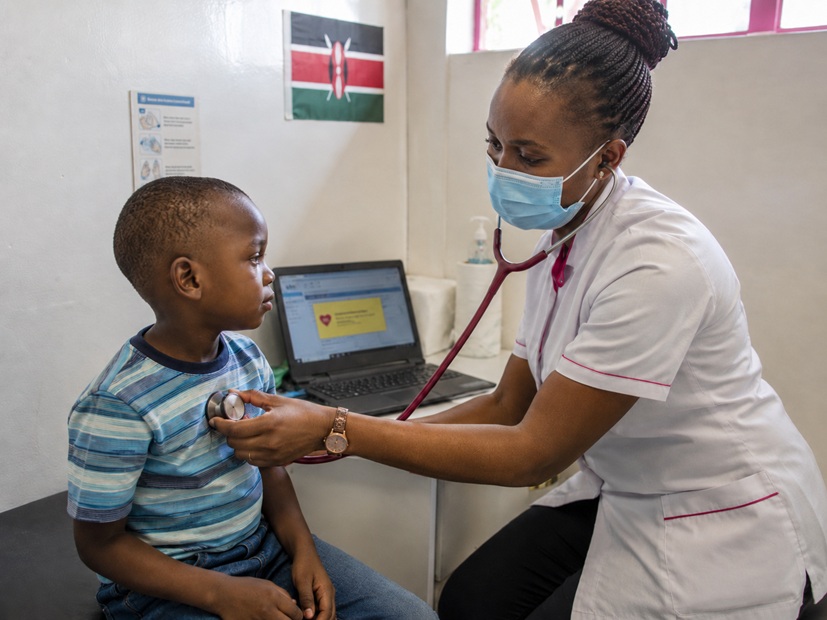 Today’s post is about the People - and of course, the Project - portions of People, Planet, Profits, and Projects. My attention was drawn by this article: https://www.npr.org/2026/07/23/g-s1-134929/this-ai-tool-promises-a-second-sight-of-eyes-to-clinicians-did-patients-benefit which looked at a project in Kenya to determine whether an AI ‘medical consultant’ made a difference in diagnosis and treatment. I expanded my search to look for other initiatives in medically-underserved areas of the world. The article starts with a dramatic story (side note: this is how I coach my students to begin a presentation if appropriate). A 4-month-old boy comes into the clinic with a fever and a stuffy nose. (Medic) Vyonne Njeri thinks it's just a cold. Then a yellow box pops up on her computer telling her to check his heart — because his heart rate is elevated. Njeri is a registered clinical officer in Nairobi, Kenya; she sees patients on her own like a nurse practitioner. When she listens with a stethoscope she hears a whoosh — a sign that the infant could have a congenital heart defect. "That's something I would have missed on any other day," Njeri says of the visit a few months ago. "That child would have just gone home." She credits an AI tool that double checks her work for helping her.
Broader Study PATH is evaluating LLM-assisted clinical support not only in Kenya but also in Nigeria and Rwanda. Its work explicitly addresses the limited evidence available concerning the safety, appropriateness, and effectiveness of these tools in African primary healthcare. A pilot project like the one in Kenya proves that a technology can operate. A program of coordinated trials such as PATH is initiating, is needed to establish whether it can create sustainable value. The Threats My research showed that unfortunately, there are areas in which AI can be a negative in terms of underserved populations in two ways. 1. Performance inequality: the tool works less accurately for certain populations. 2. Access inequality: the communities that could benefit most receive the technology last—or not at all. These are repairable problems solved by reducing bias and providing better, more representative data to AI systems and assuring that there is equity in deploying AI systems worldwide – both initiatives in which (in my opinion) project leaders should play key roles. Additional research and cases: Autonomous AI for diabetic-eye screening “Autonomous artificial intelligence for diabetic eye disease increases access and health equity in underserved populations” The study specifically examined how autonomous AI screening for diabetic eye disease could increase access and improve equity in underserved populations. This supports an important sustainability principle: The value of AI may be greatest not where doctors are plentiful, but where expertise is scarce, distant, or unaffordable. Source: Autonomous artificial intelligence for diabetic eye disease increases access and health equity in underserved populations AI and unexplained pain disparities Researchers used deep learning to analyze knee X-rays and better account for pain experienced by underserved patients. Conventional radiographic measures did not fully explain the greater pain reported by some disadvantaged populations; the AI-derived measure accounted for more of that disparity. This example broadens the story beyond access. AI may also challenge clinical measures that have historically failed to represent certain patients’ lived experiences. That provides a powerful “People” question: What if the problem is not that patients’ symptoms are inexplicable, but that the measurement system was never designed to see them? Source: An algorithmic approach to reducing unexplained pain disparities in underserved populations | Nature Medicine Multi-disease screening through an eye scan A recently reported AI system analyzes retinal images to screen for conditions including diabetes, hypertension, high cholesterol, osteoporosis, gout, and thyroid disease. Because it requires a relatively basic fundus camera, researchers see potential applications in primary-care offices, pharmacies, mobile clinics, and remote communities. This is a good example of healthcare infrastructure being redesigned around accessible technology. Source: AI analyses of eye scans can detect diseases like diabetes, osteoporosis and thyroid disease in seconds From a project perspective, the innovation is not merely the algorithm. It only comes to life with project leadership, which includes:
PATH (originally Program for Appropriate Technology in Health) is a global nonprofit public-health organization, started in 1977 that works to make healthcare more accessible, particularly in low-resource and underserved communities. It operates in more than 70 countries and partners with governments, healthcare providers, researchers, businesses, and community organizations. Its work includes:
|
The Flip-Side of Biomimicry
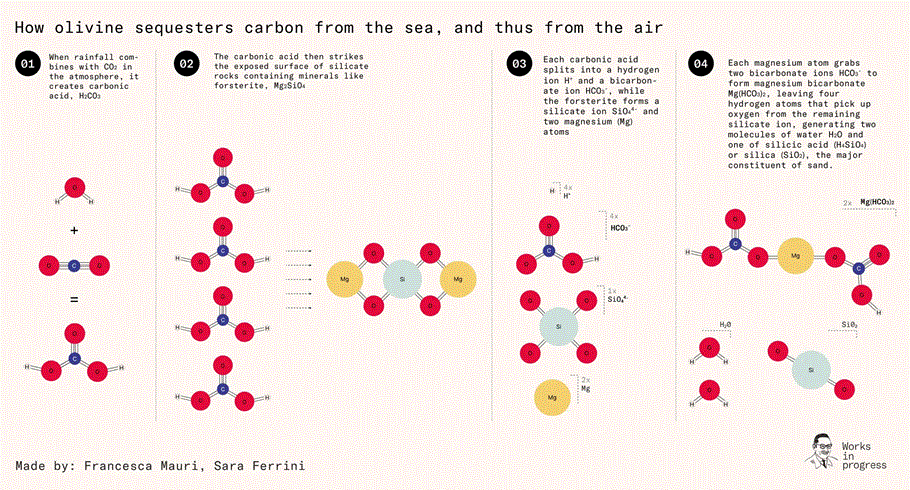
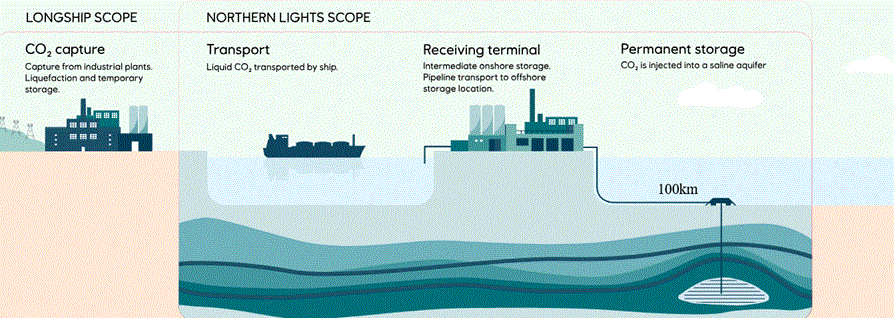
 A few weeks ago I wrote about the pomelo — how its thick, air-pocketed rind has inspired engineers designing better crash-protection and packaging, simply by copying what evolution already perfected. That's biomimicry: nature solves the problem, we study the solution. This piece is about the other side of that coin. Instead of mimicking what nature already does well, we're now trying to engineer our way around problems nature is increasingly struggling to absorb on its own — pulling carbon back out of the air and ocean we put it into in the first place. It's a useful contrast, because the two approaches reveal very different things about cost, value, and who's actually paying for the difference. The inspiration for this post comes from an episode of How We Survive, which is a spinoff podcast of Marketplace, called Carbon Burial at Sea: A Promising Climate Solution - or Another Engineering Experiment? Carbon Burial at Sea: A Promising Climate Solution—or Another Engineering Experiment? Marketplace's How We Survive explores one of the more ambitious ideas in climate mitigation: capturing carbon dioxide and storing it in the ocean or deep underground before it can contribute to global warming. The episode follows two different approaches.
|
A citrus fruit schools us on material science and project leadership (Part 2 of 2)
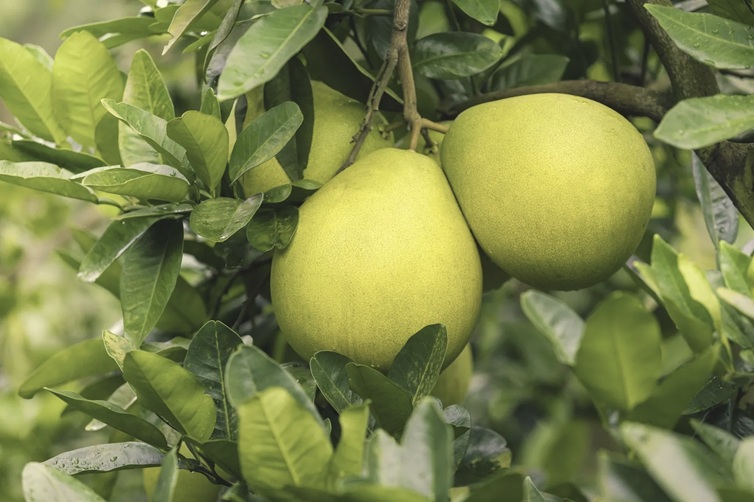 In Part 1, I discussed the characteristics of the pomelo and how scientists and engineers and others in project teams are using biomimicry to allow human-made materials to behave in this shock-absorbing manner. As a reminder- here's a bit of a summary of Part 1: The real story isn't the pomelo itself. It's the idea that nature has spent millions of years conducting R&D, and project leaders, engineers, and innovators can learn from those solutions. The Pomelo as Nature's Safety Engineer A pomelo fruit can fall 30 feet from a tree and survive with its interior intact. Development engineers look at this capability and ask (as they do any time biomimicry is applied), "How did nature solve a problem we've been trying to solve for decades?" The answer isn't a hard shell. It's a sophisticated, layered structure that:
From Ideation to Operations: The Project Management Angle This is a textbook example of how innovation moves through a technology maturation pipeline: 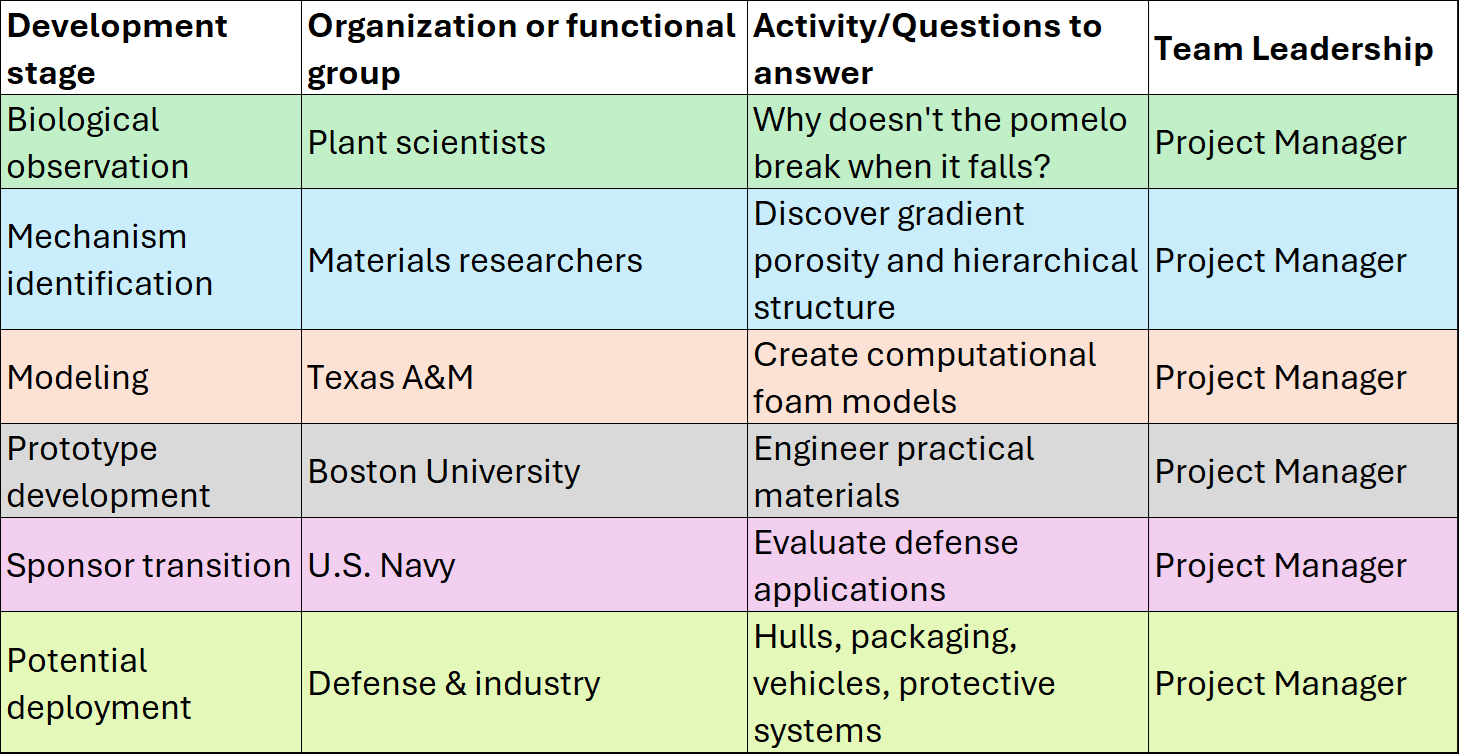 As you can see, multiple functions of organizations – and across organizations – are working together for a common objective. Notice a pattern here? This is where project leaders need to shine. One Application: Football* Helmets Modern football helmets already incorporate foam layers, but helmet designers face a difficult challenge:
Instead of a uniform foam, the pomelo (as you saw in part one of this post) takes advantage of:
The goal isn't necessarily a stronger helmet – it’s a helmet that behaves more like a pomelo peel. Beyond Football The implications extend well beyond football – hockey, cycling, military, youth sports, vehicle safety – the list is significant. Biomimicry Instead of starting from scratch, biomimicry asks: "What has nature already figured out?" Nature's solutions are frequently:
Millions of years of evolutionary pressure produced an elegant impact-management system without steel, electronics, batteries, or AI. This effort, however, as we’ve seen above, needs project leadership. The value chain here goes something like… ·Botanists studied a fruit. ·Materials scientists studied its structure. ·Engineers modeled it. ·The Navy funded applications. ·Sports equipment designers and users will ultimately benefit, potentially reducing injuries and saving lives. That's delivering value. Closing Thought and Summary The pomelo reminds us that innovation does not always begin in a lab – sometimes it begins in a tree. The project leader’s job is to notice, translate, test, and deliver value throughout that change. Learn More
|
A citrus fruit schools us on material science and project leadership (Part 1 of 2)
| A recent video ‘short’ from Boston University, which features dropping a citrus fruit – a pomelo – from the roof of a university building – caught my attention. This video focuses on the possible connection between the pomelo and better phone cases, but keep in mind that the implications are much bigger (literally and figuratively) than phone cases. Click on the picture or the link for the short video. 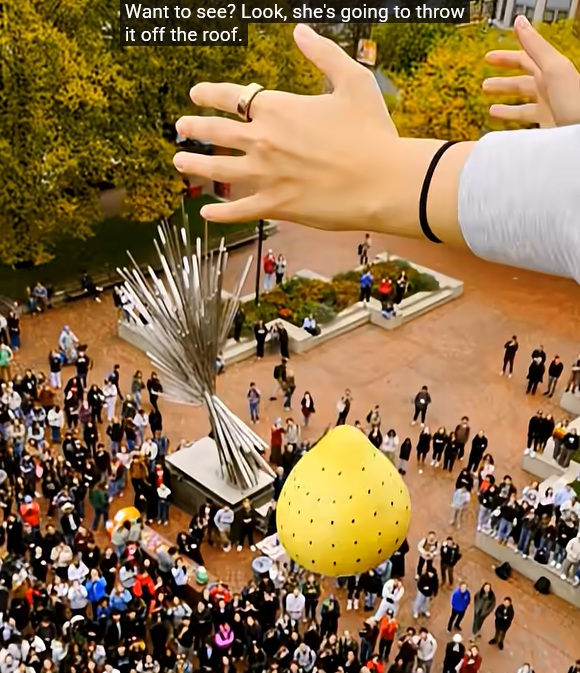 Click here for video. Since it caught my interests as a good example of applying biomimicry in design, I followed some of the research, and I am glad I did – on top of the biomimicry here, it has some good lessons on project leadership. The way I am approaching this blog post is to break it into to two parts. The first focuses on the science. Since this is about biomimicry, and since I fell into the rabbit-hole while trying to understand this myself, I thought I would share the ‘bio’ part first, and then go into the ‘mimicry’ and leadership piece with that well in hand. I know…this is going to seem a bit science-geeky, but I promise that this will connect to the intersection of project leadership and sustainability, and if you don’t want the science piece, you can wait for part 2 which should be available in a week or two. So let’s cut to the chase – literally, by looking at a cross-section of a pomelo: 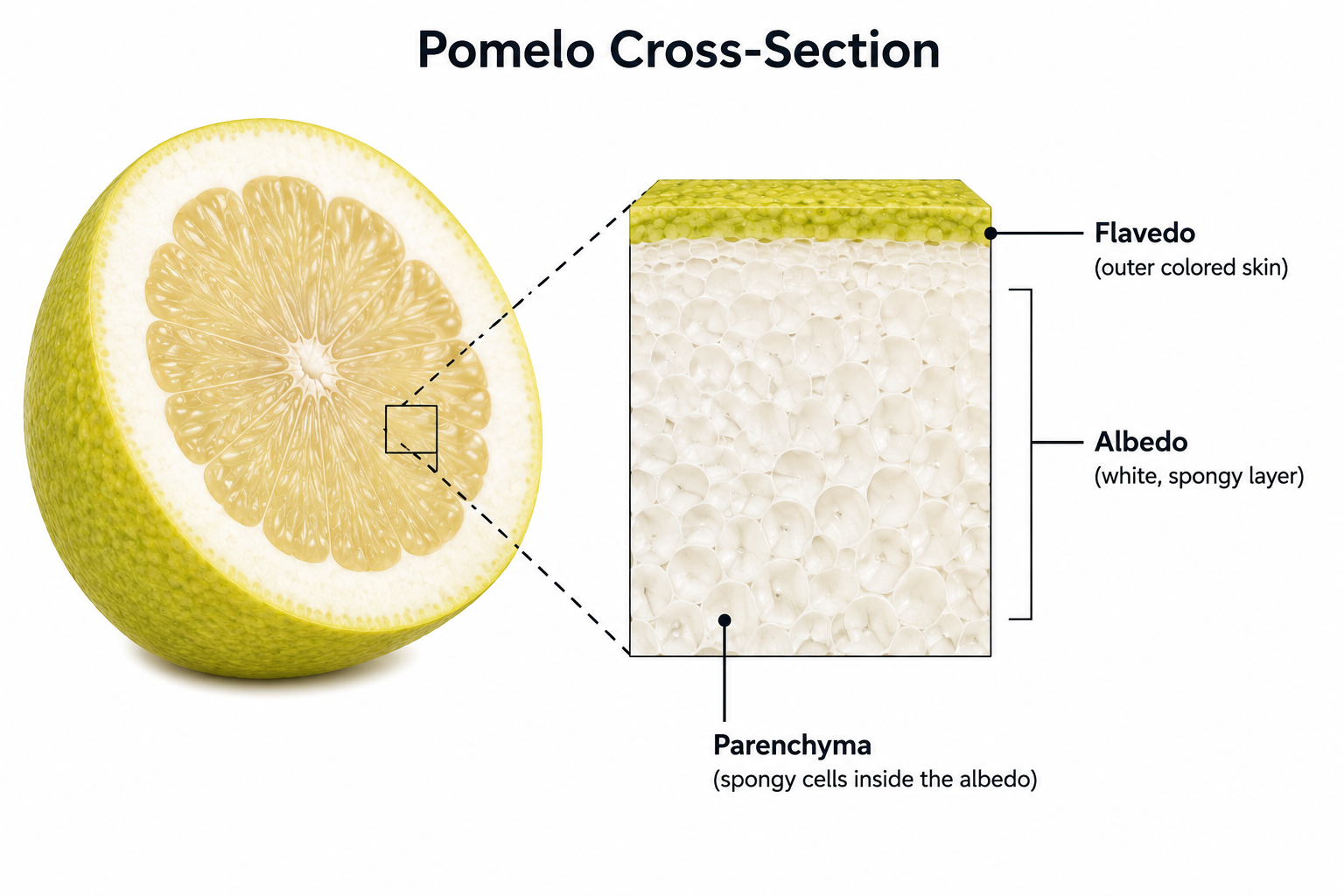 The albedo – the piece involved in the biomimicry - is effectively a natural, porous foam. Its parenchyma cells have intercellular air spaces that help dissipate energy when a fruit falls, protecting the internal pulp and seeds. The parenchyma refers to the soft, living plant tissues that make up this layer Researchers at Boston University and Texas A&M University and beyond have studied this for several years. Their work focused on the pomelo peel's unique gradient porosity—small pores near the outside, larger pores in the middle, and finer pores again near the fruit. They developed finite-element models and Voronoi-based foam structures that replicated this architecture. Their simulations showed improved energy dissipation and impact resistance compared with conventional uniform foams. Wait a second, you say. What’s this about Voronoi-based foam structures? What’s that about? I couldn’t help myself, I had to follow that rabbit-hole as well. Voronoi structures are patterns that naturally divide space into many adjoining regions, each centered around a particular point. They were first described mathematically by the Russian mathematician Georgy Voronoi, but similar structures are found throughout nature.It’s not an actual Voronoi structure but a giraffe’s coat pattern gives you the basic idea. Whether in biological tissues, mineral formations, animal markings, or cellular materials, Voronoi-like patterns often emerge when space is filled efficiently and neighboring regions grow until they meet. The function of a Voronoi structure is to organize space into distinct territories with minimal gaps and overlaps. In biological systems, these structures can help explain how cells pack together, occupy available space efficiently, or distribute forces. That last part – about distributing forces – is key here.Shock absorption is precisely about that! To bring this back to the pomelo, I used a simple example of five PMI Exam test centers first, and then expanded that to 2,000 sites so you can see the similarity to the pomelo’s albedo. 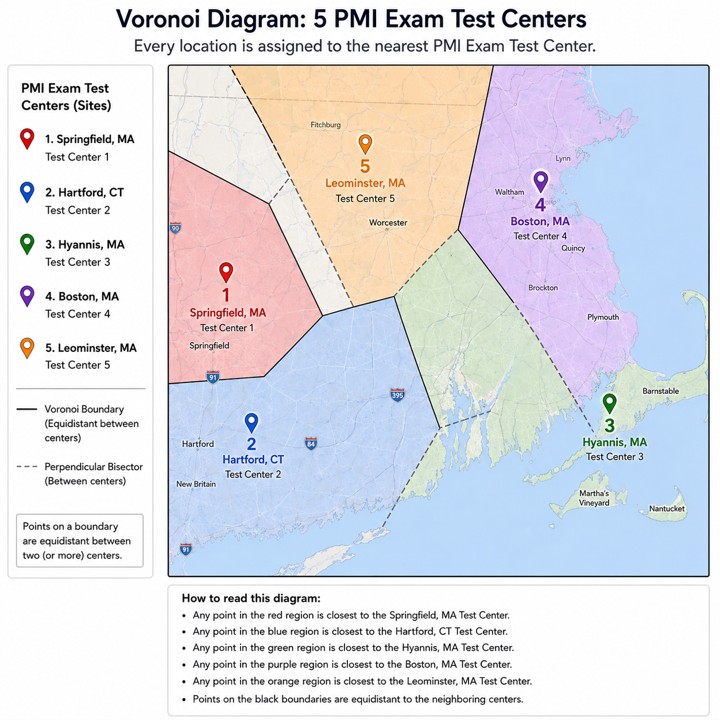 Now let's expand that by a couple of orders of magnitude... 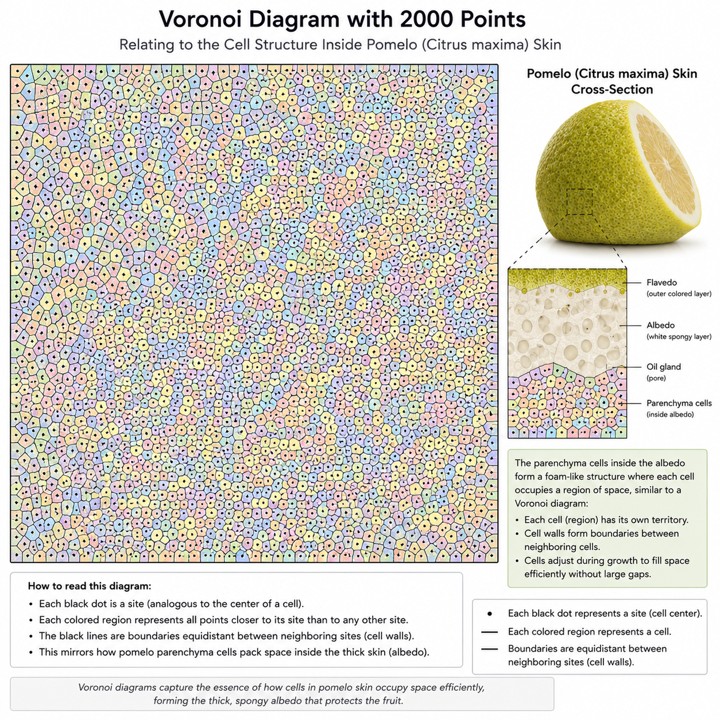 OK, so now that you know what a Voronoi structure is… let’s continue with how this very real fruit exhibiting Voronoi structures is telling us. Researchers have noted potential applications including:
So what is biomimicry? In project management terms, it's leveraging nature's ultimate continuous-improvement program—a process refined through millions of years of iterative experimentation, adaptation, and learning (we could call that evolution). Nature has been running Agile sprints long before humans coined the term, testing countless prototypes, discarding what doesn't work, and scaling what does. I will pick up on the project leadership and sustainability piece of this in Part 2. |


