









Guessing is not a strategy: How to build decision velocity with AI and real-time data
June 10, 2026 | Live Webinar

You Can't Get They-ah From Hee-yah
Floating an idea into reality: the other side of the AI Project Paradox
The Environment of the Built Environment: an AI Paradox
6th, 6th Edfition, 6th Edition PMBOK, 7th Edition, 7th Edition PMBOK, 8th Edition PMBOK, 8th Edition PMBOK Guide, Activism, actuarial, actuary, adapt, addition by subtraction, Africa, africa, agriculture, airforce, ajaita, Alaska, amazon, analogous, analytics, ancient, and more power, antarctica, anti-science, apple, apps, architecture, arctic, arrakis, Artificial Intelligence, asch paradigm, Assistant, asthma, astronomy, automobile, automotive, autonomous cars, b, bankhar, Banksy Crypto, basalt, baseball, bats, batter, beauty products, benefit, benefits, Benefits Realization, beyond epica, biases, bicycle, big data, big dfata, big dig, bike, biodiversity, biomedicine, birdhouse, blockchain, blood, blue blood, blue trees, bluefin, bluefin tuna, book review, boston, boston university, Boyce, Brazil, brazil, Breakdown Structures, BS, building, buildings, built environment, built environment, bumblebee, cake, capacitor, car, Carbon, carbon, carbon capture, carbon negative, carbon neutral, carbon pool, carbon sequestration, carbonate, careers, CEO, ChatGPT, chatGPT, chatgpt, chatgpt, chess, China, china, chopsticks, citrus, cli-fi, climate, climate change, climate resilience, climeworks, Clumsy, CO2, co2, CO2 Utilization, coalition, cobalt, coffee pods, cognition, cognitive, Collabortion, colombia, concrete, Conflict, construction 5.0, cool projects xyloscope, cooling, coral, corn, cost of good quality, cost of poor quality, cost of quality, crazy, criticism of project management, cryptocurrency, CSR, csr, data, data analytics, data privacy, datacenter, dataset, death spiral, Decision Making, decomposition, Defense and Climate, definition of a project, deforestation, dependencies, dependency, desert, DIKW, dikw, dimopoulos, disposal, dna, DOD, dogs, dolphins, dream, drilling, drink, dune, dune, dutch, early start, earth, eatlocal, eco-tourism, ecological, economic, economics, EKC, electric grid, electricity, electronics, elysis, embodied carbon, emerging technologies, empower, Energy, energy efficiency, environmental degradation, escalate, escalation, ESG, extreme weather, fallacy, FARC, farming, finance, fish, fish brains, fishing, fix, fixing the earth, flint water, Flint Water Supply, flood, flooding, Food supply chain, food waste, forest, forest for the trees, forestation, forrestgump, frank herbert, Fruitcake, fungus, fusion, Galvao, garage, gas, gasoline, geese, gender equality, gender partnerships, generational differences, Generative AI, gladwell, gold, Goodness, google, Government, GPT, great pacific garbage patch, green, green building, green buildings, green energy, green iguana, green project, green project management, greening, guest post, gyre, harkonnen, Harvesting Benefits, hawasina, hedgehogs, heursitics, historical data, hlb, holitsic, holland, horseshoe crab, human-caused climate change, hydrogen, hydrology, ice, iceland, ignition, iguana, imagery, impact, india, inequality, information, initiatives, injection, insurance, intelligence, interacting risk, internal combustion engine, invasive species, investment, isomer, issue escalation, issues, ITER, jobs, Jupiter, justification, kids, kill point, knowledge, koch brothers, Kuznets, laboratory, LAL, landscape mode, lapampa, launch, LCA, Leadership, Leadership, life cycle analyses, life cycle analysis, lifecycle, Linkedin, liquid, lizard, local, long term, long-term, long-term thinking, look up, loud, maintenance, maker, makermovement, malcolm gladwell, management, marathon, marine biology, market, mars, Martin Luther King, mean, megawatt, MeHg, melting, mercury, metal, Microgrid, microplastics, migration, military, millennial, mindset, minerals, mission, mitigate, MLK, mongolia, museum, museum of london, nature, nematodes, net gain, Net Project Success Score, net zero, netherlands, network, New book, New Jersey, New Practitioners, new york, NFT, nitrogen, noise, noreaster, norway, nova, NPSS, NREL, ocean, ocean cleanup, ocean life, oil rig, oil rigs, oklahoma, oman, only murders in the building, opportunity, overall risk, oxygen, packaging, pareto, PBS, permafrost, persistence, peru, Pharmaceutical, planet, planet.com, planning, plant, plasma, plastic, playground, pm, pm education, pmbok, pmbok guide, pmnetwork, PMXPO-2018, podcast, pollutants, pollution, poop, poor, portfolio, power, power skills, privacy, privacy concerns, professors, program, Program Management, project, project leader, project leadership, project management, project management 3.0, project on fire, project progress, Project Success, project success, projecticity, projectleadership, projectmanagement, projects, psychology, pulse of the profession, purple bacteria, purpose, quiet, rainforest, rationale, reef, refugees, renewable, renewables, Repair, repair, repeatable process, repeatable processes, repurpose, research, resource breakdown strucuture, Resource Management, reversing climate change, revisionist history, rich, rigs2reefs, ripe, risk, risk avoidance, Risk Management, risk mitigation, risk response, risk responses, river, robots, rocks, rules of thumb, rural, rural India, russia, Sarcasm/Irony, satellite, saudi, schedule, sci-fi, Science, science, science-fiction, scientific american, screaming monkeys, sea, sea life, Sea-Level Rise, sea-level rise, seagreens, seawall, seawater, seawater temperature, seaweed. beat;es. farming, secondary risk, selena gomez, sequestration, shipping, skyscraper, SLR, smart cities, smart city, smelting, social, social pressure, soil, solar, solar panels, solar perovkites, solar saheli, sonic, sponge cities, SRI, stage-gate, stagegate, stakeholder, stakeholder management, steward, stewardship, storage, strategy, stupid, success, suffer, sulphur, sunk cost, supercapacitor, supply chain, survey, Sustainability, sustainability, Sustainable Investing, Sustainable Tourism, sybiosis, symbiosis, system 03, TBL, temperature, terraform, terraforming, test, threat, threats, totem, touchscreen, tour, tower, Trains, transparency, transportation, trash, tree, tree species, trees, trillion, triple bottom line, triple constraint, truth to power, UMass, us army corps of engineers, USDA, vacuum, value, venus, vision, voice, voltage optimization, vw scandal, washing machine, waste, wastewater, water, we mean business, whales, Whirlpool, wind, wisdom, women, Women in Project Management, wood wide web, woonerf, Work Breakdown Structures (WBS), world breakdown structure, worms, xian, xylotron, Yale


|
In this first “teaser” post, I want to address and explore the connections between sustainability (or at least the environmental pillar of the Triple Bottom Line) and the wildly popular movie franchise Dune. Or, more accurately, I want to make readers aware of the connection between Frank Herbert’s novel from the novel first serialized in 1963 – before many of you were born, and perhaps before many of your parents were born! At that time, ecology was not really a ‘thing’. Gas (petrol) cost US$0.30 per gallon. The PMBOK(R) Guide didn't mention sustainability. I can guarantee that - because there was no PMBOK(R) Guide yet. Indeed, it would be 6 years until the Project Management Institute was founded. I would like to give you the background of the novel (and now the latest rendition of the film) so that you can better appreciate the story and better connect it to projects, programs, and portfolios, and better connect your project work to the realm of sustainability. By the way, for those of you who think it's silly to take a science fiction book and apply it to real-world project management on Earth, have a look at this extract from Science News. Herbert's imagination is scientifically plausible: "Not only did Herbert create a rich fantasy world, he also built a plausible planet, says Alexander Farnsworth, a climate modeler at the University of Bristol in England. A few years ago, Farnsworth and colleagues made a computer simulation of the climate on Arrakis. People could live on the desert planet, the team concluded, but Herbert probably should have relocated his cities closer to the equator than the poles." So, what could ornithopters, and the behaviors, beliefs, and technologies of a people called the Fremen have to do with projects – or sustainability? Quite a bit. Rather than provide a synopsis here, I advise you read this very short summary of the book from Brittanica (WARNING: there are some spoilers here!). Next, consider some of the concepts conveyed by Herbert: planetology, the idea of a Butlerian Jihad, to expunge humanity of Artificial Intelligence (AI), and the resulting creation of human computers (Mentats) who replace all computing devices, the development of clever technologies such as the stillsuit to preserve water in desert conditions, the creation of a body shield impervious to any (fast) motions, even the concept of ‘terraforming’ which could be considered an extreme application of Construction 5.0… all of these could be considered portfolios of projects and programs – and most of them were triggered by ecological changes on the planets in Herbert’s universe. For now, have a look at this extract from an excellent article from Salon which precedes the release of the latest movie series by about 10 years: Gerry Canavan, assistant professor of English at Marquette University and co-author of "Green Planets: Science Fiction and Ecology," sums up the novel's legacy well when he writes in an email interview, "'Dune' is really a turning point for science fiction that takes ecology seriously as a concept." Frank Herbert's son would be among the first to agree with that assessment. In "Dreamer of Dune," his 2003 biography of his father, Brian Herbert recounted many instances that demonstrated his father's interest in environmental issues, including his backyard experiments with solar and wind power. In a telephone interview from his home near Seattle, the younger Herbert said, "In 1970, on the First Earth Day, Frank Herbert spoke to 30,000 people in Philadelphia and he told them, 'I don't want to be in the position of telling my grandchildren, 'I'm sorry, there's no more Earth left for you. We've used it all up.'" As I mentioned, this is only a ‘teaser’ post. I haven’t even mentioned Dune’s giant Sandworms and the economic impact of Spice yet. But that’s coming, and there are some elements of that that fall directly into that intersection between project leadership and sustainability. So have your crysknife ready as we’ll soon slice and dice these concepts together!
|
| The Power of Awkwardness
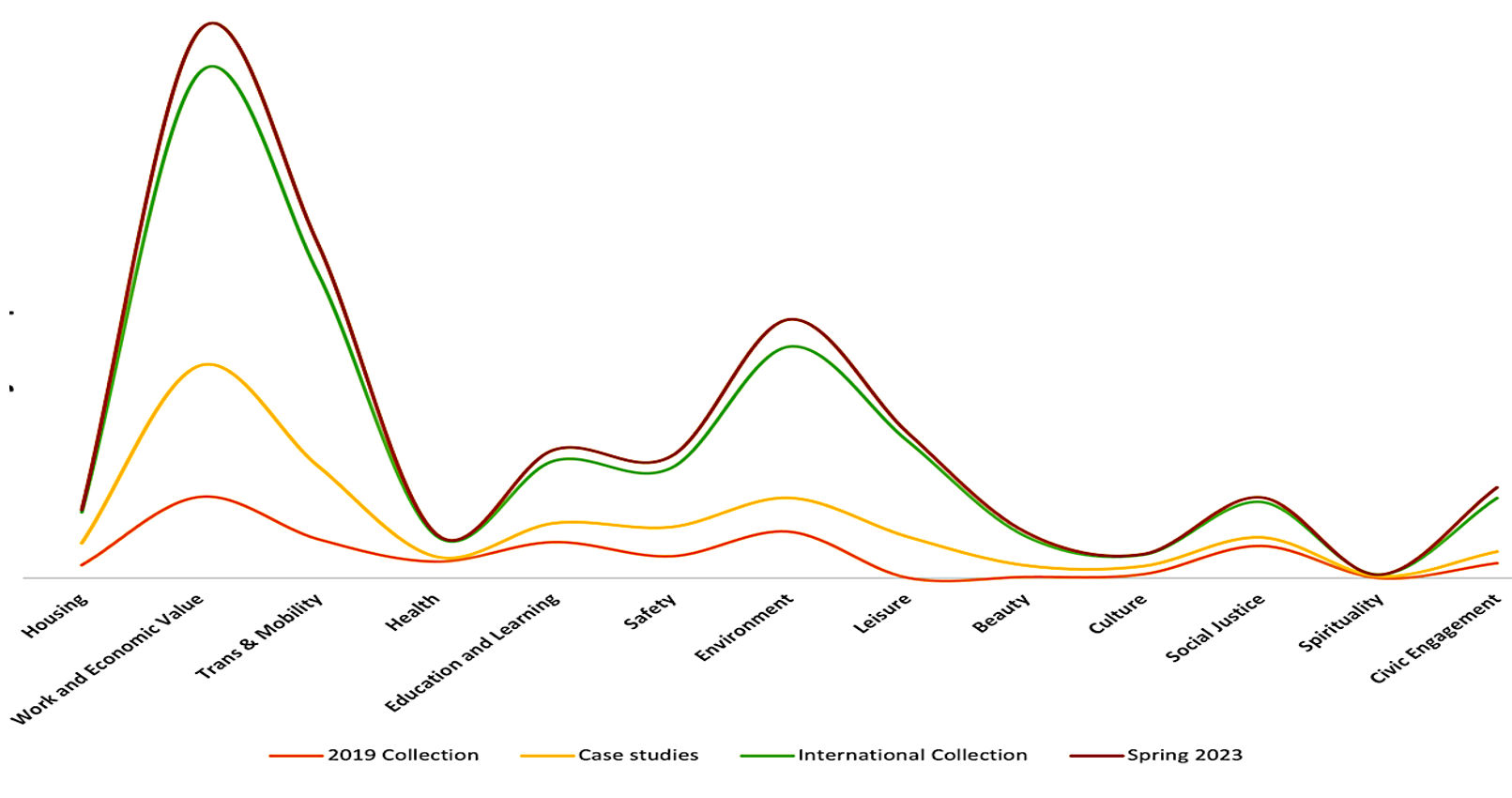
International women’s day. A day in the calendar considered a key moment for the global community to highlight issues, initiatives and progress concerning women’s equality. Not today. This, my first blog in this new series concerning smart city projects, is about awkwardness. Specifically, the discomfort ‘achieved’ in interviews for my recent smart city project research. I offer these comments to highlight how difficult moments revealed enormous areas for growth and as of yet untapped potential. Smart projects that, if achieved, will contribute to the quality of women— and perhaps more genders – who seek it every day and not just on March 8th. (A bit of context… about six years ago, I redirected my project management research career. I had had a satisfying practitioner and research experiences, but wanted to be more socially responsible in these domains. I turned toward smart cities and finished a second PhD [read: labour of love] this past fall. My own blog series soon to appear on projectmanagement.com will reflect some of those observations.) Were any considerations given to gender, I asked. It’s been well documented that the experiences of women navigating streets, neighbourhoods and even city-based services were different than another gender doing the same. I had struck a small chord. No, he said. Balance was achieved by working with people who had volunteered for the projects. There was not a “real demand” to a dedicated approach on this topic. With deference, I pushed a tiny bit further. Okay… And in your international experience? Do you imagine looking through gender lens when influencing smart city projects? Of course. When going to a smart city conference, the majority are still men. There is a demand to increase and to push the gender balance. The awkwardness had become undeniable. Even though I had only one or two more questions, the interview had come to an end. Afterwards, I realised the truth within that awkwardness. And a new point of analysis in my doctoral research had revealed itself. The goal of my doctoral research was to answer the question… How do projects contribute to quality of life in smart cities? My answer is represented in the figure below. I call it the smart city heartbeat (LUB dub, LUB dub J). Across 13 essential themes, smart city projects were distributed. More commentary will be offered in future blogs, but today the focus will remain on women.
How do projects affect quality of life in smart cities? (Pasian, 2024) I studied eight cities and more than 1000 projects. Ten projects were specifically and explicitly designed for women and girls. The city of Utrecht, the Netherlands had one of those projects men — particularly focused on the needs of migrants and refugees. The Neighbourhood Academy was set up to provide a safe space for women to meet and support each other. Many cities have their own versions, including Amsterdam, Berlin, Oslo, Milan, Birmingham, Gothenburg, Leipzig, and Munich. A lack of specific gendered-focus smart city projects can be seen elsewhere. Motivated by my case, study analysis, I moved onto a larger collection of projects. Using a few city ranking schemes, I drew a sample list of cities from Western Europe, North America, Australia, and New Zealand. Another 3000 projects were compiled from the period 2021-2023. A few dozen specifically addressed the needs of women and girls. They included: GEAC - (Girls Empowered Against Crime) Bromley & Croydon Women’s Aid (#RelationshipGoals) Agents for Change Young Women’s Project will deliver group writing and performance workshops and one-to-one mentoring from award-winning women writers to young women aged 13-18 who live in Hounslow and are on the fringes of gangs or criminal groups. The project empowers marginalized young women to find their voices, become agents for change, writing about their lives and issues faced by young women, and publishing and presenting their work to young people to inspire them. SafeCityYEG is a web-based mapping tool that allows Edmontonians to report where they feel unsafe or safe in their communities and why. Women4Climate Mentorship Program matches young women who are taking action on climate, with mentors. Greater Copenhagen Cleantech Impact Accelerator: In the project, existing networks in Skåne and Själland will be opened up and made more accessible at the same time as new network platforms are developed to meet needs that are not met today. A special network for women in the cleantech industry will be started. We do this to create a more cohesive community for environmental technology throughout the Greater Copenhagen area and to make it easier for companies to know where to turn to take advantage of available services. W4RES: Scaling up the involvement of women in supporting an accelerating market uptake of renewable energy sources for heating and cooling. To wrap up this first blog, I’d like to recall another conversation in another interview as part of my research. It was with project manager and we were talking about the secondary outcomes associated with a lighting installation in a parking garage. It was a point of pride for the city in question. The technology integration and data collection was state of the art and serving long-term needs of the city. I asked about safety. Quizzically looking at me, he asked what I meant. I said lighting installations can serve multiple purposes. Beautification being one, safety another. The quizzical expression remained. What if your daughter was using that parking garage? Would she be impressed or even aware of the data collection potential? Would the aesthetic appeal matter? Or would she be more concerned with the coverage of the lighting that would make her walk from the office or an evening with her friends safer? I recognised the vibe. Awkwardness had re-emerged. Unlike the first conversation, this one didn’t end quickly. Bringing up a family member in a professional setting is often and rightfully dismissed. Such things are typically out of bounds. But before a morning stand-up meeting and after the week’s celebratory drinks ending a project, the project manager is also a citizen. My question was disarming and revelatory without being threatening. It was utterly relatable. He thanked me for the question and the thoughts it provoked. Women’s equality is an ongoing and unachieved goal in smart cities and associated projects. Awkwardness surrounding the same projects is similarly ongoing, and regularly achieved. Both have value. The question is… How can projects and project managers use one to achieve the other? |
| InfraUltra
What are all of the colors? Red, Orange, Yellow, Green, Blue, Violet, right? Those are the visible colors, yes. But there are other ‘colors’ as well. Lower frequencies than red are infrared. Lower than that: microwave and radio. Higher than violet – ultraviolet, and beyond that, x-rays and gamma rays. If, instead of frequency we consider time, and a timeline rather than a frequency spectrum, we could think of a project lifecyle as the very narrow visible part of that timeline. Before the project: the rationale, the portfolio, the strategy, the vision that leads to the chartering of a project. After the project: the steady-state – the collection of benefits (and potentially disbenefits) and (hopefully) the creation of value. It’s time for project managers to look left (before the project) to understand the reasons the project was launched and its connection to the organization’s mission, vision, values, and strategy. And, it’s time to look right (after the project) considering what the project’s PRODUCT does in the long term, and bringing considerations of those outcomes, benefits and value into project planning. Even if the project comes in on time, within budget, and meets particular project specifications, does that mean the product’s product will be popular, clean, easy on society and the environment, able to make money or save lives in the long run? It’s certainly not a guarantee, and it certainly should not be out-of-sight-out-of-mind for the project manager. Does this mean the PM must be there for months or years watching his or her project outcome deliver? Of course not. But considering outcomes, benefits and value as a project leader will help you run a better-connected project, and a higher-performing team. |
|
It is not hard to raise one’s hand. Science says it takes about 5 calories to do so. You can get that from the dregs (5%) of a can or bottle of Coca-Cola™. Or a tiny sip of your smoothie. Yet, when a project issue concerns a team member, an issue that could either cause the project to miss an objective, or worse – to become disconnected from the organization’s mission, vision, and/or values, it seems like that can be much more difficult – as if the hand has become very heavy, and it would take millions of calories (or thousands of gallons of sugary beverages – and maybe some caffeine) to do so.
It seems like there is more hand-wringing than hand raising. That has to change. And you can play a part in that change, in the process building a higher-performing team. When companies are investing in a project or task that is counter to the project's - or organization’s - stated objectives, and a team member needs to speak up, it’s clearly a leadership issue to ease that hand-raising and avoid hand-wringing. I’m talking about the top leadership of the company. But I am also talking about project leaders. I’m using the word ‘leader’ quite intentionally here. Not project managers – project LEADERS. Project managers become project leaders when they create an atmosphere of psychological safety in their project team meetings and in general the flow of project communications. Examples of how to do this and to step up as a project leader:
There are (unfortunately) many instances of where this ‘hand-wringing’ took place instead of ‘hand-raising’: The OceanGate Titan submersible, two different Boeing 737 Max situations (MCAS and the door blowouts, Volkswagen’s ‘Dieselgate’, the Flint, Michigan water switchover, and on, and on. The bottom line here is that if you want a high-performing team, you want full participation and contribution from everyone – even, no, strike that, especially from the hand-wringers. Their silence can literally be deadly. Their participation – although it may be uncomfortable or hard to hear at first, is one of the things you need – for identification of threats, stakeholders, concerns, and details that you need as a project leader and which will make your project team cohesive (in the long term) and productive (in the short and long term). In a future post, I will discuss resources and tips for project managers to make their project platform a place where hands will go up, threats will be identified, remedies or actions will take place to prevent disasters, and the individual who raises their hand will be celebrated instead of reprimanded.
I’ll talk more about the value of Devil’s Advocacy in particular in an upcoming post. In the meantime, have a sip of your smoothie.
|
|
I’m intentionally making this a short blog post. I mainly want to applaud PMI for their efforts to shift to a “value mindset”. I saw it at the Global Summit in Atlanta. I see it in this video just released by PMI. And perhaps no coincidence, the images in the video, “PMI’s Purpose Manifesto” are drawn from the Atlanta Global Summit. I was lucky enough to attend and there was a theme of “be more human” throughout. Please watch the video below. It's only 2 minutes! My only request to PMI is to take the title from the video which seems (to me anyway) to promise a document, and publish a Purpose Manifesto, and keep it parallel with, and elevated to the level of the Code of Ethics and Professional Conduct. Keep it short, simple, straightforward, and aligned with the United Nations Sustainable Development Goals, and focused on growing the project manager's mindset to a broader, more expanded view, and longer-term mindset we need as project leaders – thinking past the end of the project and considering the wider set of stakeholders, including people and planet that our projects touch. As Nikos Mourkogiannis said in his book “Purpose”, the choice between values and success is no choice at all. Paraphrasing Mourkogiannis, organizations must satisfy the need for purpose--a set of values that defines an organization and inspires and motivates its employees. The video inspires. A manifesto would help let this inspiration infiltrate our DNA as project leaders. I know many who would be willing to work on such a document to live up to the message of the video. |