




 Dr. Beverly Pasian





Guessing is not a strategy: How to build decision velocity with AI and real-time data
June 10, 2026 | Live Webinar

You Can't Get They-ah From Hee-yah
Floating an idea into reality: the other side of the AI Project Paradox
The Environment of the Built Environment: an AI Paradox
6th, 6th Edfition, 6th Edition PMBOK, 7th Edition, 7th Edition PMBOK, 8th Edition PMBOK, 8th Edition PMBOK Guide, Activism, actuarial, actuary, adapt, addition by subtraction, Africa, africa, agriculture, airforce, ajaita, Alaska, amazon, analogous, analytics, ancient, and more power, antarctica, anti-science, apple, apps, architecture, arctic, arrakis, Artificial Intelligence, asch paradigm, Assistant, asthma, astronomy, automobile, automotive, autonomous cars, b, bankhar, Banksy Crypto, basalt, baseball, bats, batter, beauty products, benefit, benefits, Benefits Realization, beyond epica, biases, bicycle, big data, big dfata, big dig, bike, biodiversity, biomedicine, birdhouse, blockchain, blood, blue blood, blue trees, bluefin, bluefin tuna, book review, boston, boston university, Boyce, Brazil, brazil, Breakdown Structures, BS, building, buildings, built environment, built environment, bumblebee, cake, capacitor, car, Carbon, carbon, carbon capture, carbon negative, carbon neutral, carbon pool, carbon sequestration, carbonate, careers, CEO, ChatGPT, chatGPT, chatgpt, chatgpt, chess, China, china, chopsticks, citrus, cli-fi, climate, climate change, climate resilience, climeworks, Clumsy, CO2, co2, CO2 Utilization, coalition, cobalt, coffee pods, cognition, cognitive, Collabortion, colombia, concrete, Conflict, construction 5.0, cool projects xyloscope, cooling, coral, corn, cost of good quality, cost of poor quality, cost of quality, crazy, criticism of project management, cryptocurrency, CSR, csr, data, data analytics, data privacy, datacenter, dataset, death spiral, Decision Making, decomposition, Defense and Climate, definition of a project, deforestation, dependencies, dependency, desert, DIKW, dikw, dimopoulos, disposal, dna, DOD, dogs, dolphins, dream, drilling, drink, dune, dune, dutch, early start, earth, eatlocal, eco-tourism, ecological, economic, economics, EKC, electric grid, electricity, electronics, elysis, embodied carbon, emerging technologies, empower, Energy, energy efficiency, environmental degradation, escalate, escalation, ESG, extreme weather, fallacy, FARC, farming, finance, fish, fish brains, fishing, fix, fixing the earth, flint water, Flint Water Supply, flood, flooding, Food supply chain, food waste, forest, forest for the trees, forestation, forrestgump, frank herbert, Fruitcake, fungus, fusion, Galvao, garage, gas, gasoline, geese, gender equality, gender partnerships, generational differences, Generative AI, gladwell, gold, Goodness, google, Government, GPT, great pacific garbage patch, green, green building, green buildings, green energy, green iguana, green project, green project management, greening, guest post, gyre, harkonnen, Harvesting Benefits, hawasina, hedgehogs, heursitics, historical data, hlb, holitsic, holland, horseshoe crab, human-caused climate change, hydrogen, hydrology, ice, iceland, ignition, iguana, imagery, impact, india, inequality, information, initiatives, injection, insurance, intelligence, interacting risk, internal combustion engine, invasive species, investment, isomer, issue escalation, issues, ITER, jobs, Jupiter, justification, kids, kill point, knowledge, koch brothers, Kuznets, laboratory, LAL, landscape mode, lapampa, launch, LCA, Leadership, Leadership, life cycle analyses, life cycle analysis, lifecycle, Linkedin, liquid, lizard, local, long term, long-term, long-term thinking, look up, loud, maintenance, maker, makermovement, malcolm gladwell, management, marathon, marine biology, market, mars, Martin Luther King, mean, megawatt, MeHg, melting, mercury, metal, Microgrid, microplastics, migration, military, millennial, mindset, minerals, mission, mitigate, MLK, mongolia, museum, museum of london, nature, nematodes, net gain, Net Project Success Score, net zero, netherlands, network, New book, New Jersey, New Practitioners, new york, NFT, nitrogen, noise, noreaster, norway, nova, NPSS, NREL, ocean, ocean cleanup, ocean life, oil rig, oil rigs, oklahoma, oman, only murders in the building, opportunity, overall risk, oxygen, packaging, pareto, PBS, permafrost, persistence, peru, Pharmaceutical, planet, planet.com, planning, plant, plasma, plastic, playground, pm, pm education, pmbok, pmbok guide, pmnetwork, PMXPO-2018, podcast, pollutants, pollution, poop, poor, portfolio, power, power skills, privacy, privacy concerns, professors, program, Program Management, project, project leader, project leadership, project management, project management 3.0, project on fire, project progress, Project Success, project success, projecticity, projectleadership, projectmanagement, projects, psychology, pulse of the profession, purple bacteria, purpose, quiet, rainforest, rationale, reef, refugees, renewable, renewables, Repair, repair, repeatable process, repeatable processes, repurpose, research, resource breakdown strucuture, Resource Management, reversing climate change, revisionist history, rich, rigs2reefs, ripe, risk, risk avoidance, Risk Management, risk mitigation, risk response, risk responses, river, robots, rocks, rules of thumb, rural, rural India, russia, Sarcasm/Irony, satellite, saudi, schedule, sci-fi, Science, science, science-fiction, scientific american, screaming monkeys, sea, sea life, Sea-Level Rise, sea-level rise, seagreens, seawall, seawater, seawater temperature, seaweed. beat;es. farming, secondary risk, selena gomez, sequestration, shipping, skyscraper, SLR, smart cities, smart city, smelting, social, social pressure, soil, solar, solar panels, solar perovkites, solar saheli, sonic, sponge cities, SRI, stage-gate, stagegate, stakeholder, stakeholder management, steward, stewardship, storage, strategy, stupid, success, suffer, sulphur, sunk cost, supercapacitor, supply chain, survey, Sustainability, sustainability, Sustainable Investing, Sustainable Tourism, sybiosis, symbiosis, system 03, TBL, temperature, terraform, terraforming, test, threat, threats, totem, touchscreen, tour, tower, Trains, transparency, transportation, trash, tree, tree species, trees, trillion, triple bottom line, triple constraint, truth to power, UMass, us army corps of engineers, USDA, vacuum, value, venus, vision, voice, voltage optimization, vw scandal, washing machine, waste, wastewater, water, we mean business, whales, Whirlpool, wind, wisdom, women, Women in Project Management, wood wide web, woonerf, Work Breakdown Structures (WBS), world breakdown structure, worms, xian, xylotron, Yale


|
Continuing (in a way) the theme of Smart Cities... The title of this blog post is a modified lyric from the song "Oklahoma!" in turn, from the musical of the same name. The correct lyrics are: We know we belong to the land Enjoy the song here: In any case, the land of Oklahoma may become the home of America’s tallest building. As project managers – and project LEADERS, we should not be interested only in HOW this gets done, but WHY it’s getting done. Building a team, gaining cohesion amongst the team, and motivating the team depends on whether the project has a great rationale, whether it’s connected to the mission and vision of the organization, and increasingly whether the project provides benefits and value beyond the organization. There is now a plan to build the tallest building in the USA and to put that building in (wait for it) Oklahoma City. It would be 1,907 feet tall, which would make it taller than the Freedom Tower in New York City. Here is a (tall!) picture of the project.
To get some details and to understand how New Yorkers feel about this, watch this short video from a New York City TV station: To find out more about this, I went to the architect’s web page, which has cool pictures of the project, and as to its justification, says this: The Boardwalk at Bricktown will deliver an exciting architectural tapestry of modern design and a rich mixed-use experience at the heart of a vibrant entertainment district. Designed to be the tallest building in the nation, this bold development encompasses over 3 acres and over 2 million square feet of residential, hospitality, retail, dining and entertainment. Within its sleek forms, the 480-key Dream hotel and residential towers will each feature their own unique luxe amenities, creating a dynamic urban hub for tenants and visitors. Dining, retail, and open plazas elevate and energize the streetscape, forging interaction, connection and inviting the world to experience the best OKC has to offer. A catalyst for urban evolution, The Boardwalk embodies the spirited essence of Oklahoma City, honoring its rich past, dynamic present, and promising future. Here are the key stats for this building:
Why 1907 feet? An homage to the year that Oklahoma recently became a state. The entire development project is estimated to cost $1.6 billion, including $770 million for the tower, says the firm’s press release. Funding for the project will come from multiple sources, he said, including $200 million in subsidies approved by the city. The firm is also pursuing additional state and federal funding. We know the New Yorkers are opposed to this (but it’s from a pride perspective, they are not direct stakeholders). How about others? From this article at CNN: Steve Agee, an economist at Oklahoma City University, said the idea is “pie in the sky,” especially since interest rates are hovering at 23-year highs, which would make financing the building more difficult. “I don’t see the economics working in their favor,” he said. “It’s not fathomable to me that Oklahoma City is ready for a building like that.” But the tower would be an “unprecedented outlier” in Oklahoma City, said Jason Barr, a professor of economics at Rutgers University-Newark who studies the economics of skyscrapers and is the author of “Cities in the Sky: The Quest for the World’s Tallest Skyscrapers.” The height of a city’s tallest building strongly correlates with its second-tallest building, he said, and the proposed Oklahoma City tower would be more than twice the height of the city’s current tallest building, the Devon Energy Center office building. Oklahoma city is growing… does that make a difference? The article goes on quoting Barr: Large cities like New York can have taller buildings because they have more people and more companies, he said. But the Oklahoma tower struck Barr as “way too tall given the city’s population.” New York’s population is around 12 times the size of Oklahoma City’s, and Chicago’s population is four times larger. So, I thought I would engage with a chat with ChatGPT about this, looking at the rationale. I think you may enjoy my conversation. My original prompt: A developer is planning on launching a 1,907 -foot tower in Oklahoma City. It will have the following statistics: • 2.7 million SF • 3.92 Acres • 1,907 SF Residential • 938,000 SF Parking • 480-Key Dream Hotel • 1,907 Residential Units (Luxury, Affordable Housing) • 110,000 SF Retail, Entertainment, and Dining Using population figures you can derive from https://www.okc.gov/ please assess the rationale for building such a project.
ChatGPT’s first response: Assessing the rationale for building a 1,907-foot tower in Oklahoma City would require considering various factors, including population figures, economic conditions, and urban development trends. Here's a breakdown of the project's potential rationale based on the provided information:
Ultimately, the rationale for building such a project in Oklahoma City would depend on a combination of factors, including the city's economic prospects, population growth, tourism potential, and the developer's vision for creating a dynamic and attractive urban space. Detailed market studies, demand assessments, and economic feasibility studies would likely be conducted before proceeding with a project of this scale to ensure its viability and success. Then I tried to inject the aspect of a growing population as a rationale: Please reconsider with this information: Oklahoma City has a 2024 population of 702,837. It is also the county seat of Oklahoma County. Oklahoma City is currently growing at a rate of 0.73% annually and its population has increased by 2.94% since the most recent census, which recorded a population of 682,760 in 2020.
ChatGPT responds: Thank you for providing the updated population figures for Oklahoma City. Based on this information, let's reassess the rationale for building a 1,907-foot tower in the city:
Considering the updated population figures and growth rate, the rationale for building such a project in Oklahoma City appears more plausible. It aligns with the potential demand for housing, the city's economic outlook, and the desire to create a dynamic urban environment that serves both residents and visitors. Nonetheless, the project's feasibility and success would still depend on thorough market studies and economic assessments to ensure that it aligns with the specific needs and preferences of the local population. A rationale, of course, is not always only financial. Even things like “pride” can fit into the rationale. Recalling the New Yorkers’ distatste for losing the title of USA’s Tallest Tower, I asked ChatGPT:
Please reconsider this with the intangible effects of having the tallest building in the US, one-upping New York City's Freedom Tower. ChatGPT replied: Building the tallest tower in the United States with the intention of one-upping New York City's Freedom Tower would introduce intangible effects and additional considerations to the project rationale. Here's a reassessment considering these factors:
However, it's important to note that building the tallest tower in the United States comes with substantial challenges, including engineering, zoning regulations, environmental considerations, and cost. Additionally, the long-term viability and profitability of such a project would require careful planning and market analysis to ensure that it aligns with the city's broader development goals and economic sustainability. While the idea of one-upping the Freedom Tower can bring pride and recognition to Oklahoma City, it should be pursued with a clear understanding of the associated risks and a comprehensive feasibility study to determine the economic, social, and cultural benefits that would result from such an ambitious undertaking.
Finally, since this is People, Planet, Profits, and Projects, I asked about the ecological aspects of this project. How about the ecological concerns? Is a very tall skyscraper more earth-friendly than a spread-out set of buildings? ChatGPT responded: Ecological concerns play a significant role in evaluating the sustainability of a very tall skyscraper compared to a spread-out set of buildings. It's essential to consider various aspects when assessing the environmental impact:
However, it's important to note that very tall skyscrapers also have potential ecological challenges:
In summary, whether a very tall skyscraper or a spread-out set of buildings is more earth-friendly depends on various factors, including design, location, infrastructure, and sustainable practices. It's crucial to conduct a comprehensive environmental impact assessment and adopt sustainable design and construction practices to minimize ecological concerns associated with tall buildings. Each project should be evaluated on a case-by-case basis to ensure it aligns with local sustainability goals and environmental considerations. I’ll be watching the news to see what happens with this project. But whether your work is in the Built Environment, in New York, Oklahoma City, Santiago, Chile, Wassenaar, The Netherlands, or Osaka, Japan, the overarching questions for you as a project leader are indeed the same:
Thinking in this way helps transform you from a project manager to a project leader.
|
|
Note: this is a guest post from Smart Cities expert, Dr. Beverly Pasian. Learn more about her at the bottom of the post. I'm honored to have her expertise in this series on Smart Cities and Project Management! The pandemic was the excuse, not the reason. In May 2020, Sidewalk Lab’s CEO Dan Doctoroff pointed to the economic impact of the pandemic as making the financial viability of the Toronto smart city project uncertain. While undoubtedly a factor, the downfall of the unprecedented urban experiment began two years earlier with the resignation of key advisors. Notable among them was privacy expert Dr Ann Cavoukian who, concerned that the imagined ‘city of privacy’ was turning into a ‘city of surveillance,’ was unconvinced with Google’s commitment to protect personal information. In doing so, she revealed a new role within the spectrum of project management professionals—the project-manager-as-privacy-officer. Within this revelation one can further see good and bad news. The bad news? Privacy is given almost no specific mention in any of the major project management standards. The good news? It can be interpreted in all of them. Direction is available for project management professionals seeking to enrich their careers. Imaginings are offered below, influenced by PMI’s project management principles, and easily applied to IPMA’s people, practice, and perspective competences. Be a diligent, respectful, and a caring steward of data As a project manager, you will be entrusted with personal and proprietary data possibly at all stages of the project. Upholding ethics and values will be natural extensions of this work. Data stewardship comprises responsibilities both within and outside the organization and should be reflected in your integrity, care and trustworthiness. More specifically, measures must be taken to ensure compliance with policies and accords such as the General Data Protection Regulation and the California Consumer Privacy Act (CCPA). Demonstrate privacy leadership Privacy and data can be secured in a project when key roles are staffed, notably those of the privacy manager, individual privacy officers and a data protection officer. Combined, they represent the privacy organization and are responsible for the interpretation of privacy policy(ies) and compliance across the project or program. The project governance structure would be a natural place to create this leadership. Respect the rights of all stakeholders as data subjects Within a privacy discussion, a stakeholder is a data subject – someone whose personal data is contained within or otherwise affected by the project. They can be positively or negatively affected by the project when, for example, their data is (securely) used for stakeholder feedback. On the other hand, compromising or breaching personal data can dramatically curtail or stop project activities. Effectively engaging a stakeholder involves the provision of reliable information / policies detailing how their personal data is managed (including in the event of a data breech). This will directly help foster a culture of trust.
Champion the true value of privacy (it’s not the data) At its core, the value of privacy is in the feelings and esteem of a project team member, not the data. The unexpected / unwanted sharing of personal information is, at best, an embarassing distraction but, at worst, a criminal act violating someone’s boundaries. At any point along this spectrum, it can be a significant departure from the project’s work. Much as a business case is a starting point for project value, a privacy policy can be for a project organization. Starting with one or more official sources, a contextual interpretation demonstrates clear leadership and advocacy for the unspoken needs of team members. The potential value—based on good will if nothing else—is enormous. Recognize, evaluate and respond to data breaches Project teams must realize the holistic view of the project as a system with privacy and data security embedded therein. The team needs to understand that a single change (for example, a breach of data) can cascade across the project and a response mechanism is essential to maintaining the system. Privacy professionals see breaches as more than risks. Their essential nature—the unwanted sharing of personal data—is largely the same regardless of circumstance. So is the response: (1) stop the breach and (2) prevent its recurrence. Create a collaborative team environment Paradoxically, a collaborative team culture can maximize opportunities for respecting privacy and data security. The transparent exchange of ideas and practices can result in data management agreements, organizational structures (i.e, the identification of a privacy steward) and processes (e.g., data protection impact assessments). Sharing experiences as ‘cases’ for other’s enlightenment is invaluable. Build quality into information management Quality is the ability of an organization to fulfill the stakeholders’ implicit and explicit needs. The same can be said for privacy and data protection. Compliance criteria (such as laws or regulations) specify ways to assess if quality has been achieved. Navigate complexity of personal, project and organizational data Data comes in many forms and from various sources and a project manager can create effective divisions: personal, project and organization. Complexity can (increasingly) emerge from their (mis)use in projects, programs or portfolios. Setting clear privacy and data security principles and breach responses can help. Widespread knowledge and acceptance of this information is essential, along with the careful distinction of responsibilities between the privacy manager and data protection officer. While related, these are separate roles with their own functions and relationships to the project manager. Embrace adaptability A project manager must also respond to changing data conditions. Is the data fit for the purpose(s) of the project? Is a source continually reliable? Do the IT functions and infrastructure support the (changing) data conditions? Is the project organization working in accordance with privacy laws, regulations and policies? Conducting regular privacy and data protection audits, serving as a sounding board for continuous learning and improvement, and deepening your own skills and knowledge will all contribute. Blog posts are inherently limited, and this one is no different. The thoughts above provide insight (not instruction) on a critical new dimension to a project manager’s role. For the broader perspective for both this post and those upcoming in this smart city series, I’ll return to Toronto. When officially launched in 2017, Alphabet (Sidewalk Lab’s parent company) emphasized the vital importance of improving quality of life in making its city-focused technology decisions. The Toronto project was not a ‘random activity’ but the result of more than a decade’s deliberations. As a native Torontonian, I was grateful at the time to hear this thoughtfulness. And as a researcher of quality-of-life in smart cities, even happier to hear this view from a project sponsor (Alphabet Chair Eric Schmidt). It was only a year later when project leadership started to deteriorate and project failure could be seen (in hindsight anyway) as inevitable. Anonymization protocols were not secure enough for Dr. Cavoukian. Former Blackberry CEO Jim Balsillie thought the project an experiment in ‘surveillance capitalism’ (one of the more frightening phrases I’ve heard in smart city discussions). Other privacy advocates contributed to these very public fallouts. Could quality-of-life in the Toronto/Sidewalk Lab model be achieved? Apparently not. But did it show that project team members could advocate a new type of civic (not just social) responsibility? Yes. Did these project professionals do so by clarifying privacy as an abstraction into something of immediate and tangible importance to a citizen’s daily life? Absolutely yes. In developing as professionals, project managers can look favorably on the Toronto experiment. Privacy and data security were revealed as key, new dimensions of their job. Perhaps most importantly, project managers can also look at it as a clear example of their other role… that of affected citizen.
Beverly Pasian’s career is one of a project management practitioner and researcher. For more than 30 years she has managed, taught and conducted research in the public sector around the world. She has dozens of courses, papers and presentations to her credit along with master’s degrees (in education and business), a Doctorate in Project Management (2011) and a Doctorate in Business Administration (2023). Expert and leadership participation in the IEEE and IPMA are ongoing. One of the best decisions of her professional life was to pivot her focus from project management maturity to smart cities. Investigating the role of projects in maximizing quality of life in smart cities is the most responsible step she wants to take as a researcher…with the ultimate goal of working directly with companies and cities to do the same. December, 2023 Future posts will revisit the question…how do projects contribute to quality-of-life in smart cities? Stay tuned. |
|
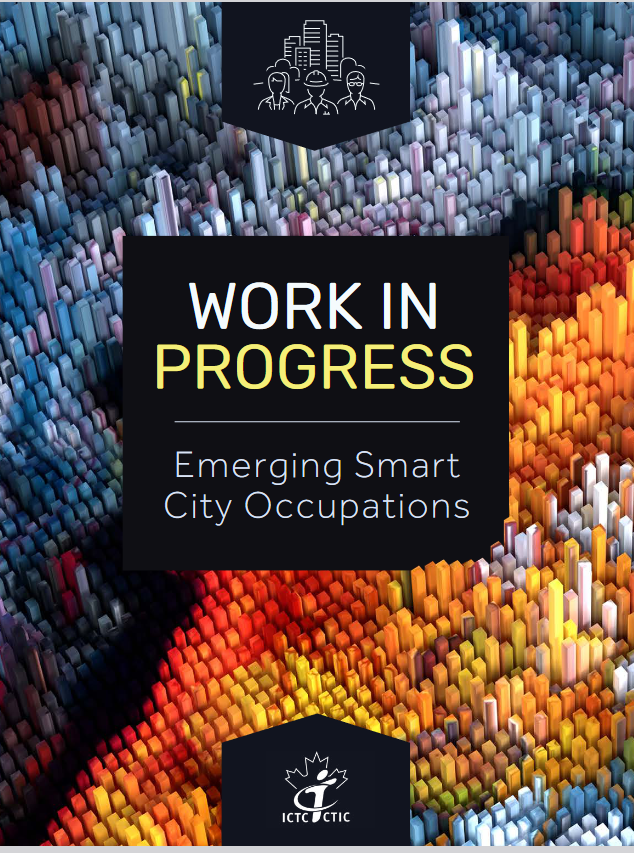
Image generated by incredibly thoughtful prompts from the author and the help of DALL-E The title of this post – projecticity, is a mashup of the words project and ‘electricity’… electricity in the sense of electrifying growth in PM career opportunities. Here, I continue the series on Project Management and Smart Cities. A new guest post is around the corner from Dr. Beverly Pasian, an expert in this area. However, given the projectmanagement.com focus on careers this month, I wanted to provide this post, focused (you guessed it) on the opportunities already here and coming along in the next few years for project managers (and project leaders) in the field of Smart Cities. I found a great resource from the Information and Communications Technology Council, Canada. It’s a summary of research on career roles based on the explosive growth of Smart Cities. Project management features heavily in it. One way that’s made obvious is that the word “project” appears 43 times in this 40-page document! The document (pictured below) can be found here or by clicking on the image below.
From this report, the focus was on five categories of roles:
I would argue that true project leaders are often working all 5 of these roles simultaneously. Like most reports of this nature, it begins with the promising growth of Smart Cities: Revenues from smart city projects worldwide are projected to grow from $116 billion (USD) in 2020 to $241 billion (USD) in 2025. 1 These initiatives, along with globalization, urbanization, and rapid digital disruption, will impact existing jobs and establish a demand for newly defined occupations in smart cities and beyond. In the research, the ICTC interviewed industry leaders in the Smart Cities area, whose overarching message was: “future skill needs will likely be centered around data and digital literacy combined with strong soft skills.” To expound further on this, The skills interviewees sought when building their teams included cross-disciplinary talent with technical skills combined with data analytics knowledge and an awareness of issues around privacy and ethics, and inclusivity and equity in technology design. In discussing cross-disciplinary talent, interviewees pointed to the need to overlap fields of study that have traditionally been more pursued in isolation. The theme of combining fields of study came up multiple times, with interviewees saying that a greater combination of technical and analytical skills and certifications (for example business along with engineering, or civil engineering and data science) would help prepare people for their department. Interviewees from one department had recently begun working on university partnerships, stating that such initiatives “provide students that key level of life experience that they need in the workforce.
In terms of certifications, as expected, Certified PMP® was one of only five certifications listed as desired, along with PE, MBA, Safety Professional and Microsoft Certified Systems Engineer. Amongst the Power Skills listed were (should sound familiar to project managers!):
The report (and others, like this one from BurningGlass, and this one from PMI) said that employers saw their skill requirements focused in the areas of
Listed under these human skills were:
To close this brief post, here’s an actual example of a job posting for a PMO leader for a Smart Cities initiative in Saudi Arabia: Job Title: PMO - Smart Cities Location: Riyadh, Saudi Arabia Overview:
Responsibilities:
|
|
Continuing with the theme of Smart Cities… I have several guest posts pending. In the meantime, I just want to make a resource available for you to help with this post series. https://www3.weforum.org/docs/WEF_Smart_at_Scale_Cities_to_Watch_25_Case_Studies_2020.pdf From this report by the World Economic Forum, this extract should be helpful: What problems do smart city applications solve? Smart city applications are manifold and can address diverse yet similar challenges that cities face around the world. These include congestion, burgeoning populations, gaps in infrastructure, inadequate service delivery, exclusion, poverty, a lack of competitiveness, limited liveability, vulnerability to climate change, and natural and man-made disasters. In some cases, especially in emerging countries, challenges are even greater and affect the very survival of some of these cities. Cities are increasingly implementing projects with smart solutions in waste management, traffic congestion, citizen safety, affordable housing, water resource management, smart buildings, efficient use of energy, renewable energy resources, facilitating navigation of autonomous vehicles, citizen participation and stakeholder consultation, to name a few. The Fourth Industrial Revolution is helping cities leapfrog certain stages of development by harnessing affordable digital solutions. Among these diverse definitions and solutions, the common goals or themes of efficiency, innovation, inclusion and resilience stand out. According to the G20 2019 Japan report Finding New Solutions through Building Smart Cities, a city that uses data and digital technologies effectively to plan and manage its core functions becomes efficient, innovative, inclusive and resilient. Integrating digital technologies, especially AI, into a city’s systems and services presents new and affordable opportunities for a city to solve its challenges. This in turn will help it achieve the Sustainable Development Goals through efficient use of its resources, effective stakeholder engagement, informed decision-making and better governance. Stay tuned for much more on this topic! Thanks. |
|
With all of the attention on AI in general, especially in the sense that ‘the robots are coming’ and the panic of the downside of AI, I think it’s time to consider the good that AI – or at least “smart’ contribution that sophisticated software (and hardware) can make to humanity. I came across a really nice post on LinkedIn that summarizes the concept of Smart Cities. It’s from David Cain ( https://www.linkedin.com/in/dccainpc/ ).
In today's rapidly evolving urban landscape, the concept of Smart Cities is becoming increasingly vital. At its core, a Smart City utilizes technology that In today's rapidly evolving urban landscape, the concept of Smart Cities is becoming increasingly vital. At its core, a Smart City utilizes technology to enhance the efficiency and quality of urban services. This includes improving transportation systems, reducing energy consumption, and streamlining waste management. By integrating data and digital technology, Smart Cities aim to optimize city functions and drive economic growth while ensuring sustainability. I really would like the project management readers to note the broader definition of sustainability. Many of you (and you know who you are!) think of sustainability as “save the whales, save the snails” – that is, it’s about ecology and environment only. Not so. Amongst ‘people, planet, profit’, it’s not only about planet. Not even close. Sustainability means much more, including, and perhaps especially the improvement of life for humans (people) and improved effectiveness and efficiency for business (profit). In future posts, I’ll be relying on some experts in the project management area who are focused on smart cities and the projects that enable their creation. Of course, this is part of “the Built Environment”, which, in turn, fits nicely into PMI’s excellent new focus on this area, with a new credential, the PMI-Construction Professional (PMI-CP™). So much (project!) effort will be needed as these smart cities are built up, it behooves project managers to learn about the rationale behind it, and the technologies in it. This is what I intend to cover in following posts. For now, you can watch this introductory video on Smart Cities. Notice how the focus is NOT on 'saving whales', but heavily on making life better for humans. However to learn more about what this means to and for Project Leaders, stay tuned! |
|
"Words are, of course, the most powerful drug used by mankind." - Rudyard Kipling |