








Guessing is not a strategy: How to build decision velocity with AI and real-time data
June 10, 2026 | Live Webinar

You Can't Get They-ah From Hee-yah
Floating an idea into reality: the other side of the AI Project Paradox
The Environment of the Built Environment: an AI Paradox
6th, 6th Edfition, 6th Edition PMBOK, 7th Edition, 7th Edition PMBOK, 8th Edition PMBOK, 8th Edition PMBOK Guide, Activism, actuarial, actuary, adapt, addition by subtraction, Africa, africa, agriculture, airforce, ajaita, Alaska, amazon, analogous, analytics, ancient, and more power, antarctica, anti-science, apple, apps, architecture, arctic, arrakis, Artificial Intelligence, asch paradigm, Assistant, asthma, astronomy, automobile, automotive, autonomous cars, b, bankhar, Banksy Crypto, basalt, baseball, bats, batter, beauty products, benefit, benefits, Benefits Realization, beyond epica, biases, bicycle, big data, big dfata, big dig, bike, biodiversity, biomedicine, birdhouse, blockchain, blood, blue blood, blue trees, bluefin, bluefin tuna, book review, boston, boston university, Boyce, Brazil, brazil, Breakdown Structures, BS, building, buildings, built environment, built environment, bumblebee, cake, capacitor, car, Carbon, carbon, carbon capture, carbon negative, carbon neutral, carbon pool, carbon sequestration, carbonate, careers, CEO, ChatGPT, chatGPT, chatgpt, chatgpt, chess, China, china, chopsticks, citrus, cli-fi, climate, climate change, climate resilience, climeworks, Clumsy, CO2, co2, CO2 Utilization, coalition, cobalt, coffee pods, cognition, cognitive, Collabortion, colombia, concrete, Conflict, construction 5.0, cool projects xyloscope, cooling, coral, corn, cost of good quality, cost of poor quality, cost of quality, crazy, criticism of project management, cryptocurrency, CSR, csr, data, data analytics, data privacy, datacenter, dataset, death spiral, Decision Making, decomposition, Defense and Climate, definition of a project, deforestation, dependencies, dependency, desert, DIKW, dikw, dimopoulos, disposal, dna, DOD, dogs, dolphins, dream, drilling, drink, dune, dune, dutch, early start, earth, eatlocal, eco-tourism, ecological, economic, economics, EKC, electric grid, electricity, electronics, elysis, embodied carbon, emerging technologies, empower, Energy, energy efficiency, environmental degradation, escalate, escalation, ESG, extreme weather, fallacy, FARC, farming, finance, fish, fish brains, fishing, fix, fixing the earth, flint water, Flint Water Supply, flood, flooding, Food supply chain, food waste, forest, forest for the trees, forestation, forrestgump, frank herbert, Fruitcake, fungus, fusion, Galvao, garage, gas, gasoline, geese, gender equality, gender partnerships, generational differences, Generative AI, gladwell, gold, Goodness, google, Government, GPT, great pacific garbage patch, green, green building, green buildings, green energy, green iguana, green project, green project management, greening, guest post, gyre, harkonnen, Harvesting Benefits, hawasina, hedgehogs, heursitics, historical data, hlb, holitsic, holland, horseshoe crab, human-caused climate change, hydrogen, hydrology, ice, iceland, ignition, iguana, imagery, impact, india, inequality, information, initiatives, injection, insurance, intelligence, interacting risk, internal combustion engine, invasive species, investment, isomer, issue escalation, issues, ITER, jobs, Jupiter, justification, kids, kill point, knowledge, koch brothers, Kuznets, laboratory, LAL, landscape mode, lapampa, launch, LCA, Leadership, Leadership, life cycle analyses, life cycle analysis, lifecycle, Linkedin, liquid, lizard, local, long term, long-term, long-term thinking, look up, loud, maintenance, maker, makermovement, malcolm gladwell, management, marathon, marine biology, market, mars, Martin Luther King, mean, megawatt, MeHg, melting, mercury, metal, Microgrid, microplastics, migration, military, millennial, mindset, minerals, mission, mitigate, MLK, mongolia, museum, museum of london, nature, nematodes, net gain, Net Project Success Score, net zero, netherlands, network, New book, New Jersey, New Practitioners, new york, NFT, nitrogen, noise, noreaster, norway, nova, NPSS, NREL, ocean, ocean cleanup, ocean life, oil rig, oil rigs, oklahoma, oman, only murders in the building, opportunity, overall risk, oxygen, packaging, pareto, PBS, permafrost, persistence, peru, Pharmaceutical, planet, planet.com, planning, plant, plasma, plastic, playground, pm, pm education, pmbok, pmbok guide, pmnetwork, PMXPO-2018, podcast, pollutants, pollution, poop, poor, portfolio, power, power skills, privacy, privacy concerns, professors, program, Program Management, project, project leader, project leadership, project management, project management 3.0, project on fire, project progress, Project Success, project success, projecticity, projectleadership, projectmanagement, projects, psychology, pulse of the profession, purple bacteria, purpose, quiet, rainforest, rationale, reef, refugees, renewable, renewables, Repair, repair, repeatable process, repeatable processes, repurpose, research, resource breakdown strucuture, Resource Management, reversing climate change, revisionist history, rich, rigs2reefs, ripe, risk, risk avoidance, Risk Management, risk mitigation, risk response, risk responses, river, robots, rocks, rules of thumb, rural, rural India, russia, Sarcasm/Irony, satellite, saudi, schedule, sci-fi, Science, science, science-fiction, scientific american, screaming monkeys, sea, sea life, Sea-Level Rise, sea-level rise, seagreens, seawall, seawater, seawater temperature, seaweed. beat;es. farming, secondary risk, selena gomez, sequestration, shipping, skyscraper, SLR, smart cities, smart city, smelting, social, social pressure, soil, solar, solar panels, solar perovkites, solar saheli, sonic, sponge cities, SRI, stage-gate, stagegate, stakeholder, stakeholder management, steward, stewardship, storage, strategy, stupid, success, suffer, sulphur, sunk cost, supercapacitor, supply chain, survey, Sustainability, sustainability, Sustainable Investing, Sustainable Tourism, sybiosis, symbiosis, system 03, TBL, temperature, terraform, terraforming, test, threat, threats, totem, touchscreen, tour, tower, Trains, transparency, transportation, trash, tree, tree species, trees, trillion, triple bottom line, triple constraint, truth to power, UMass, us army corps of engineers, USDA, vacuum, value, venus, vision, voice, voltage optimization, vw scandal, washing machine, waste, wastewater, water, we mean business, whales, Whirlpool, wind, wisdom, women, Women in Project Management, wood wide web, woonerf, Work Breakdown Structures (WBS), world breakdown structure, worms, xian, xylotron, Yale


|
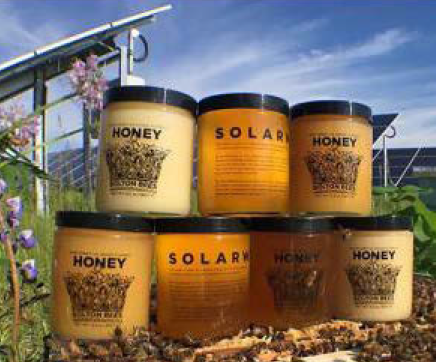
OK folks, time to add a new word to your vocabulary: Agrivoltaics. This refers to the practice of installing solar photovoltaic panels on farmland in a way that primary agricultural activities (such as animal grazing, insect resourcing (honey production) and crop/vegetable production) can continue. It’s also called dual-use solar. A recent article in UMass Magazine features several stories in one article; this post focuses on the first story, regarding (you guessed it) Agrivoltaics. A portion of the article reads: Dwayne Breger ’94PhD, director of the UMass Clean Energy Extension, says, “With dual-use solar, you do simultaneous solar collection and farming on the same land, together.” In theory, placing solar panels higher off the ground and spacing them farther apart allows the sun to hit both the panels and the plants sufficiently. In the mid-2000s, UMass installed one of the first dual-use arrays in an experimental farm in South Deerfield to test the theory. Now, Breger’s team is working with three solar developers on eight different farms. “These site trials will greatly expand the data,” Breger says. “You’ll see active agriculture taking place under the array. It could be row crops or a field of hay or sheep grazing,” Breger says. “Raising the panels helps distribute the shading, and also allows farm machinery to get under and around them.” Fine-tuning dual-use farming can provide farmers with another revenue stream and more solar power for the rest of us. “We’re rooting for clean energy, and we’re rooting for farming and food.” This short article inspired me to dig deeper and it led to a whole series of interesting findings.
An opportunity becomes a threat, becomes an opportunity again One of the findings is related to project risk. We all know that when we respond to a threat, there is a chance of secondary risk – that is, new threats (or perhaps even new opportunities) arising because of the threat response. An example is an injury incurred from an air bag deployment. The air bag is a threat response to injuries from impacts in auto accidents, and if the airbag itself causes injury – that’s a secondary threat. In the case of solar farms, they are a response to the threat of climate change (and an opportunity to make money as a power-generation mechanism). However, when they are installed, vast amounts of farmland could become unavailable – thus, a secondary risk of the solar farm deployment. In fact, farm and ranch lands are often the ‘victim’ of urban and highly developed land use, some of which is solar farm use. From the farmlandinfo website: “between 2001 and 2016, 11 million acres of farmland and ranchland were converted to urban and highly developed land use (4.1 million acres) or low-density residential land use (nearly 7 million acres).” The reports on the site also show how states have—or have not—responded to the threats of agricultural land conversion. This is a good source of information on the topic if it has piqued your interest. You can visit:
https://farmlandinfo.org/publications/farms-under-threat-the-state-of-the-states/
https://farmlandinfo.org/media/co-location-of-agriculture-and-solar/ An example of the loss of agricultural land is shown below. Interactive maps of every US state are available here. This one is from northeastern Massachusetts. Red dots indicate loss of agricultural land
Continuing to dig into this after being inspired, I found a quite resource-rich US Department of Energy site covering (ironically) its aptly-named INSpire project.
New research demonstrates that states and regions can more than meet their ambitious solar energy goals on marginal and developed land without sacrificing its productive farmland and sensitive wildlife habitat. Examples of interesting projects described in Inspire include:
I recommend visiting the US Department of Energy Inspire site: https://openei.org/wiki/InSPIRE/Project You will find there:
References Overall (inspirational) source: https://www.umass.edu/magazine/fall-2021/smartfarm Other references: https://ag.umass.edu/clean-energy
|
|
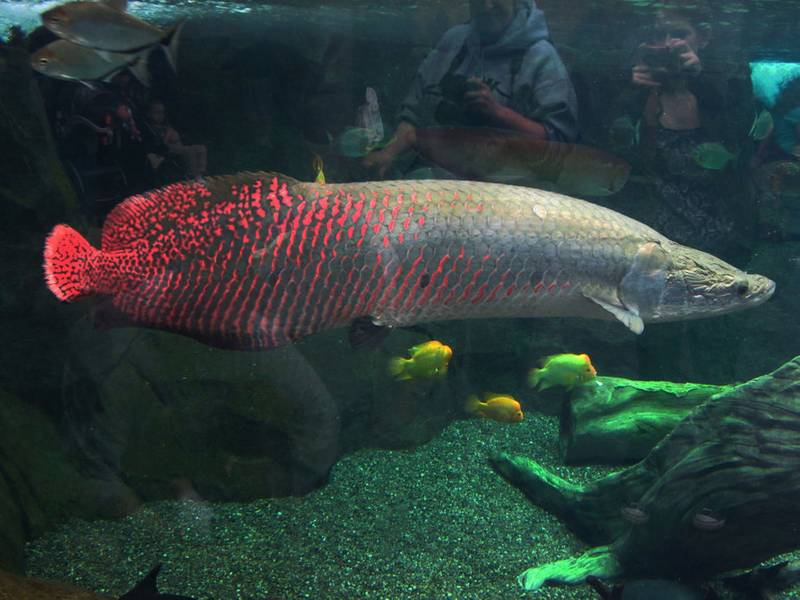
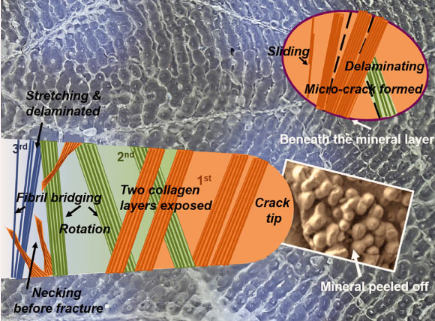
In Part 1 of this series, I discussed the giant Arapaima fish which is inspiring better designs for body armor. In this episode, we leap from the fresh waters of the Amazon and other parts of the world to the skies of southern and southeast Asia, to learn about how butterflies are providing their own source of inspiration. In the BBC podcast series “30 Animals That Made us Smarter”, butterflies are (so far) featured not once, but three times. The first two:
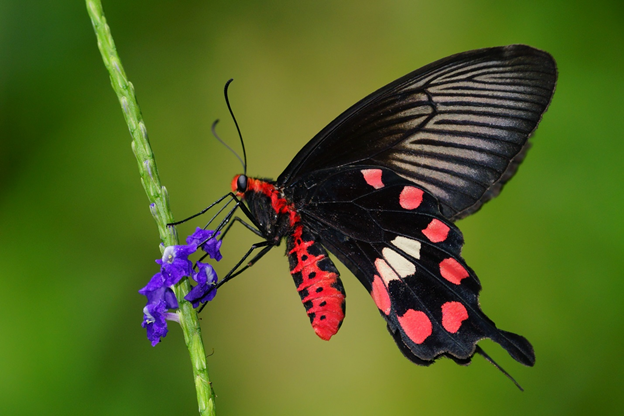
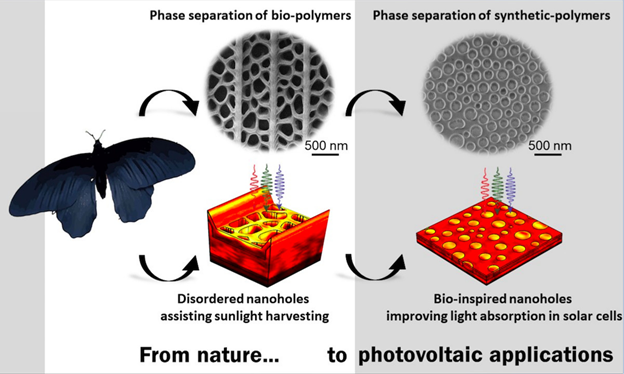
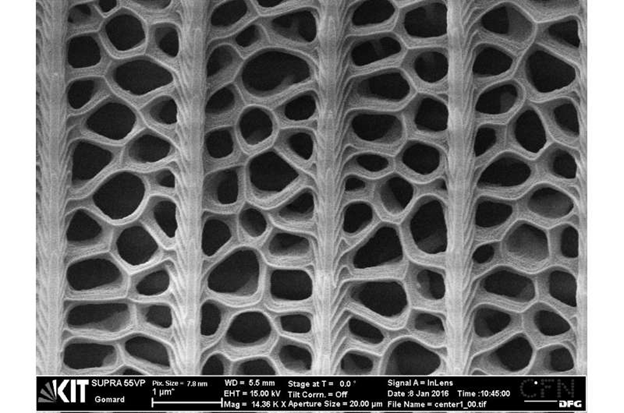
This episode, however, is about biomimicry threaded through a project to significantly improve solar panel efficiency thanks to the Common Rose butterfly, featured in the top photo in the blog post. So - what’s the story here? Butterflies have no way to generate heat internally – they are cold-blooded. They are constantly ‘harvesting’ solar energy – it’s a heat tactic to warm up their internal temperature. California Institute of Technology scientist Radwanul Hasan Siddique explains, in the paper, “Bioinspired phase-separated disordered nanostructures for thin photovoltaic absorber”, “The nanopatterned absorbers achieve a relative integrated absorption increase of 90% at a normal incident angle of light to as high as 200% at large incident angles, demonstrating the potential of black butterfly structures for light-harvesting purposes in thin-film solar cells.” This team was able to create the structure organically – creating plastics which naturally organize itself into a lattice structure. Doubled the amount of light collection, especially at “off angles” or indirect sunlight. Below you can see figures depicting the process, and a closeup of the structure – something that is not an ‘obvious engineering solution’ – something we’re taught about from …butterflies:
Could your project use some bio-inspiration? Check out the podcast, 30 Animals That Made Us Smarter!
Overall source: R.H. Siddique el al., "Bioinspired phase-separated disordered nanostructures for thin photovoltaic absorbers," Science Advances (2017). advances.sciencemag.org/content/3/10/e1700232 Other references: https://phys.org/news/2017-10-black-butterfly-wings-solar-cells.html |
| |
|
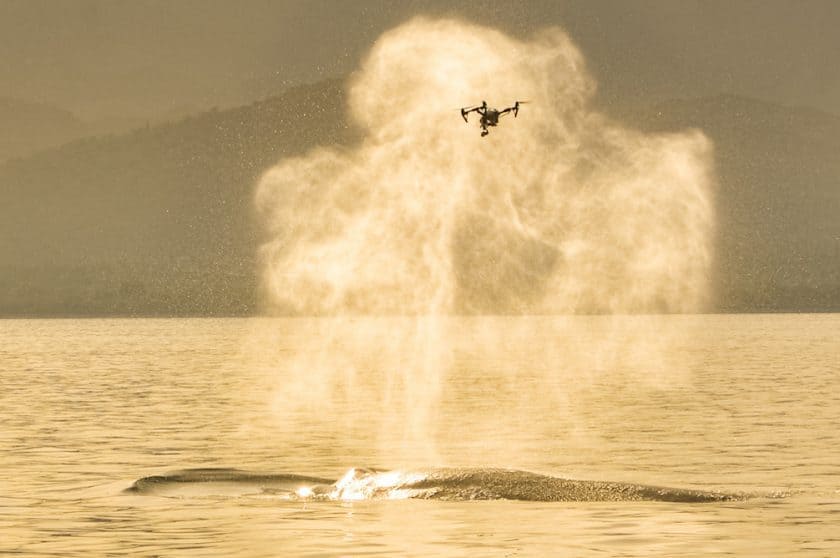
In northeastern Massachusetts you will find a town called Gloucester. Importantly, it is properly pronounced “GLAW-stah”, not “Glow-chester”. Not even close. This post, despite the title, is not about pronunciation. Rather, it somehow interweaves portfolios, copper paint, whales, and something (I am not making this up) called a Snotbot®. Really, this is a Program Management story. The Program is that of the Ocean Alliance. Remember, a Program is a collection of projects, which, managed together, can achieve benefits not available if they were managed separately. You could probably argue that this is a Portfolio as well. We can have that argument later. For now, let’s discuss the initiatives of the Ocean Alliance, because they are interesting and important no matter what we call them. At the forefront of this is Chief Executive Dr. Iain Kerr, who joined the group 30 years ago, being offered a job captaining research vessels in the Galapagos by none other than Roger Payne, famous for his discovery and promotion of whale song. We could easily do an entire blog post (and may yet) on Roger Payne. For now, bookmark him as a famous person who brought Iain Kerr into the Ocean Alliance, and now it’s Kerr who has been the chief executive of the Ocean Alliance organization since 1990. I’ll discuss two of the projects in the Ocean Alliance’s portfolio (I settled on Portfolio after studying the group for a while). The first of these two projects involves the aforementioned Snotbot®. Let’s consider the project to be the introduction of this tool, and now the product of the project – the Snotbot – is in operation. So what is a Snotbot? From the Ocean Alliance webpage: SnotBot® is a modified consumer drone which flies through the blow of a whale and collects exhaled “snot” on petri dishes. This blow contains a treasure trove of valuable biological information: DNA, stress and pregnancy hormones, microbiomes and potentially many other biological compounds/indicators of the animal’s health and ecology. Best of all, the whale doesn’t even know we are there: This is a non-invasive tool that is safer for the animals and cheaper and more effective for the user. Advantages of Snotbot: Democratizing Science: A single tool that can collect a wide range of data but that costs relatively little represents a paradigm shift in the way we study whales. Drones can empower groups in the developing world, enabling them to conduct research and collect data on marine mammals that they would not be able to do using the research vessel model. Benign: Ocean Alliance was founded by Dr. Roger Payne on the premise of studying whales without doing them harm. Especially when working with endangered species, it is vital not to add to the stresses facing the animals while conducting research. During 7oo approaches to whales to collect snot samples, there have only been 3 reactions to the drone. Vast range of data: The blow samples that SnotBot collects contain DNA, stress and pregnancy hormones, and microbiomes, and possibly other indicators of the animal’s health.
Below is a photo and a video to show you this amazing innovation in action.
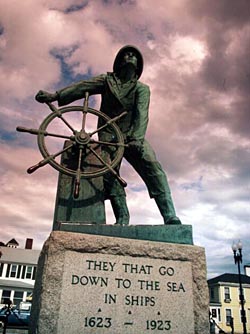
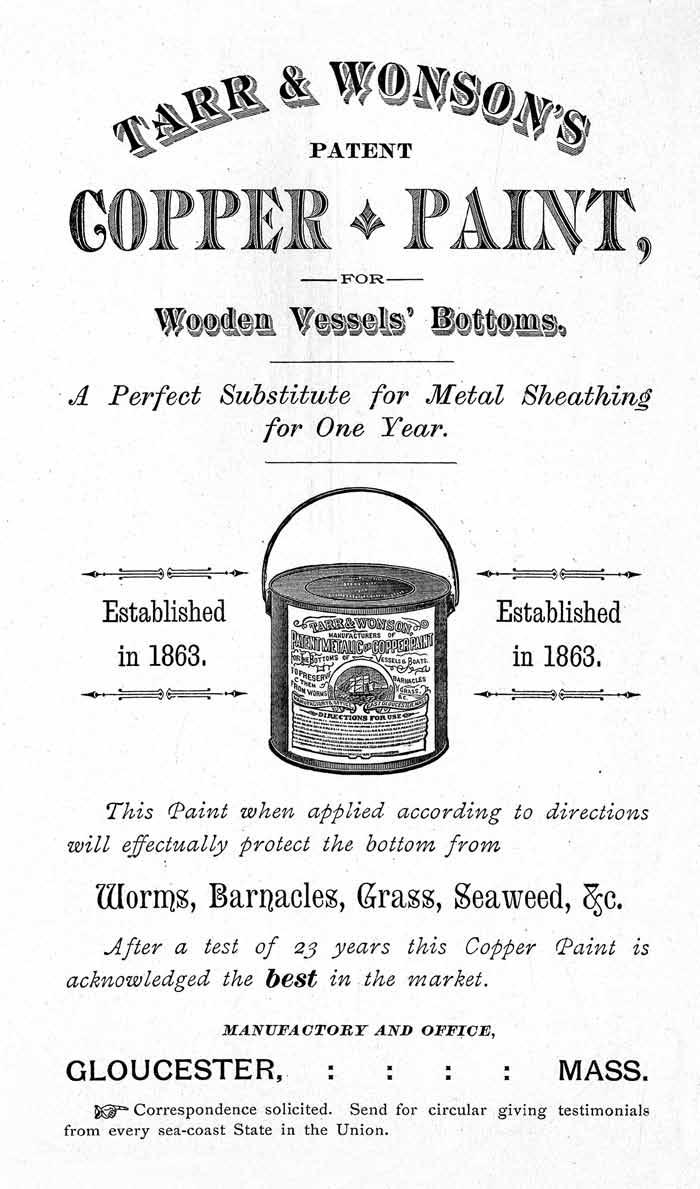
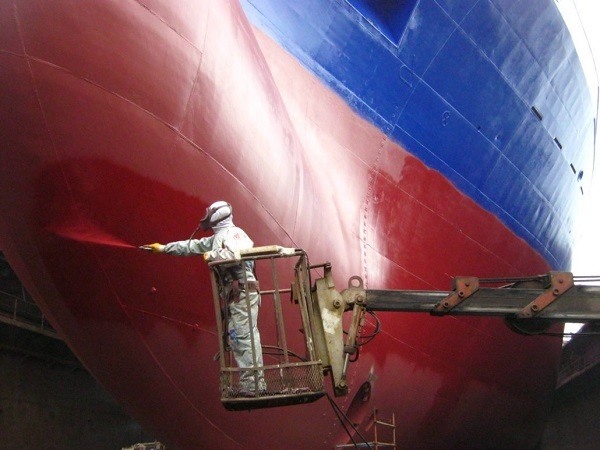
The second of these two projects is a more traditional construction – or rather, restoration project, having very much to do with the town of Gloucester, famous as the first seaport of the United States, and famous of course, the Fisherman Memorial statue, as depicted in the header of this blog post. However, Gloucester is also the home of a “manufactory” of copper paint, after two men (Tarr and Wonson) invented an elixir of copper oxide and other substances, which, when painted on the hulls of ships, prevented the “fouling” of these vessels by barnacles and other sea life. They received a patent for the paint in 1863 and began manufacturing it here in Gloucester, shipping it in vast quantities, worldwide.
Photo: (C) Cape Ann Museum
It had an effect on seagoing vessels of all kinds, from small boats to warships. Read more about the fascinating history of this copper paint here. Indeed, you can learn about the history of the Tarr and Wonson Manufactory in the video below.
The buildings eventually became abandoned and fell into disrepair. Dr. Kerr and the Ocean Alliance has taken on the project of restoring these landmark buildings – making them their headquarters. Here’s a video tour of Copper Paint factory: The Ocean Alliance is up to much more that these two projects – you can see that clearly at their website. Whether you call their work a Portfolio or a Program, you can see that this is an example of an organization focused on good. It’s inspiring! |
|
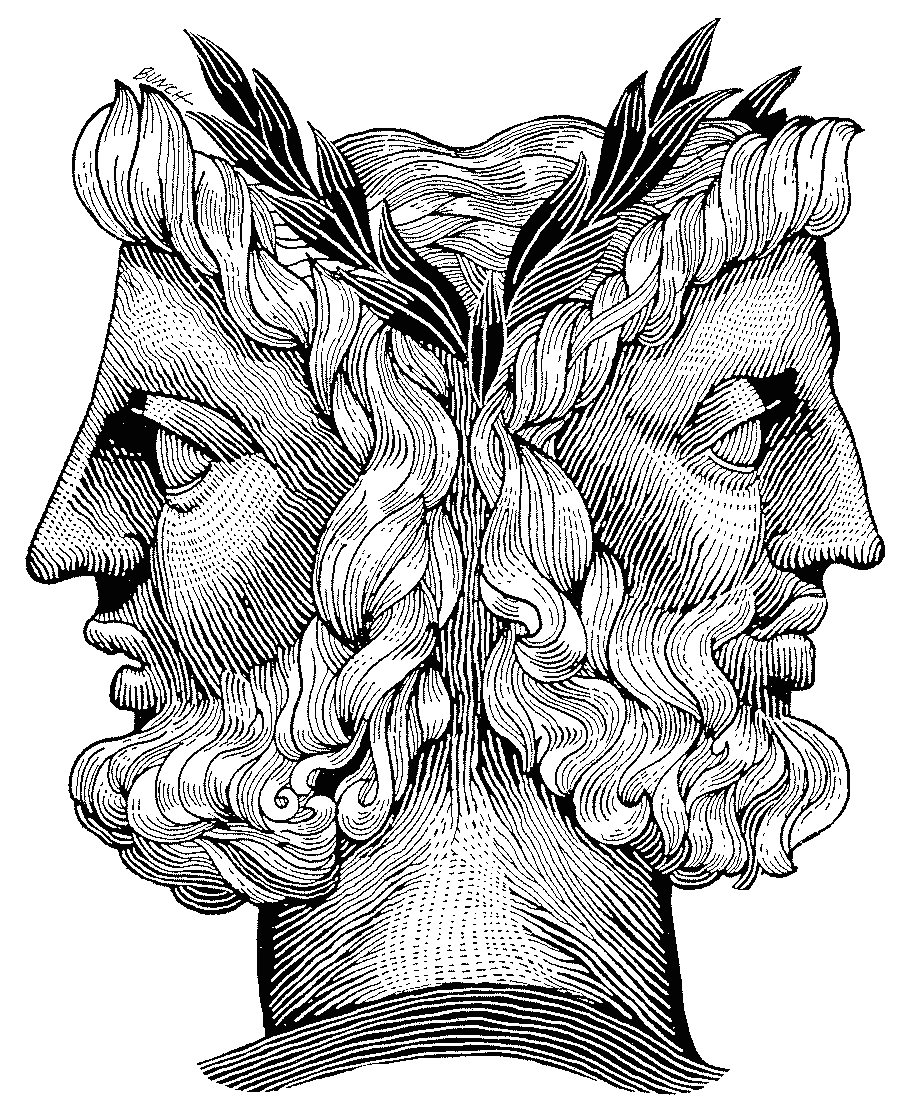
I read this article in the Cape Cod Times about a project to reshape a company’s business based on the effects of COVID-19 and it inspired this post. As you know, in our project management parlance, risk has two sides – a sort of Janus, two-headed being. It is threat, of course, the way most people view risk, but also opportunity, the positive side of risk.
As I tell my students, always imagine what would happen if something goes “horribly right”. I actually coach students to develop a list of threats and “flip them” and then do the same for opportunities. It’s surprising how this actually generates more thorough and thoughtful risk identification. So in this case, a firm – Blue Stream Aquaculture, is facing the threat of COVID-19. Sales of their farmed fish were down. Then came a wave of fish poop. Or at least a wave of ideas involving fish waste. Blue Stream Aquaculture is a hatchery that raises brook, brown, rainbow, and tiger trout. Their sales were cut in half by the effects of COVID-19, as restaurant eaters were instead staying home and ordering pizza. Or whatever. But they were not in restaurants ordering fish. Paraphrasing from the article, Keith Wilda and Jim Malandrinos own three farms altogether. One in Turners Falls, MA, raises warm-water Barramundi. Blue Stream Aquaculture New Hampshire and the West Barnstable (Cape Cod, Massachusetts) farm raise trout. Between the three locations, they had 1.6 million fish when the pandemic hit. They decided that they could market their fish waste elixir, collected from the closed aquaculture system in West Barnstable. Wilda has 30 years of experience in hydroponics, and when he tested the fish waste elixir on his lawn and vegetables, the results were amazing. For example, his tomatoes had never grown so well. Below is a photo of two basil plants, one grown with, and one grown without the fish elixir.
Turns out that the high level of micro activity in it does the trick. It is full of (helpful) bacteria and fungi, protozoans, amoebas and freshwater diatoms, which make it a great soil conditioner and fertilizer. The company cleverly avoided the temptation to use the brand name, FishPoo® and instead developed a line of products under the name Fish Brew™, which includes soil conditioners called Bold Flo™, Epic™, 'Rise and Thrive' and Hydrolysate, a fertilizer. They have worked with the Commonwealth of Massachusetts because of the environmental benefits of the product line, and Massachusetts has helped the firm switch over to solar power. You can read more about the company here, and look at the sustainability elements of Blue Stream’s mission here. My coaching for project managers:
|
|
"We cling to our own point of view, as though everything depended on it. Yet our opinions have no permanence; like autumn and winter, they gradually pass away." - ChuangTzu |