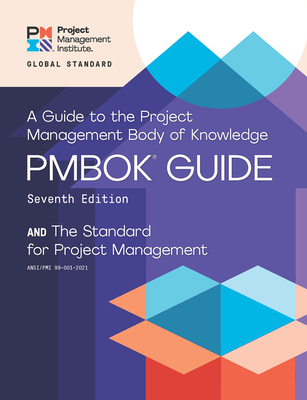
This is going to be a short blog post, because your time is valuable. I am going to send you to not one, but two valuable videos just contributed by folks I admire: Ricardo Vargas, and Nader Rad, core team contributors to the PMBOK® Guide 7th edition. Each will walk you through the new Guide and Standard, with valuable insight.
The connection to value here is no coincidence. I also was one of about 70 reviewers of the document and submitted scores of changes, and I’m pleased and proud to see that they appeared to have made a difference. Clearly (at least to me) there is now a solid encouragement for project managers to consider their project more holistically, in a larger context, and importantly, to look past the end of their project – in the longer term. There is revolutionary feel to this – moving from outputs to outcomes, considering benefits over time: which is (in my mind) the definition of project value delivery.
And in fact, “Value” is one of the 12 Principles which form the basis for the Standard for Project Management.
Do me (and yourself) a favor. Please take some more of your valuable time to watch at least one of these, and I would value any comments you may have.
In my last post I discussed things you can do – perhaps in your own home – to reduce the use of plastics. You can take those initiatives to a higher level by looking for such reductions in your projects and programs. Can this be taken to an even higher level – for example, your enterprise?
Actually, yes it can. But it goes beyond plastics. Here’s one way that you as an individual can produce an enterprise-level outcome. It has to do with a pledge and with something called “stubborn optimism”.
It’s short, informative and quite interesting background:
I mention “Stubborn Optimism” because it is at the heart of the organization “Global Optimism”, which in turn is the partner for something called The Climate Pledge.
The Climate Pledge, as summarized by this article in The Verge, is a call to businesses and organizations to take collective action on the world’s greatest crisis and to work together to build towards a safe and healthy planet for the next generations. The Climate Pledge was co-founded by Amazon's Jeff Bezos with Global Optimism in 2019. The Climate Pledge is a platform for signatories to work together on ambitious actions to achieve net zero carbon emissions by 2040, 10 years ahead of the Paris Agreement.
There is a lot of good (who would expect anything else from an organization with Optimism In their name) on the Global Optimism site, I encourage you to have a look at.
For example, on their Events page, they state:
“Achieving a zero emissions future is not a far-off challenge. It’s one we must get on track for now. Science demands that we cut global greenhouse gas emissions by half in the decade between 2020 and 2030, in order to eventually meet the goal of net zero emissions by 2050 at the latest. This goal was adopted by 195 countries through the Paris Agreement. It is now the responsibility of all of us to act with the courage, urgency and solidarity to build the transformative solutions to thrive now and in the future. We work with like-minded people and collectives from all sectors, investing in the steps required to be on this challenging – and life-affirming – journey.”
Also on their Events page, you will find some high-quality podcasts including:
So there are some excellent resources for you. But let’s get back to the Climate Pledge.
The commitments of the signatories of the Climate Change:
Measure and report greenhouse gas emissions on a regular basis;
Implement decarbonization strategies in line with the Paris Agreement through real business changes and innovations, including efficiency improvements, renewable energy, materials reductions, and other carbon emission elimination strategies;
Neutralize any remaining emissions with additional, quantifiable, real, permanent, and socially-beneficial offsets to achieve net zero annual carbon emissions by 2040.
A quick perusal revealed these enterprises were indeed on the list:
If so, make sure your project team members are aware of it – your job as a project (and especially program or portfolio manager) is assure alignment of project outcomes and value with the enterprise’s high level mission and vision. This is amplified greatly in the PMI's 7th Edition PMBOK® Guide.
If not, you can be an agent of change by suggesting to your C-level leadership that they would be in good company by signing on.
This time it’s about you. In particular, it’s about your feet. Well, not really your feet, literally, but your plastic footprint, and some personal, small projects that can help you reduce your plastic impact.
I came across a fantastic article (paired with a podcast from NPR’s Life Kit) which you can read – and play – from this link. You will find a 24-minute audio clip right there, and/or you can read the article, entitled: The Plastic Problem Isn't Your Fault, But You Can Be Part Of The Solution. From my experience, most project managers are problem solvers and love to be part of a solution – so, read on. The United States was responsible for more plastic trash than any country in the world, says the article, that's millions and millions of tons of plastic waste. Per capita, that boils down to nearly 300 pounds of plastic trash per person(!) per year.
In summary, because you can derive the steps and background from the article, it’s about 6 steps, which are only slightly dependent on each other, in fact much of it can be done in parallel, some of which are intended to be ongoing (so not really a project, but a steady-state operation).
The six steps are:
Do your research
Do an audit
Look for sustainable swaps
Be a conscientious recycler
Check locally
Make some noise
I expand these below in outline form:
Do your research
Know the storybehind the plastics you use. They are likely derived from fossil fuels and may have a bigger impact than you think, on you and your neighbors. For example, (from the article) Yvette Arellano runs an environmental justice organization called Fenceline Watch. It's an advocacy group based in Houston that helps communities of color and low-income neighborhoods disproportionately affected by petrochemical pollution from facilities congregating along Houston's Ship Channel.
Do an audit
As project managers we know all about this – getting a baseline, or grasping the current state, so we can better target a future state. How much plastics, and of which types, are you using now, and how are they disposed of?
Start in the kitchen and the bathroom. The bathroom can be a festival of plastic especially if you are using shampoos, conditioners, body wash, exfoliating liquids, skin lotions. In many cases, you may be able to simplify and/or reduce. In the kitchen, consider condiment bottles, plastic wrapping, snack or chip bags, even packaging of vegetables.
Look for sustainable swaps (see animated photo at bottom)
Look at the items on your plastic inventory list and ask yourself, "What can I replace the plastic with?". A bar of soap may do the same thing as many of those lotions. You can buy bundled instead of plastic-wrapped vegetables. Consider reusable containers for tea, coffee, and water. The article has further suggestions.
Be a conscientious recycler
Have you ever “wishcycled”? That means you have something plastic in your hand, not knowing if it is really recyclable in your location, so you drop it in and wish that it is? Avoid that by digging in and discovering the facts. They exist! As project managers we instinctively know to work from facts and minimize assumptions, so this is in our wheelhouse. Wish-cycling may alleviate some of your guilt, but it clogs up the recycling system and makes recycling more expensive. When in doubt, find out or leave it out.
Check locally
As above – validate what works in your specific area. And check periodically to see if the rules have changed. Like project scheduling, recycling guidelines are dynamic.
Make some noise
Here I will paraphrase from the article: If you bring home a product you like, but its package isn't recyclable (in general or in your area), tell companies how you feel, because companies are listening more than ever before.
Use the comment section on a company's website or its social media accounts. Harrison suggests you tell them, "I like your product, but I'm worried about this label. Is it recyclable? Ask them. Wait for an answer." Let them know that you care about this as a customer.
And finally (this is not one of the six steps, but it’s still important): Don’t beat yourself up over this. Do what you can, but realize that you are but one pair of plastic footprints.
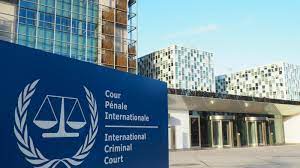
Did you know that there are currently four core international crimes dealt with by the Rome Statute of the International Criminal Court? They are: genocide, war crimes, crimes against humanity, and the crime of aggression. You can read about these four core international crimes (and examples) here.
Just this month, an Expert Drafting Panel (see this link for detail) drafted a 165-word statement that would add ecocide as the fifth international crime. Who is this “Expert Drafting Panel”?
From the Ecocide Law webpage:
The panel was convened by the Stop Ecocide Foundation on the request of interested parliamentarians from the governing parties in Sweden. Expert advice was solicited and a public consultation took place in early 2021 attracting hundreds of responses from legal, political, economic, youth, faith and indigenous perspectives from around the world. All of this material fed into the panel’s deliberations over six months.
The panel comprised a mixture of renowned international criminal lawyers, environmental lawyers and legal scholars drawn from around the world, with a wide range of backgrounds and perspectives. The group reported in June 2021 with a core definition text in English and accompanying commentary.
Although this seems like it’s something “new”, it’s not. From the NPR article:
The intent to make ecocide an international crime isn't new. The idea was brought up by then-Swedish Prime Minister Olof Palme at the 1972 U.N. Conference on the Human Environment. In his speech, he warned that rapid industrial progress could deplete natural resources at unsustainable levels. But even before that biologist and bioethicist Arthur Galston used the word "ecocide" at the 1970 Conference on War and National Responsibility in Washington, D.C.
So what are the 165 words?
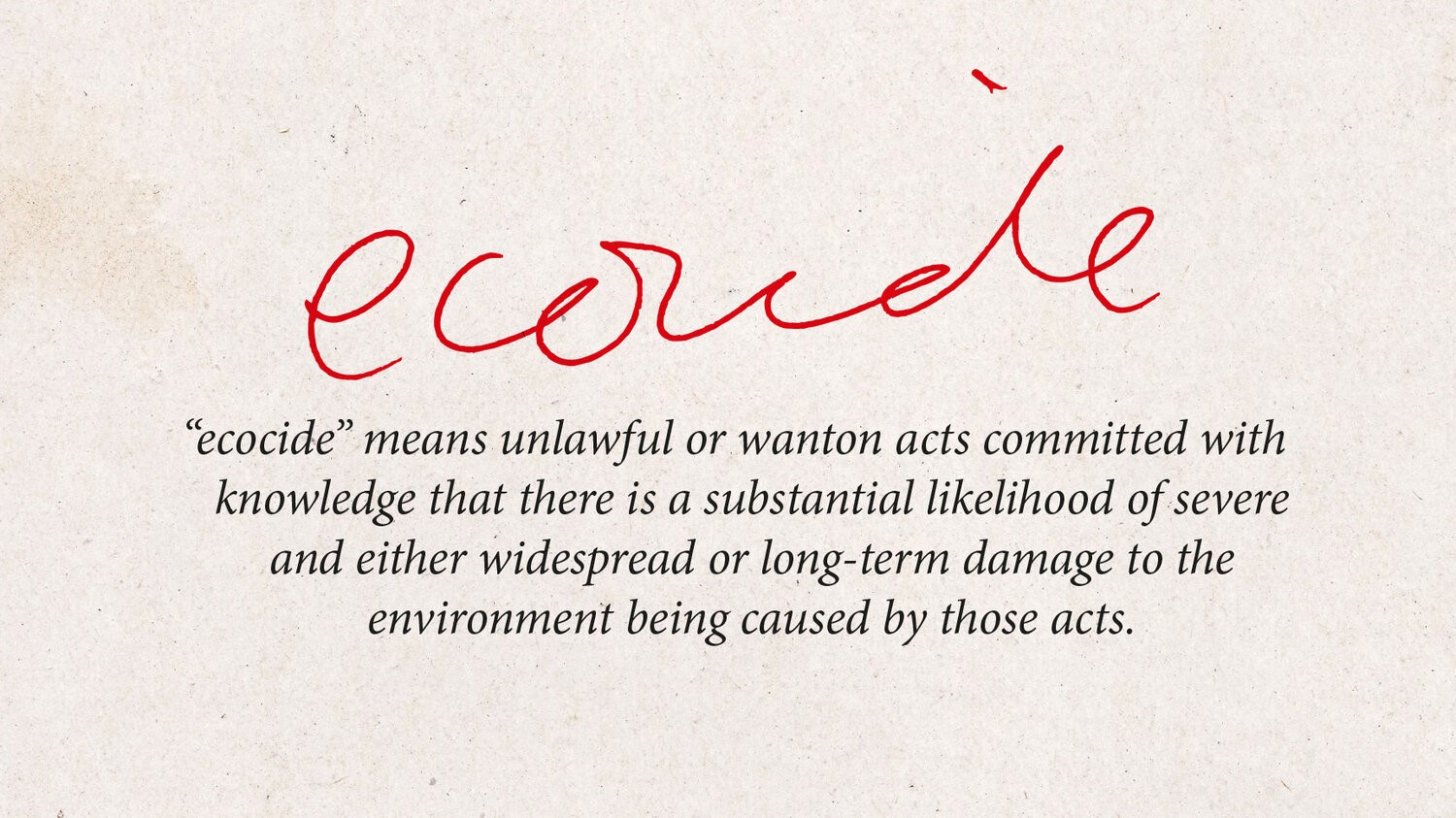
For the purpose of this Statute, “ecocide” means unlawful or wanton acts committed with knowledge that there is a substantial likelihood of severe and either widespread or long-term damage to the environment being caused by those acts.
For the purpose of paragraph 1:
a. “Wanton” means with reckless disregard for damage which would be clearly excessive in relation to the social and economic benefits anticipated;
b. “Severe” means damage which involves very serious adverse changes, disruption or harm to any element of the environment, including grave impacts on human life or natural, cultural or economic resources;
c. “Widespread” means damage which extends beyond a limited geographic area, crosses state boundaries, or is suffered by an entire ecosystem or species or a large number of human beings;
d. “Long-term” means damage which is irreversible or which cannot be redressed through natural recovery within a reasonable period of time;
e. “Environment” means the earth, its biosphere, cryosphere, lithosphere, hydrosphere and atmosphere, as well as outer space.
Getting this completed so that the International Criminal Court includes it in the list of crimes is a project unto itself:
The steps for getting this to be that 5th international crime:
One of the International Criminal Court's 123-member countries (which do not include the U.S., China or India) would have to submit a definition to the United Nations secretary-general
The proposal must then be voted on by a majority of members of the ICC at the annual assembly in December in order to be considered.
Once the final text for an amendment is discussed and agreed upon, two-thirds of member countries must vote in favor.
The vote is ratified and must be enforced in countries a year later. While it will become a criminal offense in the countries where it is ratified, ratifying nations may arrest non-nationals on their own soil for ecocide crimes committed elsewhere. This means citizens of countries that are not members of the ICC could still be affected.
Not everyone agrees. It’s worth listening to skepticism on this (having a variety of views is a good thing).
Here are some skeptical thoughts about this from the International Commission of Jurists. I am not a lawyer, and some of this gets pretty geeky (in legal terms), but it is interesting to explore the legal analysis of these 165 words.
What’s the connection to project management and sustainability? Well, when it comes to responsibility in project management, we should act responsibly (in terms of environmental impact) because it’s the right thing to do. However, knowing that doing otherwise is an international crime – well that adds another whole layer of awareness, doesn’t it?
This is a very brief 'opinion' post to reflect on a recent conference we sponsored at Boston University Metropolitan College, called the Project Management in Practice conference. Last year, one of the themes (and tracks) was Sustainability.
We had speakers such as Gilbert Silvius talk about the intersection of project management and sustainability. It was a main focus of our conference.
The thing is, this year, the conference themes were Value, Change, and Agile. Not Sustainability. However, what I noticed – what many of us noticed – even the speakers - was that even though Sustainability was not (nominally) the theme, all three tracks “spoke to” the ideas of:
A holistic, more broadened view of risks and stakeholders
An ability to shift – quickly – even fundamentally
A long-term mindset
An improved understanding of what an organization is all about
In other words, sustainability was sustainable as a theme, and I think, is more than a theme at a conference. As I hope we will see on 1-August-2021 when the new PMBOK® Guide comes out, and just in general, sustainability – in name or not – is part of our discipline. It may come under the guise of long-term (lifecycle) thinking, or benefits realization management, or value engineering, but these are all aspects of sustainability thinking in project management.
We’ll see – but I’m optimistic that project managers are beginning to adopt these ideas, which (again in my opinion) is a very good sign for our profession – for society, and for our planet.