


Have a... Seat


|
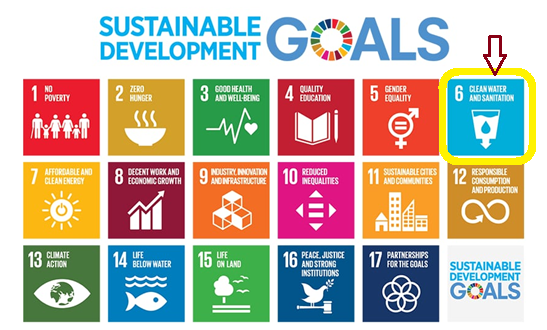
Many project managers are unfamiliar with the United Nations' Sustainable Development Goals. You can learn about them in this brief video. If you don't have the patience for a 3 minute video, they're also shown below:
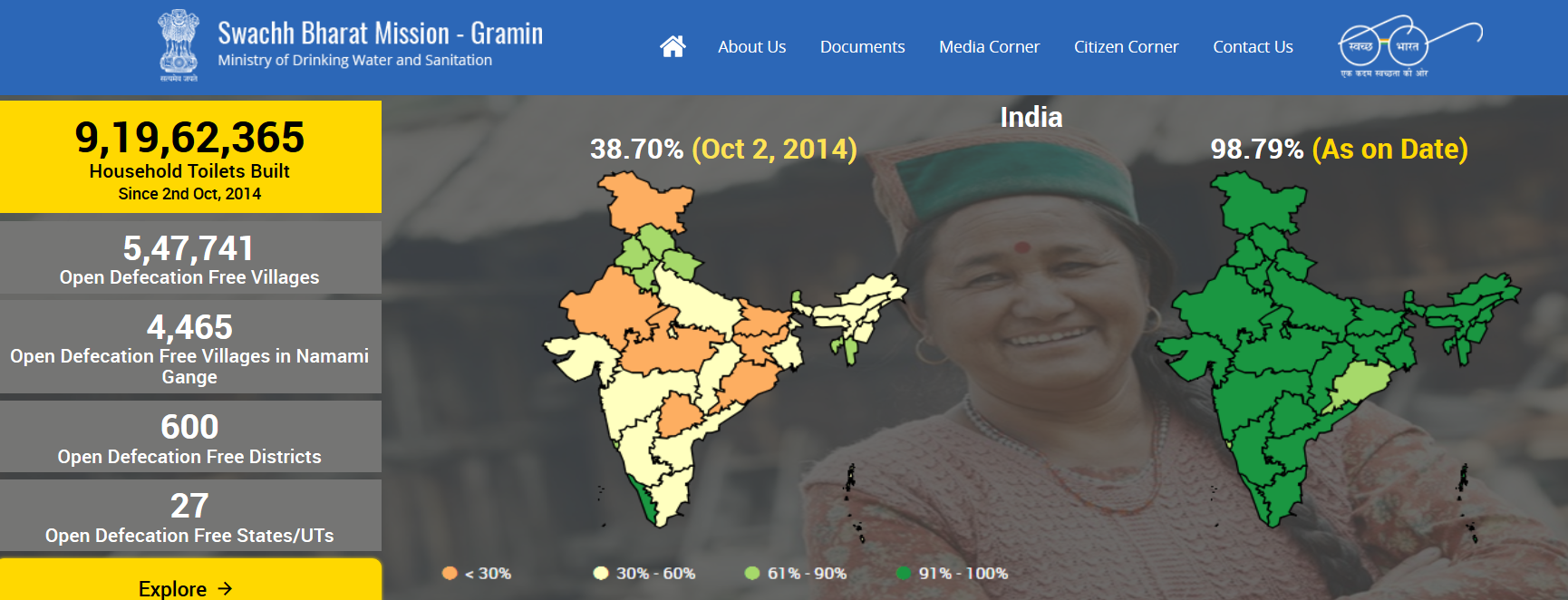
In this particular post, I invite you to have a seat, any seat, but consider that seat in your home that has a flush lever behind or above it. In fact, I’d like to warn at least some readers that this post could make you a little bit queasy. Why? Because this post is about Sustainable Goal 6: Sanitation. And it’s something that showed up in PM Network magazine last month, and caught my attention. The PM Network article was entitled “Cleaning Spree”. It discusses a program in India called Swachh Bharat Abhiyan. It is a $29B program (in other words, approximately 5 US-Mexico Border walls in size). India is building about 62,000 toilets a day to eliminate open defecation, aiming to be ODF (Open Defecation Free) by a very specific program end date: 2-October 2019. Mark your calendars! As of the publishing date of “Cleaning Spree”, the progress was impressive, with the households having individual latrines going from about 39% in October of 2014 when the program launched, to over 95% now. The program inspired me to dig a little deeper. I found that the government had created a program website – something I encourage project and program managers to do, especially in civil works. It informs citizens of how their tax money is being spent. Here’s a screenshot:
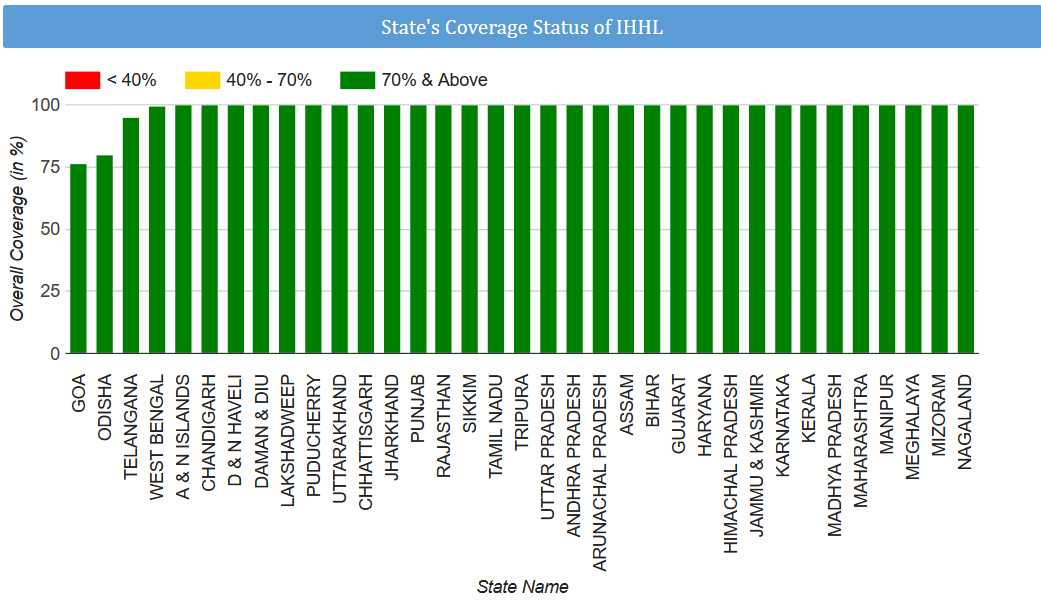
This shows that the country is now not at 95% but actually almost at 99%. To accelerate the efforts to achieve universal sanitation coverage and to put focus on sanitation, the Prime Minister of India, Shri Narendra Modi, launched the Swachh Bharat Mission on 2nd October, 2014. The Mission Coordinator shall be Secretary, Ministry of Drinking Water and Sanitation (MDWS) with two Sub-Missions – the Swachh Bharat Mission (Gramin) and the Swachh Bharat Mission (Urban). The Mission aims to achieve a Swachh Bharat by 2019, as a fitting tribute to Mahatma Gandhi on his 150th birth anniversary.
By focusing on the mindset and getting buy-in from the millions and millions of stakeholders, this project has been successful. Sit on that thought for a while. |

Trillions of Tons - Part 4 of 3
|
Yeah... Math was never a strong point for me. Yes, you read that correctly, this is Part 4 of an originally-3-part series. But I am being Agile. Adapting. I'm allowing a new requirement to change the design. This is a short post about a carbon-capture-at-the-source technique that was just covered a few days ago in Popular Mechanics magazine.
The idea is to actually use carbon to capture carbon at the source - at coal plants. Of course, eventually we need to get "off" of fossil fuel, but for now, we need to do all we can to limit CO2 production at the source as we work on renewable, non-fossil energy sources. For those carbon plants, the process to scrub and sequester carbon has been expensive. This solution promises to be significantly less expensive and easy to implement. Tiny carbon spheres with holes in them - holes so small that they are only slightly larger than the carbon dioxide atoms they’re meant to collect. There's even a name for the material, reminiscent of a certain Mary Poppins song... "ultramicroporous" (see below - all along, it turns out they were singing about carbon sequestration!). In this paper, the technique is explained in technical detail. Bottom line: a powder made from ultramicroporous nanosphere. From the abstract of the paper: "An ultrahigh ultramicropore content of 95.5% was achieved for the optimally-designed carbon nanospheres, which demonstrated excellent CO2 capture performances with extremely high capacities of 1.58 mmol g−1 at typical flue gas conditions and 4.30 mmol g−1 at 25 °C and ambient pressure. Beyond that, the CO2 adsorption mechanism in ultramicropore was also investigated through molecular dynamics simulation to guide the pore size optimization. This work provides a novel and facile guideline to engineer carbon materials with abundant and tunable ultramicroporosity towards superior CO2 capture performance". A product of work jointly done between Canada's University of Waterloo, by Professor Zhongwei Chen, Canadian Research Chair Professor You add this to the list of carbon capture techniques although this one is meant to be a bit more preventive. Next time, I'll try to do a better job of arithmetic!
|

Trillions of Tons - Part 3 of 3
|
In Part 1 of this blog post, I introduced the idea of carbon capture (removing CO2 from the atmosphere), the drivers for the effort, but also the project, program, and portfolio management aspects of the idea. In Part 2, since it featured the direct air capture technique, I went into some of the technical details of that particular strategy. In that post, I asked readers to think about secondary effects of the technique, the fact that even in a project which is geared at long-term thinking, ecology, and sustainability, the second-order effects (secondary risks) must be taken into account – with at least as much vim, vigor, and vitality as in a “regular” project (whatever that means). In this post, I’d like to take that idea a little further and also, as promised, survey the various strategies for carbon capture, beyond the direct air capture technique featured in the photos and in the first two posts. Much of this material comes to you courtesy of an outstanding article by Richard Conniff in Scientific American. Hey, it’s still effectively time for New Year’s resolutions, how about adding one for yourself – subscribe to this magazine, an American ‘treasure’ – the oldest continuously-published magazine in the United States. Disclaimer: I have no connection to Scientific American, other than a subscriber, I just think that project managers can’t know enough about the world around them and this magazine provides that knowledge in an intelligent but accessible fashion. Facts are good!
So: on to the strategies. They are:
In summary: Bioenergy involves taking advantage of the fact that plants ‘breathe in’ CO2. Plants are burned or fermented to turn them into fuel The CO2 is extracted and stored underground. Weathering starts by creating stone dust from rock. The dust is then spread onto fields, and as it draws CO2 from the air, it fertilizes the soil. Or it can be added to seawater converting the CO2 into carbonates that fall to the sea floor. Forestry – really reforestation and afforestation involves planting trees (in large numbers) to replace clear-cut forests or to expand currently-growing forests. This is about helping nature help us!
Biochar involves (hold your nose!) the oxygen-less heating of crops (technically called pyrolysis, see below), manure, or organic waste, which creates biochar, a residue quite like charcoal which is, of course, rich in carbon. This can be used as fertilizer.
Direct Air Capture has been discussed in Parts 1 and 2. Ocean Fertilization uses iron filings distributed into seawater, aiding in the growth of plankton, which breathe in CO2 and convert that into sugars (and more plankton). Dead plankton (with CO2 embedded) sink to the sea floor. Soil Sequestration takes advantage of grasses or other plants that breathe in CO2 and convert it to root material which helps bind the carbon into the soil. Soil can hold a limited amount of carbon. As you have probably deduced, each of these techniques have advantages and disadvantages. Also, as a project manager, you are already familiar with decision making techniques such as weighted tables. The chart below (courtesy of the referenced Scientific American article) does a good job of comparing each of the technologies (rows) and showing the secondary risks in the columns, taking advantage of color (maroon is negative, green is positive, amber is limited) to show whether we’re dealing with a threat or an opportunity.
Have a look at the article, in particular the section called “How the Carbon Capture Strategies Stack Up” to learn not only more about this subject, but how, as a PM, you can use a tool like the one shown here to compare options in any sort of project. |


A Trillion Tons - Part 2 of 3
|
In Part 1, I introduced the carbon capture technique being employed in Iceland. In this part I’ll dive a bit more into how this technology works. In Part 3, I’ll zoom back out to illustrate the variety of technologies (spurring many projects) that all aim at removing carbon from the atmosphere. I was going to write a long, detailed post but found this wonderfully expressed video with outstanding imagery of the project and an explanation of how it works here: AnthropoScene III : Hellishei∂i; or, the Post-Modern Prometheus from Adam Sébire on Vimeo. This diagram also provides more for those with the technical inclination.
The project management question here (other than the scope, schedule, budget of the project) is this – for your consideration: are there any secondary risks to this process? One article in Science magazine says: Bigger field tests are needed, says geologist Peter Kelemen of Columbia University, to confirm that such a high fraction of the injected carbon was mineralized. (Columbia is a CarbFix partner, but Kelemen is not on the project.) Scaled-up demonstrations could also make sure that the speed of the reaction won’t turn into a drawback, Stanford’s Benson says. If carbonation generates minerals that quickly plug the pores in the basalt, she worries, they could trap CO2 near the injection site instead of letting it spread through the rock. There is research in this area – some examples here and here. Ironically, even in the area of sustainability projects, long-term thinking, and secondary risk considerations are critical. |


A Trillion Tons - Part 1 of 3
|
Looking like half-buried silver golf balls, but the size of one-car garages, and dotting the landscape just outside Reykjavik, Iceland, these otherworldly-shaped structures (pictured above) are actually the first tiny step in what may be a “last resort” to reduce CO2 levels in the Earth’s atmosphere. In fact, much of the information in this post comes from an excellent article in the current edition of Scientific American, with the title The Last Resort. Why “the last resort”? Well, reducing emissions is of course important, but it won’t be enough. The International Panel on Climate Change warned us in October 2018 that we have about 12 years to act if we want to avoid going past the 1.5 degree Celsius increase milestone – considered by most scientists as a ‘tipping point’, beyond which significant, perhaps catastrophic impacts to all life on Earth may begin to become irreversible. Whatever your views on climate change and its causes – even if you think the whole thing is made up, you will find the projects in these posts fascinating if for no reason other than the sheer scope, schedule, and budget of it all. Also, the projects’ technologies are pretty cool. And really, I’ll start with only one technology which will yield a program, but there are seven or more major technologies (to be covered in Part 3), so I would declare that this is no less than a portfolio of projects, programs, and operations. Jan Minx of Germany’s Mercator Research Institute on Climate Change says (quoting from the Scientific American article) that we will have to start building 700 carbon capture and storage installations A YEAR starting in 2030. Why? To limit global warming to 1.5 C, one trillion tons must be removed from the planet’s atmosphere by the end of this century. Carbon capture methods could remove a quarter of that amount (250 million tons), and replanting clear-cut forests another 180 million tons – so it’s still not enough, but it’s a start. With those numbers you get an idea of program scope. How about cost? With each ton costing up to $300, the numbers are astounding: about a third of a quadrillion dollars. Quadrillion? A great word for Words with Friends, but one you don’t hear every day. These are indeed big budget numbers, which will come with outstanding opportunities for (well-prepared) project and program professionals. One company, Climeworks, makes the system I described at the top of this blog post. In Part 2 I will go into more technical detail on the system. For now, the short description is this: The system draws ambient air through a chemical filter, yielding CO2 and pumping it nearly a half-mile underground. There, the gas reacts with basalt rock (plagioclase and pyroxene minerals for you geology fans) and forms a solid mineral, carbonate.
Below is a photo of a core sample of basalt which shows veins of carbonate based on this reaction.
The system is powered by the excess heat from a neighboring geothermal power plant (this is Iceland after all). That’s an important Enterprise Environmental Factor to note, as unfortunately, the carbon capture and sequestration process is energy hungry – with a 1 trillion ton removal requiring approximately 400 megawatts of power. We need watch the net effect of these systems; it’s a self-defeating situation if the carbon removal simply creates a similar amount of CO2. In Part 2, I will provide more detail on the Climeworks system, and in Part 3, I’ll talk about the other technologies, Forestry, Bioenergy, Biochar, Weathering, Ocean Fertilization, and Soil Sequestration. |




