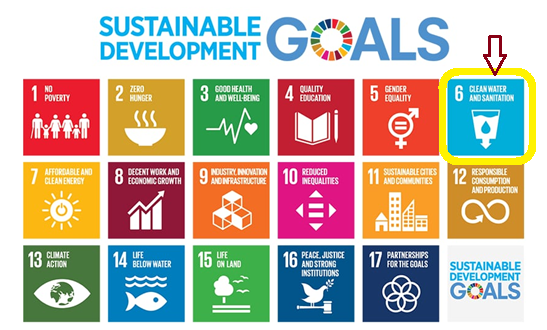
Many project managers are unfamiliar with the United Nations' Sustainable Development Goals. You can learn about them in this brief video.
If you don't have the patience for a 3 minute video, they're also shown below:
In this particular post, I invite you to have a seat, any seat, but consider that seat in your home that has a flush lever behind or above it. In fact, I’d like to warn at least some readers that this post could make you a little bit queasy.
Why? Because this post is about Sustainable Goal 6: Sanitation. And it’s something that showed up in PM Network magazine last month, and caught my attention.
The PM Network article was entitled “Cleaning Spree”. It discusses a program in India called Swachh Bharat Abhiyan. It is a $29B program (in other words, approximately 5 US-Mexico Border walls in size). India is building about 62,000 toilets a day to eliminate open defecation, aiming to be ODF (Open Defecation Free) by a very specific program end date: 2-October 2019. Mark your calendars!
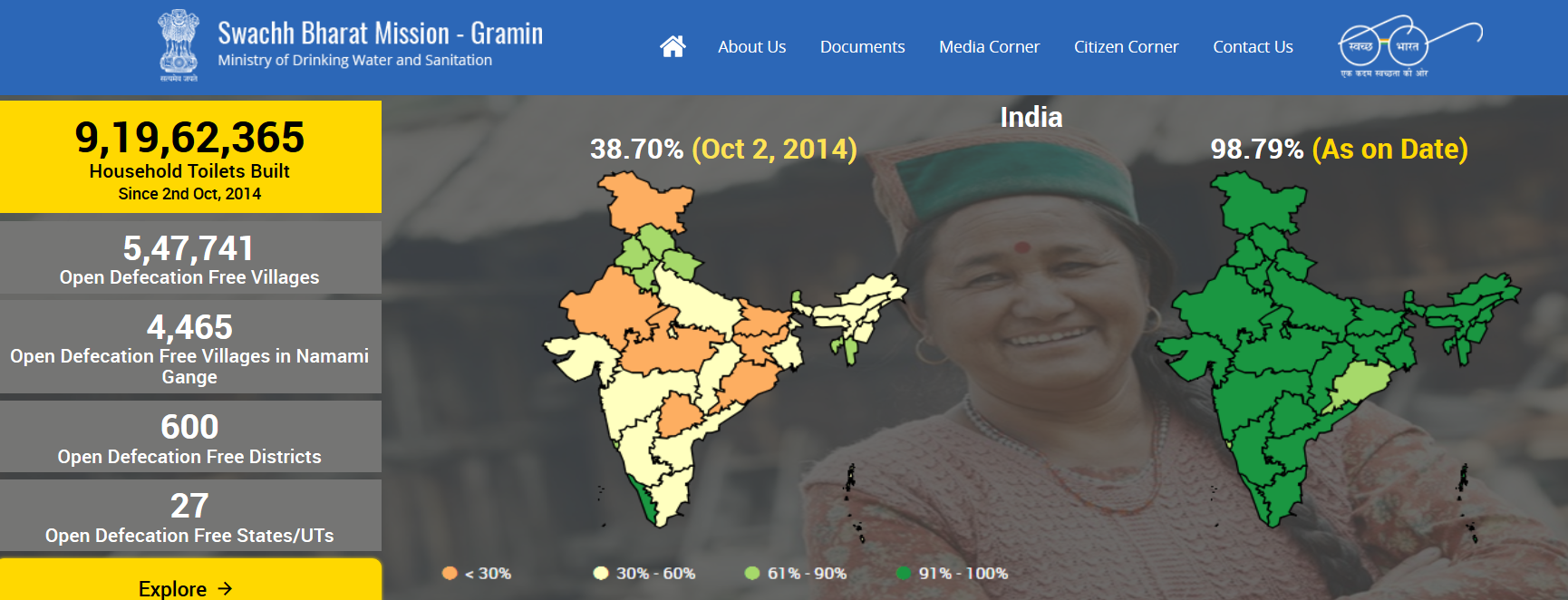
As of the publishing date of “Cleaning Spree”, the progress was impressive, with the households having individual latrines going from about 39% in October of 2014 when the program launched, to over 95% now. The program inspired me to dig a little deeper. I found that the government had created a program website – something I encourage project and program managers to do, especially in civil works. It informs citizens of how their tax money is being spent. Here’s a screenshot:
This shows that the country is now not at 95% but actually almost at 99%.
Here, you’ll also find the program’s mission statement:
To accelerate the efforts to achieve universal sanitation coverage and to put focus on sanitation, the Prime Minister of India, Shri Narendra Modi, launched the Swachh Bharat Mission on 2nd October, 2014. The Mission Coordinator shall be Secretary, Ministry of Drinking Water and Sanitation (MDWS) with two Sub-Missions – the Swachh Bharat Mission (Gramin) and the Swachh Bharat Mission (Urban). The Mission aims to achieve a Swachh Bharat by 2019, as a fitting tribute to Mahatma Gandhi on his 150th birth anniversary.
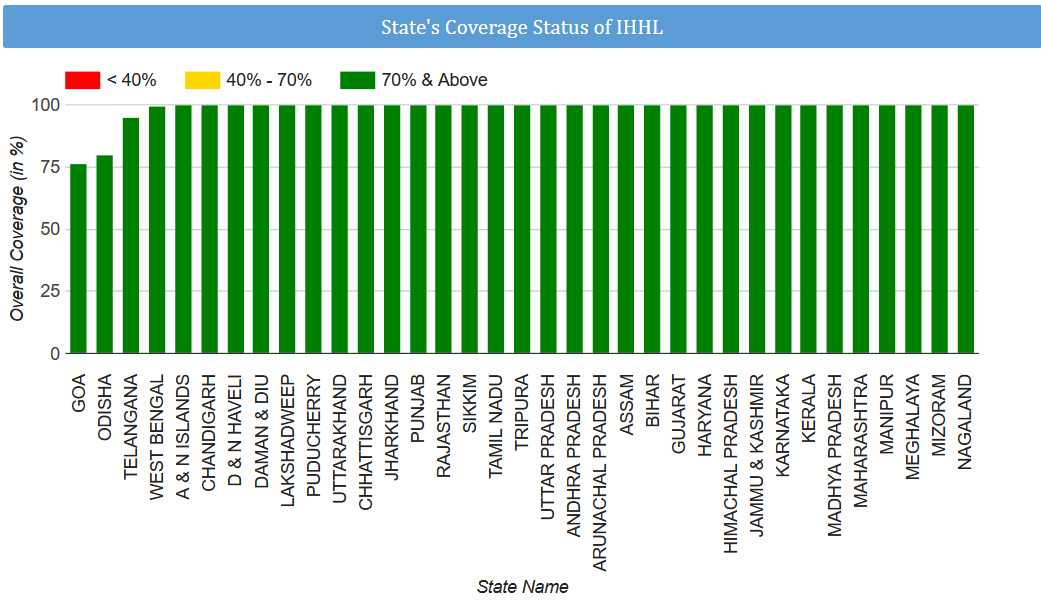
This site also branches to the official Indian government web pages which provide more detail on the progress by state (see below) and the Vision and specific Objectives of the project.
Vision
The aim of Swachh Bharat Mission (Gramin) is to achieve a clean and Open Defecation Free (ODF) India by 2nd October, 2019
Objectives
• To bring about an improvement in the general quality of life in the rural areas, by promoting cleanliness, hygiene and eliminating open defecation.
• To accelerate sanitation coverage in rural areas to achieve the vision of Swachh Bharat by 2nd October 2019.
• To motivate communities to adopt sustainable sanitation practices and facilities through awareness creation and health education.
• To encourage cost effective and appropriate technologies for ecologically safe and sustainable sanitation.
• To develop, wherever required, community managed sanitation systems focusing on scientific Solid & Liquid Waste Management systems for overall cleanliness in the rural areas.
• To create significant positive impact on gender and promote social inclusion by improving sanitation especially in marginalized communities
One of the things that impressed me about this program is that from the start, the principals realized that this was less a construction project and more of a mindset project. The program produced a set of stories called “An Open Mind” which you can read in its entirety here: https://mdws.gov.in/sites/default/files/ODF%20Book.pdf, and there was even a movie called “Toilet: A Love Story” which made this a key theme. The trailer for this film is below.