






Guessing is not a strategy: How to build decision velocity with AI and real-time data
June 10, 2026 | Live Webinar

You Can't Get They-ah From Hee-yah
Floating an idea into reality: the other side of the AI Project Paradox
The Environment of the Built Environment: an AI Paradox
6th, 6th Edfition, 6th Edition PMBOK, 7th Edition, 7th Edition PMBOK, 8th Edition PMBOK, 8th Edition PMBOK Guide, Activism, actuarial, actuary, adapt, addition by subtraction, Africa, africa, agriculture, airforce, ajaita, Alaska, amazon, analogous, analytics, ancient, and more power, antarctica, anti-science, apple, apps, architecture, arctic, arrakis, Artificial Intelligence, asch paradigm, Assistant, asthma, astronomy, automobile, automotive, autonomous cars, b, bankhar, Banksy Crypto, basalt, baseball, bats, batter, beauty products, benefit, benefits, Benefits Realization, beyond epica, biases, bicycle, big data, big dfata, big dig, bike, biodiversity, biomedicine, birdhouse, blockchain, blood, blue blood, blue trees, bluefin, bluefin tuna, book review, boston, boston university, Boyce, Brazil, brazil, Breakdown Structures, BS, building, buildings, built environment, built environment, bumblebee, cake, capacitor, car, Carbon, carbon, carbon capture, carbon negative, carbon neutral, carbon pool, carbon sequestration, carbonate, careers, CEO, ChatGPT, chatGPT, chatgpt, chatgpt, chess, China, china, chopsticks, citrus, cli-fi, climate, climate change, climate resilience, climeworks, Clumsy, CO2, co2, CO2 Utilization, coalition, cobalt, coffee pods, cognition, cognitive, Collabortion, colombia, concrete, Conflict, construction 5.0, cool projects xyloscope, cooling, coral, corn, cost of good quality, cost of poor quality, cost of quality, crazy, criticism of project management, cryptocurrency, CSR, csr, data, data analytics, data privacy, datacenter, dataset, death spiral, Decision Making, decomposition, Defense and Climate, definition of a project, deforestation, dependencies, dependency, desert, DIKW, dikw, dimopoulos, disposal, dna, DOD, dogs, dolphins, dream, drilling, drink, dune, dune, dutch, early start, earth, eatlocal, eco-tourism, ecological, economic, economics, EKC, electric grid, electricity, electronics, elysis, embodied carbon, emerging technologies, empower, Energy, energy efficiency, environmental degradation, escalate, escalation, ESG, extreme weather, fallacy, FARC, farming, finance, fish, fish brains, fishing, fix, fixing the earth, flint water, Flint Water Supply, flood, flooding, Food supply chain, food waste, forest, forest for the trees, forestation, forrestgump, frank herbert, Fruitcake, fungus, fusion, Galvao, garage, gas, gasoline, geese, gender equality, gender partnerships, generational differences, Generative AI, gladwell, gold, Goodness, google, Government, GPT, great pacific garbage patch, green, green building, green buildings, green energy, green iguana, green project, green project management, greening, guest post, gyre, harkonnen, Harvesting Benefits, hawasina, hedgehogs, heursitics, historical data, hlb, holitsic, holland, horseshoe crab, human-caused climate change, hydrogen, hydrology, ice, iceland, ignition, iguana, imagery, impact, india, inequality, information, initiatives, injection, insurance, intelligence, interacting risk, internal combustion engine, invasive species, investment, isomer, issue escalation, issues, ITER, jobs, Jupiter, justification, kids, kill point, knowledge, koch brothers, Kuznets, laboratory, LAL, landscape mode, lapampa, launch, LCA, Leadership, Leadership, life cycle analyses, life cycle analysis, lifecycle, Linkedin, liquid, lizard, local, long term, long-term, long-term thinking, look up, loud, maintenance, maker, makermovement, malcolm gladwell, management, marathon, marine biology, market, mars, Martin Luther King, mean, megawatt, MeHg, melting, mercury, metal, Microgrid, microplastics, migration, military, millennial, mindset, minerals, mission, mitigate, MLK, mongolia, museum, museum of london, nature, nematodes, net gain, Net Project Success Score, net zero, netherlands, network, New book, New Jersey, New Practitioners, new york, NFT, nitrogen, noise, noreaster, norway, nova, NPSS, NREL, ocean, ocean cleanup, ocean life, oil rig, oil rigs, oklahoma, oman, only murders in the building, opportunity, overall risk, oxygen, packaging, pareto, PBS, permafrost, persistence, peru, Pharmaceutical, planet, planet.com, planning, plant, plasma, plastic, playground, pm, pm education, pmbok, pmbok guide, pmnetwork, PMXPO-2018, podcast, pollutants, pollution, poop, poor, portfolio, power, power skills, privacy, privacy concerns, professors, program, Program Management, project, project leader, project leadership, project management, project management 3.0, project on fire, project progress, Project Success, project success, projecticity, projectleadership, projectmanagement, projects, psychology, pulse of the profession, purple bacteria, purpose, quiet, rainforest, rationale, reef, refugees, renewable, renewables, Repair, repair, repeatable process, repeatable processes, repurpose, research, resource breakdown strucuture, Resource Management, reversing climate change, revisionist history, rich, rigs2reefs, ripe, risk, risk avoidance, Risk Management, risk mitigation, risk response, risk responses, river, robots, rocks, rules of thumb, rural, rural India, russia, Sarcasm/Irony, satellite, saudi, schedule, sci-fi, Science, science, science-fiction, scientific american, screaming monkeys, sea, sea life, Sea-Level Rise, sea-level rise, seagreens, seawall, seawater, seawater temperature, seaweed. beat;es. farming, secondary risk, selena gomez, sequestration, shipping, skyscraper, SLR, smart cities, smart city, smelting, social, social pressure, soil, solar, solar panels, solar perovkites, solar saheli, sonic, sponge cities, SRI, stage-gate, stagegate, stakeholder, stakeholder management, steward, stewardship, storage, strategy, stupid, success, suffer, sulphur, sunk cost, supercapacitor, supply chain, survey, Sustainability, sustainability, Sustainable Investing, Sustainable Tourism, sybiosis, symbiosis, system 03, TBL, temperature, terraform, terraforming, test, threat, threats, totem, touchscreen, tour, tower, Trains, transparency, transportation, trash, tree, tree species, trees, trillion, triple bottom line, triple constraint, truth to power, UMass, us army corps of engineers, USDA, vacuum, value, venus, vision, voice, voltage optimization, vw scandal, washing machine, waste, wastewater, water, we mean business, whales, Whirlpool, wind, wisdom, women, Women in Project Management, wood wide web, woonerf, Work Breakdown Structures (WBS), world breakdown structure, worms, xian, xylotron, Yale


|
In this post, we explore the NFT: The Non-Fungible Token. I am only going to give ‘token’ time to defining this, partially because I am still learning about it. But I think you should know about this technology because (1) like it or not, it appears to be “a thing”, and (2) there is a reinforcement of a project management concept on which I blogged about already this month – that of secondary risk. Some of you may recognize the “Charlie Bit My Finger” image I put in the header of this postYou’re seeing a screen capture of a viral YouTube video. I did a Google search of that phrase as I’m writing this and it yielded about 2.3 million results. You may also have read articles, like this one from the BBC, which describes how this video is now being removed from YouTube because it has become an NFT. An NFT video of a kid biting another kid’s finger - that just sold for more than three-quarters of a million dollars. Say WHAT? So we start with, what is an NFT? It’s one of those acronyms for which spelling it out helps make as much sense as a FoaB (Fish on a Bicycle). But here goes: NFT stands for Non-Fungible Token. Right. So now we have to break that down. Fungible is not a word we use every day. If you asked me what it meant yesterday, I would have said fungible was an edible mushroom. But no – it has nothing to do with fungi. I actually have a go-to source for terms like this: Investopedia. Here’s their definition: Fungibility is the ability of a good or asset to be interchanged with other individual goods or assets of the same type. Fungible assets simplify the exchange and trade processes, as fungibility implies equal value between the assets. So what’s fungible? Cash money is an example. I can find an equal exchange for a US$1 bill – twenty nickels, or four quarters or ten dimes are equal exchanges. What’s non-fungible? Again, from Investopedia: If Person A lends Person B his car, it is not acceptable for Person B to return a different car, even if it is the same make and model as the original car lent by Person A. Cars are not fungible with respect to ownership, but the gasoline that powers the cars is fungible. And finally, the last letter of the acronym - token. Remember, we are still just spelling out the acronym here. I hope you now “get” the Non-Fungible part, so let’s move on to TOKEN. Think of tokens as a ‘unit of value’. This applies to cryptocurrency as well as a token like the old-timey ones we used to use to allow admission to the subway. Crypto tokens are cryptocurrency tokens. Cryptocurrencies or virtual currencies are denominated into these tokens – units of value, which reside on their own blockchains. Blockchains are special databases that store information in blocks that are then chained or linked together. This means that crypto tokens, which are also called crypto assets, represent a certain unit of value. So why is this so hot now, literally on fire? Yes, literally, ON FIRE. Have a look at this video. A group of crypto-enthusiasts called Injective Protocol bought a Banksy painting for about $100,000 and then burned it, to make their point about NFTs. The point they were trying to make is about trust. By destroying the original they are trying to build trust in blockchain technology. Whether or not you get this (I’m still wrapping my head around it) there is, as I said above, the aspect I’d like to tackle here is regarding secondary risk. The secondary risk, believe it or not, is the carbon footprint of NFTs. According to a recent article, the positives of NFTs for artists are abundant: Artists around the world were thrilled: NFTs provide the opportunity for them to make significant money on their work, reach a broader audience all over the world and link a digital file to a creator, ensuring authenticity. And with the value of cryptocurrency skyrocketing, some think there's never been a better time to get in on it. We could look at NFTs as a way to respond to the risk of theft of art. That’s nifty. However, that same article goes on to talk about the downside – a nasty side - of NFTs. It turns out that blockchain technology is very energy-intensive. Blockchain incorporates a "proof of work" (PoW) method to create digital assets and it is – by design – highly inefficient and thus uses significant computing power, translating into large amounts of actual energy usage. In fact, the computers are, in effect, trying to solve a complicated mathematical puzzle, something like trying to open a safe by trying every combination. They make millions of attempts every second to solve the puzzle so that they can (on behalf of the ‘miner’) get ‘added to the blockchain’. The higher the value the token, the more difficult these puzzles are to solve, and that makes them increase in value, creating a spiraling need for greater computer power and larger data warehouses and stronger cooling units just to keep up. As you can imagine, this causes an exponential increase in actual power consumption. The NFT open-source network, Ethereum, according to the article, is “currently estimated to (annually) consume roughly 44.94 terawatt-hours of electrical energy, which is comparable to the yearly power consumption of countries like Qatar and Hungary.” So while NFT is ‘nifty’ for artists, it contains a secondary risk. How do we respond to the secondary risk? First: be aware of it – and articles and blog posts like this, I hope, help in that area. Next: make the network less energy-hungry. Efforts such as Greentouch from the past have been successful at reducing the energy consumption of IT networks. This secondary risk provides a tertiary risk – an opportunity – for network engineers to focus on algorithms and technologies to keep the PoW vibrant and focused on security while still being less energy-hungry. This has been done in the past. I have blogged about GreenTouch, a consortium of IT and telecom companies who are fierce competitors but who collaborated on algorithms to reduce the energy use of the technology simply by using clever algorithms to reduce the number of times optical amplifiers transition from a zero to a one. This collaboration resulted in a new optical transceiver which was expected to reduce the overall power consumption of the entire metro access network by 27 percent; this translates to about 4 terawatt hours of electricity saved on an annual basis, equivalent in terms of annual greenhouse gas emissions to taking nearly 600,000 cars off the road. If competitor telecom companies can do that in 2014, think of what an open-source collaboration could do with 7 years of increased knowledge under their belts! In addition to working on better networks, this provides opportunities for computer and data storage companies to improve the physical need for energy of their systems, something they are doing already, but this should motivate them to ‘up their game’ in this area. It also should be a motivator for these companies to source their energy supply on renewables like solar and wind. So while some technical enthusiasts are “burning up” art, they should also be “burning down” work products to reduce the hunger of NFTs and cryptocurrencies in general for carbon-intensive energy.
|
|
A short but 'power'-ful post. Say watt? No: Watt. As in James Watt. As in the guy for whom the unit of power was named. His LinkedIn profile photo is shown above. As I have pointed out in many prior posts and in my talks to PMI National Conferences with titles like “Giving You The Green Light to Think Past The End of Your Project”, project success is an elusive, hard-to-define, holistic, not-at-the-ribbon-cutting-ceremony measurement. I want to practice what I preach. So I didn’t want to declare our project to add 24 solar panels to our home’s roof a success when the nice folks from Vivint told me that we were generating power. But today, 17 months in, as we cross well over the 10 Megawatt level, and I continue to see the electric meter run backwards, and as we continue to have the electric company pay us each month, I declare project success. It seems appropriate to make this statement in May, which last year (and probably this year) seems to be our best month (see figure below).
I will continue to update you from time to time on this blog about the ups and downs, but I feel confident that we can now say we have delivered value to the key stakeholders – ourselves as well as the environment. According to my solar calculator provided by Vivint, it looks like we’ve saved about 9 acres of forest in carbon offset equivalency, and according to the EPA (United States Environmental Protection Agency) calculator (try it for yourself!): https://www.epa.gov/energy/greenhouse-gas-equivalencies-calculator It appears that we have taken the equivalent of 1.5 cars of the road for a year. Not bad. So here’s to you, James Watt! More power to you!
|
|
iStock photo One of the more difficult project management concepts to understand and to put into practice is secondary risk. It’s often confused with residual risk. In simple terms, secondary risk that is caused by a risk response. Now, of course, risk can be positive (opportunity) or negative (threat). Here we’ll go to the dark side and focus on threat – most people consider risk and threat to be the same. You and I know that they are different, but to make the concept of residual risk clear, we’ll stay with threat. So again, a secondary risk is a new threat that is caused by a response to the original threat. We can all think of examples:
All of these examples speak to the idea of risk versus reward, but with a twist – it is really risk response versus punishment. This speaks to thinking carefully about the downsides of our risk treatments or responses. Could the cure be worse than the disease? A recent story by the BBC on tree planting – traceable to an article from the research journal Global Change Biology - found that in some cases, planned tree planting does not increase carbon capture and can have negative effects. caught my attention, considering this idea of secondary risk. The BBC story starts with this bold statement: Tree planting is a brilliant solution to tackle climate change and protect biodiversity, but the wrong tree in the wrong place can do more harm than good, say experts at the Royal Botanic Gardens, Kew. From the abstract of the Global Change Biology Journal: Urgent solutions to global climate change are needed. Ambitious tree‐planting initiatives, many already underway, aim to sequester enormous quantities of carbon to partly compensate for anthropogenic CO2 emissions, which are a major cause of rising global temperatures. However, tree planting that is poorly planned and executed could actually increase CO2 emissions and have long‐term, deleterious impacts on biodiversity, landscapes and livelihoods. So the overall risk response (to climate change) is planting forests. It seems that there are indeed downsides to this – and are those downsides worth it? Are there ways to avoid those downsides? After all, our goal is have a net benefit when we put the risk response into place. Sure, an airbag may – in rare instances – cause injury, but that does that mean we should throw them all away? NO. Airbags save many lives and prevent injuries. We have to figure the downside of a failed airbag and do what we can to assure that they don’t introduce new risk, but we don’t just stop using them due to an instance of secondary risk. Let’s start with the threat that’s causing us to plant forests. Every year we lose one Denmark worth of tropical forest. Is that bad? Well, what do forests provide? Well, they are home to three-quarters of the world's plants and animals. They absorb CO2, and provide humans with food, fuels and medicines. So, yes, I think we’d all agree, losing a Denmark (or three Connecticuts) of forest each year is a threat we cannot tolerate. And planting forests does work, if it’s done properly. Here’s what NOT to do, according to the article: don’t replace natural forests teeming with plants, animals and fungi with commercial plantations with row upon row of timber trees, which will be harvested after a few decades. That actually causes more damage than leaving the forests alone. Turns out that there are 10 “golden rules” for reforestation that, if followed, can prevent those secondary risks: 10 Golden Rules for Restoring Forests (set out in detail below) 1. Protect existing forests first 2. Put local people at the heart of tree-planting projects 3. Maximize biodiversity recovery to meet multiple goals 4. Select the right area for reforestation 5. Use natural forest regrowth wherever possible 6. Select the right tree species that can maximize biodiversity 7. Make sure the trees are resilient to adapt to a changing climate 8. Plan ahead 9. Learn by doing 10. Make it pay
These are explained in detail in the Journal article, which has been made ‘open source’, so feel free to view it here. So what is the takeaway for project managers? First of all, in your Risk Registers, have a place to record Secondary Risks. Think not just about the risk response you propose, but what new threats (or opportunity) that threat response may initiate. Next, think of the ways in which you can respond to THOSE threats – those secondary threats, introduced by your risk response. Secondly, avoid ‘throwing the baby out with the bathwater’. Instead, secure that baby and just throw out the bathwater. In other words, look at the equivalent of the above 10 Golden Rules for your risk response. It takes more work and more thinking through to what happens if your risk response does get activated. But it’s worth it. After all, you don’t want to be the one of the people this guy is talking about, do you? |
|
Who would ever think you’d be reading about a Spanish Michelin Star chef, hunter-gatherer Seri people from Mexico, and a possible defense against erosion and climate change, all related to a project to harvest something which we’ll call sea rice? I’ll attempt to pull this together for you. It’s quite fascinating, actually and worth it. For me, this started with a recent article in The Guardian called “The rice of the sea: how a tiny grain could change the way humanity eats”. This article caught my attention when I read this description of a ‘new food’: gluten-free, high in omega-6 and -9 fatty acids, and contains 50% more protein than rice per grain, according to Aponiente’s research. And all of it growing without freshwater or fertiliser. Wow. Is this possible? And is this really new? Stay tuned. I’ll start with the celebrity chef, named Ángel León. León is profiled in a Time Magazine article: In 2008, as a young, unknown chef, he took a loin from one fish and attached it to the loin of another, using collagen to bind the two proteins together. He called them hybrids and served them to unsuspecting diners at Aponiente, his restaurant in the southern Spanish port town of El Puerto de Santa María, just across the bay from Cádiz. He discovered that fish eyes, cooked at 55°C in a thermal circulator until the gelatin collapsed, made excellent thickening agents for umami-rich sauces. Next he found that micro-algae could sequester the impurities of cloudy kitchen stocks the same way an egg white does in classical French cooking. In the years since, León has used sea bass to make mortadella; mussels to make blood sausage; moray eel skin to mimic crispy pigskins; boiled hake to fashion fettuccine noodles; and various parts of a tuna’s head to create a towering, gelatinous, fall-apart osso buco. Meet Leon in a video profile here: His restaurant, Michelin-starred Aponiente, is “set in an 18th-century tidal mill inhabited by myriad species in southwest Spain” it’s is a seafood lover’s paradise, serving the freshest, most sustainable ocean produce, including goose barnacle, fiddler crab and albacore, as well as plankton. Read the Michelin review here: https://guide.michelin.com/en/andalucia/el-puerto-de-santa-maria/restaurant/aponiente Aponiente has its own research lab, which recently has made progress with eelgrass seeds – the little grain that was featured in the Guardian article above. The eelgrass is Zostera Marina. From the lab’s research: At Aponiente’s research lab, we have achieved the cultivation of Zostera marina and its seed – marine grain. For the first time ever, controlled crops have been successfully grown. Never before has this goal been reached. The project was launched in 2017 – the first of its kind in all the world. The undertaking allowed for the recovery of the native species, Zostera marina, helping to generate greater marine biodiversity, thus enriching our ecosystem and strengthening the region in the struggle against climate change. Currently, the experimental cultivation area measures some 3000 m2, and is located in Bahía de Cádiz Natural Park, near the municipality of Puerto Real. Along the northern coast of Spain, and throughout Europe, there are naturally occurring marine meadows teeming with Zostera marina. The wild species is now protected, given that it plays a crucial role in the ecosystem, but it is still dying at an alarming rate in areas where it once grew in abundance. Human marine activities have had an adverse effect on the plant. Despite their importance it is extremely challenging to carry out reforestation projects of this kind. The problem is that there are no nurseries that are prepared to supply the appropriate plants and/or seeds. One aspect of the present project that makes it so notable is that, for the first time, a seed bank will be created that will serve to repopulate coastal wetlands, which can then be restored and managed. A full PDF of this research is available here: https://www.cerealmarino.com/wp-content/uploads/2021/01/APONIENTE_CEREAL-MARINO_DOSSIER-DE-PRENSA_ENG.pdf The rice is nutritionally sound:
So what about the connection to the Seri hunter-gatherers that I promised you? Back to the article from Time: Juan Martín, Aponiente’s resident biologist who has worked with León for years, knew the plant well. “I had been studying seagrasses for 15 years—but always from the standpoint of the ecosystem. It never occurred to me or anyone else studying it that it was edible.” That is, until León showed up one day at Aponiente with a printout of a 1973 article in Science documenting the diet of the Seri, hunters and gatherers of Sonora, Mexico, who have eaten eelgrass for generations. Like many grains, it required an elaborate process of threshing, winnowing, toasting and pulverizing before being cooked into a slurry with water. The Seri ate the bland paste with condiments to punch up the flavor: honey or, preferably, sea-turtle oil. Here's a snippet from that article (https://science.sciencemag.org/content/181/4097/355)
So what is the project theme here? Well, aside from the research project, León and his restaurant’s research team is going to take the research to reality: If all goes according to (project) plan, they will harvest 12 acres of eelgrass in the summer of 2021. León and team will use most of those seeds (about 22,000 kg) to expand the eelgrass significantly in 2022–2023, and he will keep about 3,000 kg to cook with at the restaurant and experiment with in the lab. With more than 5,000 hectares of estuaries and abandoned salt beds strewn across the region, if León and team have their way, Cádiz could soon be home to one of the largest eelgrass meadows on the planet. Could you be making and eating Zostera waffles soon? Maybe! |
| Today, I’m quite pleased and proud to feature a guest blog post by an MBA student at Bard College’s MBA in Sustainability. I’m thankful to Kristina Kohl, PMP, author of Becoming a Sustainable Organization, who made the connection and introduced me to Kirstie Dabbs.
Kirstie Dabbs, Bard MBA in Sustainability
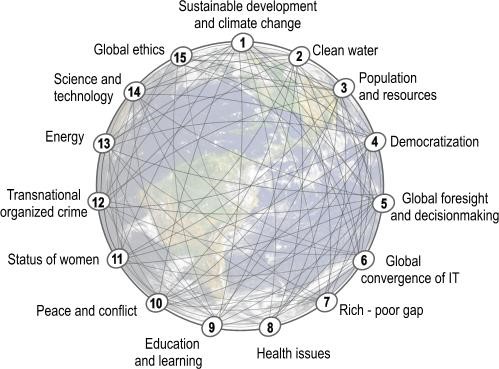
Kirstie Dabbs is a student at Bard College's MBA in Sustainability. Her areas of expertise include corporate ESG disclosure and the application of strategic foresight to inform sustainable decision-making. She has enjoyed developing sustainability strategies for public, private, and nonprofit organizations. Here is her post: How might we harness the power of global participation to achieve a better future for all? The answer may lie in transcending the labels that divide individuals and organizations. Long before the establishment of the United Nations Sustainable Development Goals in 2015, or even the Millennium Development Goals in 2000, a think tank called The Millennium Project methodically worked to compile a list of 15 global challenges looming beyond the year 2000. The next millennium was fast approaching, and co-founders Jerome Glenn and Theodore J. Gordon saw this milestone as a potential teaching moment for humanity. Rather than merely creating a report about the state of the world, Glenn (then a futurist and consultant at United Nations University and its American Council) and Gordon (CEO of the Futures Group and formerly at the RAND Corporation) figured that society would benefit from something even more ambitious than a think tank’s report: the establishment of a global system to support ongoing research about the state of the world. As futurists, they hoped this system would gather useful information to inspire decision-making for a better future. The Millennium Project launched in 1996, and to this day the organization remains the only one of its kind. After three years of feasibility studies conducted under the United Nations University, the Project became operational under the American Council for the UNU as a participatory global think tank connecting civilians, universities, private enterprise, governments, and policy makers. In 2009, The Millennium Project became an independent NGO. Now in its 25th year, the organization should be studied as a model of global collaboration for good that transcends place, institution, and ideology. The non-hierarchical structure of research, combined with the online Global Futures Intelligence System (GFIS, launched in 2014), enable The Millennium Project to collect, organize and synthesize information from around globe in near real-time. Much of the data gathered are organized into categories based on the 15 global challenges identified in the 1990s. The challenges remain relevant today, as evidenced by their overlap with many of the UN 2030 Sustainable Development Goals. Their continued significance is a testament to the successful foresight work performed by The Millennium Project in its early days. The Millennium Project 15 Global Challenges
Image Courtesy of The Millennium Project After 25 years of tracking these issues through global news feeds and participant inputs, the Project’s global collective intelligence system serves as a rich resource and it is available to scholars, NGOs, government agencies, and individuals who subscribe to its network. The Project’s data on environmental risk alone has informed numerous departments of defense around the globe. The organization is also well-positioned to support collaborative efforts to achieve the UN Sustainable Development Goals by 2030, offering a network for global partnership.
Image courtesy of The Millennium Project Re-Imagining Organizational Structures Another way that The Millennium Project is leading the way for global change is through its aspiration to evolve beyond the boundaries of a rigid organizational structure, becoming the world’s first transinstitution. The legal status or “legal personhood” of a transinstitution does not yet exist. This, according to Glenn, is unfortunate. “Our society has accelerating technological change, but institutional change is lagging.” He believes that just as all countries have for-profit law and non-profit law, there should be a third category: transinstitutional law. While The Millennium Project is currently a nonprofit 501(c)(3) public charity, it has embodied different structures through its existence and Glenn as CEO would promptly register it as a transinstitution if a country were to take the step to create this new category. In contrast to the way the term public-private partnerships is used today, which simply refers to collaboration between institutions, Glenn’s use of the term transinstitution describes an organization that is able to span different boundaries, as needed. As Glenn explains, “The advantage of being a transinstitution is that when you have to be in the United Nations, you’d be in the United Nations. When you have to be based in a country, you’d be in a country. When you have to focus on an issue, you could act like an NGO. When you want to be in education, you could act like a university – you can act through all of these categories while also being acted upon by all of these categories.” Glenn believes a transinstitution structure would enable more action because it would allow for adaptation. “Some things are harder for a business to do, and others are harder for universities to do,” he explains. If an organization were able to exercise different capacities simultaneously for different purposes, barriers that inhibit collaboration and action would be reduced. “We are already adaptive – we are politically sensitive because we engage with government and policy makers regularly. We are internationally and culturally sensitive because we have Nodes around the world,” including, as Glenn points out, nodes in both Tel Aviv and Tehran. “That’s a little unusual for an organization.” As for the possibility of other organizations registering as this designation, Glenn sees a transinstitution being useful to support any cause. “The main idea is to attract people who are interested in what you are doing and then put them together in a healthy environment, even if they are different – just like an opera,” he says. “A trumpet should not be a violin. But when you put them together it makes beautiful music. It’s the same with a transinstitution: you can have left-wing, right-wing, and more, but the relationship of how you put them together can allow for a successful output.” Looking Forward When The Millennium Project was first envisioned, its founders wondered how to create a global system. “We didn’t know how. That’s why we did the feasibility study,” Glenn explains. The Cold War was still underway during the early exploratory phase, creating geopolitical tension and posing a threat to a truly global network – yet Glenn and his collaborators discovered that there were people around the world who were eager to participate; the network self-organized and has continued to do so ever since. This type of network that is accessible to anyone interested in joining makes global collaboration possible. No matter what legal structure an organization may embody, or what challenges may loom, The Millennium Project inspires us to adopt inclusive, forward-looking participation in order to achieve the ambitious action required to create a more sustainable world. ---- Thanks, Kirstie. We invite readers to comment on Kirstie's post! |
|
"The rule is perfect: In all matters of opinion, our adversaries are insane." - Mark Twain |