The Millennium Project: A Model for the Future of Global Collaboration
From the People, Planet, Profits & Projects Blog
by Richard Maltzman,
Dave Shirley

View Posts By:
Richard Maltzman
Dave Shirley
Recent Posts
What is AI doing to the sustainability of our profession???
Stepwells – Insight from a Particularly Valid Angle
Climb-it Change: Pre-Interview Connector
Climb-it Change: New Relevance for the Stepwells of India
A PATH to more equitable health - via AI project leadership
Categories
6th,
6th Edfition,
6th Edition PMBOK,
7th Edition,
7th Edition PMBOK,
8th Edition PMBOK,
8th Edition PMBOK Guide,
Activism,
actuarial,
actuary,
adapt,
addition by subtraction,
Africa,
africa,
agriculture,
airforce,
ajaita,
Alaska,
amazon,
analogous,
analytics,
ancient,
and more power,
antarctica,
anti-science,
apple,
apps,
architecture,
arctic,
arrakis,
Artificial Intelligence,
asch paradigm,
Assistant,
asthma,
astronomy,
automobile,
automotive,
autonomous cars,
b,
bankhar,
Banksy Crypto,
basalt,
baseball,
bats,
batter,
beauty products,
benefit,
benefits,
Benefits Realization,
beyond epica,
biases,
bicycle,
big data,
big dfata,
big dig,
bike,
biodiversity,
biomedicine,
birdhouse,
blockchain,
blood,
blue blood,
blue trees,
bluefin,
bluefin tuna,
book review,
boston,
boston university,
Boyce,
Brazil,
brazil,
Breakdown Structures,
BS,
building,
buildings,
built environment,
built environment,
bumblebee,
cake,
capacitor,
car,
Carbon,
carbon,
carbon capture,
carbon negative,
carbon neutral,
carbon pool,
carbon sequestration,
carbonate,
careers,
CEO,
ChatGPT,
chatGPT,
chatgpt,
chatgpt,
chess,
China,
china,
chopsticks,
citrus,
cli-fi,
climate,
climate change,
climate resilience,
climeworks,
Clumsy,
CO2,
co2,
CO2 Utilization,
coalition,
cobalt,
coffee pods,
cognition,
cognitive,
Collabortion,
colombia,
concrete,
Conflict,
construction 5.0,
cool projects xyloscope,
cooling,
coral,
corn,
cost of good quality,
cost of poor quality,
cost of quality,
crazy,
criticism of project management,
cryptocurrency,
CSR,
csr,
data,
data analytics,
data privacy,
datacenter,
dataset,
death spiral,
Decision Making,
decomposition,
Defense and Climate,
definition of a project,
deforestation,
dependencies,
dependency,
desert,
DIKW,
dikw,
dimopoulos,
disposal,
dna,
DOD,
dogs,
dolphins,
dream,
drilling,
drink,
dune,
dune,
dutch,
early start,
earth,
eatlocal,
eco-tourism,
ecological,
economic,
economics,
EKC,
electric grid,
electricity,
electronics,
elysis,
embodied carbon,
emerging technologies,
empower,
Energy,
energy efficiency,
environmental degradation,
escalate,
escalation,
ESG,
extreme weather,
fallacy,
FARC,
farming,
finance,
fish,
fish brains,
fishing,
fix,
fixing the earth,
flint water,
Flint Water Supply,
flood,
flooding,
Food supply chain,
food waste,
forest,
forest for the trees,
forestation,
forrestgump,
frank herbert,
Fruitcake,
fungus,
fusion,
Galvao,
garage,
gas,
gasoline,
geese,
gender equality,
gender partnerships,
generational differences,
Generative AI,
gladwell,
gold,
Goodness,
google,
Government,
GPT,
great pacific garbage patch,
green,
green building,
green buildings,
green energy,
green iguana,
green project,
green project management,
greening,
guest post,
gyre,
harkonnen,
Harvesting Benefits,
hawasina,
hedgehogs,
heursitics,
historical data,
hlb,
holitsic,
holland,
horseshoe crab,
human-caused climate change,
hydrogen,
hydrology,
ice,
iceland,
ignition,
iguana,
imagery,
impact,
india,
inequality,
information,
initiatives,
injection,
insurance,
intelligence,
interacting risk,
internal combustion engine,
invasive species,
investment,
isomer,
issue escalation,
issues,
ITER,
jobs,
Jupiter,
justification,
kids,
kill point,
knowledge,
koch brothers,
Kuznets,
laboratory,
LAL,
landscape mode,
lapampa,
launch,
LCA,
Leadership,
Leadership,
life cycle analyses,
life cycle analysis,
lifecycle,
Linkedin,
liquid,
lizard,
local,
long term,
long-term,
long-term thinking,
look up,
loud,
maintenance,
maker,
makermovement,
malcolm gladwell,
management,
marathon,
marine biology,
market,
mars,
Martin Luther King,
mean,
megawatt,
MeHg,
melting,
mercury,
metal,
Microgrid,
microplastics,
migration,
military,
millennial,
mindset,
minerals,
mission,
mitigate,
MLK,
mongolia,
museum,
museum of london,
nature,
nematodes,
net gain,
Net Project Success Score,
net zero,
netherlands,
network,
New book,
New Jersey,
New Practitioners,
new york,
NFT,
nitrogen,
noise,
noreaster,
norway,
nova,
NPSS,
NREL,
ocean,
ocean cleanup,
ocean life,
oil rig,
oil rigs,
oklahoma,
oman,
only murders in the building,
opportunity,
overall risk,
oxygen,
packaging,
pareto,
PBS,
permafrost,
persistence,
peru,
Pharmaceutical,
planet,
planet.com,
planning,
plant,
plasma,
plastic,
playground,
pm,
pm education,
pmbok,
pmbok guide,
pmnetwork,
PMXPO-2018,
podcast,
pollutants,
pollution,
poop,
poor,
portfolio,
power,
power skills,
privacy,
privacy concerns,
professors,
program,
Program Management,
project,
project leader,
project leadership,
project management,
project management 3.0,
project on fire,
project progress,
Project Success,
project success,
projecticity,
projectleadership,
projectmanagement,
projects,
psychology,
pulse of the profession,
purple bacteria,
purpose,
quiet,
rainforest,
rationale,
reef,
refugees,
renewable,
renewables,
Repair,
repair,
repeatable process,
repeatable processes,
repurpose,
research,
resource breakdown strucuture,
Resource Management,
reversing climate change,
revisionist history,
rich,
rigs2reefs,
ripe,
risk,
risk avoidance,
Risk Management,
risk mitigation,
risk response,
risk responses,
river,
robots,
rocks,
rules of thumb,
rural,
rural India,
russia,
Sarcasm/Irony,
satellite,
saudi,
schedule,
sci-fi,
Science,
science,
science-fiction,
scientific american,
screaming monkeys,
sea,
sea life,
Sea-Level Rise,
sea-level rise,
seagreens,
seawall,
seawater,
seawater temperature,
seaweed. beat;es. farming,
secondary risk,
selena gomez,
sequestration,
shipping,
skyscraper,
SLR,
smart cities,
smart city,
smelting,
social,
social pressure,
soil,
solar,
solar panels,
solar perovkites,
solar saheli,
sonic,
sponge cities,
SRI,
stage-gate,
stagegate,
stakeholder,
stakeholder management,
steward,
stewardship,
storage,
strategy,
stupid,
success,
suffer,
sulphur,
sunk cost,
supercapacitor,
supply chain,
survey,
Sustainability,
sustainability,
Sustainable Investing,
Sustainable Tourism,
sybiosis,
symbiosis,
system 03,
TBL,
temperature,
terraform,
terraforming,
test,
threat,
threats,
totem,
touchscreen,
tour,
tower,
Trains,
transparency,
transportation,
trash,
tree,
tree species,
trees,
trillion,
triple bottom line,
triple constraint,
truth to power,
UMass,
us army corps of engineers,
USDA,
vacuum,
value,
venus,
vision,
voice,
voltage optimization,
vw scandal,
washing machine,
waste,
wastewater,
water,
we mean business,
whales,
Whirlpool,
wind,
wisdom,
women,
Women in Project Management,
wood wide web,
woonerf,
Work Breakdown Structures (WBS),
world breakdown structure,
worms,
xian,
xylotron,
Yale
Date
Today, I’m quite pleased and proud to feature a guest blog post by an MBA student at Bard College’s MBA in Sustainability. I’m thankful to Kristina Kohl, PMP, author of Becoming a Sustainable Organization, who made the connection and introduced me to Kirstie Dabbs.
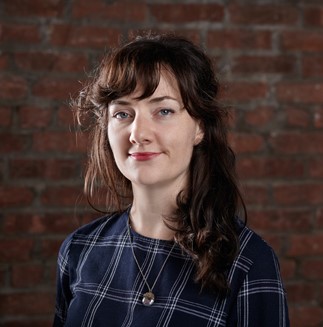
Kirstie Dabbs, Bard MBA in Sustainability
Kirstie Dabbs is a student at Bard College's MBA in Sustainability. Her areas of expertise include corporate ESG disclosure and the application of strategic foresight to inform sustainable decision-making. She has enjoyed developing sustainability strategies for public, private, and nonprofit organizations.
Here is her post:
How might we harness the power of global participation to achieve a better future for all?
The answer may lie in transcending the labels that divide individuals and organizations.
Long before the establishment of the United Nations Sustainable Development Goals in 2015, or even the Millennium Development Goals in 2000, a think tank called The Millennium Project methodically worked to compile a list of 15 global challenges looming beyond the year 2000. The next millennium was fast approaching, and co-founders Jerome Glenn and Theodore J. Gordon saw this milestone as a potential teaching moment for humanity.
Rather than merely creating a report about the state of the world, Glenn (then a futurist and consultant at United Nations University and its American Council) and Gordon (CEO of the Futures Group and formerly at the RAND Corporation) figured that society would benefit from something even more ambitious than a think tank’s report: the establishment of a global system to support ongoing research about the state of the world. As futurists, they hoped this system would gather useful information to inspire decision-making for a better future.
The Millennium Project launched in 1996, and to this day the organization remains the only one of its kind. After three years of feasibility studies conducted under the United Nations University, the Project became operational under the American Council for the UNU as a participatory global think tank connecting civilians, universities, private enterprise, governments, and policy makers. In 2009, The Millennium Project became an independent NGO. Now in its 25th year, the organization should be studied as a model of global collaboration for good that transcends place, institution, and ideology.
The non-hierarchical structure of research, combined with the online Global Futures Intelligence System (GFIS, launched in 2014), enable The Millennium Project to collect, organize and synthesize information from around globe in near real-time. Much of the data gathered are organized into categories based on the 15 global challenges identified in the 1990s. The challenges remain relevant today, as evidenced by their overlap with many of the UN 2030 Sustainable Development Goals. Their continued significance is a testament to the successful foresight work performed by The Millennium Project in its early days.
The Millennium Project 15 Global Challenges
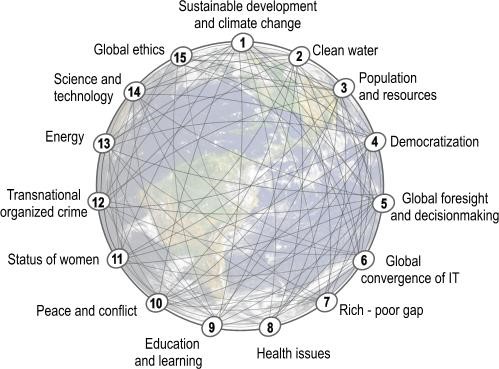
Image Courtesy of The Millennium Project
After 25 years of tracking these issues through global news feeds and participant inputs, the Project’s global collective intelligence system serves as a rich resource and it is available to scholars, NGOs, government agencies, and individuals who subscribe to its network. The Project’s data on environmental risk alone has informed numerous departments of defense around the globe.
The organization is also well-positioned to support collaborative efforts to achieve the UN Sustainable Development Goals by 2030, offering a network for global partnership.

Image courtesy of The Millennium Project
Re-Imagining Organizational Structures
Another way that The Millennium Project is leading the way for global change is through its aspiration to evolve beyond the boundaries of a rigid organizational structure, becoming the world’s first transinstitution.
The legal status or “legal personhood” of a transinstitution does not yet exist. This, according to Glenn, is unfortunate. “Our society has accelerating technological change, but institutional change is lagging.” He believes that just as all countries have for-profit law and non-profit law, there should be a third category: transinstitutional law. While The Millennium Project is currently a nonprofit 501(c)(3) public charity, it has embodied different structures through its existence and Glenn as CEO would promptly register it as a transinstitution if a country were to take the step to create this new category.
In contrast to the way the term public-private partnerships is used today, which simply refers to collaboration between institutions, Glenn’s use of the term transinstitution describes an organization that is able to span different boundaries, as needed. As Glenn explains, “The advantage of being a transinstitution is that when you have to be in the United Nations, you’d be in the United Nations. When you have to be based in a country, you’d be in a country. When you have to focus on an issue, you could act like an NGO. When you want to be in education, you could act like a university – you can act through all of these categories while also being acted upon by all of these categories.”
Glenn believes a transinstitution structure would enable more action because it would allow for adaptation. “Some things are harder for a business to do, and others are harder for universities to do,” he explains. If an organization were able to exercise different capacities simultaneously for different purposes, barriers that inhibit collaboration and action would be reduced.
“We are already adaptive – we are politically sensitive because we engage with government and policy makers regularly. We are internationally and culturally sensitive because we have Nodes around the world,” including, as Glenn points out, nodes in both Tel Aviv and Tehran. “That’s a little unusual for an organization.”
As for the possibility of other organizations registering as this designation, Glenn sees a transinstitution being useful to support any cause. “The main idea is to attract people who are interested in what you are doing and then put them together in a healthy environment, even if they are different – just like an opera,” he says. “A trumpet should not be a violin. But when you put them together it makes beautiful music. It’s the same with a transinstitution: you can have left-wing, right-wing, and more, but the relationship of how you put them together can allow for a successful output.”
Looking Forward
When The Millennium Project was first envisioned, its founders wondered how to create a global system. “We didn’t know how. That’s why we did the feasibility study,” Glenn explains. The Cold War was still underway during the early exploratory phase, creating geopolitical tension and posing a threat to a truly global network – yet Glenn and his collaborators discovered that there were people around the world who were eager to participate; the network self-organized and has continued to do so ever since.
This type of network that is accessible to anyone interested in joining makes global collaboration possible. No matter what legal structure an organization may embody, or what challenges may loom, The Millennium Project inspires us to adopt inclusive, forward-looking participation in order to achieve the ambitious action required to create a more sustainable world.
----
Thanks, Kirstie. We invite readers to comment on Kirstie's post!
Posted
by
Richard Maltzman
on: April 26, 2021 09:59 AM |
Permalink
Comments (1)
Please login or join to subscribe to this item
thank you for sharing Kirstie's thought leadership blog post. She is student in my Employees and Organizations class in the Bard Graduate Programs in Sustainability's thought leadership piece. Soon to be an MBA graduate!
Please Login/Register to leave a comment.
|
"Far out in the uncharted backwaters of the unfashionable end of the Western Spiral arm of the galaxy lies a small unregarded yellow sun. Orbiting this at a distance of roughly 98 million miles is an utterly insignificant little blue-green planet whose ape-descended life forms are so amazingly primitive that they still think digital watches are a pretty neat idea..."
- Douglas Adams
|




