


Sustainability being sustainable...


|
This is a very brief 'opinion' post to reflect on a recent conference we sponsored at Boston University Metropolitan College, called the Project Management in Practice conference. Last year, one of the themes (and tracks) was Sustainability. We had speakers such as Gilbert Silvius talk about the intersection of project management and sustainability. It was a main focus of our conference. The thing is, this year, the conference themes were Value, Change, and Agile. Not Sustainability. However, what I noticed – what many of us noticed – even the speakers - was that even though Sustainability was not (nominally) the theme, all three tracks “spoke to” the ideas of:
In other words, sustainability was sustainable as a theme, and I think, is more than a theme at a conference. As I hope we will see on 1-August-2021 when the new PMBOK® Guide comes out, and just in general, sustainability – in name or not – is part of our discipline. It may come under the guise of long-term (lifecycle) thinking, or benefits realization management, or value engineering, but these are all aspects of sustainability thinking in project management. We’ll see – but I’m optimistic that project managers are beginning to adopt these ideas, which (again in my opinion) is a very good sign for our profession – for society, and for our planet. |

A Pearl of a Project
|
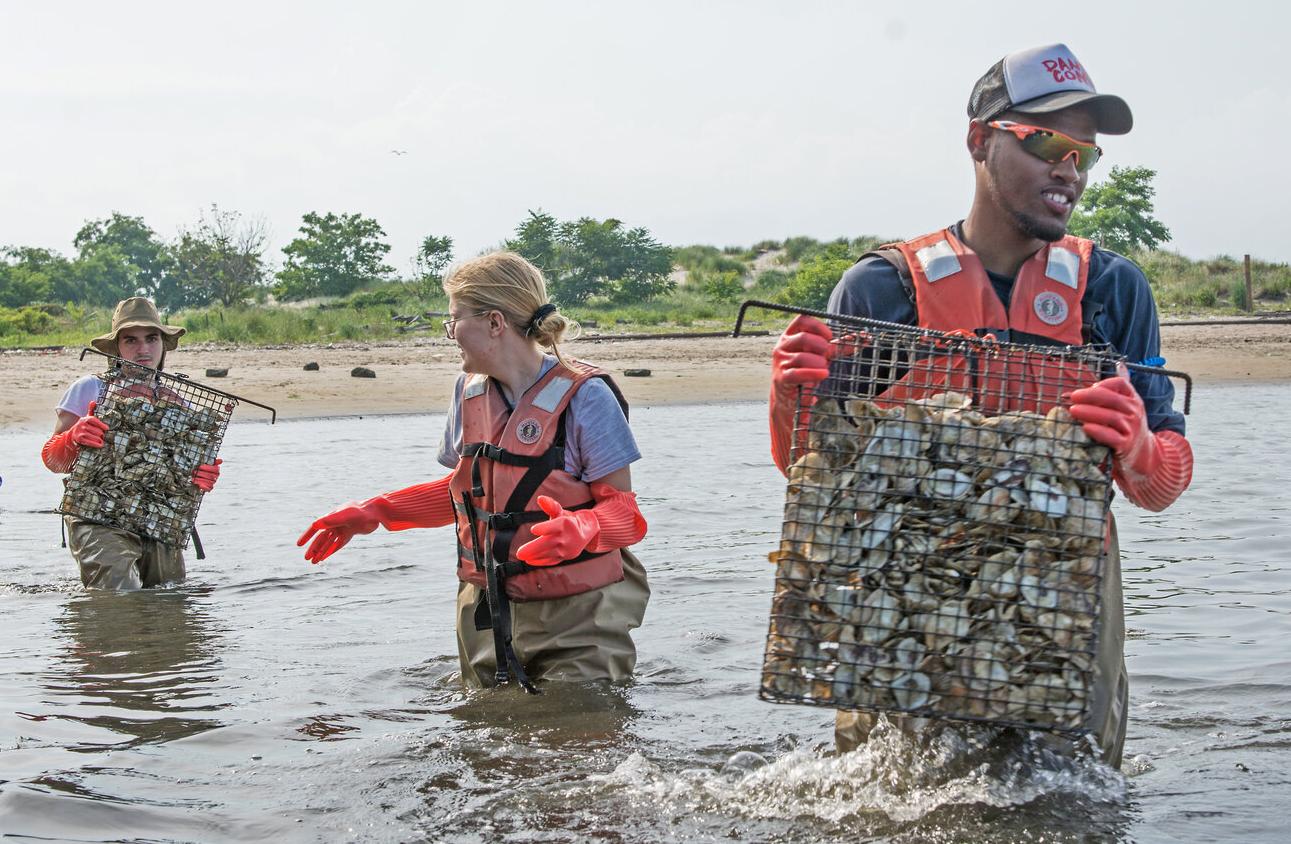
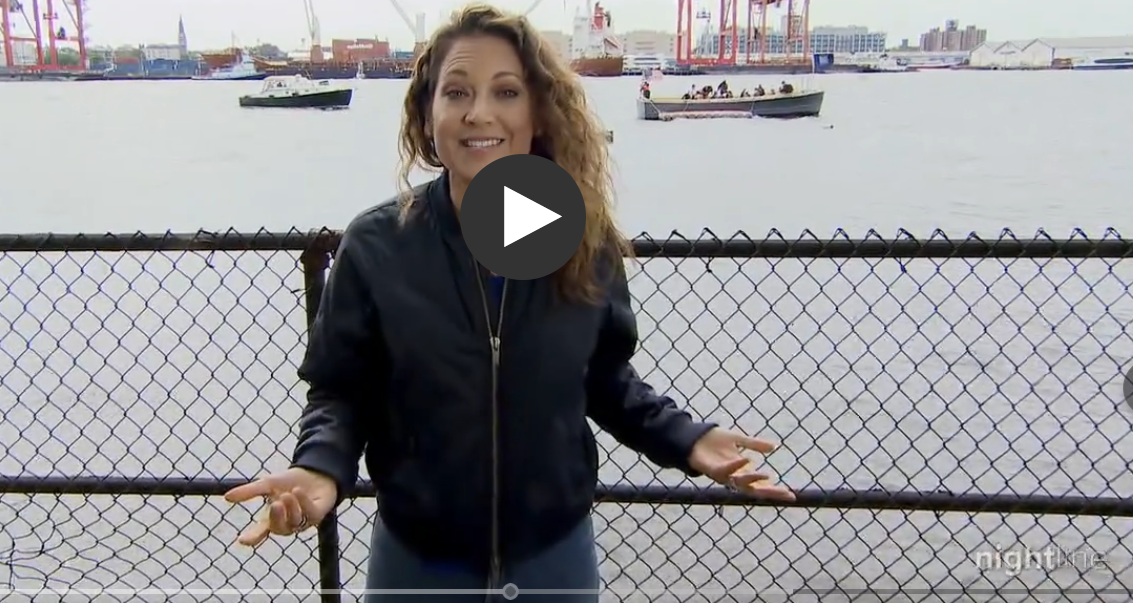
The year is 1620. William Bradford and the Mayflower Pilgrims land on what becomes known as Plymouth Rock, in Plymouth, Massachusetts. Head south about 400 miles south to New York Harbor. Whales, dolphins, seals, seahorses, herring, striped bass, and hundreds of other species in the Harbor enjoy the benefits of oyster reefs — an ecosystem that had already sustained the local Lenape people for generations. At this point in time, New York Harbor was one of the most diverse and dynamic environments not just in North America, but the entire planet. Flash forward to 1906. U.S. President Theodore Roosevelt leaves for a trip to Panama to inspect the construction progress of the Panama Canal (the first time a sitting President of the United States makes an official trip outside of the United States). And New York Harbor is basically lifeless. The absence of oysters is a key reason for this change. A recent story from ABC News (USA) caught my attention. I suggest you watch the video here:
From the ABC story: Oysters filter water and the physical reef creates an ecosystem for other sea life, in addition to becoming a kind of natural speed bump for storm surge that can erode coastlines during storms. "Oysters are probably one of the most sustainable foods we have. They require no feed, no fresh water, no land to produce. And they're doing something good for the environment when they're filtering the water, providing habitat for surrounding fish and invertebrates," said Robert Jones, the global aquaculture lead from the Nature Conservancy. There’s a pandemic aspect to this: with people not eating oysters, the oysters became too large to eat as restaurants closed and seafood and shellfish demand rescinded. Environmental organizations came together to find a way to use those oysters for general betterment. The Nature Conservancy and Pew Charitable Trusts announced plans to buy millions of unsold oysters and return them to the ocean as living reefs. Where does project management come into play here? The story talks about collaboration between key stakeholders, such as The Nature Conservancy, government, schools and something called the Billion Oyster Project. Learn more about this amazing organization here. In the many project management courses I teach, I stress that every project should be linked to an organization’s vision. Here’s the vision statement of the Billion Oyster Project: VISION: A future in which New York Harbor is the center of a rich, diverse, and abundant estuary. The communities that surround this complex ecosystem have helped construct it, and in return benefit from it, with endless opportunities for work, education, and recreation. The harbor is a world-class public space, well used and well cared for—our Commons. The project work being done exemplifies this vision. Have a look at this short video describing the actual tasks involved. The science behind all of this? I’ve taken the following from The Billion Oysters Project site section called “Ecosystem Engineers”. Support The Billion Oyster Project with a donation, won’t you?
Why Oysters? Did you know that New York Harbor was once home to 220,000 acres of oyster reefs? Or, that an adult oyster can filter up to 50 gallons of water a day? The historic evidence of oysters in New York Harbor, combined with the oyster’s reputation as an “ecosystem engineer”, drives us to return New York Harbor to its rightful place as an ecological treasure. Here’s why we need them: Like coral reefs, oyster reefs provide 3D habitat for hundreds of species. Oysters grow off of one another — creating a hardy infrastructure for a lively underwater city of marine wildlife. Reefs are to the ocean what trees are to the forest. Oysters Filter Water Oysters filter water as they eat, which helps clarify the water and remove certain pollutants, including nitrogen. This is very important to a marine ecosystem, because excessive nitrogen triggers algal blooms that deplete the water of oxygen and create “dead zones.” Oysters Reefs are a Natural Storm Barrier Massive oyster reef systems in New York Harbor were once a natural defense against storm damage—softening the blow of large waves, reducing flooding, and preventing erosion.
The project is already producing outcomes:
I love this story because it shows that collaboration, cooperation, vision, with contributions from industry sponsors, educators, and government can make a difference, with solid project management… a pearl, if you will, from a grain of sand. |
NiFTy or Nasty?
|
In this post, we explore the NFT: The Non-Fungible Token. I am only going to give ‘token’ time to defining this, partially because I am still learning about it. But I think you should know about this technology because (1) like it or not, it appears to be “a thing”, and (2) there is a reinforcement of a project management concept on which I blogged about already this month – that of secondary risk. Some of you may recognize the “Charlie Bit My Finger” image I put in the header of this postYou’re seeing a screen capture of a viral YouTube video. I did a Google search of that phrase as I’m writing this and it yielded about 2.3 million results. You may also have read articles, like this one from the BBC, which describes how this video is now being removed from YouTube because it has become an NFT. An NFT video of a kid biting another kid’s finger - that just sold for more than three-quarters of a million dollars. Say WHAT? So we start with, what is an NFT? It’s one of those acronyms for which spelling it out helps make as much sense as a FoaB (Fish on a Bicycle). But here goes: NFT stands for Non-Fungible Token. Right. So now we have to break that down. Fungible is not a word we use every day. If you asked me what it meant yesterday, I would have said fungible was an edible mushroom. But no – it has nothing to do with fungi. I actually have a go-to source for terms like this: Investopedia. Here’s their definition: Fungibility is the ability of a good or asset to be interchanged with other individual goods or assets of the same type. Fungible assets simplify the exchange and trade processes, as fungibility implies equal value between the assets. So what’s fungible? Cash money is an example. I can find an equal exchange for a US$1 bill – twenty nickels, or four quarters or ten dimes are equal exchanges. What’s non-fungible? Again, from Investopedia: If Person A lends Person B his car, it is not acceptable for Person B to return a different car, even if it is the same make and model as the original car lent by Person A. Cars are not fungible with respect to ownership, but the gasoline that powers the cars is fungible. And finally, the last letter of the acronym - token. Remember, we are still just spelling out the acronym here. I hope you now “get” the Non-Fungible part, so let’s move on to TOKEN. Think of tokens as a ‘unit of value’. This applies to cryptocurrency as well as a token like the old-timey ones we used to use to allow admission to the subway. Crypto tokens are cryptocurrency tokens. Cryptocurrencies or virtual currencies are denominated into these tokens – units of value, which reside on their own blockchains. Blockchains are special databases that store information in blocks that are then chained or linked together. This means that crypto tokens, which are also called crypto assets, represent a certain unit of value. So why is this so hot now, literally on fire? Yes, literally, ON FIRE. Have a look at this video. A group of crypto-enthusiasts called Injective Protocol bought a Banksy painting for about $100,000 and then burned it, to make their point about NFTs. The point they were trying to make is about trust. By destroying the original they are trying to build trust in blockchain technology. Whether or not you get this (I’m still wrapping my head around it) there is, as I said above, the aspect I’d like to tackle here is regarding secondary risk. The secondary risk, believe it or not, is the carbon footprint of NFTs. According to a recent article, the positives of NFTs for artists are abundant: Artists around the world were thrilled: NFTs provide the opportunity for them to make significant money on their work, reach a broader audience all over the world and link a digital file to a creator, ensuring authenticity. And with the value of cryptocurrency skyrocketing, some think there's never been a better time to get in on it. We could look at NFTs as a way to respond to the risk of theft of art. That’s nifty. However, that same article goes on to talk about the downside – a nasty side - of NFTs. It turns out that blockchain technology is very energy-intensive. Blockchain incorporates a "proof of work" (PoW) method to create digital assets and it is – by design – highly inefficient and thus uses significant computing power, translating into large amounts of actual energy usage. In fact, the computers are, in effect, trying to solve a complicated mathematical puzzle, something like trying to open a safe by trying every combination. They make millions of attempts every second to solve the puzzle so that they can (on behalf of the ‘miner’) get ‘added to the blockchain’. The higher the value the token, the more difficult these puzzles are to solve, and that makes them increase in value, creating a spiraling need for greater computer power and larger data warehouses and stronger cooling units just to keep up. As you can imagine, this causes an exponential increase in actual power consumption. The NFT open-source network, Ethereum, according to the article, is “currently estimated to (annually) consume roughly 44.94 terawatt-hours of electrical energy, which is comparable to the yearly power consumption of countries like Qatar and Hungary.” So while NFT is ‘nifty’ for artists, it contains a secondary risk. How do we respond to the secondary risk? First: be aware of it – and articles and blog posts like this, I hope, help in that area. Next: make the network less energy-hungry. Efforts such as Greentouch from the past have been successful at reducing the energy consumption of IT networks. This secondary risk provides a tertiary risk – an opportunity – for network engineers to focus on algorithms and technologies to keep the PoW vibrant and focused on security while still being less energy-hungry. This has been done in the past. I have blogged about GreenTouch, a consortium of IT and telecom companies who are fierce competitors but who collaborated on algorithms to reduce the energy use of the technology simply by using clever algorithms to reduce the number of times optical amplifiers transition from a zero to a one. This collaboration resulted in a new optical transceiver which was expected to reduce the overall power consumption of the entire metro access network by 27 percent; this translates to about 4 terawatt hours of electricity saved on an annual basis, equivalent in terms of annual greenhouse gas emissions to taking nearly 600,000 cars off the road. If competitor telecom companies can do that in 2014, think of what an open-source collaboration could do with 7 years of increased knowledge under their belts! In addition to working on better networks, this provides opportunities for computer and data storage companies to improve the physical need for energy of their systems, something they are doing already, but this should motivate them to ‘up their game’ in this area. It also should be a motivator for these companies to source their energy supply on renewables like solar and wind. So while some technical enthusiasts are “burning up” art, they should also be “burning down” work products to reduce the hunger of NFTs and cryptocurrencies in general for carbon-intensive energy.
|

Watt is Success?
|
A short but 'power'-ful post. Say watt? No: Watt. As in James Watt. As in the guy for whom the unit of power was named. His LinkedIn profile photo is shown above. As I have pointed out in many prior posts and in my talks to PMI National Conferences with titles like “Giving You The Green Light to Think Past The End of Your Project”, project success is an elusive, hard-to-define, holistic, not-at-the-ribbon-cutting-ceremony measurement. I want to practice what I preach. So I didn’t want to declare our project to add 24 solar panels to our home’s roof a success when the nice folks from Vivint told me that we were generating power. But today, 17 months in, as we cross well over the 10 Megawatt level, and I continue to see the electric meter run backwards, and as we continue to have the electric company pay us each month, I declare project success. It seems appropriate to make this statement in May, which last year (and probably this year) seems to be our best month (see figure below).
I will continue to update you from time to time on this blog about the ups and downs, but I feel confident that we can now say we have delivered value to the key stakeholders – ourselves as well as the environment. According to my solar calculator provided by Vivint, it looks like we’ve saved about 9 acres of forest in carbon offset equivalency, and according to the EPA (United States Environmental Protection Agency) calculator (try it for yourself!): https://www.epa.gov/energy/greenhouse-gas-equivalencies-calculator It appears that we have taken the equivalent of 1.5 cars of the road for a year. Not bad. So here’s to you, James Watt! More power to you!
|


2nd-ary Risk
|
iStock photo One of the more difficult project management concepts to understand and to put into practice is secondary risk. It’s often confused with residual risk. In simple terms, secondary risk that is caused by a risk response. Now, of course, risk can be positive (opportunity) or negative (threat). Here we’ll go to the dark side and focus on threat – most people consider risk and threat to be the same. You and I know that they are different, but to make the concept of residual risk clear, we’ll stay with threat. So again, a secondary risk is a new threat that is caused by a response to the original threat. We can all think of examples:
All of these examples speak to the idea of risk versus reward, but with a twist – it is really risk response versus punishment. This speaks to thinking carefully about the downsides of our risk treatments or responses. Could the cure be worse than the disease? A recent story by the BBC on tree planting – traceable to an article from the research journal Global Change Biology - found that in some cases, planned tree planting does not increase carbon capture and can have negative effects. caught my attention, considering this idea of secondary risk. The BBC story starts with this bold statement: Tree planting is a brilliant solution to tackle climate change and protect biodiversity, but the wrong tree in the wrong place can do more harm than good, say experts at the Royal Botanic Gardens, Kew. From the abstract of the Global Change Biology Journal: Urgent solutions to global climate change are needed. Ambitious tree‐planting initiatives, many already underway, aim to sequester enormous quantities of carbon to partly compensate for anthropogenic CO2 emissions, which are a major cause of rising global temperatures. However, tree planting that is poorly planned and executed could actually increase CO2 emissions and have long‐term, deleterious impacts on biodiversity, landscapes and livelihoods. So the overall risk response (to climate change) is planting forests. It seems that there are indeed downsides to this – and are those downsides worth it? Are there ways to avoid those downsides? After all, our goal is have a net benefit when we put the risk response into place. Sure, an airbag may – in rare instances – cause injury, but that does that mean we should throw them all away? NO. Airbags save many lives and prevent injuries. We have to figure the downside of a failed airbag and do what we can to assure that they don’t introduce new risk, but we don’t just stop using them due to an instance of secondary risk. Let’s start with the threat that’s causing us to plant forests. Every year we lose one Denmark worth of tropical forest. Is that bad? Well, what do forests provide? Well, they are home to three-quarters of the world's plants and animals. They absorb CO2, and provide humans with food, fuels and medicines. So, yes, I think we’d all agree, losing a Denmark (or three Connecticuts) of forest each year is a threat we cannot tolerate. And planting forests does work, if it’s done properly. Here’s what NOT to do, according to the article: don’t replace natural forests teeming with plants, animals and fungi with commercial plantations with row upon row of timber trees, which will be harvested after a few decades. That actually causes more damage than leaving the forests alone. Turns out that there are 10 “golden rules” for reforestation that, if followed, can prevent those secondary risks: 10 Golden Rules for Restoring Forests (set out in detail below) 1. Protect existing forests first 2. Put local people at the heart of tree-planting projects 3. Maximize biodiversity recovery to meet multiple goals 4. Select the right area for reforestation 5. Use natural forest regrowth wherever possible 6. Select the right tree species that can maximize biodiversity 7. Make sure the trees are resilient to adapt to a changing climate 8. Plan ahead 9. Learn by doing 10. Make it pay
These are explained in detail in the Journal article, which has been made ‘open source’, so feel free to view it here. So what is the takeaway for project managers? First of all, in your Risk Registers, have a place to record Secondary Risks. Think not just about the risk response you propose, but what new threats (or opportunity) that threat response may initiate. Next, think of the ways in which you can respond to THOSE threats – those secondary threats, introduced by your risk response. Secondly, avoid ‘throwing the baby out with the bathwater’. Instead, secure that baby and just throw out the bathwater. In other words, look at the equivalent of the above 10 Golden Rules for your risk response. It takes more work and more thinking through to what happens if your risk response does get activated. But it’s worth it. After all, you don’t want to be the one of the people this guy is talking about, do you? |



