







Guessing is not a strategy: How to build decision velocity with AI and real-time data
June 10, 2026 | Live Webinar

You Can't Get They-ah From Hee-yah
Floating an idea into reality: the other side of the AI Project Paradox
The Environment of the Built Environment: an AI Paradox
6th, 6th Edfition, 6th Edition PMBOK, 7th Edition, 7th Edition PMBOK, 8th Edition PMBOK, 8th Edition PMBOK Guide, Activism, actuarial, actuary, adapt, addition by subtraction, Africa, africa, agriculture, airforce, ajaita, Alaska, amazon, analogous, analytics, ancient, and more power, antarctica, anti-science, apple, apps, architecture, arctic, arrakis, Artificial Intelligence, asch paradigm, Assistant, asthma, astronomy, automobile, automotive, autonomous cars, b, bankhar, Banksy Crypto, basalt, baseball, bats, batter, beauty products, benefit, benefits, Benefits Realization, beyond epica, biases, bicycle, big data, big dfata, big dig, bike, biodiversity, biomedicine, birdhouse, blockchain, blood, blue blood, blue trees, bluefin, bluefin tuna, book review, boston, boston university, Boyce, Brazil, brazil, Breakdown Structures, BS, building, buildings, built environment, built environment, bumblebee, cake, capacitor, car, Carbon, carbon, carbon capture, carbon negative, carbon neutral, carbon pool, carbon sequestration, carbonate, careers, CEO, ChatGPT, chatGPT, chatgpt, chatgpt, chess, China, china, chopsticks, citrus, cli-fi, climate, climate change, climate resilience, climeworks, Clumsy, CO2, co2, CO2 Utilization, coalition, cobalt, coffee pods, cognition, cognitive, Collabortion, colombia, concrete, Conflict, construction 5.0, cool projects xyloscope, cooling, coral, corn, cost of good quality, cost of poor quality, cost of quality, crazy, criticism of project management, cryptocurrency, CSR, csr, data, data analytics, data privacy, datacenter, dataset, death spiral, Decision Making, decomposition, Defense and Climate, definition of a project, deforestation, dependencies, dependency, desert, DIKW, dikw, dimopoulos, disposal, dna, DOD, dogs, dolphins, dream, drilling, drink, dune, dune, dutch, early start, earth, eatlocal, eco-tourism, ecological, economic, economics, EKC, electric grid, electricity, electronics, elysis, embodied carbon, emerging technologies, empower, Energy, energy efficiency, environmental degradation, escalate, escalation, ESG, extreme weather, fallacy, FARC, farming, finance, fish, fish brains, fishing, fix, fixing the earth, flint water, Flint Water Supply, flood, flooding, Food supply chain, food waste, forest, forest for the trees, forestation, forrestgump, frank herbert, Fruitcake, fungus, fusion, Galvao, garage, gas, gasoline, geese, gender equality, gender partnerships, generational differences, Generative AI, gladwell, gold, Goodness, google, Government, GPT, great pacific garbage patch, green, green building, green buildings, green energy, green iguana, green project, green project management, greening, guest post, gyre, harkonnen, Harvesting Benefits, hawasina, hedgehogs, heursitics, historical data, hlb, holitsic, holland, horseshoe crab, human-caused climate change, hydrogen, hydrology, ice, iceland, ignition, iguana, imagery, impact, india, inequality, information, initiatives, injection, insurance, intelligence, interacting risk, internal combustion engine, invasive species, investment, isomer, issue escalation, issues, ITER, jobs, Jupiter, justification, kids, kill point, knowledge, koch brothers, Kuznets, laboratory, LAL, landscape mode, lapampa, launch, LCA, Leadership, Leadership, life cycle analyses, life cycle analysis, lifecycle, Linkedin, liquid, lizard, local, long term, long-term, long-term thinking, look up, loud, maintenance, maker, makermovement, malcolm gladwell, management, marathon, marine biology, market, mars, Martin Luther King, mean, megawatt, MeHg, melting, mercury, metal, Microgrid, microplastics, migration, military, millennial, mindset, minerals, mission, mitigate, MLK, mongolia, museum, museum of london, nature, nematodes, net gain, Net Project Success Score, net zero, netherlands, network, New book, New Jersey, New Practitioners, new york, NFT, nitrogen, noise, noreaster, norway, nova, NPSS, NREL, ocean, ocean cleanup, ocean life, oil rig, oil rigs, oklahoma, oman, only murders in the building, opportunity, overall risk, oxygen, packaging, pareto, PBS, permafrost, persistence, peru, Pharmaceutical, planet, planet.com, planning, plant, plasma, plastic, playground, pm, pm education, pmbok, pmbok guide, pmnetwork, PMXPO-2018, podcast, pollutants, pollution, poop, poor, portfolio, power, power skills, privacy, privacy concerns, professors, program, Program Management, project, project leader, project leadership, project management, project management 3.0, project on fire, project progress, Project Success, project success, projecticity, projectleadership, projectmanagement, projects, psychology, pulse of the profession, purple bacteria, purpose, quiet, rainforest, rationale, reef, refugees, renewable, renewables, Repair, repair, repeatable process, repeatable processes, repurpose, research, resource breakdown strucuture, Resource Management, reversing climate change, revisionist history, rich, rigs2reefs, ripe, risk, risk avoidance, Risk Management, risk mitigation, risk response, risk responses, river, robots, rocks, rules of thumb, rural, rural India, russia, Sarcasm/Irony, satellite, saudi, schedule, sci-fi, Science, science, science-fiction, scientific american, screaming monkeys, sea, sea life, Sea-Level Rise, sea-level rise, seagreens, seawall, seawater, seawater temperature, seaweed. beat;es. farming, secondary risk, selena gomez, sequestration, shipping, skyscraper, SLR, smart cities, smart city, smelting, social, social pressure, soil, solar, solar panels, solar perovkites, solar saheli, sonic, sponge cities, SRI, stage-gate, stagegate, stakeholder, stakeholder management, steward, stewardship, storage, strategy, stupid, success, suffer, sulphur, sunk cost, supercapacitor, supply chain, survey, Sustainability, sustainability, Sustainable Investing, Sustainable Tourism, sybiosis, symbiosis, system 03, TBL, temperature, terraform, terraforming, test, threat, threats, totem, touchscreen, tour, tower, Trains, transparency, transportation, trash, tree, tree species, trees, trillion, triple bottom line, triple constraint, truth to power, UMass, us army corps of engineers, USDA, vacuum, value, venus, vision, voice, voltage optimization, vw scandal, washing machine, waste, wastewater, water, we mean business, whales, Whirlpool, wind, wisdom, women, Women in Project Management, wood wide web, woonerf, Work Breakdown Structures (WBS), world breakdown structure, worms, xian, xylotron, Yale


|
This blog is usually about big things, like converting oil rigs to reefs, or aligning projects and programs with the UN Sustainable Development Goals (SDGs). This time it’s about you. In particular, it’s about your feet. Well, not really your feet, literally, but your plastic footprint, and some personal, small projects that can help you reduce your plastic impact. I came across a fantastic article (paired with a podcast from NPR’s Life Kit) which you can read – and play – from this link. You will find a 24-minute audio clip right there, and/or you can read the article, entitled: The Plastic Problem Isn't Your Fault, But You Can Be Part Of The Solution. From my experience, most project managers are problem solvers and love to be part of a solution – so, read on. The United States was responsible for more plastic trash than any country in the world, says the article, that's millions and millions of tons of plastic waste. Per capita, that boils down to nearly 300 pounds of plastic trash per person(!) per year. In summary, because you can derive the steps and background from the article, it’s about 6 steps, which are only slightly dependent on each other, in fact much of it can be done in parallel, some of which are intended to be ongoing (so not really a project, but a steady-state operation). The six steps are:
I expand these below in outline form:
And finally (this is not one of the six steps, but it’s still important): Don’t beat yourself up over this. Do what you can, but realize that you are but one pair of plastic footprints.
|
|
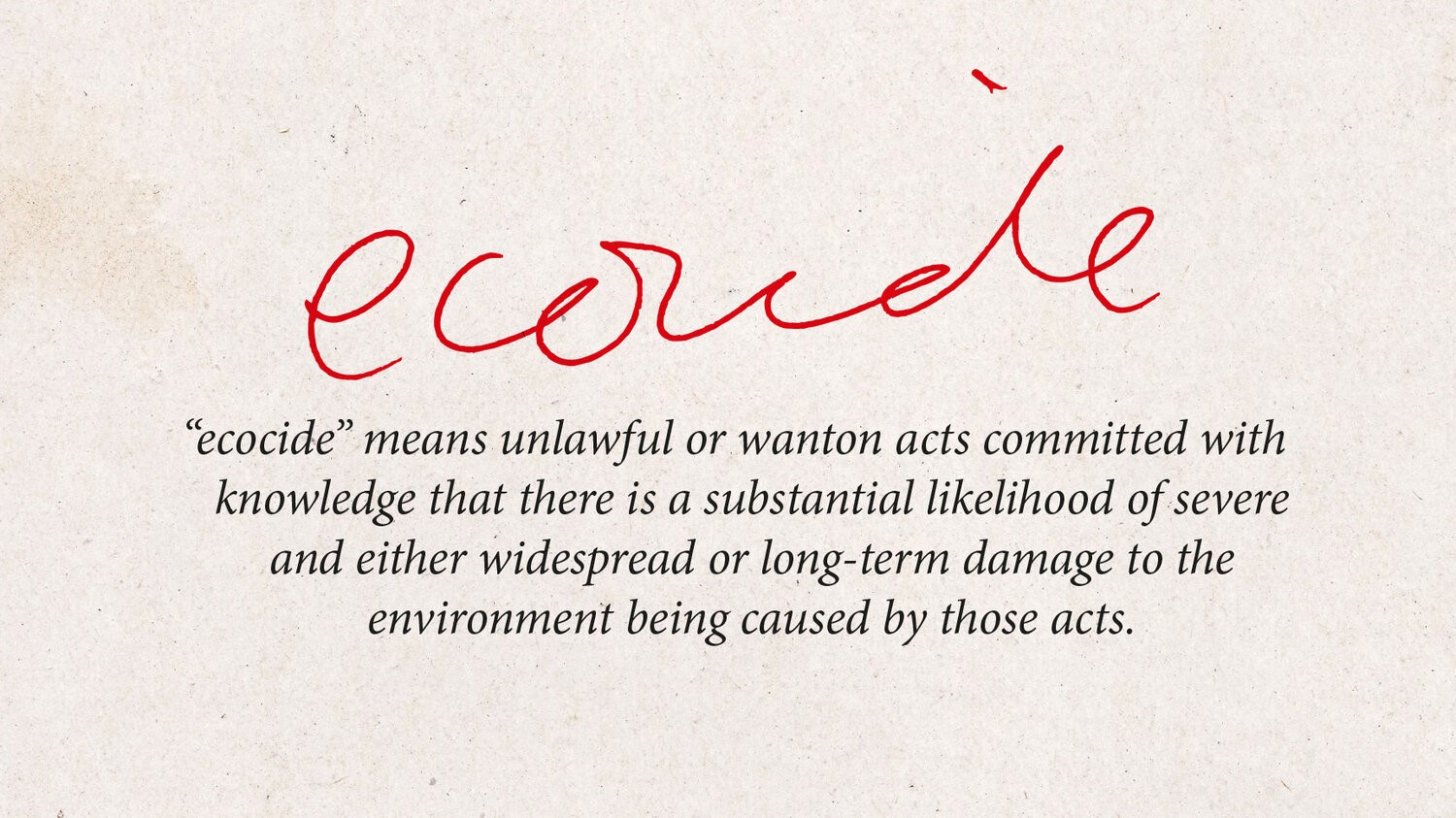
Did you know that there are currently four core international crimes dealt with by the Rome Statute of the International Criminal Court? They are: genocide, war crimes, crimes against humanity, and the crime of aggression. You can read about these four core international crimes (and examples) here. Soon there may be five. An article on this topic, with the curious title: “How 165 Words Could Make Mass Environmental Destruction An International Crime”, from the USA’s National Public Radio website, caught my eye. So what is this 5th Crime? Have you ever heard the word ecocide? Well, that’s it. That is possibly going to become that 5th international crime. Here’s the definition of ecocide:
Image from https://www.stopecocide.earth/expert-drafting-panel
Just this month, an Expert Drafting Panel (see this link for detail) drafted a 165-word statement that would add ecocide as the fifth international crime. Who is this “Expert Drafting Panel”? From the Ecocide Law webpage: The panel was convened by the Stop Ecocide Foundation on the request of interested parliamentarians from the governing parties in Sweden. Expert advice was solicited and a public consultation took place in early 2021 attracting hundreds of responses from legal, political, economic, youth, faith and indigenous perspectives from around the world. All of this material fed into the panel’s deliberations over six months. The panel comprised a mixture of renowned international criminal lawyers, environmental lawyers and legal scholars drawn from around the world, with a wide range of backgrounds and perspectives. The group reported in June 2021 with a core definition text in English and accompanying commentary. Although this seems like it’s something “new”, it’s not. From the NPR article: The intent to make ecocide an international crime isn't new. The idea was brought up by then-Swedish Prime Minister Olof Palme at the 1972 U.N. Conference on the Human Environment. In his speech, he warned that rapid industrial progress could deplete natural resources at unsustainable levels. But even before that biologist and bioethicist Arthur Galston used the word "ecocide" at the 1970 Conference on War and National Responsibility in Washington, D.C. So what are the 165 words? For the purpose of this Statute, “ecocide” means unlawful or wanton acts committed with knowledge that there is a substantial likelihood of severe and either widespread or long-term damage to the environment being caused by those acts. For the purpose of paragraph 1: a. “Wanton” means with reckless disregard for damage which would be clearly excessive in relation to the social and economic benefits anticipated; b. “Severe” means damage which involves very serious adverse changes, disruption or harm to any element of the environment, including grave impacts on human life or natural, cultural or economic resources; c. “Widespread” means damage which extends beyond a limited geographic area, crosses state boundaries, or is suffered by an entire ecosystem or species or a large number of human beings; d. “Long-term” means damage which is irreversible or which cannot be redressed through natural recovery within a reasonable period of time; e. “Environment” means the earth, its biosphere, cryosphere, lithosphere, hydrosphere and atmosphere, as well as outer space. Getting this completed so that the International Criminal Court includes it in the list of crimes is a project unto itself: The steps for getting this to be that 5th international crime:
You can download the full wording here: There is also much more about this here and here. Not everyone agrees. It’s worth listening to skepticism on this (having a variety of views is a good thing). Here are some skeptical thoughts about this from the International Commission of Jurists. I am not a lawyer, and some of this gets pretty geeky (in legal terms), but it is interesting to explore the legal analysis of these 165 words. http://opiniojuris.org/2021/06/23/skeptical-thoughts-on-the-proposed-crime-of-ecocide-that-isnt/ What’s the connection to project management and sustainability? Well, when it comes to responsibility in project management, we should act responsibly (in terms of environmental impact) because it’s the right thing to do. However, knowing that doing otherwise is an international crime – well that adds another whole layer of awareness, doesn’t it? |
|
This is a very brief 'opinion' post to reflect on a recent conference we sponsored at Boston University Metropolitan College, called the Project Management in Practice conference. Last year, one of the themes (and tracks) was Sustainability. We had speakers such as Gilbert Silvius talk about the intersection of project management and sustainability. It was a main focus of our conference. The thing is, this year, the conference themes were Value, Change, and Agile. Not Sustainability. However, what I noticed – what many of us noticed – even the speakers - was that even though Sustainability was not (nominally) the theme, all three tracks “spoke to” the ideas of:
In other words, sustainability was sustainable as a theme, and I think, is more than a theme at a conference. As I hope we will see on 1-August-2021 when the new PMBOK® Guide comes out, and just in general, sustainability – in name or not – is part of our discipline. It may come under the guise of long-term (lifecycle) thinking, or benefits realization management, or value engineering, but these are all aspects of sustainability thinking in project management. We’ll see – but I’m optimistic that project managers are beginning to adopt these ideas, which (again in my opinion) is a very good sign for our profession – for society, and for our planet. |
|
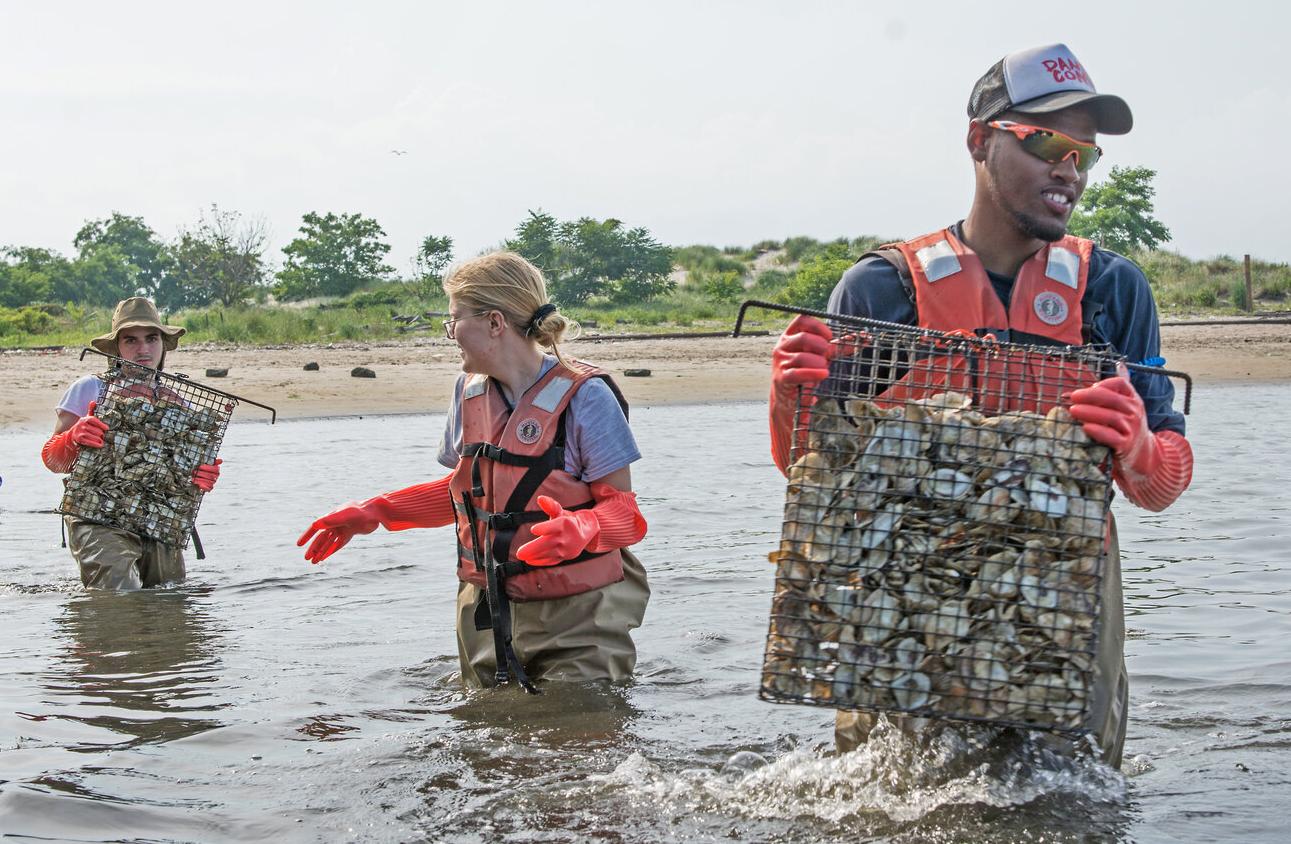
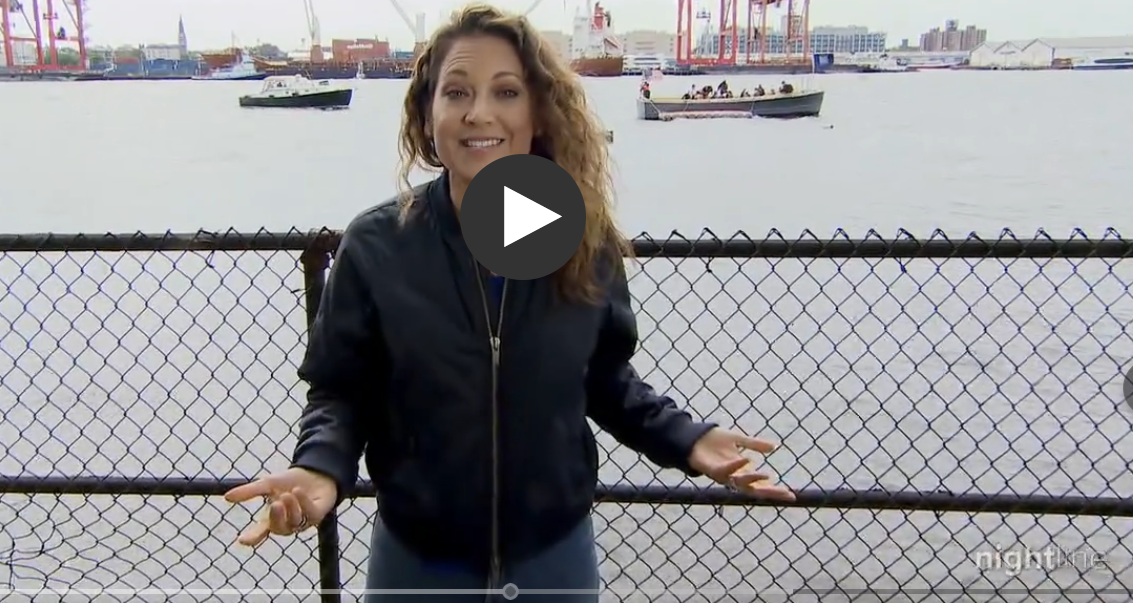
The year is 1620. William Bradford and the Mayflower Pilgrims land on what becomes known as Plymouth Rock, in Plymouth, Massachusetts. Head south about 400 miles south to New York Harbor. Whales, dolphins, seals, seahorses, herring, striped bass, and hundreds of other species in the Harbor enjoy the benefits of oyster reefs — an ecosystem that had already sustained the local Lenape people for generations. At this point in time, New York Harbor was one of the most diverse and dynamic environments not just in North America, but the entire planet. Flash forward to 1906. U.S. President Theodore Roosevelt leaves for a trip to Panama to inspect the construction progress of the Panama Canal (the first time a sitting President of the United States makes an official trip outside of the United States). And New York Harbor is basically lifeless. The absence of oysters is a key reason for this change. A recent story from ABC News (USA) caught my attention. I suggest you watch the video here:
From the ABC story: Oysters filter water and the physical reef creates an ecosystem for other sea life, in addition to becoming a kind of natural speed bump for storm surge that can erode coastlines during storms. "Oysters are probably one of the most sustainable foods we have. They require no feed, no fresh water, no land to produce. And they're doing something good for the environment when they're filtering the water, providing habitat for surrounding fish and invertebrates," said Robert Jones, the global aquaculture lead from the Nature Conservancy. There’s a pandemic aspect to this: with people not eating oysters, the oysters became too large to eat as restaurants closed and seafood and shellfish demand rescinded. Environmental organizations came together to find a way to use those oysters for general betterment. The Nature Conservancy and Pew Charitable Trusts announced plans to buy millions of unsold oysters and return them to the ocean as living reefs. Where does project management come into play here? The story talks about collaboration between key stakeholders, such as The Nature Conservancy, government, schools and something called the Billion Oyster Project. Learn more about this amazing organization here. In the many project management courses I teach, I stress that every project should be linked to an organization’s vision. Here’s the vision statement of the Billion Oyster Project: VISION: A future in which New York Harbor is the center of a rich, diverse, and abundant estuary. The communities that surround this complex ecosystem have helped construct it, and in return benefit from it, with endless opportunities for work, education, and recreation. The harbor is a world-class public space, well used and well cared for—our Commons. The project work being done exemplifies this vision. Have a look at this short video describing the actual tasks involved. The science behind all of this? I’ve taken the following from The Billion Oysters Project site section called “Ecosystem Engineers”. Support The Billion Oyster Project with a donation, won’t you?
Why Oysters? Did you know that New York Harbor was once home to 220,000 acres of oyster reefs? Or, that an adult oyster can filter up to 50 gallons of water a day? The historic evidence of oysters in New York Harbor, combined with the oyster’s reputation as an “ecosystem engineer”, drives us to return New York Harbor to its rightful place as an ecological treasure. Here’s why we need them: Like coral reefs, oyster reefs provide 3D habitat for hundreds of species. Oysters grow off of one another — creating a hardy infrastructure for a lively underwater city of marine wildlife. Reefs are to the ocean what trees are to the forest. Oysters Filter Water Oysters filter water as they eat, which helps clarify the water and remove certain pollutants, including nitrogen. This is very important to a marine ecosystem, because excessive nitrogen triggers algal blooms that deplete the water of oxygen and create “dead zones.” Oysters Reefs are a Natural Storm Barrier Massive oyster reef systems in New York Harbor were once a natural defense against storm damage—softening the blow of large waves, reducing flooding, and preventing erosion.
The project is already producing outcomes:
I love this story because it shows that collaboration, cooperation, vision, with contributions from industry sponsors, educators, and government can make a difference, with solid project management… a pearl, if you will, from a grain of sand. |
|
In this post, we explore the NFT: The Non-Fungible Token. I am only going to give ‘token’ time to defining this, partially because I am still learning about it. But I think you should know about this technology because (1) like it or not, it appears to be “a thing”, and (2) there is a reinforcement of a project management concept on which I blogged about already this month – that of secondary risk. Some of you may recognize the “Charlie Bit My Finger” image I put in the header of this postYou’re seeing a screen capture of a viral YouTube video. I did a Google search of that phrase as I’m writing this and it yielded about 2.3 million results. You may also have read articles, like this one from the BBC, which describes how this video is now being removed from YouTube because it has become an NFT. An NFT video of a kid biting another kid’s finger - that just sold for more than three-quarters of a million dollars. Say WHAT? So we start with, what is an NFT? It’s one of those acronyms for which spelling it out helps make as much sense as a FoaB (Fish on a Bicycle). But here goes: NFT stands for Non-Fungible Token. Right. So now we have to break that down. Fungible is not a word we use every day. If you asked me what it meant yesterday, I would have said fungible was an edible mushroom. But no – it has nothing to do with fungi. I actually have a go-to source for terms like this: Investopedia. Here’s their definition: Fungibility is the ability of a good or asset to be interchanged with other individual goods or assets of the same type. Fungible assets simplify the exchange and trade processes, as fungibility implies equal value between the assets. So what’s fungible? Cash money is an example. I can find an equal exchange for a US$1 bill – twenty nickels, or four quarters or ten dimes are equal exchanges. What’s non-fungible? Again, from Investopedia: If Person A lends Person B his car, it is not acceptable for Person B to return a different car, even if it is the same make and model as the original car lent by Person A. Cars are not fungible with respect to ownership, but the gasoline that powers the cars is fungible. And finally, the last letter of the acronym - token. Remember, we are still just spelling out the acronym here. I hope you now “get” the Non-Fungible part, so let’s move on to TOKEN. Think of tokens as a ‘unit of value’. This applies to cryptocurrency as well as a token like the old-timey ones we used to use to allow admission to the subway. Crypto tokens are cryptocurrency tokens. Cryptocurrencies or virtual currencies are denominated into these tokens – units of value, which reside on their own blockchains. Blockchains are special databases that store information in blocks that are then chained or linked together. This means that crypto tokens, which are also called crypto assets, represent a certain unit of value. So why is this so hot now, literally on fire? Yes, literally, ON FIRE. Have a look at this video. A group of crypto-enthusiasts called Injective Protocol bought a Banksy painting for about $100,000 and then burned it, to make their point about NFTs. The point they were trying to make is about trust. By destroying the original they are trying to build trust in blockchain technology. Whether or not you get this (I’m still wrapping my head around it) there is, as I said above, the aspect I’d like to tackle here is regarding secondary risk. The secondary risk, believe it or not, is the carbon footprint of NFTs. According to a recent article, the positives of NFTs for artists are abundant: Artists around the world were thrilled: NFTs provide the opportunity for them to make significant money on their work, reach a broader audience all over the world and link a digital file to a creator, ensuring authenticity. And with the value of cryptocurrency skyrocketing, some think there's never been a better time to get in on it. We could look at NFTs as a way to respond to the risk of theft of art. That’s nifty. However, that same article goes on to talk about the downside – a nasty side - of NFTs. It turns out that blockchain technology is very energy-intensive. Blockchain incorporates a "proof of work" (PoW) method to create digital assets and it is – by design – highly inefficient and thus uses significant computing power, translating into large amounts of actual energy usage. In fact, the computers are, in effect, trying to solve a complicated mathematical puzzle, something like trying to open a safe by trying every combination. They make millions of attempts every second to solve the puzzle so that they can (on behalf of the ‘miner’) get ‘added to the blockchain’. The higher the value the token, the more difficult these puzzles are to solve, and that makes them increase in value, creating a spiraling need for greater computer power and larger data warehouses and stronger cooling units just to keep up. As you can imagine, this causes an exponential increase in actual power consumption. The NFT open-source network, Ethereum, according to the article, is “currently estimated to (annually) consume roughly 44.94 terawatt-hours of electrical energy, which is comparable to the yearly power consumption of countries like Qatar and Hungary.” So while NFT is ‘nifty’ for artists, it contains a secondary risk. How do we respond to the secondary risk? First: be aware of it – and articles and blog posts like this, I hope, help in that area. Next: make the network less energy-hungry. Efforts such as Greentouch from the past have been successful at reducing the energy consumption of IT networks. This secondary risk provides a tertiary risk – an opportunity – for network engineers to focus on algorithms and technologies to keep the PoW vibrant and focused on security while still being less energy-hungry. This has been done in the past. I have blogged about GreenTouch, a consortium of IT and telecom companies who are fierce competitors but who collaborated on algorithms to reduce the energy use of the technology simply by using clever algorithms to reduce the number of times optical amplifiers transition from a zero to a one. This collaboration resulted in a new optical transceiver which was expected to reduce the overall power consumption of the entire metro access network by 27 percent; this translates to about 4 terawatt hours of electricity saved on an annual basis, equivalent in terms of annual greenhouse gas emissions to taking nearly 600,000 cars off the road. If competitor telecom companies can do that in 2014, think of what an open-source collaboration could do with 7 years of increased knowledge under their belts! In addition to working on better networks, this provides opportunities for computer and data storage companies to improve the physical need for energy of their systems, something they are doing already, but this should motivate them to ‘up their game’ in this area. It also should be a motivator for these companies to source their energy supply on renewables like solar and wind. So while some technical enthusiasts are “burning up” art, they should also be “burning down” work products to reduce the hunger of NFTs and cryptocurrencies in general for carbon-intensive energy.
|
|
"Take care of the luxuries and the necessities will take care of themselves." - Dorothy Parker |