Winding Down: Part 0 of 2


|
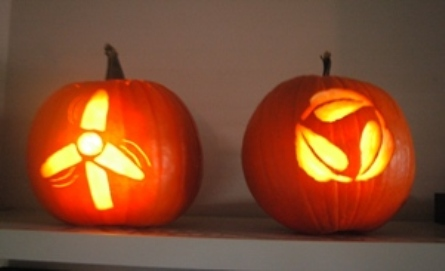
In honor of Halloween (celebrated today in the US and elsewhere) I thought I would just at least start a very scary story. How would you feel if your project never operated – never actually realized any of the benefits and value it was meant to provide? Even worse, what a nightmare it would be if there was also no end in sight in terms of dis-assembling the work you did? This is the case for Wind 1 and Wind 2, renewable energy projects on Cape Cod. I will be tackling this story early in November. It’s going to be a spooky story about stakeholders - but one you can learn from. Stand by. |
Blue-seeum
|
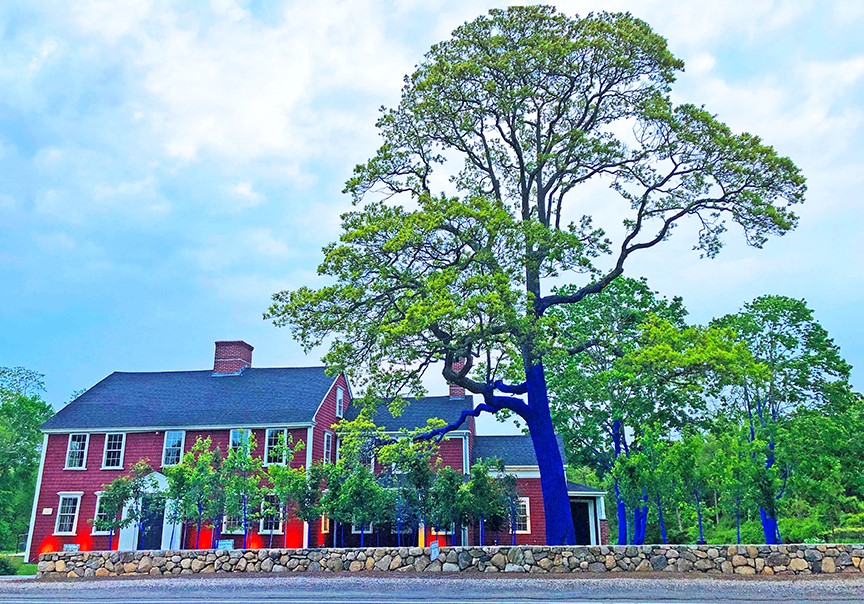
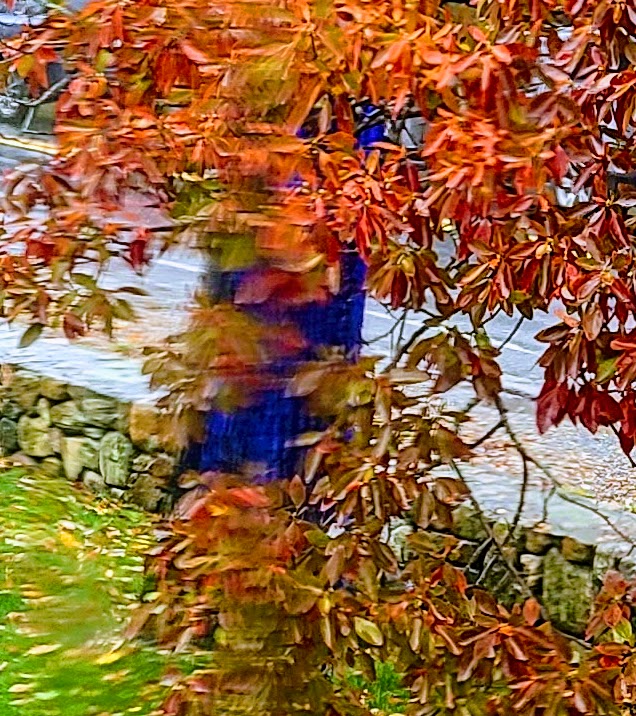
They took all the trees, put ‘em in a tree museum. And they charge the people a dollar and a half just to see ‘em…. I went to see an art exhibit today at the Calhoon Museum in Falmouth, Massachusetts… and ended up focused on something outside the window, instead of inside the museum. And like Joni Mitchell’s lyric above, it was about trees and museums, but not trees in the museum, trees outside the museum, and the trees were painted an unearthly blue so that you really could “see ‘em”, and maybe in a different way. Here's an example of what I actually saw:
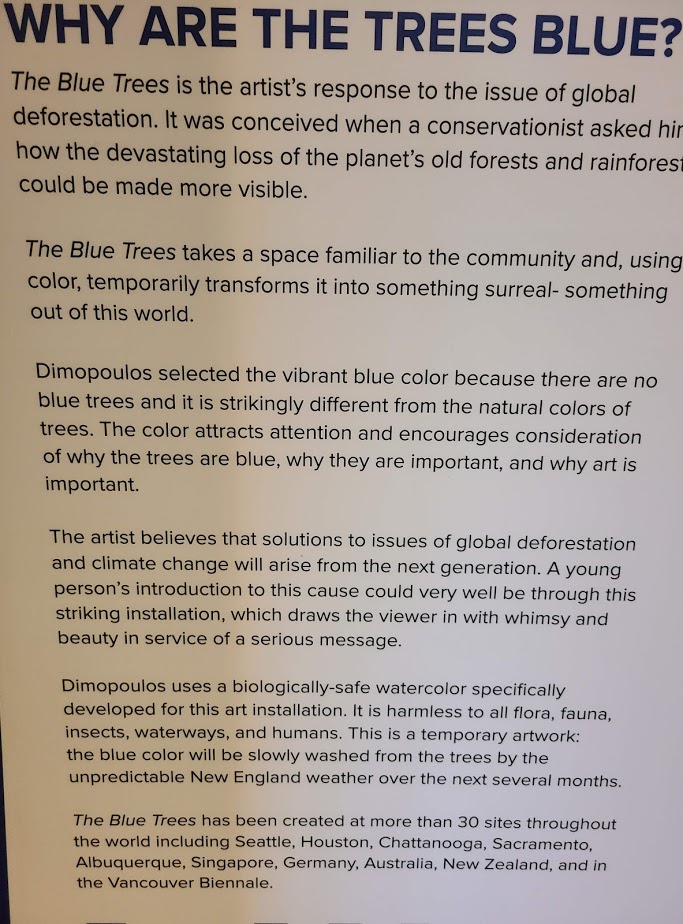
What was that about? Why are these trees all an electric royal blue color? Then I saw this sign:
The artist, Melbourne, Australia-based Konstantin Dimopoulos, says this about the tree project (actually a program): As a conceptual and installation artist I create artworks that are grounded in my sociological and humanist philosophies. In my environmental art installation, The Blue Trees, the colour and the Tree come together to transform and affect each other; the colour changing the Tree into something surreal, while the Tree, rooted in this earth reflects what we may lose. This change highlights ecological issues, such as the ecocide of our forests and climate change, and effects a transformation in the psyche of people by raising our social consciousness referencing how individually and collectively we shape the world we inhabit. The Blue Trees has a strong regenerative aspect to it, an organic work that is continually changing and evolving. From season to season the trees grow through the cycles of nature and the colors begin to change and disappear. Time passing is a part of the concept; time that determines our own existence is measured through these trees. Perhaps the best way to learn about this is with this charming video: "The Blue Trees" in Chattanooga, TN from Public Art Chattanooga on Vimeo. This got me thinking about communications. What an interesting way to communicate a message! Not an email or a text, or an advert, but a community-based display that gets attention and engagement. I'm not suggesting that if your project has some issues you should paint all the trees in your town amber. I'm just thinking that we can think outside the box a little bit when we need to convey a message and take some inspiration from The Blue Trees. And of course, we should pay attention to the message that Dimopolous is sending! After seeing the video, what are your thoughts about this program*? Are you inspired to improve your own messaging? *I call it a program because each city ‘engagement’ is a slightly-different implementation of the art project – it has been done in many cities around the world. Oh. And for those of you who don’t know the Joni Mitchell (or Counting Crows) reference, have a look at this: Learn more about the Blue Tree program at these links: |
Nature is Diabolical. Let's learn its tricks!
|
Photo Copyright © 2013 Jim Moore In this brief post, I hope to do a few things:
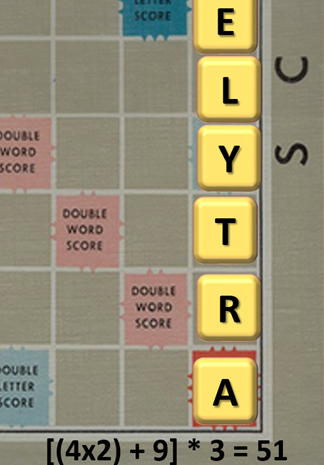
Here we go. Let’s start off with improving your Scrabble game. The word is Elytra. Hey,if you position that word just right (see figure) it can net you 51 points!
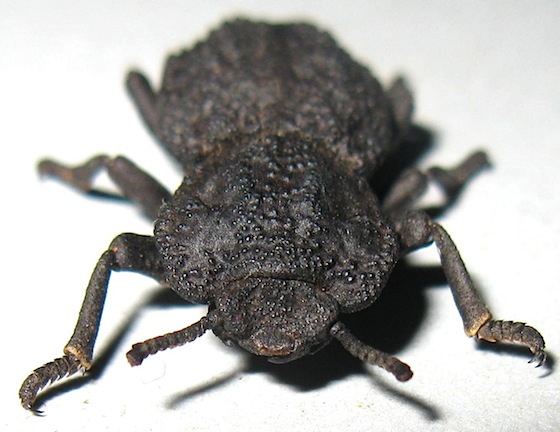
OK, now that I've improved your Scrabble game, let's move from etymology to entomology. So what is “elytra”? Actually it is the plural of elytron, which sounds like a robot villain but is actually the hardened forewings of certain insects, especially beetles. Most beetles use them in flight. However, some beetles have chosen to be earthbound. The Diabolical Ironclad Beetle has made that choice eons ago. Their elytron have fused together to help form a protective shield for this critter. The protective shield in this case is quite amazing, and it’s only recently that scientists have uncovered how this works. Biomimicry Biomimicry is the process (art and science) of emulating what nature does and taking advantage of some of the amazing things that nature has evolved. I have blogged about this in the past, covering, for example, the ‘stickiness’ of the gecko and the new adhesives developed by engineers and scientists at UMass Amherst. If you haven’t seen that post, or the concept, you really should visit this site: https://geckskin.umass.edu/. In the case of the diabolical ironclad beetle, the attribute scientists are after is this level of protection yielded by the beetle’s fused elytron. How are they connected? What’s the trick that allows them to withstand, literally, being run over by a car? In an article from Nature, entitled Toughening Mechanisms of the Elytra of the Diabolical Ironclad Beetle, this is all revealed. The highlights are as follows:
This is very important, because as engineers, project managers, and actually anyone who flies in an airplane, drives a car, or rides a bike, we are interested in how we fasten things to other things (for example, how an engine is attached to a plane wing!). That last one really always concerns me. Blogger's confession: Haven’t you ever been seated near the wing, and looked out in wonder (or fright) at how that heavy engine is connected to the wing? I admit it. I have. Anyway, if we can emulate this form of ‘suture’, we can redesign connectors, strengthening them, avoiding extra weight, and avoiding sources of corrosion and weakness. It’s well explained in the video below from Purdue University. Think about how advances like this – and others from studying nature – can accelerate and improve the deliverables from your projects! |
S'not your granparents' corn
|
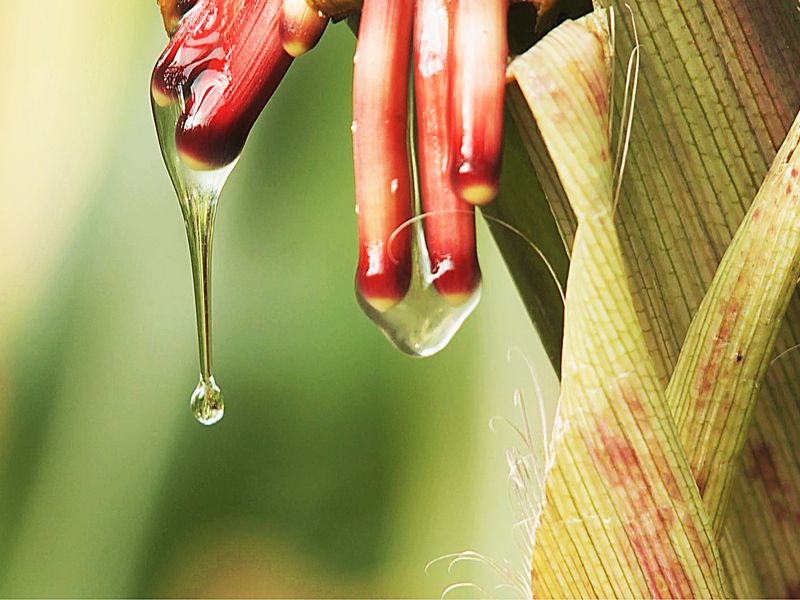
Do you eat food? If so, this article may be of interest to you. As a food eater, you may have some exquisite recipes and know some great gourmet restaurants. But I’m guessing that unless you are also a chemist or a fan of science, you probably do not know about the Haber-Bosch process. However, this process has been a huge boost for the production of food. Its importance is summarized in this Smithsonian article –the one which triggered this blog post: The discovery of the Haber-Bosch process and its refinements, in which nitrogen is stripped out of the air under high heat and pressure in the presence of a catalyst, has led to three separate Nobel prizes. And they are well deserved. It’s estimated that crop yields more than doubled between 1908 and 2008, with synthetic nitrogen fertilizer responsible for up to half that growth. Some researchers have tied the massive growth in human population in the last seventy years to the increased use of nitrogen fertilizer. Without it, we’d have to farm almost four times as much land or have billions of fewer people in the world. Have a look at this TED video that explains the process. As you can see that's a tremendous achievement. And it has won its inventors Nobel prizes. However, like many outcomes that seem 100% positive, they may have a long-term negative outcome. In this case, the negative outcome is almost as strikingly negative as the above makes it seem seems strikingly positive. …making fertilizer via the Haber-Bosch process uses between 1 and 2 percent of the world’s energy, emitting lots of greenhouse gases. And synthetic nitrogen routinely washes off fields into waterways, leading to massive algae blooms that suck up all the oxygen, killing fish and other organisms. So much nitrogen goes into rivers and streams that large dead zones have developed at the mouths of the world’s rivers, including one in the Gulf of Mexico that last year was the size of New Jersey. In fact, this blog recently covered this issue with a post about algae blooms on Cape Cod. So what’s the connection to corn? Well, of course, corn is a food – a major grain. According to the US Department of Agriculture (USDA), Corn is the primary U.S. feed grain, accounting for more than 95 percent of total feed grain production and use. More than 90 million acres of land are planted to corn, with the majority of the crop grown in the Heartland region. Most of the crop is used as the main energy ingredient in livestock feed Wouldn’t it be nice if crops (in this case, corn) could produce its OWN nitrogen? It turns out that there is a type of corn – a very unique type – that does this. The corn variety Sierra Mixe extends aerial roots (see photo from Howard-Yana Shapiro above). These roots produce a sweet mucus that nurtures a type of bacteria resident in the mucus. (And thus the "S'not" in our title). The bacteria, in turn, extracts nitrogen from the air. This nitrogen serves as fertilizer for the corn. It’s ingenious! This breed of corn is grown in the Sierra Mixe region of Oaxaca in southern Mexico, part of the region where corn was first domesticated by Native Americans thousands of years ago. Now, if this capability can be added to conventional corn – it could reduce the need for nitrogen fertilizer and would make a huge difference in the problems caused by the Haber process reviewed above. But how? What are the projects that will get us there? From the article, Alan B. Bennett of the University of California, Davis—along with Shapiro and other researchers—began using cutting-edge technology to look into the nitrogen-fixing properties of the phlegmy corn, finding that indeed, bacteria living in the mucus were pulling nitrogen from the air, transmuting it into a form the corn could absorb.
To learn more about the advantages of getting nitrogen out of this food cycle, have a look at this interview with scientist Dr. Mark Sutton. In it, he has a very interesting analogy of nitrogen as “The Godfather:: Just like climate change, when we talk about the increase of CO2 for nitrogen we are talking about major changes over the last century. With the mass production of nitrogen fertilizers following the 1950s, we have doubled the amount of nitrogen compounds in the world. I would say that climate change is an easy issue. Maybe somebody else will not agree, but I say so because it is a single focal thing: burning things produces carbon dioxide, which leads to climate change. It is complicated to fix, but easy to explain. As for nitrogen, the problem is that it is everywhere and it is doing all sorts of things. It's like the godfather of pollution: you see the results but you don't see the godfather. In part 2 of this corny series I will provide more detail on the Sierra Mixe corn, and the project to embed this trait in our domestic corn. I plan to also include an interview with one of the principals involved in the research! Keep you “ears” tuned to this channel. |
No Laughing (Gas) Matter
|
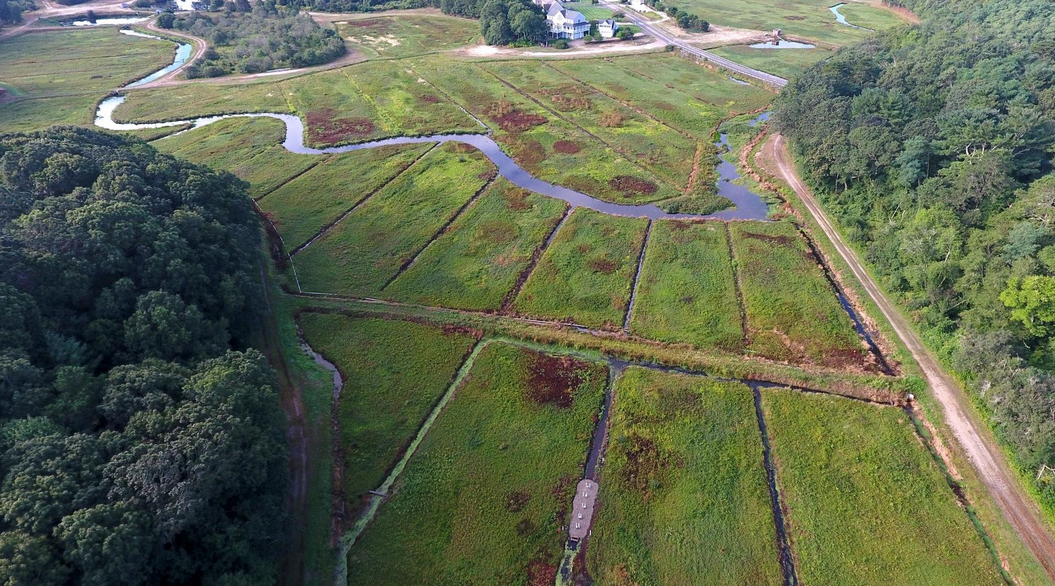
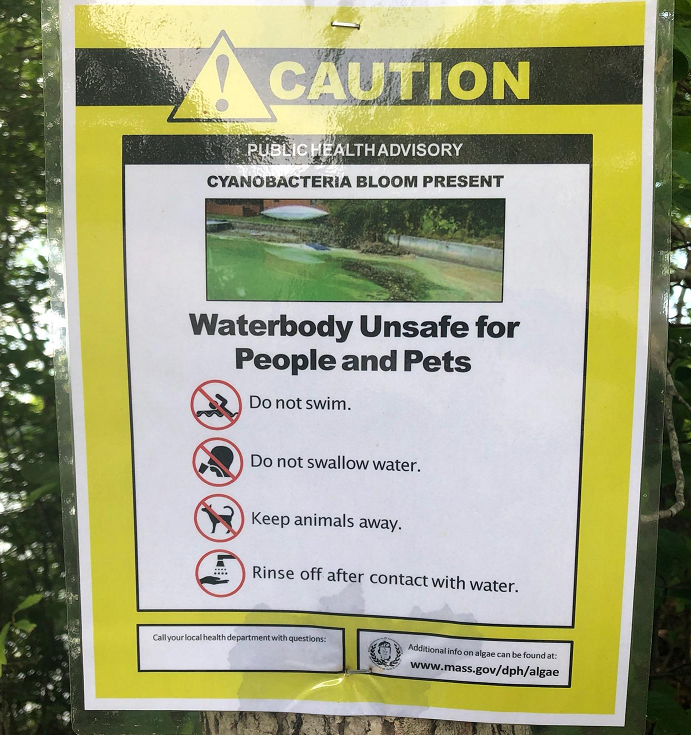
You can’t see nitrogen. You can’t taste or smell it, either. You know it, though – it’s that stuff, which, when combined with oxygen makes nitrous oxide - ‘laughing gas’. However, in some other forms, nitrogen is no laughing matter. To quote the US EPA (yes, even this current EPA), “Nutrient pollution is one of America's most widespread, costly and challenging environmental problems, and is caused by excess nitrogen and phosphorus in the air and water.” Here on Cape Cod, a beautiful peninsula ‘arm’ extending from the Massachusetts mainland, farming is a big industry, alongside to the main industry here, tourism. Corn, cranberries are grown in quantity here. The EPA goes on to say: “Nitrogen and phosphorus are nutrients that are natural parts of aquatic ecosystems. Nitrogen is also the most abundant element in the air we breathe. Nitrogen and phosphorus support the growth of algae and aquatic plants, which provide food and habitat for fish, shellfish and smaller organisms that live in water. But when too much nitrogen and phosphorus enter the environment - usually from a wide range of human activities - the air and water can become polluted. Nutrient pollution has impacted many streams, rivers, lakes, bays and coastal waters for the past several decades, resulting in serious environmental and human health issues, and impacting the economy.” So, nitrogen is important, but if we fail to manage it properly, we fail. A project here on Cape Cod is aimed at stopping that failure. As reported in today’s Cape Cod Times, it is a joint brainchild of the Barnstable Clean Water Coalition, the US EPA, and Mount Holyoke College. This partnership of stakeholder sponsors is building a bioreactor to act as a collection system for nitrogen-laden sources, such as septic systems, that affect key watershed areas in the Marston Mills area of Cape Cod – in particular, the Marston Mills River. The system is a maze of ‘beds’ of woodchips, alum, and biochar, which can filter the nutrients from the water – to intercept the nitrogen. The pilot project has a goal: determine if the bioreactor can assist in the removal of nutrients, including nitrogen, before surface water flows from the bog and into the river (and Cape Cod Bay). This is particularly important since nitrogen can cause toxic cyanobacteria blooms.
From the article: “We want to intercept those nutrients before they reach the river,” said Casey Dannhauser, special projects manager for the Clean Water Coalition. I reached out to Casey, who provided said "Projects like this wouldn't be possible without our partners. We started meeting weekly just before COVID-19 struck and it would have been really easy to shelve the project until the world was in a better place. Instead they continued to bring their expertise and technical assistance to the virtual table and make the bioreactor a reality despite a global pandemic." She also provided this video: It’s “only” a pilot project, but it’s an important step forward in the reduction of nitrogen and the reduction of cyanobacteria. Watch this space for updates and/or a follow-up article about this bold and interesting project! |