


Boldly Break the Bulky Boundaries of Bureaucracy!


|
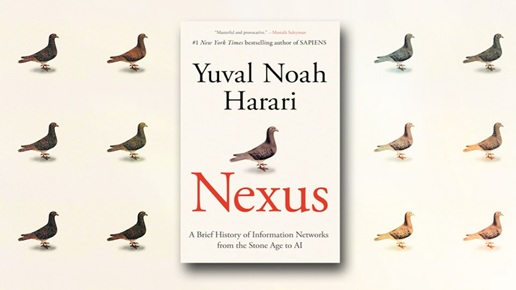
Well, here I am, sitting at a writing desk, working on this week’s blog post for People, Planet, Profits, and Projects. Looks like that puts me in a box called “bureaucrat”. What does that mean? Well, my writing desk also serves as a reading desk. And I am reading Nexus, by Yuval Noah Harari. It’s an amazing read. I want to share one gem from the book with you here in this post.
So about that thing… that bureaucrat thing… (quotes from Harari are italicized and are in sky blue.
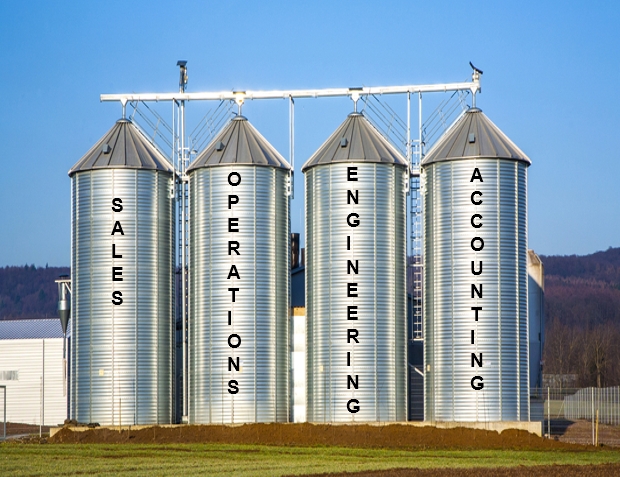
Bureaucracy literally means “rule by writing desk.” The term was invented in eighteenth-century France, when the typical official sat next to a writing desk with drawers—a bureau. At the heart of the bureaucratic order, then, is the drawer. Bureaucracy seeks to solve the retrieval problem by dividing the world into drawers, and knowing which document goes into which drawer. The principle remains the same regardless of whether the document is placed into a drawer, a shelf, a basket, a jar, a computer folder, or any other receptacle: divide and rule. Divide the world into containers, and keep the containers separate so the documents don’t get mixed up. This principle, however, comes with a price. Does this sound familiar, project managers? I’ll give you a hint. Three letters, starting with W and ending with S – and a B in the middle. Yep, this is our very basic practice of creating a Work Breakdown Structure. So, what’s the price that Harari’s talking about? Instead of focusing on understanding the world as it is, bureaucracy is often busy imposing a new and artificial order on the world. Bureaucrats begin by inventing various drawers, which are intersubjective realities that don’t necessarily correspond to any objective divisions in the world. The bureaucrats then try to force the world to fit into these drawers, and if the fit isn’t very good, the bureaucrats push harder. In other words, the drawers (perhaps our workstreams of a WBS?) may connect to the bureau, but are disconnected from the rest of the furniture, the rest of the room, the rest of the world. This is really the overall theme of People, Planet, Profits, and Projects. I have found Nexus to be a treasure trove of ideas for project managers who want to become Project Leaders. You will see more diamonds extracted from this mine here on this blog. Getting back to this post, though - the irony of silofication here is that although we will – out of good practice, force our projects’ work into silos (workstreams), we, as project leaders, should be silo-busters. Harari uses something familiar to me as an example – the world of academia: Consider, for example, how universities are divided into different faculties and departments. History is separate from biology and from mathematics. Why? Certainly this division doesn’t reflect objective reality. It is the intersubjective invention of academic bureaucrats. The COVID-19 pandemic, for example, was at one and the same time a historical, biological, and mathematical event. But the academic study of pandemics is divided between the separate departments of history, biology, and mathematics (among others). Students pursuing an academic degree must usually decide to which of these departments they belong. Their decision limits their choice of courses, which in turn shapes their understanding of the world. ….
Harari goes on with his example, using academic journals, and the way they are organized in “drawers”: … journals are divided by discipline, and publishing an article on virus mutations in a biology journal demands following different conventions from publishing an article on the politics of pandemics in a history journal. There are different jargons, different citation rules, and different expectations. Historians should have a deep understanding of culture and know how to read and interpret historical documents. Biologists should have a deep understanding of evolution and know how to read and interpret DNA molecules. As project managers – or better yet – as project leaders, we would hopefully sense the need to bust these silo walls and build a cross-functional, effective, project-focused team. The question is, do we as project leaders escape our OWN silo of project management thought, or do we instead let ourselves get trapped in a time-boxed world that ends with the end of the project and get constrained into scope-boxed world that considers only the immediate project stakeholders and sponsors? Or do we think more broadly, more holistically, more in the long-term? Harari continues with a point that really cuts to the core of not just this blog post, but the blog (People, Planet, Profits, and Projects) itself: A bureaucrat tasked with increasing industrial production is likely to ignore environmental considerations that fall outside her purview, and perhaps dump toxic waste into a nearby river, leading to an ecological disaster downstream. If the government then establishes a new department to combat pollution, its bureaucrats are likely to push for ever more stringent regulations, even if this results in economic ruin for communities upstream. Ideally, someone should be able to take into account all the different considerations and aspects, but such a holistic approach requires transcending or abolishing the bureaucratic division. If you consider ‘increasing industrial production’ to be a project (which it is), and you consider (as distasteful as it is) yourself the bureaucrat in this scenario – the project manager of the production transformation initiative (project), then the “someone” Harari mentions above is you – and the transcending he’s talking about is on you. It’s about that long-term, holistic thinking that will indeed make you a better project manager. I highly recommend Nexus as nearly mandatory reading for project managers who want to be project leaders. As I said, this is just scratching the surface of one topic in Nexus. There is more to come. In the meantime, Medium has a nice take on this part of the book as well, you can read that here. Harari, Yuval Noah. Nexus (p. 51). Random House Publishing Group. Kindle Edition |

Plan B for Project Leaders - or is it Plan B[ai] ?
|
In this post I'm joined by longtime friend and expert aerospace engineer and project leader, Dr. Luigi Morsa (see below the article for his bio and photo). In this post we make a distinction between project manager and project leader. For excellent treatment of that topic, see another longtime friend's post - I'm talking about the fantastic Cornelius Fichtner - see his post here.
---- What is a "Plan B"? Having a "Plan B" is like an unwritten rule of survival in life. Whether it’s a backup career, an alternative strategy in business - having options - is key. In personal life, it’s about resilience—whether that’s adjusting plans when dreams take a detour or embracing unexpected opportunities. In the business world, Plan B often means pivoting when VUCA* strikes; for example, the market shifts, the competition intensifies, new technology pops up, or geopolitics affects your business. You also need options for new revenue streams if the primary model isn’t working. Project leaders are already accustomed to considering a Plan B (and C, D... if necessary!). In this article we will take a closer look at the differences between having a Plan B in business and in the daily work of Project Managers and what else (and of course, it’s Artificial Intelligence these days) that can facilitate the decision-making process of conceiving, defining, and adopting a Plan B. *Volatility, Uncertainty, Complexity, Ambiguity Project Managers, Project Leaders, and Entrepreneurs Project Managers are definitely part of a business; however, they are not necessarily the ones who created the business, as businesses are founded by Entrepreneurs or company creators. Also, we’ll use the term Project Leader here to distinguish them from a day-to-day project manager. The Project Leader thinks more broadly and with more business acumen than a project manager. To understand the difference between having a Plan B in business in general and in a project, let's start with the definitions (simple) of Project Manager, Project Leader, and Entrepreneur. This will help in understanding why, in project management, the definition of a Plan B (discussed in the next section) can be more structured and, to a certain extent, automatable.
In the remainder of the article we will favor the use of the term Project Leader, indicating that this is the preferred behavior pattern for project managers – whatever their title. In essence, a project manager – or even a project leader - often operates within structured environments, while an entrepreneur thrives in uncertainty, forging their own path. A project manager executes a plan, whereas an entrepreneur creates one. Interestingly, a project manager can also experience an entrepreneurial environment when working as an Innovation Project Manager. Innovation management demands a different mindset compared to the linear thinking traditionally used in project management [1]. For this reason, understanding the entrepreneurial perspective is valuable.
Plan B for Project Managers and Entrepreneurs There are several perspectives on how project managers and entrepreneurs approach contingency planning and adaptability.
Some experts argue that project managers and entrepreneurs share common traits, such as risk-taking and leadership, but differ in their execution. A study from the Association for Project Management (APM) highlights that entrepreneurs often lack the safety net that project managers have, making their approach to risk more instinctive and dynamic [4]. Since project managers often make recurring decisions or face similar situations repeatedly, as explained in the next section, tools like artificial intelligence can be highly beneficial in supporting their decision-making. Artificial Intelligence and Plan B Having a Plan B is all about preparing for uncertainty, which naturally involves assessing the risks of an event or decision. Plan B isn’t just about reacting to failure—it’s about proactively considering your responses to risks – both opportunities and threats - before they arise. Therefore, Plan B is closely linked to concepts and practices like risk management, scenario analysis, and decision-making. In this regard, artificial intelligence can play a significant role in supporting project managers. Below are some examples.
Conclusions and Final Advice Plan B is essential for project leaders because they operate in environments full of VUCA—tight deadlines, evolving requirements, stakeholder expectations, ambiguous instructions, complicated systems, noise-filled communications, and unforeseen challenges. A backup plan ensures that when things don’t go as intended, there’s a structured alternative to keep your project on track. Some risks are recurring and, to some extent, can be monitored in their evolution and predicted. For this reason, artificial intelligence can be an excellent ally for the project leader in better defining a Plan B and determining when it should be implemented. Things become a bit more complicated when dealing with innovation. In this context, the attitude – and mindset - of the innovation project leader resembles that of an entrepreneur. Decisions are often driven by instinct, vision, focus, and the desire to achieve a specific goal. Things become more complex when there are no prior experiences to draw upon. In such cases, the risk lies in delaying the introduction of a Plan B. Robert Chess, a lecturer in management at Stanford Graduate School of Business, notes that the positive attitude that usually motivates an entrepreneur can also blind them to signs that it’s time to consider an alternative plan [8]. He underlines that in the biotech industry, where scientific research demands long product development lead times, 80% of firms are successful in areas very different from their original ideas. Considering the above considerations, here are two key recommendations for a project leader: 1. Embrace AI (with your own human critical thinking, of course). As it has been emphasized by many: “AI is not going to replace people, but people that use AI may be replacing those that don't” [9][10][11]. 2. Stay positive while avoiding blindness of the negative. The key is to consistently strike a balance between optimism and realism. In this regard, Robert Chess points out that objective data should never be ignored. For this reason, it can be valuable to have a trusted adviser outside your immediate circle—someone who can help you maintain objectivity when evaluating that data [8]. Now go back to recommendation (1) above, and use AI to help you “see” the negatives and to have a conversation [12] with AI about your Plan B. REFERENCES 1. Harold Kerzner, “Innovation Project Management”, 2023 Wiley. 2. Waite, C. J. W. “Is there an entrepreneurial dimension to managing projects?” Paper presented at PMI® Global Congress 2006—North America, Seattle, WA. Newtown Square, PA: Project Management Institute. 3. Amela Trokić, “Entrepreneurial Project Management – Cross-Fertilization between the Fields”, PM World Journal, Vol. V, Issue II – February 2016. 4. Sally Percy, “Project manager or entrepreneur?”, https://www.apm.org.uk, 24 Nov 2014. 5. Stephanie Baladi, “15 AI prompts every project manager should be using”, www.glean.com, Feb 13, 2025. 6. Institute of Project Management, “The 6 Best AI Project Management Tools to Help You Succeed”, https://projectmanagement.ie, 20 Oct 2023. 7. Antonio Nieto-Rodriguez and Ricardo Viana Vargas, “How AI Will Transform Project Management”, https://hbr.org, February 2, 2023. 8. Deborah Petersen, “How to Know When It is Time to Switch to Plan B“, https://www.gsb.stanford.edu/, September 11, 2015 9. Annabel Murphy, “Adobe: ‘AI is not going to replace people, but people that use AI may be replacing those that don't’”, www.euronews.com, June 18 2024. 10. Lakshmi Varanasi, “AI won't replace human workers, but 'people that use it will replace people that don't,' AI expert Andrew Ng says”, www.businessinsider.com Jul 28, 2024. 11. Karim Lakhani, “AI Won’t Replace Humans — But Humans With AI Will Replace Humans Without AI,” Harvard Business Review, August 04, 2023. 12. Silberman, Maltzman, Abramo, Kanabar, “AI-Powered Leadership: Mastering the Synergy of Technology and Human Expertise”, Pearson, March 2025, https://www.oreilly.com/library/view/ai-powered-leadership-mastering/9780135429549/ Luigi Morsa, PMP, Ph. D. Luigi Morsa (Ph.D.) is an Aerospace Engineer and Project Manager working in the Aircraft Industry in Germany. The passion for project management has led Luigi to contribute to two books by Dr. Harold Kerzner, the pioneer and globally recognized expert in project management. Luigi wrote two case studies about the Aircraft industry for Project Management Case Studies, 5th and 6th Editions (Wiley, 2017, 2022), two sections (Open Innovation in Action; The Project Manager’s Role in Developing Innovation Skills and Ideas in People) and the chapter “Innovation Management Software” for Innovation Project Management 1st and 2nd editions (Wiley, 2019, 2023). He wrote with Richard Maltzman, PMP and Master Lecturer at Boston University Metropolitan College, the chapter “10 Lessons Learnt from Irresponsibility in Project Management” for the book De Gruyter Handbook of Responsible Project Management (De Gruyter, 2023). In 2018, Luigi was a speaker at the Project Management Institute EMEA Congress (Berlin) to discuss the complexity of the aircraft industry market, with particular emphasis on the relationship between product and customer needs. He presented at the 18th Annual Project Management in Practice Conference (Boston, 2024) the latest achievements of the Artificial Intelligence software in Project/Innovation Management. In November 2024 he was a speaker together with Richard Maltzman at the International Project Management Day by IIL with talk “Human-AI Synergy in Practice: From Traditional to Innovation Project Management”. Luigi has been contributor for the International Institute of Learning Blog since 2019 with articles that cover themes related to Employee Engagement, Innovation, Team Management, Risk Management, Conflict Management, Agile, AI. Dr. Luigi Morsa
|


Silofication versus Systems Thinking in Projects
|
Following up on my last post (You’ve Come A Long Way, Babushka”), this post is meant to be an example of how the concept of Systems Thinking fits into the intersection of project management and sustainability, and how becoming adept at this intersection can advance you from project manager to project leader. Unfortunately, there are resplendent examples. The Flint, Michigan water supply cutover, the Aral Sea Desiccation, the Columbia Gas explosions in Massachusetts’ Merrimack Valley, and Volkswagen’s “dieselgate” are just a few. We may explore some of them in future posts. This post focuses on the Bura Irrigation and Settlement Project in Kenya, both in its original deployment and (luckily) in a revamped version of the project. See maps below for orientation.
Background The original Bura Irrigation and Settlement Project, launched in 1977, aimed to develop approximately 6,700 hectares of irrigated land and settle around 5,150 landless families. Despite being completed within its revised timelines and budget constraints, the project faced numerous challenges.
Note: sources for this information are listed at the end of this post. Systems Thinking Lessons from the Bura Irrigation Settlement Project Had the planners of the Bura Irrigation Settlement Project adopted a systems thinking approach, many of the project’s adverse outcomes—economic inefficiency, social distress, and ecological degradation—could have been anticipated and mitigated. A key failure was the lack of integration across subsystems: the project emphasized rapid irrigation infrastructure and settlement development without accounting for the interdependencies between environmental sustainability, social well-being, and long-term economic viability. This was failure to understand the interrelationships of these elements. For example, neglecting to implement fuelwood plantations led settlers to overexploit nearby forests, contributing not only to biodiversity loss but also to an unsustainable fuel source that burdened household labor and undercut food production efforts. Moreover, health and social dynamics were largely ignored in the initial project logic. For example, the perspective of the farmers was largely ignored. Settling diverse communities without robust health infrastructure led to the spread of diseases like malaria and schistosomiasis, weakening labor productivity and increasing mortality—factors that directly impacted agricultural output and economic returns. Simultaneously, environmental consequences such as soil erosion from premature land clearing, contamination of the Tana River from biocide runoff, and disruption of wildlife corridors not only damaged the ecosystem but incurred hidden long-term costs that drained the already struggling economic model. Systems thinking would have required the planners to recognize that success in one domain—such as infrastructure delivery—cannot offset failures in others. With systems thinking in mind, they could have incorporated robust stakeholder input, interagency coordination, and proactive environmental and social safeguards, the Bura project could have achieved more resilient and equitable outcomes. Instead, its singular focus on output metrics (hectares cultivated, families settled) over outcomes (sustainable livelihoods, environmental health) yielded biased perspectives and turned what was meant to be a flagship development initiative into a cautionary tale. The planners of the Bura Irrigation Settlement Project were hindered from applying systems thinking by a combination of institutional, political, cognitive, and practical barriers—many of which are common in large-scale development efforts, especially those led by multi-agency, multi-national partnerships. Why Systems Thinking Was Absent in the Bura Irrigation Project The planners of the Bura Irrigation Settlement Project were hindered from applying systems thinking by a combination of institutional, political, cognitive, and practical barriers—many of which are common in large-scale development efforts, especially those led by multi-agency, multi-national partnerships. 1. Overvaluing only certain distinctions The project was designed around visible, measurable indicators of success: number of hectares cultivated, number of settler families installed, irrigation canals completed, and cotton yields. This output-driven mindset—often reinforced by donor requirements—encouraged a narrow focus on infrastructure delivery and immediate agricultural productivity. Intangible or longer-term systemic indicators like environmental degradation, health dynamics, and social cohesion were sidelined or not measured at all. 2. Political and Donor Pressures With financial support from the World Bank, and others, there was significant political pressure to deliver visible results quickly. National leaders, keen to demonstrate development progress, prioritized speed and scale over inclusiveness or resilience. At the same time, donor agencies of the 1970s–80s often lacked strong environmental or social safeguards. As noted in the report, the World Bank’s own environmental policies had not yet evolved into the more robust frameworks we see today. This institutional lag encouraged a 'build now, fix later' mentality. 3. Limited Local Engagement and Feedback Loops The project was designed and largely executed in a top-down manner, with minimal involvement of local communities in planning or decision-making. This not only led to the neglect of local knowledge systems—such as sustainable riverine agriculture and forest use by the local residents —but also eroded community ownership. Without effective feedback mechanisms or iterative review structures, early warning signs (like wood shortages, illness, or settler attrition) failed to trigger adaptive responses. In fact, the project planners were unaware of these risk triggers. 4. Cognitive Biases and Silofication They were not aware of the system within which they worked. Engineers focused on canal design, agronomists on cotton yields, and economists on repayment models—each optimizing their part while overlooking the whole. This siloed approach led to cascading failures: for example, ignoring fuelwood needs led to forest destruction, which in turn created erosion and worsened settler hardship. In summary, the absence of systems thinking in Bura was not due to ignorance of the issues, but rather to structural, cultural, and institutional blind spots that prioritized speed, scope, and siloed expertise over holistic, adaptive, and inclusive design. The result was a project that fulfilled its blueprint but failed its purpose. So…What Went Wrong? Siloed Thinking.
*If you want a refresher on how DSRP plays into this, please revisit the previous post and the outstanding 11-minute video embedded in it! Or just click here. How a DSRP Approach Could Have Helped
These moves aren’t technical. They’re cognitive. And they’re accessible to any project leader willing to shift from task-based management to structural thinking. The Good News Current Revitalization Efforts Recognizing the past shortcomings, the Kenyan government, through the National Irrigation Authority, has undertaken significant efforts to rehabilitate and modernize the Bura Irrigation Scheme, but this time with an expanded, systems thinking view.
These revitalization efforts aim to address the systemic issues that plagued the original project by adopting a more holistic and sustainable approach. While challenges remain, the current initiatives represent a significant shift towards integrating environmental, social, and economic considerations into the project's framework. Additional information on the Bura project’s initial version: Extracts from the World Bank report from the initial project’s limited systems view:
References https://www-jstor-org.ezproxy.bu.edu/stable/2385881?seq=1 https://documents1.worldbank.org/curated/en/503041468046825515/pdf/multi-page.pdf https://www.irrigationauthority.go.ke/projects/bura-irrigation-development-project/ |


You've Come A Long Way, Babushka!
|
There used to be a (highly misogynistic) TV advertisement for Virginia Slims cigarettes, which rather exploited the ‘women’s liberation’ movement to advertise a harmful product. It’s theme was “You’ve Come a Long Way, Baby”, and ostensibly gave women their own cigarette, which they have somehow ‘earned’. Thankfully, this post isn’t about that advert but I couldn’t help myself from using it for the title – with a twist. Not a ‘long way, baby’, but a ‘long way babushka’. What’s a babushka? Many of us know this as a “Russian nesting doll” or ‘matryoshka’. (матрёшка). It’s a set of wooden dolls of decreasing size placed one inside another. And it should evoke the idea of the fact that everything is a system – and everything is part of a system. Now let’s shift from cigarettes and wooden dolls to: systems. The second chapter in the PMBOK® Guide, 7th Edition, is entitled, “A System for Value Delivery”. It says, in part, “projects exist within a larger system, such as a governmental agency, organization, or contractual arrangement….Organizations create value for stakeholders.” It goes on to say that “components such as portfolios, programs, projects, products and operations that can be used individually or collectively to create value”. So projects are part of a system – and as you know, projects are made up of work, and tasks, and milestones, and systems to describe who does what (RACI matrices), how work is organized (WBS), scheduled (Gantt Chart), and those may be part of a project information management system (PMIS), which in turn is part of a larger information management system… and that may now be aided by AI agents, which requires that project managers get educated and certified, as part of an educational system…are you beginning to see babushkas? I am. They’re all around me. And they’re IN me because I am a system – a system of systems. This has been the foundation for me in teaching a suite of graduate-level project management courses, and was a real boost for me for course that I had already written called Project Value Strategies. In this post, I’d like to discuss the key word in that PMBOK® Guide chapter: System. More and more as I research and discuss what differentiates a project leader from a project manager, I think a big element of that distinction is whether or not they sense, see, feel, hear, appreciate the bigger picture of where there project fits in the larger scheme of things. That “picture’ is the system, and it’s a lot like the idea of the babushka doll. I have been now ‘hooked’ on the idea of systems thinking as a way to improve how project managers can become more successful – and become project leaders. I will likely end up with a series of posts on this topic, with this being only an introductory one. To that end, project leaders, I invite you to watch this video. Consider it an eye-opener as it was for me. What you can expect in the next posts will be an expansion of that video and a strengthened connection between it and project value delivery. See you later - in the system! |

Sustainability in the Age of AI - a quick summary
|
In the last blog post, I covered the huge advancements in project management - as a practice - getting it right about integrating sustainability into PM and now, adding some AI power to that combination. In this brief post I want to summarize an excellent thought leadership publication by PMI's Brightline, called Sustainability in the Age of AI - the Integration Imperative. This is free and downloadable here for PMI members. I highly suggest downloading it and giving it a thorough read. However, if you want a peek at the highlights - read on. I created this summary with AI. I must stress that this was a human-first, human-in-the-loop application of AI. Nothing was taken without the required back and forth and critical thinking needed to make AI really work. Here you go: Summary of Key Takeaways, Key Findings, Success Factors, and Actionable Steps
Sustainability + AI: The Integration Imperative Key Takeaways
Key Findings
Success Factors:
Actionable Steps
Two things really struck me immediately when reading the report - the idea of walking a key line between what the report calls "unbridled optimism" and "categorical skepticism". Either approach will reduce your ability to think clearly and make progress in this effort to integrate sustainability and project management with the productive assistance of AI. I think it's not all that different from general application of AI. Taking either of those extreme perspectives is counterproductive. I tried to visualize this for you with the AI assisted diagram below.
That's right. There is a chasm on each side. Walk the rational path that is neither so optimistic that you will be blind to the problems AI may contribute, nor so pessimistic that you have zero faith or confidence in what is offered up by AI. The other concept that was really helpful in the report was the idea of a Virtuous Cycle. What is that? Well, let's let a conversation with AI define that for us: A virtuous cycle is a self-reinforcing positive loop where each successful outcome sets us up for even greater success in the future.
Here's how this particular virtuous cycle works - in visual terms:
Again, I suggest that you read the Report, because it has significant amounts of research data that may help you dive deeper into how this integration could work in your practice area. It's my hope that this whets your appetite to do so.
|




