Boldly Break the Bulky Boundaries of Bureaucracy!
From the People, Planet, Profits & Projects Blog
by Richard Maltzman,
Dave Shirley

View Posts By:
Richard Maltzman
Dave Shirley
Recent Posts
What is AI doing to the sustainability of our profession???
Stepwells – Insight from a Particularly Valid Angle
Climb-it Change: Pre-Interview Connector
Climb-it Change: New Relevance for the Stepwells of India
A PATH to more equitable health - via AI project leadership
Categories
6th,
6th Edfition,
6th Edition PMBOK,
7th Edition,
7th Edition PMBOK,
8th Edition PMBOK,
8th Edition PMBOK Guide,
Activism,
actuarial,
actuary,
adapt,
addition by subtraction,
Africa,
africa,
agriculture,
airforce,
ajaita,
Alaska,
amazon,
analogous,
analytics,
ancient,
and more power,
antarctica,
anti-science,
apple,
apps,
architecture,
arctic,
arrakis,
Artificial Intelligence,
asch paradigm,
Assistant,
asthma,
astronomy,
automobile,
automotive,
autonomous cars,
b,
bankhar,
Banksy Crypto,
basalt,
baseball,
bats,
batter,
beauty products,
benefit,
benefits,
Benefits Realization,
beyond epica,
biases,
bicycle,
big data,
big dfata,
big dig,
bike,
biodiversity,
biomedicine,
birdhouse,
blockchain,
blood,
blue blood,
blue trees,
bluefin,
bluefin tuna,
book review,
boston,
boston university,
Boyce,
Brazil,
brazil,
Breakdown Structures,
BS,
building,
buildings,
built environment,
built environment,
bumblebee,
cake,
capacitor,
car,
Carbon,
carbon,
carbon capture,
carbon negative,
carbon neutral,
carbon pool,
carbon sequestration,
carbonate,
careers,
CEO,
ChatGPT,
chatGPT,
chatgpt,
chatgpt,
chess,
China,
china,
chopsticks,
citrus,
cli-fi,
climate,
climate change,
climate resilience,
climeworks,
Clumsy,
CO2,
co2,
CO2 Utilization,
coalition,
cobalt,
coffee pods,
cognition,
cognitive,
Collabortion,
colombia,
concrete,
Conflict,
construction 5.0,
cool projects xyloscope,
cooling,
coral,
corn,
cost of good quality,
cost of poor quality,
cost of quality,
crazy,
criticism of project management,
cryptocurrency,
CSR,
csr,
data,
data analytics,
data privacy,
datacenter,
dataset,
death spiral,
Decision Making,
decomposition,
Defense and Climate,
definition of a project,
deforestation,
dependencies,
dependency,
desert,
DIKW,
dikw,
dimopoulos,
disposal,
dna,
DOD,
dogs,
dolphins,
dream,
drilling,
drink,
dune,
dune,
dutch,
early start,
earth,
eatlocal,
eco-tourism,
ecological,
economic,
economics,
EKC,
electric grid,
electricity,
electronics,
elysis,
embodied carbon,
emerging technologies,
empower,
Energy,
energy efficiency,
environmental degradation,
escalate,
escalation,
ESG,
extreme weather,
fallacy,
FARC,
farming,
finance,
fish,
fish brains,
fishing,
fix,
fixing the earth,
flint water,
Flint Water Supply,
flood,
flooding,
Food supply chain,
food waste,
forest,
forest for the trees,
forestation,
forrestgump,
frank herbert,
Fruitcake,
fungus,
fusion,
Galvao,
garage,
gas,
gasoline,
geese,
gender equality,
gender partnerships,
generational differences,
Generative AI,
gladwell,
gold,
Goodness,
google,
Government,
GPT,
great pacific garbage patch,
green,
green building,
green buildings,
green energy,
green iguana,
green project,
green project management,
greening,
guest post,
gyre,
harkonnen,
Harvesting Benefits,
hawasina,
hedgehogs,
heursitics,
historical data,
hlb,
holitsic,
holland,
horseshoe crab,
human-caused climate change,
hydrogen,
hydrology,
ice,
iceland,
ignition,
iguana,
imagery,
impact,
india,
inequality,
information,
initiatives,
injection,
insurance,
intelligence,
interacting risk,
internal combustion engine,
invasive species,
investment,
isomer,
issue escalation,
issues,
ITER,
jobs,
Jupiter,
justification,
kids,
kill point,
knowledge,
koch brothers,
Kuznets,
laboratory,
LAL,
landscape mode,
lapampa,
launch,
LCA,
Leadership,
Leadership,
life cycle analyses,
life cycle analysis,
lifecycle,
Linkedin,
liquid,
lizard,
local,
long term,
long-term,
long-term thinking,
look up,
loud,
maintenance,
maker,
makermovement,
malcolm gladwell,
management,
marathon,
marine biology,
market,
mars,
Martin Luther King,
mean,
megawatt,
MeHg,
melting,
mercury,
metal,
Microgrid,
microplastics,
migration,
military,
millennial,
mindset,
minerals,
mission,
mitigate,
MLK,
mongolia,
museum,
museum of london,
nature,
nematodes,
net gain,
Net Project Success Score,
net zero,
netherlands,
network,
New book,
New Jersey,
New Practitioners,
new york,
NFT,
nitrogen,
noise,
noreaster,
norway,
nova,
NPSS,
NREL,
ocean,
ocean cleanup,
ocean life,
oil rig,
oil rigs,
oklahoma,
oman,
only murders in the building,
opportunity,
overall risk,
oxygen,
packaging,
pareto,
PBS,
permafrost,
persistence,
peru,
Pharmaceutical,
planet,
planet.com,
planning,
plant,
plasma,
plastic,
playground,
pm,
pm education,
pmbok,
pmbok guide,
pmnetwork,
PMXPO-2018,
podcast,
pollutants,
pollution,
poop,
poor,
portfolio,
power,
power skills,
privacy,
privacy concerns,
professors,
program,
Program Management,
project,
project leader,
project leadership,
project management,
project management 3.0,
project on fire,
project progress,
Project Success,
project success,
projecticity,
projectleadership,
projectmanagement,
projects,
psychology,
pulse of the profession,
purple bacteria,
purpose,
quiet,
rainforest,
rationale,
reef,
refugees,
renewable,
renewables,
Repair,
repair,
repeatable process,
repeatable processes,
repurpose,
research,
resource breakdown strucuture,
Resource Management,
reversing climate change,
revisionist history,
rich,
rigs2reefs,
ripe,
risk,
risk avoidance,
Risk Management,
risk mitigation,
risk response,
risk responses,
river,
robots,
rocks,
rules of thumb,
rural,
rural India,
russia,
Sarcasm/Irony,
satellite,
saudi,
schedule,
sci-fi,
Science,
science,
science-fiction,
scientific american,
screaming monkeys,
sea,
sea life,
Sea-Level Rise,
sea-level rise,
seagreens,
seawall,
seawater,
seawater temperature,
seaweed. beat;es. farming,
secondary risk,
selena gomez,
sequestration,
shipping,
skyscraper,
SLR,
smart cities,
smart city,
smelting,
social,
social pressure,
soil,
solar,
solar panels,
solar perovkites,
solar saheli,
sonic,
sponge cities,
SRI,
stage-gate,
stagegate,
stakeholder,
stakeholder management,
steward,
stewardship,
storage,
strategy,
stupid,
success,
suffer,
sulphur,
sunk cost,
supercapacitor,
supply chain,
survey,
Sustainability,
sustainability,
Sustainable Investing,
Sustainable Tourism,
sybiosis,
symbiosis,
system 03,
TBL,
temperature,
terraform,
terraforming,
test,
threat,
threats,
totem,
touchscreen,
tour,
tower,
Trains,
transparency,
transportation,
trash,
tree,
tree species,
trees,
trillion,
triple bottom line,
triple constraint,
truth to power,
UMass,
us army corps of engineers,
USDA,
vacuum,
value,
venus,
vision,
voice,
voltage optimization,
vw scandal,
washing machine,
waste,
wastewater,
water,
we mean business,
whales,
Whirlpool,
wind,
wisdom,
women,
Women in Project Management,
wood wide web,
woonerf,
Work Breakdown Structures (WBS),
world breakdown structure,
worms,
xian,
xylotron,
Yale
Date

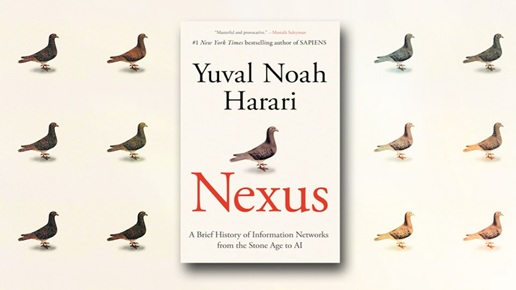
Well, here I am, sitting at a writing desk, working on this week’s blog post for People, Planet, Profits, and Projects. Looks like that puts me in a box called “bureaucrat”. What does that mean? Well, my writing desk also serves as a reading desk. And I am reading Nexus, by Yuval Noah Harari. It’s an amazing read. I want to share one gem from the book with you here in this post.
So about that thing… that bureaucrat thing… (quotes from Harari are italicized and are in sky blue.
Bureaucracy literally means “rule by writing desk.” The term was invented in eighteenth-century France, when the typical official sat next to a writing desk with drawers—a bureau. At the heart of the bureaucratic order, then, is the drawer. Bureaucracy seeks to solve the retrieval problem by dividing the world into drawers, and knowing which document goes into which drawer. The principle remains the same regardless of whether the document is placed into a drawer, a shelf, a basket, a jar, a computer folder, or any other receptacle: divide and rule. Divide the world into containers, and keep the containers separate so the documents don’t get mixed up. This principle, however, comes with a price.
Does this sound familiar, project managers? I’ll give you a hint. Three letters, starting with W and ending with S – and a B in the middle. Yep, this is our very basic practice of creating a Work Breakdown Structure.
So, what’s the price that Harari’s talking about?
Instead of focusing on understanding the world as it is, bureaucracy is often busy imposing a new and artificial order on the world. Bureaucrats begin by inventing various drawers, which are intersubjective realities that don’t necessarily correspond to any objective divisions in the world. The bureaucrats then try to force the world to fit into these drawers, and if the fit isn’t very good, the bureaucrats push harder.
In other words, the drawers (perhaps our workstreams of a WBS?) may connect to the bureau, but are disconnected from the rest of the furniture, the rest of the room, the rest of the world.
This is really the overall theme of People, Planet, Profits, and Projects. I have found Nexus to be a treasure trove of ideas for project managers who want to become Project Leaders. You will see more diamonds extracted from this mine here on this blog.
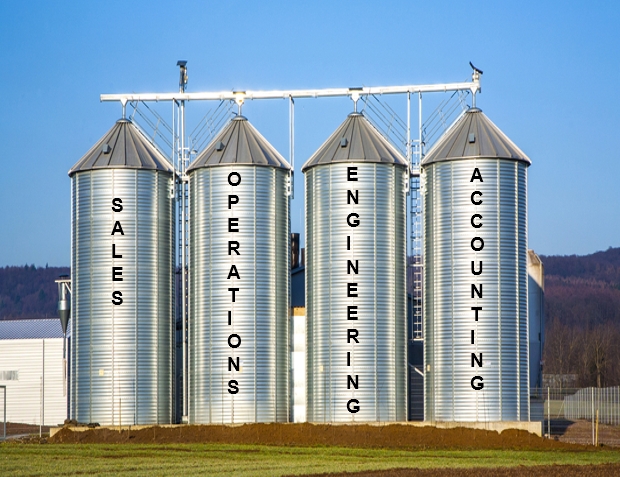
Getting back to this post, though - the irony of silofication here is that although we will – out of good practice, force our projects’ work into silos (workstreams), we, as project leaders, should be silo-busters. Harari uses something familiar to me as an example – the world of academia:
Consider, for example, how universities are divided into different faculties and departments. History is separate from biology and from mathematics. Why? Certainly this division doesn’t reflect objective reality. It is the intersubjective invention of academic bureaucrats. The COVID-19 pandemic, for example, was at one and the same time a historical, biological, and mathematical event. But the academic study of pandemics is divided between the separate departments of history, biology, and mathematics (among others). Students pursuing an academic degree must usually decide to which of these departments they belong. Their decision limits their choice of courses, which in turn shapes their understanding of the world. ….
Harari goes on with his example, using academic journals, and the way they are organized in “drawers”:
… journals are divided by discipline, and publishing an article on virus mutations in a biology journal demands following different conventions from publishing an article on the politics of pandemics in a history journal. There are different jargons, different citation rules, and different expectations. Historians should have a deep understanding of culture and know how to read and interpret historical documents. Biologists should have a deep understanding of evolution and know how to read and interpret DNA molecules.
As project managers – or better yet – as project leaders, we would hopefully sense the need to bust these silo walls and build a cross-functional, effective, project-focused team.
The question is, do we as project leaders escape our OWN silo of project management thought, or do we instead let ourselves get trapped in a time-boxed world that ends with the end of the project and get constrained into scope-boxed world that considers only the immediate project stakeholders and sponsors? Or do we think more broadly, more holistically, more in the long-term?
Harari continues with a point that really cuts to the core of not just this blog post, but the blog (People, Planet, Profits, and Projects) itself:
A bureaucrat tasked with increasing industrial production is likely to ignore environmental considerations that fall outside her purview, and perhaps dump toxic waste into a nearby river, leading to an ecological disaster downstream. If the government then establishes a new department to combat pollution, its bureaucrats are likely to push for ever more stringent regulations, even if this results in economic ruin for communities upstream. Ideally, someone should be able to take into account all the different considerations and aspects, but such a holistic approach requires transcending or abolishing the bureaucratic division.
If you consider ‘increasing industrial production’ to be a project (which it is), and you consider (as distasteful as it is) yourself the bureaucrat in this scenario – the project manager of the production transformation initiative (project), then the “someone” Harari mentions above is you – and the transcending he’s talking about is on you.
It’s about that long-term, holistic thinking that will indeed make you a better project manager. I highly recommend Nexus as nearly mandatory reading for project managers who want to be project leaders.
As I said, this is just scratching the surface of one topic in Nexus. There is more to come. In the meantime, Medium has a nice take on this part of the book as well, you can read that here.
Harari, Yuval Noah. Nexus (p. 51). Random House Publishing Group. Kindle Edition
Posted
by
Richard Maltzman
on: June 29, 2025 03:09 PM |
Permalink
Comments (2)
Please login or join to subscribe to this item

Marc Kane
Associate Director | Digital Core - Oracle| Accenture
Los Angeles, CA, United States
Too many transformation efforts try to reform bureaucracy gently, hoping it will evolve on its own. But in practice, clients need clear permission to disrupt the structures that no longer serve them. This is where adaptive leadership becomes not just valuable (but essential).
In the consulting space, we’re seeing A.I. play a major role in accelerating this shift. It’s revealing bottlenecks, identifying redundant governance flows, and offering alternative pathways that teams don't necessarily have visibility to from inside their own silos. The true value will be realized when those insights are paired with sponsorship from leaders willing to challenge legacy assumptions (not just automate them).

SUKUMARAN SUBARAMANIYAN
Senior Manager| Malaysia Rapid Transit Corporation Sdn Bhd
Petaling Jaya, Selangor, Malaysia
Great article. Very impressive and full of insight. Truly appreciated your thoughtful sharing. Thank you!
Please Login/Register to leave a comment.
|
I did this thing on the Ottoman Empire. Like, what was this? A whole empire based on putting your feet up?
- Jerry Seinfeld
|




