Bioretention Part 3: The Maker Movement
Categories:
makermovement
Categories: makermovement


|
In Parts 1 and 2 of this multipart post, I focused on a local bioretention project near my temporary home in Washington DC. Please read those short posts to get oriented. That said, I know you won’t do that right now, so here is a quick refresher on bioretention. It’s a three-minute video, and I know you can do that!
Okay, so now that you know what bioretention is all about, let’s catch you up with Part 2’s content in which I invervewed Volker Janssen from Limnotech and we discussed the collection of data in his project, and the idea of crowdsourcing the collection of data. Turns out, there are growing communities out there who are helping us understand our environment a little better, literally from the grass roots. An example: https://www.envirodiy.org/ is a community for do-it-yourself environmental science and monitoring. It is part of https://wikiwatershed.org/ which is a web toolkit designed to help citizens, conservation practitioners, municipal decision-makers, researchers, educators, and students advance knowledge and stewardship of fresh water. And this in turn is part of https://stroudcenter.org/ which has this mission: “we seek to advance knowledge and stewardship of freshwater systems through global research, education, and watershed restoration”. Both of the above are part of Stroud™ Water Research Center. Their mission: Stroud™ Water Research Center is overcoming the obstacles to large near-real-time data collection networks by using Arduino, an open source electronics platform. We are sharing our experiences building wireless sensor networks in an online community, so that anyone can replicate and implement their own versions of our instrumentation. To follow our progress and share your experiences, visit EnviroDIY.org. That led me to research Arduino and it’s amazing. It also changed the whole theme of this post, although if you are patient enough, this will come back full-circle to talk about water flow…
As to Arduino, watch this TED talk about it: It’s really about the “Maker Movement” which could be a FOURTH post in this series but I’m not going there. I do, however, encourage project managers and my colleagues in academia to pay attention to this Maker Movement because it is such a powerhouse of innovation and project launches. When you see the video, note the reference to the crowdsourced data collection related to the Fukashima nuclear disaster. Think about how something like that could conceivably be used to help us pinpoint epicenters and spread of COVID-19. Actually… we don’t have to think about it. Here’s an article from Bloomberg or Scientific American about that exact topic! https://www.bloomberg.com/news/articles/2020-04-06/the-maker-movement-mobilizes-to-fight-coronavirus And check this out: You will find ideas here in their “Tech for Care” segment about assisting in the solution (vaccine for COVID-19) but also the very human element of innovating to provide an interactive robot video ‘butler’ that helps patients connect with their families and friends. They did it by smooshing (it’s a technical word – look it up!) together a Roomba, an ipad and a tripod (and of course some other hardware and software) to make this robot. Everything here is open source. No patents, permissions, privacy of ideas. If you want to build on something you find here – just do it. Watch this robot in action here: Excited? Want to try this yourself? Try #HACKTHEPANDEMIC – go to this site: https://copper3d.com/hackthepandemic/ and you can download the STL files (3D printing format), as well as all sorts of info and instruction and background on producing/modifying the much-needed N95 mask. Their rationale: NanoHack was inspired by a great global pandemic. The most radical innovations are born from crises, which is why NanoHack is a unique design. By the way: it’s called Copper3D because (read about it in this article from Smithsonian magazine) copper has some surprising (good) traits when it comes to coronavirus. Bottom line: the virus doesn’t live very long at all when it lands on copper. To quote the author of the article, “copper zapped the virus within minutes while it remained infectious for five days on surfaces such as stainless steel or glass”. Or, to bring this back full-circle, here is a video to close the loop. It’s about automatic watering of a garden… excellent effort by this gentleman, Grady Hillhouse! |

The Perspective of Women Project Management Professionals
Categories:
Women in Project Management
Categories: Women in Project Management
|
This blog’s title is People, Planet, Profits & Projects. Much of the time I am talking about the Planet and Projects components (case in point, the series on Bioretention). This particular post focuses on the People and Projects components. It's a book review and a book recommendation. People. Roughly half of the people on the Planet (okay, so there’s the planet piece, too) are female. An increasing number (luckily, in my humble opinion) are becoming project managers. Ipek Sahra Ozguler (pictured below) of Turkey decided that she would take on a book project to gain insight and perspective of women in project management.
She says, “The aim of realizing this book project is to share the interviewees’ opinions without including my own comments. It is surprising to find out that the majority of the answers were similar across different regions of the world. I think that the perspectives of women project management professionals are more or less similar.” Ipek interviewed women in Argentina, Australia, Brazil, Colombia, Germany, India, Iran, Lebanon, Mexico, New Zealand, Norway, Poland, Portugal, Singapore, Slovenia, United Kingdom, United States. The book (shown in this post’s photo) is a fascinating read for anyone, because it provides some depth and breadth on an array of concerns that all project managers have. Here are the questions that Ipek asked: Q1: Describe your journey as a project management professional. Q2: Why did you choose to become a project management professional? Q3: Have you encountered any related obstacles in advancing your career? Q4: Why is it important that more people work in the project management area? Q5: How can we encourage more people to pursue project management as a career? Q6: What do you think are the top issues that project managers face today? Q7: Do you think there is a stereotype attached to project managers? Q8: Why is it important to celebrate international women's day? I’ve been a manager and supervisor in the world of project management for a long time (about 4 decades). I have had reported to many male and female line managers and I have had many male and female employees. I have always been interested in knowing how any differences between people (including gender) contribute to the success of projects. Importantly, I also know that I can never really know what a female project manager has to go through in their career progression and in doing their work without the actual perspective of a woman who has been through. This is why I was interested in Ipek’s work. The particularly interesting finding for me – a male project manager, PMO leader, and academic – was that although there were (of course) differences between the women who shared their perspective, many themes were the same, and most of those themes were not particularly focused on, or limited to, gender issues at all, but rather focused on the general state of project management as a profession. So there is a lot to learn here! When there were mentions of gender (and of course, that came up) it went something like this: “We should take advantage of the complementary attributes of males and females” to build better teams. This aligns with my own experience. My own finding (before the book!): The most successful project teams, and the most successful groups of PMs, when I was a PM director, were about 50% male and 50% female and also were more diverse from a national culture background. Below I share some categorized observations from the book. You should still get yourself a copy – this is a recommendation, after all! Regarding PM stereotypes: The negative stereotypes attached to the project managers are summarized below. • PM is seen as ‘just an administrative role’. The roles are only operational, not strategic. The other terminologies used instead of the terminology “administrator” are as following: librarians, a kind of secretary. • PMs are unwanted disrupters who don’t get anything done. • PMs are nagging people that just get in the functional workers’ way of doing work. • PMs don’t want any change in their projects. Sound familiar? Not a male or female issue* – but a project management issue we all face as PM people. *although I would bet females suffer these stereotypes more than males! Another theme was the need (as PMs) for our discipline (of project management) to focus on value – lasting value. Here we are talking about value that is delivered well after we’ve moved on to a second or third other project, impacts that may continue after we have long retired. Yet another theme was career path: the vast majority of these women did not prepare for, or expect a career in project management. They were mostly “accidental” PMs. When gender differences did come up (and again, I had to look rather hard for this), this is what I found as a theme (paraphrasing here): “we had to work harder than our male counterparts to get work done and to get recognized for that work”. What other challenges do female PMs face in their career? Some examples: Diane Dromgold I do get annoyed though when I see conferences with no or token female presenters. In fact these days I simply don’t go. It’s my personal stand. No females, no Diane! Deena Gordon Parla Several challenges come to mind: 1. When project success was determined by a yes/no answer to “was it on time” and “was it within budget”, rather than assessing value realized by the business for the resources invested. 2. Success factors tied to soft skills were not as valued. For example:
As a result, team building and stakeholder communications tasks were the first to be “trimmed” to shorten project schedules. Also, soft skills were not consistently given the same priority for talent development.
Annie Sheehan What do you think are the top issues that project managers face today? • Unskilled people passing themselves off as project managers, giving experienced and credentialed project managers a bad name. • The lack of understanding and respect for project management skills. Inexperienced stakeholders expect project managers to be super beings. If a PM is unable to articulate their value anddemonstrate their work and how it is helping an organisation, they can be easily devalued and dismissed.
Alenka Gruden As a woman in project management, in the field of technology and IT environment where men dominate, was always challenging. I had to work and study harder than any man that I know in my profession. I had to repeatedly prove that I am an experienced and trustworthy project manager with great results. I admit it was hard but worth it. I had worked with many amazing and innovative teams and together we managed to bring great benefits and values to the company. Antje Lehmann-Benz Another obstacle definitely concerns gender: As female project management professionals, it seems we have to prove twice as much that we are knowledgeable and experienced. We have the feeling we should hide the fact that we have children. This can be very tedious at times, but all the more incentive to help more women choose and develop careers in project management, then this will hopefully stop one day. Deena Landers Within the project management profession, I’ve worked in many industries and for many companies. The least mature of the organizations from a project management perspective perceive project managers as administrators, those who set up meetings, take notes, and provide reminders for upcoming milestones. They are missing the significant value that project managers can provide, and the truly unfortunate aspect is that this may be propagated by the project managers themselves, and their own leadership as well. By behaving in a way that supports this notion, it is supported. Instead, project managers need to challenge the existing stereotypes in their organizations by driving projects to completion, realizing business benefits, and communicating widely those benefits.
I was impressed that these professionals did not lean on gender as a career obstacle. They acknowledge it of course, as I am glad they did, but they aren’t using inequality as an excuse. Instead, they lamented the same sort of obstacles any project manager would lament:
So, overall – a definite great read for male or female project managers, and, because it has some coaching for those senior managers who hire and gain benefits from projects, I think it’s a great book for senior managers of any stripe. If you are interested in learning more about the book, or want to join others interested in expanding your own perspectives, you can join the LinkedIn group set up by Ipek here. |


Bioretention Projects - Part 2 of X
|
In Part 1, I introduced the concept of Bioretention and gave some examples, including the Green Infrastructure (GI) project within walking distance of my (temporary) Washington DC home. In Part 2, as promised, I have a brief interview with Volker Janssen, a project engineer from Limnotech which built the system that I (almost literally) stumbled upon. Volker kindly agreed to answer a few questions about this Bioretention project, and I think you’ll find this interesting.
I start with that interview and then briefly discuss the importance of the data and the way it is conveyed. As I researched this last piece, I got more and more intrigued with the connections between project management, data analytics, the Internet of Things, and decision making…which actually led me to the highly unusual step of needing – and now planning - a “Part 3” of this two-part series. 1. Volker, given that this is a project focused on an ecological result, as opposed to an economical one, how are you measuring scope? How are you measuring success? Volker: As the technical consultant to the project, we are tasked with measuring and calculating the effect of the installed Green Infrastructure (GI) practices and their effect on stormwater runoff. Answers to these questions will help our client (the DC Department of Energy & Environment) to determine the extent and types of Green Infrastructure to invest in for the future as well as best practices for installation and needed maintenance schedule.
2. Is there a different ‘attitude’ amongst project team members since you all know that what you are doing is for the ‘greater good’ and is, at least in some way, helping the planet?
Volker: LimnoTech is an environmental consultant and a lot of our work revolves around projects like RiverSmart. Being able to help our communities to develop sustainable approaches and keeping our waters clean is certainly gratifying. Working on a neighborhood scale also reminds us that these projects can have a real local impact, and that the impact can vary considerably between different neighborhoods.
3. If you can compare this project to one that you may have worked on that is strictly geared at making a profit, how does this project compare in terms of risk identification, risk analysis, and risk response? Can you give a couple of examples of the risks you identified and how you responded to them (e.g. a vehicle backs into one of your sensor units and disables it – and/or it damages the vehicle).
Volker: As a technical consultant, we usually do not measure a project based on its profitability for our client. Risks we identified for this particular project include personnel safety (ensuring proper safety measures during field visits) as well as the safety of our installed monitoring hardware (e.g. financial risk related to the potential of having to replace components due to accidental damage, theft or vandalism).
4. I noticed that it’s possible to view the data from these sensors. I went to http://monitormywatershed.org/sites/DoEE_LAF_BIO-19/ and found data but it only went up until December 2019. Is there a way to view current (2020) data? Volker: All GI practices underwent extensive maintenance late in 2019. We removed our stations prior. Additionally we had some technical problems which resulted in us installing different data loggers after the practice maintenance was completed. We are currently working our way through the data. Another project location (in the MacFarland neighborhood) has more recent data online on a different data portal (https://limnotech.iot.ubidots.com/app/dashboards/public/dashboard/cvYE5LCCtmHPG3fEQXQj21MgbOk?datePicker=true). Part of this project was also testing different ways of monitoring and presenting data. This included different types of monitoring sensors, data loggers and online vs offline data collection.
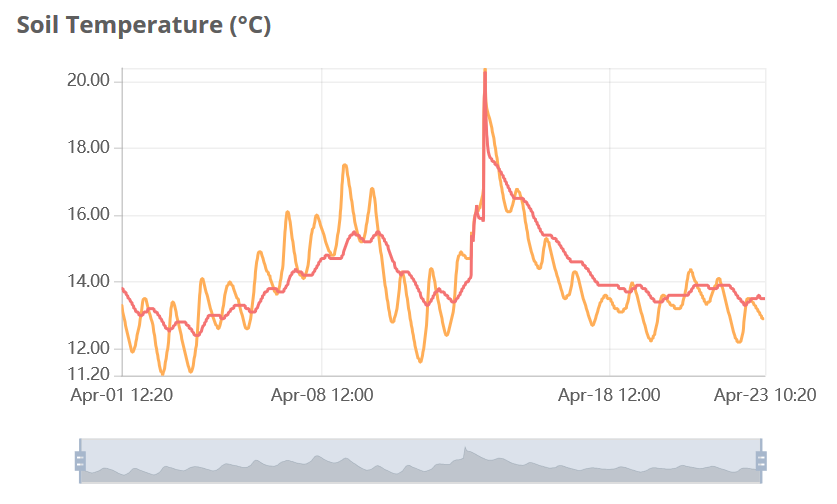
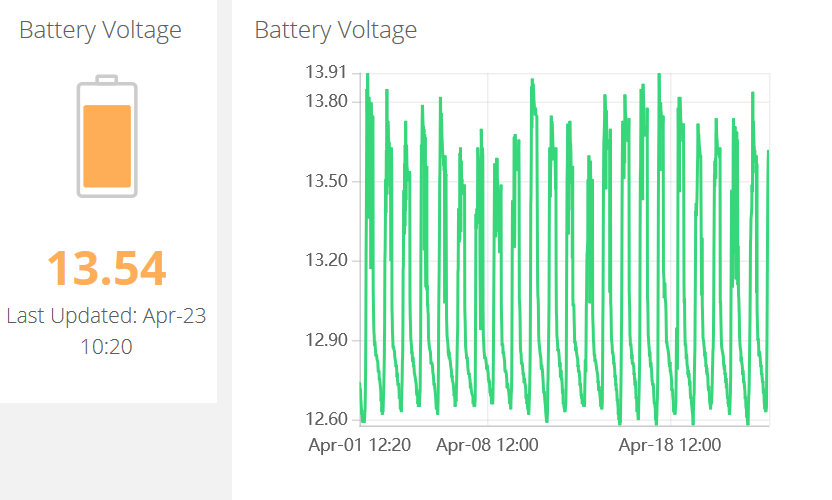
The monitoring portion of this project (we could say it is part of the steady-state outcome of the project) is something that caught my attention because it really ties into the many IoT (Internet of Things) family of projects that we increasingly see all around us – and some of you may be very actively participating in managing. There are several platforms on which GI initiatives can have their sensors connect to the cloud and report and log – and display data. I was going to briefly summarize them but it seems like a topic unto itself so I will tackle that in an added Part 3 which will focus only on that. As a teaser, and to further connect that upcoming Part 3 to Bioretention, below you will see some of the data available from the dashboard that Janssen provided me.
|

Bioretention Projects - Part 1 of 2
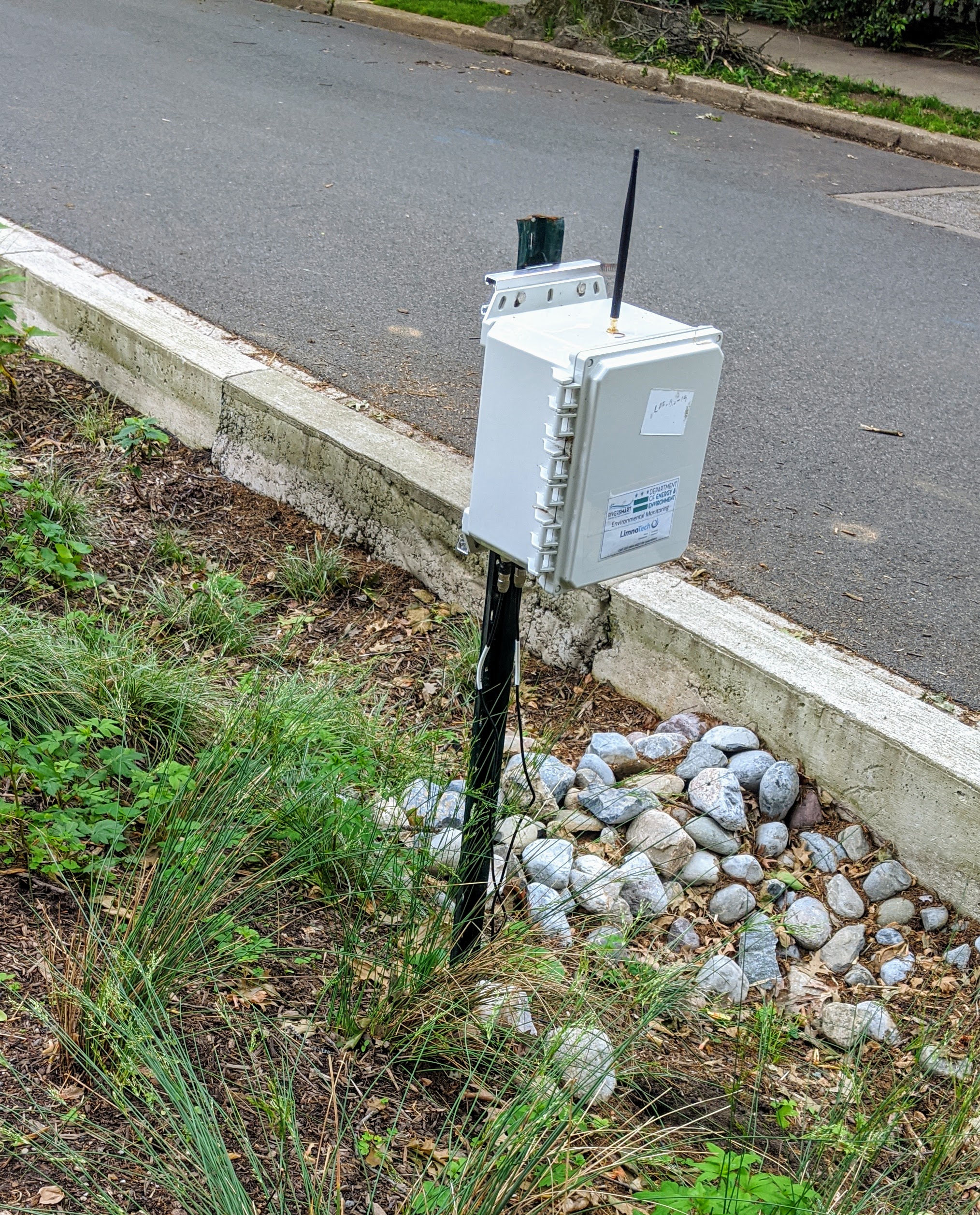
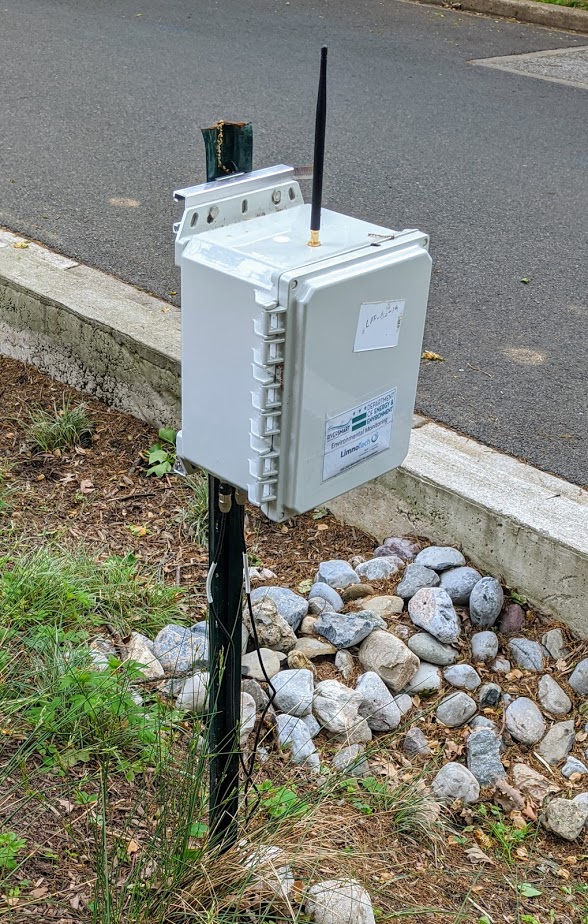
| A day or two ago, I was walking with my wife and grandson here in Northwest Washington DC, where I’m spending my COVID-19 time for now, and I came across this electronic gizmo on a post, with an antenna.
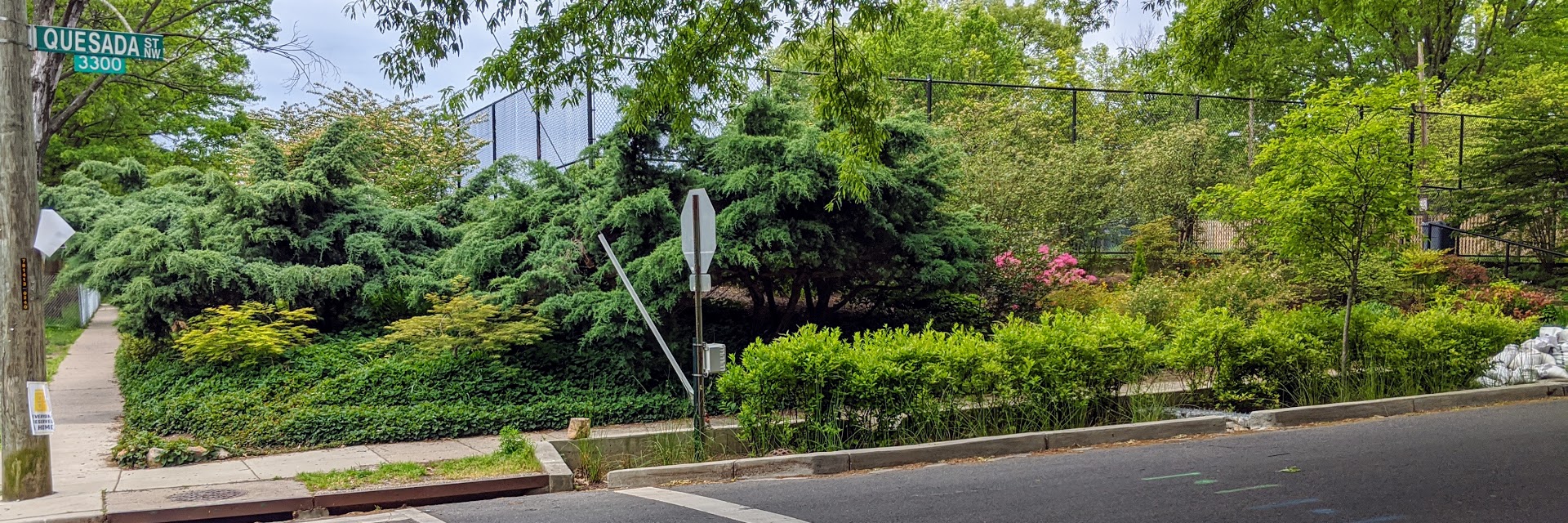
It is in an area that has some vegetation – almost a sort of sidewalk garden (see below). It has some sidewalk-style barriers and doesn’t look like much, but the little device with the antenna…what WAS that?
You can see where the device is mounted, on the post of the stop sign near the center of this photo. As a project manager and a tinkerer this got my retention, er... attention. Double-time. I needed to find out what this was, and what sort of project this belonged to. It HAD to be a project, right? It was unique, it seemed temporary, and on top of it all, it seemed to be connected to some sort of sustainability initiative (it had a “RiverSmart” sticker on it).
RiverSmart is a portfolio of programs “to reduce stormwater runoff that harms the District’s waterways and the Chesapeake Bay. RiverSmart programs provide financial incentives to help District property owners install green infrastructure such as rain barrels, green roofs, rain gardens, permeable pavers, shade trees, and more. These practices allow rainwater to stay on site and soak into the ground, where natural processes help remove pollutants.” It is part of the District of Columbia’s Department of Energy and Environment (DoEE). It turns out that what I saw was part of one of these programs - a bioretention project, which is why I had that "attention - retention" play on words above. What’s bioretention? Turns out it’s relatively new and quite interesting. The following description comes from a Massachusetts DEP (Depertment of Environmental Protection) Clean Water Toolkit site. Bioretention areas (also referred to as bioretention cells or rain gardens) use soil, plants and microbes to treat stormwater before it is infiltrated or discharged. Bioretention areas are shallow depressions filled with sandy soil, topped with a thick layer of mulch, and planted with dense vegetation.
To learn more about this, I started doing some research and found these great summary videos, the first from Alberta, Canada, and the second from Clemson University:
In Part 2, I’ll provide you with a more in-depth view of the RiverSmart project and the companies, products, and project stakeholders behind this particular bioretention cell. I actually had a chance to talk to the company partnering with DoEE to execute this project. I’m looking forward to finishing that piece in the next few days. |

The People Part of P,P,P&P
|
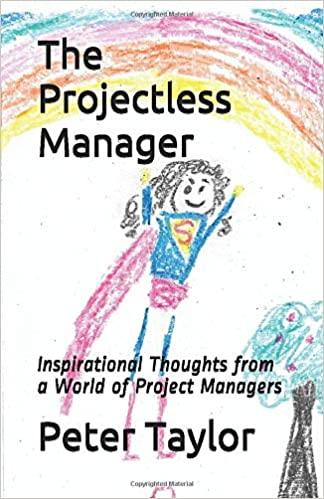
Normally the focus of this blog is on Sustainability. Sustainability can be thought of in terms of its components: lasting economic benefit, lasting social benefit, and lasting ecological benefit - or at least minimizing negative impacts to the so-called Triple Bottom Line of economic, social, and ecological measures. This short post focuses on the first P of P, P, P & P - People. Not just any people, though - project managers in particular, and project managers who are in an otherworldly COVID-19 world right now. Together. Many of them are "projectless" - their projects are on hold. Some are busier than ever. Either way, 56 of them got together under a 21-day challenge issued by Peter Taylor, the unlazy Lazy Project Manager, to write a book providing insight and hopefully inspiration during this otherworldly time. And, speaking of 'world', the authors hail from 20 different countries. It's already published and available on Amazon. For a worldwide perspective of the human side of project management as viewed by a spectrum of different project managers, check it out. Disclaimer: I get no benefit from the sale of this book - I just think it's worth reading! |