Bioretention Projects - Part 2 of X
From the People, Planet, Profits & Projects Blog
by Richard Maltzman,
Dave Shirley

View Posts By:
Richard Maltzman
Dave Shirley
Recent Posts
What is AI doing to the sustainability of our profession???
Stepwells – Insight from a Particularly Valid Angle
Climb-it Change: Pre-Interview Connector
Climb-it Change: New Relevance for the Stepwells of India
A PATH to more equitable health - via AI project leadership
Categories
6th,
6th Edfition,
6th Edition PMBOK,
7th Edition,
7th Edition PMBOK,
8th Edition PMBOK,
8th Edition PMBOK Guide,
Activism,
actuarial,
actuary,
adapt,
addition by subtraction,
Africa,
africa,
agriculture,
airforce,
ajaita,
Alaska,
amazon,
analogous,
analytics,
ancient,
and more power,
antarctica,
anti-science,
apple,
apps,
architecture,
arctic,
arrakis,
Artificial Intelligence,
asch paradigm,
Assistant,
asthma,
astronomy,
automobile,
automotive,
autonomous cars,
b,
bankhar,
Banksy Crypto,
basalt,
baseball,
bats,
batter,
beauty products,
benefit,
benefits,
Benefits Realization,
beyond epica,
biases,
bicycle,
big data,
big dfata,
big dig,
bike,
biodiversity,
biomedicine,
birdhouse,
blockchain,
blood,
blue blood,
blue trees,
bluefin,
bluefin tuna,
book review,
boston,
boston university,
Boyce,
Brazil,
brazil,
Breakdown Structures,
BS,
building,
buildings,
built environment,
built environment,
bumblebee,
cake,
capacitor,
car,
Carbon,
carbon,
carbon capture,
carbon negative,
carbon neutral,
carbon pool,
carbon sequestration,
carbonate,
careers,
CEO,
ChatGPT,
chatGPT,
chatgpt,
chatgpt,
chess,
China,
china,
chopsticks,
citrus,
cli-fi,
climate,
climate change,
climate resilience,
climeworks,
Clumsy,
CO2,
co2,
CO2 Utilization,
coalition,
cobalt,
coffee pods,
cognition,
cognitive,
Collabortion,
colombia,
concrete,
Conflict,
construction 5.0,
cool projects xyloscope,
cooling,
coral,
corn,
cost of good quality,
cost of poor quality,
cost of quality,
crazy,
criticism of project management,
cryptocurrency,
CSR,
csr,
data,
data analytics,
data privacy,
datacenter,
dataset,
death spiral,
Decision Making,
decomposition,
Defense and Climate,
definition of a project,
deforestation,
dependencies,
dependency,
desert,
DIKW,
dikw,
dimopoulos,
disposal,
dna,
DOD,
dogs,
dolphins,
dream,
drilling,
drink,
dune,
dune,
dutch,
early start,
earth,
eatlocal,
eco-tourism,
ecological,
economic,
economics,
EKC,
electric grid,
electricity,
electronics,
elysis,
embodied carbon,
emerging technologies,
empower,
Energy,
energy efficiency,
environmental degradation,
escalate,
escalation,
ESG,
extreme weather,
fallacy,
FARC,
farming,
finance,
fish,
fish brains,
fishing,
fix,
fixing the earth,
flint water,
Flint Water Supply,
flood,
flooding,
Food supply chain,
food waste,
forest,
forest for the trees,
forestation,
forrestgump,
frank herbert,
Fruitcake,
fungus,
fusion,
Galvao,
garage,
gas,
gasoline,
geese,
gender equality,
gender partnerships,
generational differences,
Generative AI,
gladwell,
gold,
Goodness,
google,
Government,
GPT,
great pacific garbage patch,
green,
green building,
green buildings,
green energy,
green iguana,
green project,
green project management,
greening,
guest post,
gyre,
harkonnen,
Harvesting Benefits,
hawasina,
hedgehogs,
heursitics,
historical data,
hlb,
holitsic,
holland,
horseshoe crab,
human-caused climate change,
hydrogen,
hydrology,
ice,
iceland,
ignition,
iguana,
imagery,
impact,
india,
inequality,
information,
initiatives,
injection,
insurance,
intelligence,
interacting risk,
internal combustion engine,
invasive species,
investment,
isomer,
issue escalation,
issues,
ITER,
jobs,
Jupiter,
justification,
kids,
kill point,
knowledge,
koch brothers,
Kuznets,
laboratory,
LAL,
landscape mode,
lapampa,
launch,
LCA,
Leadership,
Leadership,
life cycle analyses,
life cycle analysis,
lifecycle,
Linkedin,
liquid,
lizard,
local,
long term,
long-term,
long-term thinking,
look up,
loud,
maintenance,
maker,
makermovement,
malcolm gladwell,
management,
marathon,
marine biology,
market,
mars,
Martin Luther King,
mean,
megawatt,
MeHg,
melting,
mercury,
metal,
Microgrid,
microplastics,
migration,
military,
millennial,
mindset,
minerals,
mission,
mitigate,
MLK,
mongolia,
museum,
museum of london,
nature,
nematodes,
net gain,
Net Project Success Score,
net zero,
netherlands,
network,
New book,
New Jersey,
New Practitioners,
new york,
NFT,
nitrogen,
noise,
noreaster,
norway,
nova,
NPSS,
NREL,
ocean,
ocean cleanup,
ocean life,
oil rig,
oil rigs,
oklahoma,
oman,
only murders in the building,
opportunity,
overall risk,
oxygen,
packaging,
pareto,
PBS,
permafrost,
persistence,
peru,
Pharmaceutical,
planet,
planet.com,
planning,
plant,
plasma,
plastic,
playground,
pm,
pm education,
pmbok,
pmbok guide,
pmnetwork,
PMXPO-2018,
podcast,
pollutants,
pollution,
poop,
poor,
portfolio,
power,
power skills,
privacy,
privacy concerns,
professors,
program,
Program Management,
project,
project leader,
project leadership,
project management,
project management 3.0,
project on fire,
project progress,
Project Success,
project success,
projecticity,
projectleadership,
projectmanagement,
projects,
psychology,
pulse of the profession,
purple bacteria,
purpose,
quiet,
rainforest,
rationale,
reef,
refugees,
renewable,
renewables,
Repair,
repair,
repeatable process,
repeatable processes,
repurpose,
research,
resource breakdown strucuture,
Resource Management,
reversing climate change,
revisionist history,
rich,
rigs2reefs,
ripe,
risk,
risk avoidance,
Risk Management,
risk mitigation,
risk response,
risk responses,
river,
robots,
rocks,
rules of thumb,
rural,
rural India,
russia,
Sarcasm/Irony,
satellite,
saudi,
schedule,
sci-fi,
Science,
science,
science-fiction,
scientific american,
screaming monkeys,
sea,
sea life,
Sea-Level Rise,
sea-level rise,
seagreens,
seawall,
seawater,
seawater temperature,
seaweed. beat;es. farming,
secondary risk,
selena gomez,
sequestration,
shipping,
skyscraper,
SLR,
smart cities,
smart city,
smelting,
social,
social pressure,
soil,
solar,
solar panels,
solar perovkites,
solar saheli,
sonic,
sponge cities,
SRI,
stage-gate,
stagegate,
stakeholder,
stakeholder management,
steward,
stewardship,
storage,
strategy,
stupid,
success,
suffer,
sulphur,
sunk cost,
supercapacitor,
supply chain,
survey,
Sustainability,
sustainability,
Sustainable Investing,
Sustainable Tourism,
sybiosis,
symbiosis,
system 03,
TBL,
temperature,
terraform,
terraforming,
test,
threat,
threats,
totem,
touchscreen,
tour,
tower,
Trains,
transparency,
transportation,
trash,
tree,
tree species,
trees,
trillion,
triple bottom line,
triple constraint,
truth to power,
UMass,
us army corps of engineers,
USDA,
vacuum,
value,
venus,
vision,
voice,
voltage optimization,
vw scandal,
washing machine,
waste,
wastewater,
water,
we mean business,
whales,
Whirlpool,
wind,
wisdom,
women,
Women in Project Management,
wood wide web,
woonerf,
Work Breakdown Structures (WBS),
world breakdown structure,
worms,
xian,
xylotron,
Yale
Date
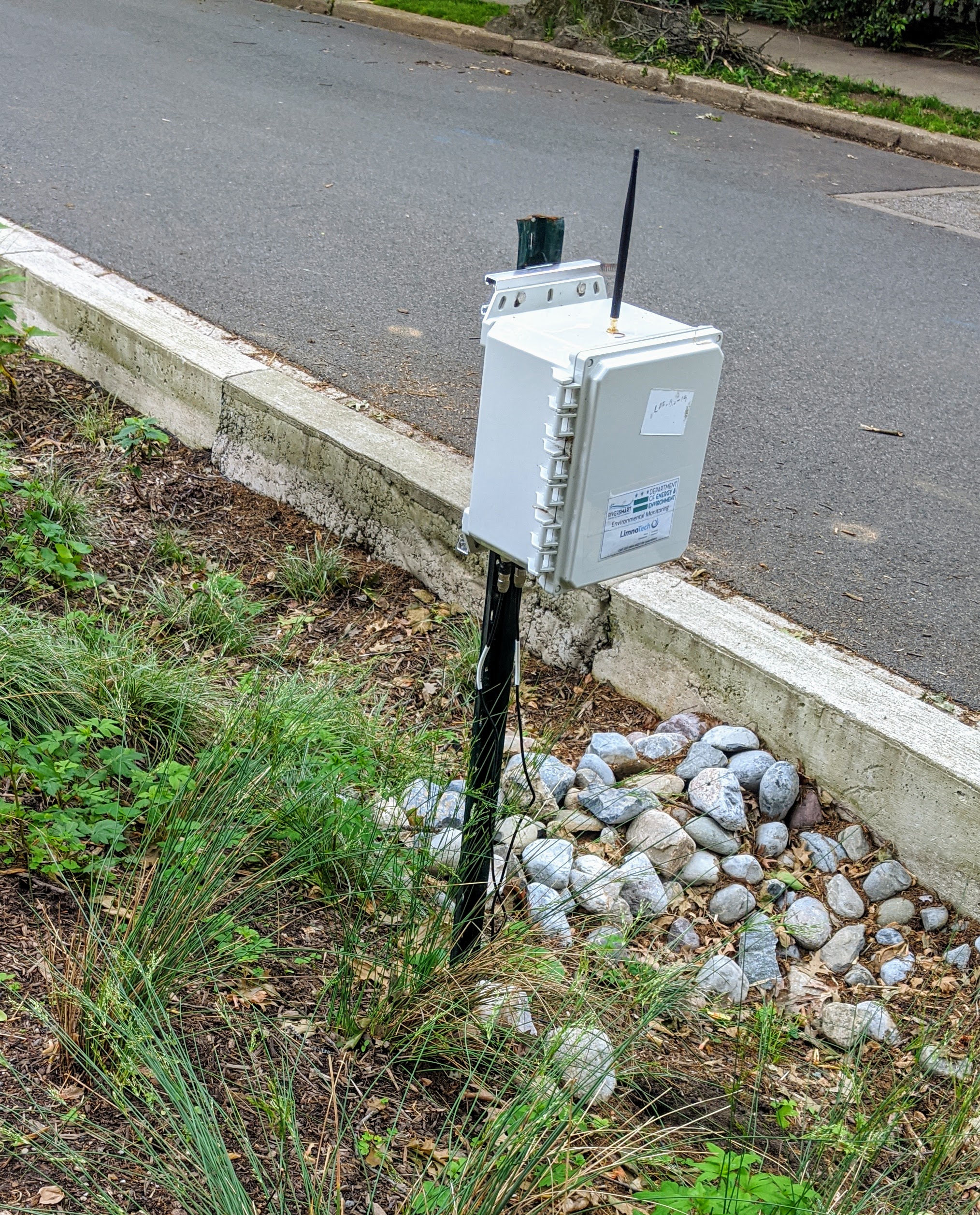
In Part 1, I introduced the concept of Bioretention and gave some examples, including the Green Infrastructure (GI) project within walking distance of my (temporary) Washington DC home. In Part 2, as promised, I have a brief interview with Volker Janssen, a project engineer from Limnotech which built the system that I (almost literally) stumbled upon. Volker kindly agreed to answer a few questions about this Bioretention project, and I think you’ll find this interesting.
I start with that interview and then briefly discuss the importance of the data and the way it is conveyed. As I researched this last piece, I got more and more intrigued with the connections between project management, data analytics, the Internet of Things, and decision making…which actually led me to the highly unusual step of needing – and now planning - a “Part 3” of this two-part series.
1. Volker, given that this is a project focused on an ecological result, as opposed to an economical one, how are you measuring scope? How are you measuring success?
Volker: As the technical consultant to the project, we are tasked with measuring and calculating the effect of the installed Green Infrastructure (GI) practices and their effect on stormwater runoff. Answers to these questions will help our client (the DC Department of Energy & Environment) to determine the extent and types of Green Infrastructure to invest in for the future as well as best practices for installation and needed maintenance schedule.
2. Is there a different ‘attitude’ amongst project team members since you all know that what you are doing is for the ‘greater good’ and is, at least in some way, helping the planet?
Volker: LimnoTech is an environmental consultant and a lot of our work revolves around projects like RiverSmart. Being able to help our communities to develop sustainable approaches and keeping our waters clean is certainly gratifying. Working on a neighborhood scale also reminds us that these projects can have a real local impact, and that the impact can vary considerably between different neighborhoods.
3. If you can compare this project to one that you may have worked on that is strictly geared at making a profit, how does this project compare in terms of risk identification, risk analysis, and risk response? Can you give a couple of examples of the risks you identified and how you responded to them (e.g. a vehicle backs into one of your sensor units and disables it – and/or it damages the vehicle).
Volker: As a technical consultant, we usually do not measure a project based on its profitability for our client. Risks we identified for this particular project include personnel safety (ensuring proper safety measures during field visits) as well as the safety of our installed monitoring hardware (e.g. financial risk related to the potential of having to replace components due to accidental damage, theft or vandalism).
4. I noticed that it’s possible to view the data from these sensors. I went to http://monitormywatershed.org/sites/DoEE_LAF_BIO-19/ and found data but it only went up until December 2019. Is there a way to view current (2020) data?
Volker: All GI practices underwent extensive maintenance late in 2019. We removed our stations prior. Additionally we had some technical problems which resulted in us installing different data loggers after the practice maintenance was completed. We are currently working our way through the data. Another project location (in the MacFarland neighborhood) has more recent data online on a different data portal (https://limnotech.iot.ubidots.com/app/dashboards/public/dashboard/cvYE5LCCtmHPG3fEQXQj21MgbOk?datePicker=true). Part of this project was also testing different ways of monitoring and presenting data. This included different types of monitoring sensors, data loggers and online vs offline data collection.
The monitoring portion of this project (we could say it is part of the steady-state outcome of the project) is something that caught my attention because it really ties into the many IoT (Internet of Things) family of projects that we increasingly see all around us – and some of you may be very actively participating in managing.
There are several platforms on which GI initiatives can have their sensors connect to the cloud and report and log – and display data. I was going to briefly summarize them but it seems like a topic unto itself so I will tackle that in an added Part 3 which will focus only on that.
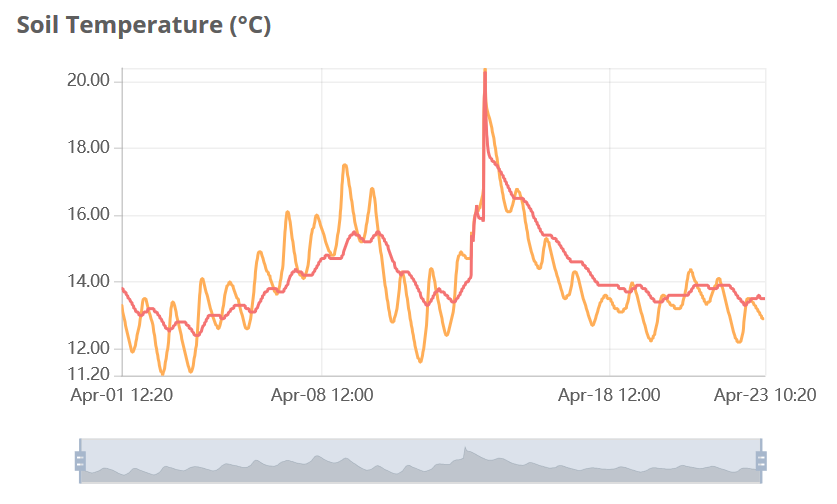
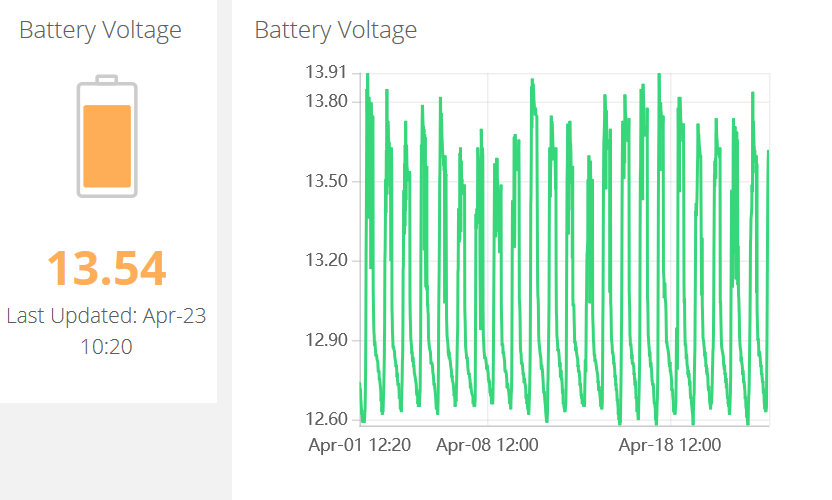
As a teaser, and to further connect that upcoming Part 3 to Bioretention, below you will see some of the data available from the dashboard that Janssen provided me.

Posted
by
Richard Maltzman
on: May 26, 2020 09:51 PM |
Permalink
Comments (2)
Please login or join to subscribe to this item

Ashleigh Kennett-Smith
ICT Project Manager| Australian Red Cross Lifeblood
Adelaide, South Australia, Australia
This is great is great Richard. It particularly appeals to me because of a past role in Hydrology.
I find the pros and cons of real time vs offline data collection really interesting. I suspect that these days real time is more of a "no reason not to" decision, but some applications the difficult technical environment and/or possibly the sensitivity of the data leads to more of an offline approach. But then that's probably part of the standard project requirements and risks discussion for this type of project.
Very interesting., thanks for sharing
Please Login/Register to leave a comment.
|
Egotism is the anesthetic that dulls the pain of stupidity.
- Frank Leahy
|




