After A Fashion


|
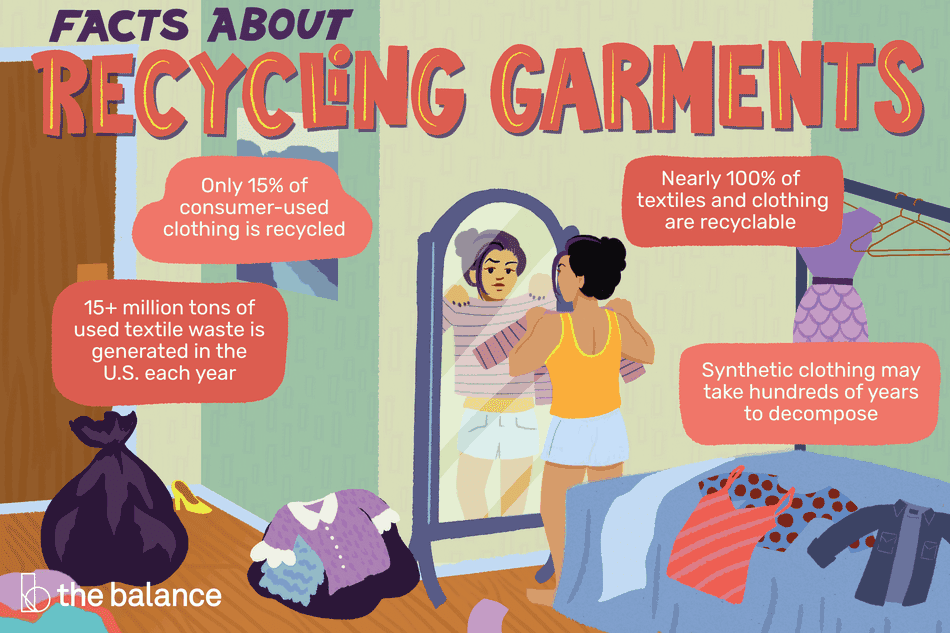
What happens to that ugly (Holiday?) sweater you decided you no longer want to wear, even to Ugly Sweater Contests? Well, it joins hands (cuffs) with 15 million tons of clothing which goes into landfill each year from the USA alone, making it second only to plastic in terms of what goes into our landfills. With respect to clothing, or perhaps WITHOUT respect - Americans throw away a little more than half of their own weight per person, per year (see references below). And synthetic clothing could take hundreds of years to decompose, with that decomposition releasing potentially hazardous substances. So it makes sense that the number of projects aimed at improving when, where, and how we recycle clothing. You can see more statistics in the infographic below.
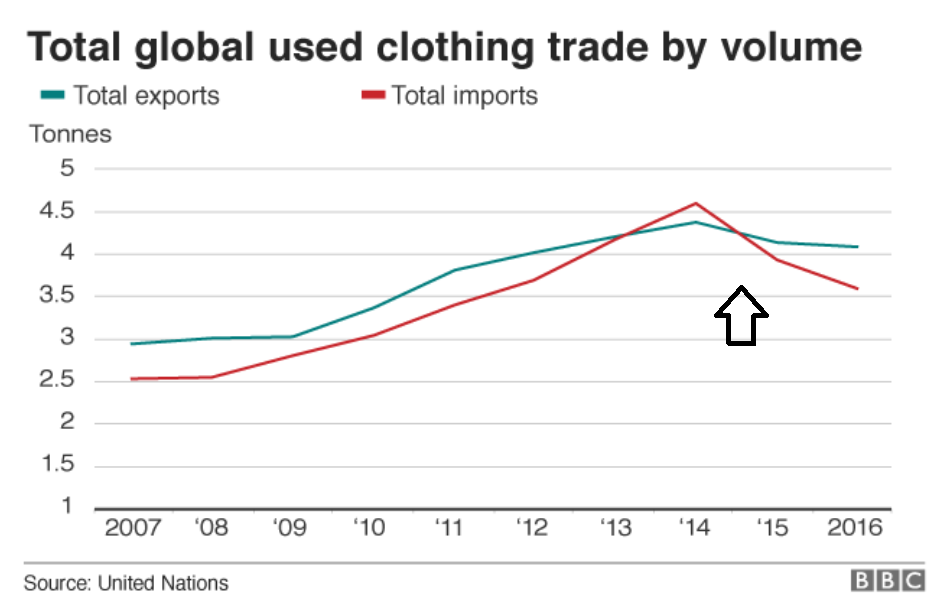
It’s a dreary story. You can read more about it in this article, “Are Our Clothes Doomed for the Landfill?”. One thing that has changed recently in our dynamic world is this: countries to whom the wealthier countries have been shipping used clothes for resale and reuse, have started to say, “no more, thank you very much". The graph below (source: United Nations) shows that recent decline in imports of used clothing.
So, that puts the emphasis again on science, on projects, and on more sophisticated ways to make clothing more directly recyclable. When I started researching this I found a variety of projects to look at, and I may cover several in this blog. For now, one that caught my eye actually comes from an article placed in Nature magazine by Deakin University of Australia. The following is paraphrased from the (promoted) article. Researchers at Deakin University’s Institute for Frontier Materials (IFM) have developed a ‘fibre to fibre’ technology to recycle textiles, based on cotton being an excellent source of cellulose. The research is part of IFM’s focus on designing materials and processes for a circular economy. The Deakin team, led by Nolene Byrne, has found a solution to the dyeing process, a known stumbling block in recycling fabric. In Australia alone, more than 500,000 tonnes of clothing waste is sent to landfill each year, making it the second largest waste material after plastic. Researchers at Deakin University’s Institute for Frontier Materials (IFM) have developed a ‘fibre to fibre’ technology to recycle textiles, based on cotton being an excellent cellulose feedstock. The research is part of IFM’s focus on designing materials and processes for a circular economy. The institute’s Associate Professor for Circular Design, Nolene Byrne, who leads the research, says that current mechanical methods of recycling cotton textiles shorten the fibre length, meaning that only 30% of the recycled fibre can be incorporated into new fabrics without compromising quality and performance. By contrast, in the method developed by Byrne and her team, 100% of the recycled fibre can be reused. They have developed a binary solvent containing an ionic liquid to dissolve the cotton, and an aprotic solvent, which reduces the cost, makes recovering the solvent easier and improves the processability. This is exciting news. Project managers will be needed to continue the research, and to make the process real and practical, and then to implement the systems that will really do this work, to promote their use, to advertise the benefits. The more project managers understand about this business, the more they will be excited by the possibilities it holds, and the better-qualified they’ll be to serve in these projects. To come back around to our Ugly Sweater, learn more about the used clothing business in the video and associated link below. Used clothing business: a report from BBC.
And you know what? Keep that ugly sweater for one more year. Maybe you’ll win that contest after all! Happy Holidays from People, Planet, Profits, and Projects! |

Eat Gas, Get Here
|
|