







Guessing is not a strategy: How to build decision velocity with AI and real-time data
June 10, 2026 | Live Webinar

You Can't Get They-ah From Hee-yah
Floating an idea into reality: the other side of the AI Project Paradox
The Environment of the Built Environment: an AI Paradox
6th, 6th Edfition, 6th Edition PMBOK, 7th Edition, 7th Edition PMBOK, 8th Edition PMBOK, 8th Edition PMBOK Guide, Activism, actuarial, actuary, adapt, addition by subtraction, Africa, africa, agriculture, airforce, ajaita, Alaska, amazon, analogous, analytics, ancient, and more power, antarctica, anti-science, apple, apps, architecture, arctic, arrakis, Artificial Intelligence, asch paradigm, Assistant, asthma, astronomy, automobile, automotive, autonomous cars, b, bankhar, Banksy Crypto, basalt, baseball, bats, batter, beauty products, benefit, benefits, Benefits Realization, beyond epica, biases, bicycle, big data, big dfata, big dig, bike, biodiversity, biomedicine, birdhouse, blockchain, blood, blue blood, blue trees, bluefin, bluefin tuna, book review, boston, boston university, Boyce, Brazil, brazil, Breakdown Structures, BS, building, buildings, built environment, built environment, bumblebee, cake, capacitor, car, Carbon, carbon, carbon capture, carbon negative, carbon neutral, carbon pool, carbon sequestration, carbonate, careers, CEO, ChatGPT, chatGPT, chatgpt, chatgpt, chess, China, china, chopsticks, citrus, cli-fi, climate, climate change, climate resilience, climeworks, Clumsy, CO2, co2, CO2 Utilization, coalition, cobalt, coffee pods, cognition, cognitive, Collabortion, colombia, concrete, Conflict, construction 5.0, cool projects xyloscope, cooling, coral, corn, cost of good quality, cost of poor quality, cost of quality, crazy, criticism of project management, cryptocurrency, CSR, csr, data, data analytics, data privacy, datacenter, dataset, death spiral, Decision Making, decomposition, Defense and Climate, definition of a project, deforestation, dependencies, dependency, desert, DIKW, dikw, dimopoulos, disposal, dna, DOD, dogs, dolphins, dream, drilling, drink, dune, dune, dutch, early start, earth, eatlocal, eco-tourism, ecological, economic, economics, EKC, electric grid, electricity, electronics, elysis, embodied carbon, emerging technologies, empower, Energy, energy efficiency, environmental degradation, escalate, escalation, ESG, extreme weather, fallacy, FARC, farming, finance, fish, fish brains, fishing, fix, fixing the earth, flint water, Flint Water Supply, flood, flooding, Food supply chain, food waste, forest, forest for the trees, forestation, forrestgump, frank herbert, Fruitcake, fungus, fusion, Galvao, garage, gas, gasoline, geese, gender equality, gender partnerships, generational differences, Generative AI, gladwell, gold, Goodness, google, Government, GPT, great pacific garbage patch, green, green building, green buildings, green energy, green iguana, green project, green project management, greening, guest post, gyre, harkonnen, Harvesting Benefits, hawasina, hedgehogs, heursitics, historical data, hlb, holitsic, holland, horseshoe crab, human-caused climate change, hydrogen, hydrology, ice, iceland, ignition, iguana, imagery, impact, india, inequality, information, initiatives, injection, insurance, intelligence, interacting risk, internal combustion engine, invasive species, investment, isomer, issue escalation, issues, ITER, jobs, Jupiter, justification, kids, kill point, knowledge, koch brothers, Kuznets, laboratory, LAL, landscape mode, lapampa, launch, LCA, Leadership, Leadership, life cycle analyses, life cycle analysis, lifecycle, Linkedin, liquid, lizard, local, long term, long-term, long-term thinking, look up, loud, maintenance, maker, makermovement, malcolm gladwell, management, marathon, marine biology, market, mars, Martin Luther King, mean, megawatt, MeHg, melting, mercury, metal, Microgrid, microplastics, migration, military, millennial, mindset, minerals, mission, mitigate, MLK, mongolia, museum, museum of london, nature, nematodes, net gain, Net Project Success Score, net zero, netherlands, network, New book, New Jersey, New Practitioners, new york, NFT, nitrogen, noise, noreaster, norway, nova, NPSS, NREL, ocean, ocean cleanup, ocean life, oil rig, oil rigs, oklahoma, oman, only murders in the building, opportunity, overall risk, oxygen, packaging, pareto, PBS, permafrost, persistence, peru, Pharmaceutical, planet, planet.com, planning, plant, plasma, plastic, playground, pm, pm education, pmbok, pmbok guide, pmnetwork, PMXPO-2018, podcast, pollutants, pollution, poop, poor, portfolio, power, power skills, privacy, privacy concerns, professors, program, Program Management, project, project leader, project leadership, project management, project management 3.0, project on fire, project progress, Project Success, project success, projecticity, projectleadership, projectmanagement, projects, psychology, pulse of the profession, purple bacteria, purpose, quiet, rainforest, rationale, reef, refugees, renewable, renewables, Repair, repair, repeatable process, repeatable processes, repurpose, research, resource breakdown strucuture, Resource Management, reversing climate change, revisionist history, rich, rigs2reefs, ripe, risk, risk avoidance, Risk Management, risk mitigation, risk response, risk responses, river, robots, rocks, rules of thumb, rural, rural India, russia, Sarcasm/Irony, satellite, saudi, schedule, sci-fi, Science, science, science-fiction, scientific american, screaming monkeys, sea, sea life, Sea-Level Rise, sea-level rise, seagreens, seawall, seawater, seawater temperature, seaweed. beat;es. farming, secondary risk, selena gomez, sequestration, shipping, skyscraper, SLR, smart cities, smart city, smelting, social, social pressure, soil, solar, solar panels, solar perovkites, solar saheli, sonic, sponge cities, SRI, stage-gate, stagegate, stakeholder, stakeholder management, steward, stewardship, storage, strategy, stupid, success, suffer, sulphur, sunk cost, supercapacitor, supply chain, survey, Sustainability, sustainability, Sustainable Investing, Sustainable Tourism, sybiosis, symbiosis, system 03, TBL, temperature, terraform, terraforming, test, threat, threats, totem, touchscreen, tour, tower, Trains, transparency, transportation, trash, tree, tree species, trees, trillion, triple bottom line, triple constraint, truth to power, UMass, us army corps of engineers, USDA, vacuum, value, venus, vision, voice, voltage optimization, vw scandal, washing machine, waste, wastewater, water, we mean business, whales, Whirlpool, wind, wisdom, women, Women in Project Management, wood wide web, woonerf, Work Breakdown Structures (WBS), world breakdown structure, worms, xian, xylotron, Yale


|
Tinder. Uber. Indeed. These companies are really matchmakers. Like Yente, from Fiddler on the Roof. Another company you may not have heard of, Indigo has started an initiative – I’ll call it a project – which is also a sort of matchmaker. Indigo caught my attention because it showed up as #22 in FastCompany’s Most Innovative Companies, 2020. Here’s a link to their section on Indigo. If you had heard of Indigo, it may have been because of their introduction of a biocoating for seeds which reduces the need for fertilizers which are harmful to the environment. You can read about that in this article from Forbes, which states in part, Indigo Agriculture, a tech startup in Boston, Massachusetts, makes seed treatments that help plants grow. The technology involves coating the seeds of corn, rice, soybeans and wheat with natural microbes. The result? Plants thrive like they're supposed to. The private company also appears to be thriving, and recently announced $250 million in new venture capital investments along with a new digital marketplace for buying and selling grain. Indigo Ag was founded in 2014 by Flagship Pioneering, a Cambridge biotech investment firm, and reportedly has crops growing on about 1 million acres across the United States. You can learn about the process with this video. That’s some background on indigo. Now on to that matchmaking Terraton Inititative. It’s about connecting farmers to regenerative farming techniques. The plan aims to eventually pay farmers in this program $15 to $20 per ton of carbon that they sequester using tools like no-till and cover crops, aiming to sequester 1 trillion tons of carbon into the earth. Payments could tally an estimated $30 to $60 per acre. The techniques for such sequestration, according to David Perry, CEO of Indigo, are (from an excellent article in agriculture.com):
The initiative is also summarized in this video by Indigo Is this catching on? Well, Indigo had hoped to enroll about 1.5 acres of farmland in the first six months of the initiative. Instead, farmers with more than 15 million acres have expressed interest. Now that’s a great start to a great initiative. So we’re talking about a pretty good matchmaker! Yente would be proud. |
|
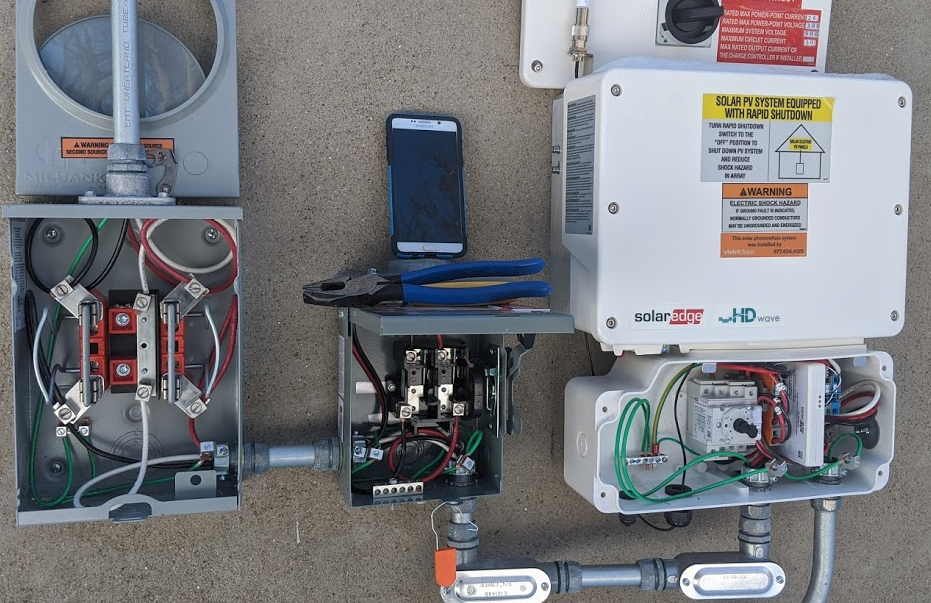
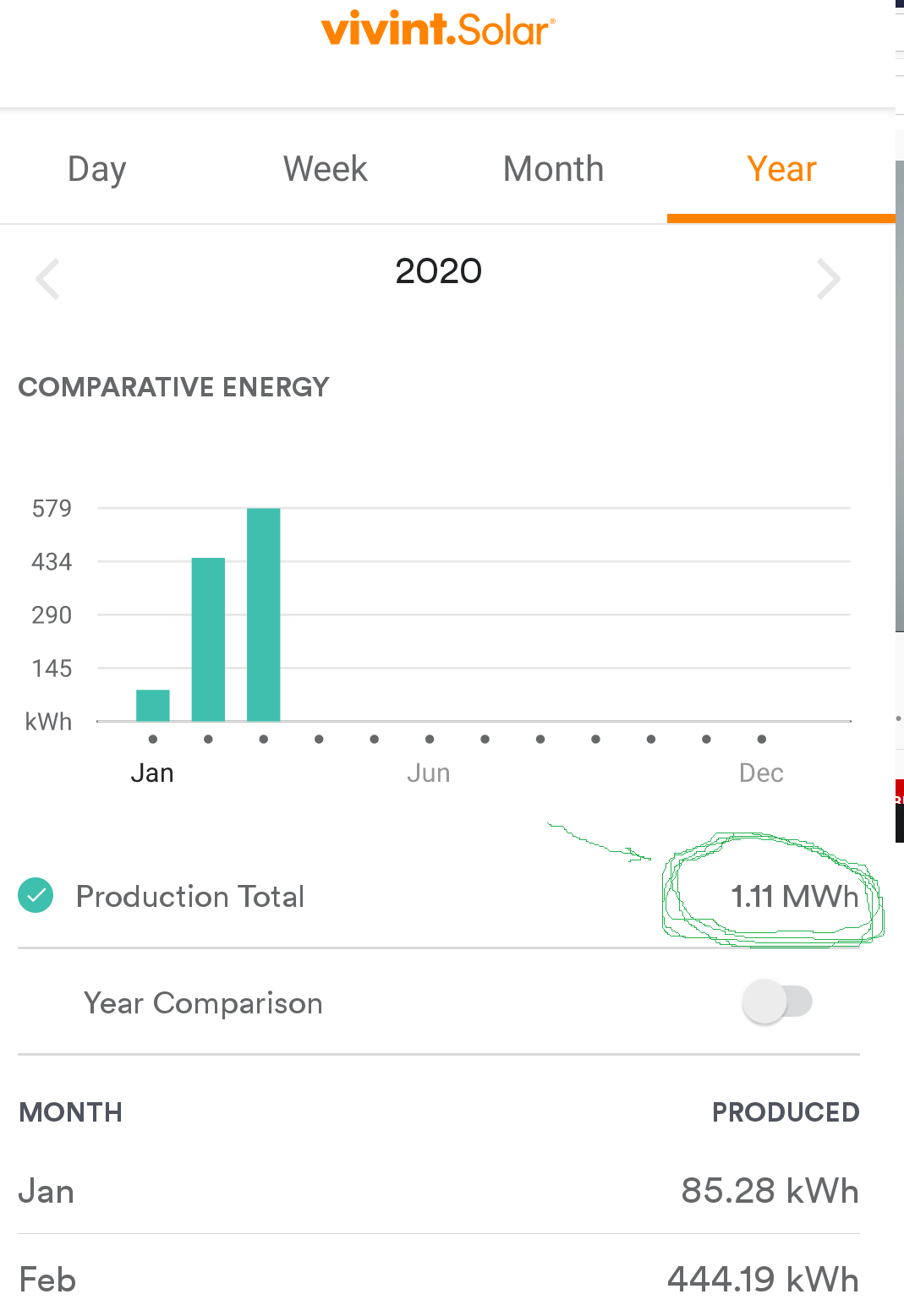
COVID-19 and its spread makes it seem trivial to talk about a single solar power installation. By the same token, we will - with science and good project management - defeat this virus, so in a way, one way to defeat it is to continue working on other important issues, and climate change is one of them. Installing solar power on one house is clearly not going to do much in and of itself, but I hope that one project will yield inspiration and enablement of others. In any case, I had promised to give an update on our home’s solar installation when we went over 1 mWh (one megawatt hour). That's where the wacky blog post title came from... mega-what-our... In any case, we’ve achieved that milestone (see image below)!
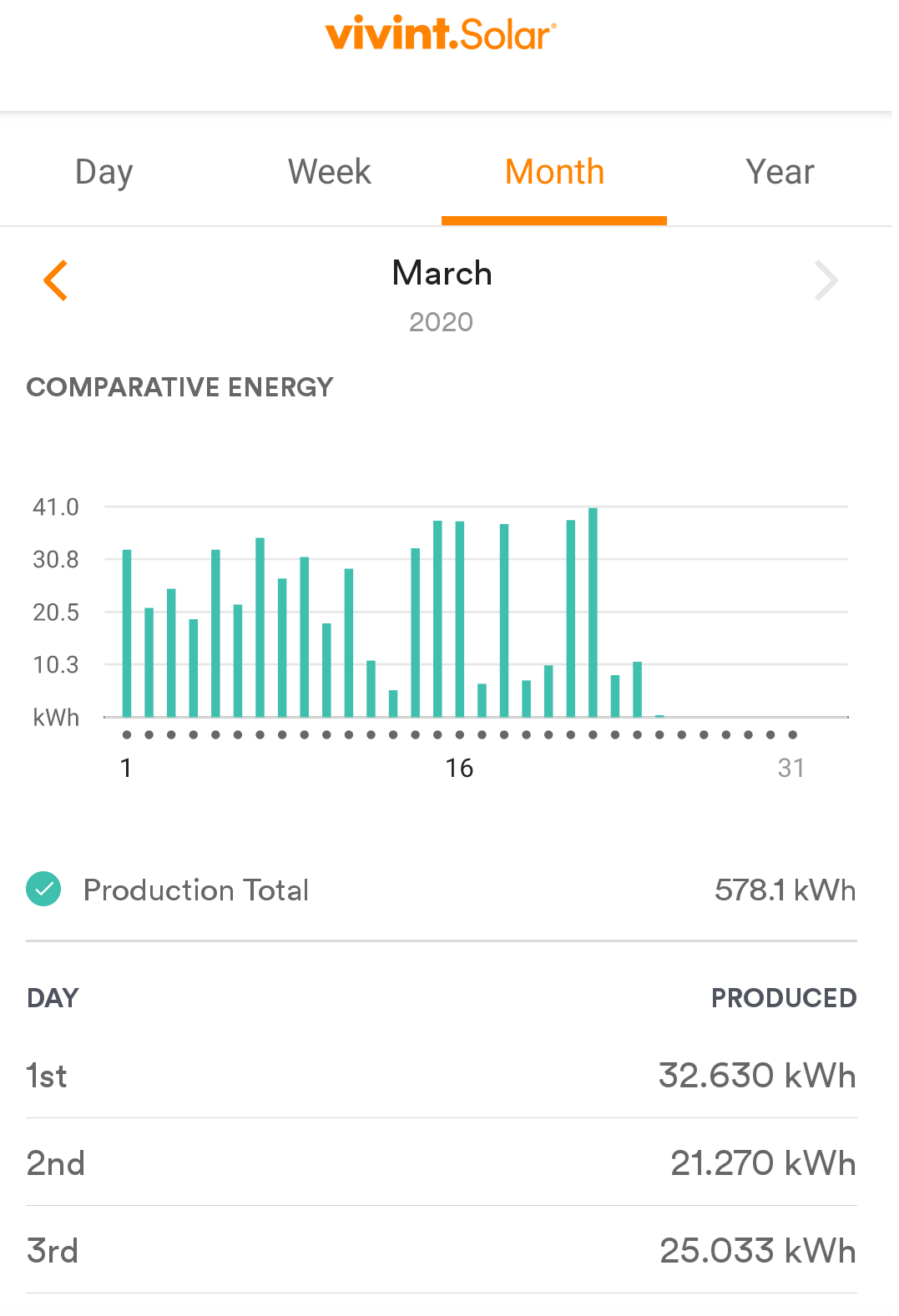
March was a particularly sunny month and that put us over the top. See other image below.
Yep, over 1.1 mWh, with about 580 kWh coming in one month alone! Economically, our bills have dropped to near zero, and now we are enrolled in Massachusetts’ SMART program, which provides additional incentives to solar homes. Learn more about SMART here.
The Massachusetts Department of Energy Resources (DOER), in conjunction with the participating electric utilities is setting their sights even higher for the most energy-efficient state in the nation by launching the Solar Massachusetts Renewable Target (SMART) Program. The SMART Program is a long-term sustainable solar incentive program sponsored by Eversource, National Grid and Unitil. SMART will encourage the development of solar photovoltaic (PV) technology by supporting 1,600 MW of new solar generating capacity. The SMART Program began with 17 projects totaling 53.273 MW of solar PV. These new Solar Tariff Generation Units (STGUs) will generate clean, renewable power for decades to come. Along with this first block of awards, the Base Compensation Rate levels have been set for the SMART program. On November 26, 2018 the SMART Program became available to solar PV projects of all types and sizes, up to 5 MW per project. With your help, we can create a brighter, more sustainable future for Massachusetts. So, it’s a start. It’s one project in a program. And it’s one program in the renewable energy portfolio. Further updates to be posted. Stay well, listen to scientists, and base your decisions on facts. |
|
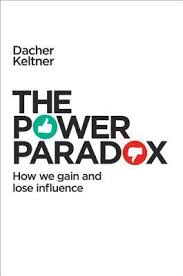
I had promised to give you an update on our solar power installation and I will shortly. In fact, here’s a tidbit: we have produced 700KwH of power in just our first 2.5 months. We're on our way to our first megawatt hour of power! But I want to wait until I start seeing the economic benefit. As soon as I see what this does to our electric bill, I’ll be back to you with more. For now, I want to talk about power but of a very different kind: the power we use to run our PROJECTS. Human power. Project management power! So this is a bit of a departure from the sustainability subject. Or is it? Don’t we want to make a difference? Don’t we want that ability to make a difference to be long-lasting? So, I could easily make an argument that this IS a posting about sustainability in perhaps an even more meaningful sense. Much of this post originates in – or at least the thinking behind it was stimulated by an article https://www.brainpickings.org/2016/09/28/power-paradox-dachter-keltner/ which in turn comes from a book called, “The Power Paradox” by Dacher Keltner.
What is "power" in the world of humans, and therefore in the world of project management? From the book: Power defines the waking life of every human being. It is found not only in extraordinary acts but also in quotidian (blogger’s confession: I had to look this word up – it means ‘everyday’) acts, indeed in every interaction and every relationship, be it an attempt to get a two-year-old to eat green vegetables or to inspire a stubborn colleague to do her best work. It lies in providing an opportunity to someone, or asking a friend the right question to stir creative thought, or calming a colleague’s rattled nerves, or directing resources to a young person trying to make it in society. Power dynamics, patterns of mutual influence, define the ongoing interactions between fetus and mother, infant and parent, between romantic partners, childhood friends, teens, people at work, and groups in conflict. Power is the medium through which we relate to one another. Power is about making a difference in the world by influencing others.
So that actually should make sense to you – it did to me. But there is a problem, and thus the ‘power paradox’. The power paradox is this: we rise in power and make a difference in the world due to what is best about human nature, but we fall from power due to what is worst. We gain a capacity to make a difference in the world by enhancing the lives of others, but the very experience of having power and privilege leads us to behave, in our worst moments, like impulsive, out-of-control sociopaths. How we handle the power paradox guides our personal and work lives and determines, ultimately, how happy we and the people we care about will be. It determines our empathy, generosity, civility, innovation, intellectual rigor, and the collaborative strength of our communities (Blogger’s note: also our PROJECTS) and social networks. Its ripple effects shape the patterns that make up our families, neighborhoods, and workplaces, as well as the broader patterns of social organization that define societies and our current political struggles As project managers, I think this next quote will ‘move’ you a bit. Read it carefully, perhaps even read it twice, slowly: Our influence, the lasting difference that we make in the world, is ultimately only as good as what others think of us. Having enduring power is a privilege that depends on other people continuing to give it to us. WOW. We gain power (and the ability to influence) by improving how others think about us, whether it’s good-natured-ness, or competence, or expertise. But watch out, project managers, we can lose this power easily, because… …another paradox lives inside the power paradox — the more powerful a person becomes, the busier and more rushed she is, which cuts her off from the very qualities that define the truly powerful. What would the studies Keltner cites look like if we controlled not only for power, but for time — for the perception of being rushed and demand-strained beyond capacity? Does that sound familiar, busy project managers? I plan on covering this a bit more in Part 2, including any feedback from all of you all, and some definitions of Power, Status, Control, and even Social Class. That means I would like to influence you to respond to this post with your observations and reflections on how you have successfully made a difference in your projects by using your personal project management power. Will you help? Sure, you will! Do it now while you are thinking about it! Your comments may appear powerfully in powerful part 2! |
|
(AP Photo/Rodrigo Abd) In Part 1 of this series (which you really should read first, no – really, it’s worth it), I discussed the La Plata region of Peru, and how it has been devastated by illegal and environmentally-unsound mining for gold. In this post I will review some of the project management-related aspects of the rescue program. For a little history on this you can visit this article regarding the Peruvian government’s approach to halting the mining. And here, from The University of Maryland’s Public Policy Peru website is a description of Operación Mercurio 2019: The Vizcarra administration and the Council of Ministries adopted a plan for intervention that entered its first phase in February of 2019. It is intended to end gold mining in La Pampa in the near term and invest in sustainable alternatives in the longer term. The formal name of the plan can be loosely translated as the “Integral Plan Against Illegal Mining in Madre de Dios.” It’s known more commonly as “Operación Mercurio 2019.” The plan has four priorities:
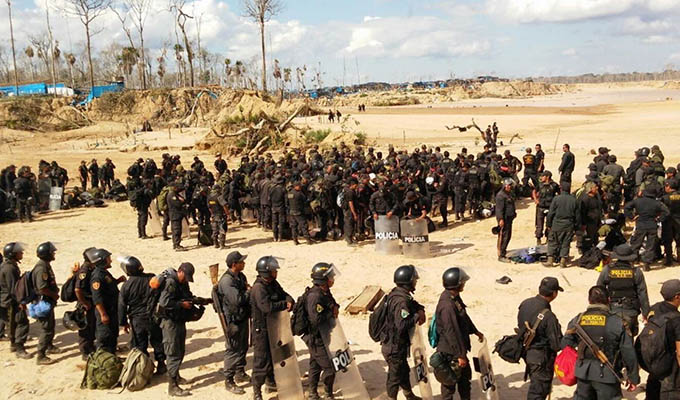
“Priority 1” is done. The Guardian article summarizes this: By air, land and river, hundreds of army commandos and more than 1,200 police officers swooped on La Pampa. Peruvians had grown rather used to seeing images of commandos helicoptered into the jungle, driving out miners and blowing up machines in what many suspected was a show for the cameras. But this time, the scale of the operation and the tone of the rhetoric was different. “We’re not leaving until we see this place green, as it always was,” said Peru’s defence minister, José Huerta. Security forces say they expelled some 6,000 miners, captured dozens of suspected criminals and rescued more than 50 trafficked women in the raid, the result of months of meticulous planning and intelligence gathering.
Photos from https://panamericana.pe/nacionales/260104-autoridades-ejecutan-amplio-operativo-mineria-ilegal-pampa
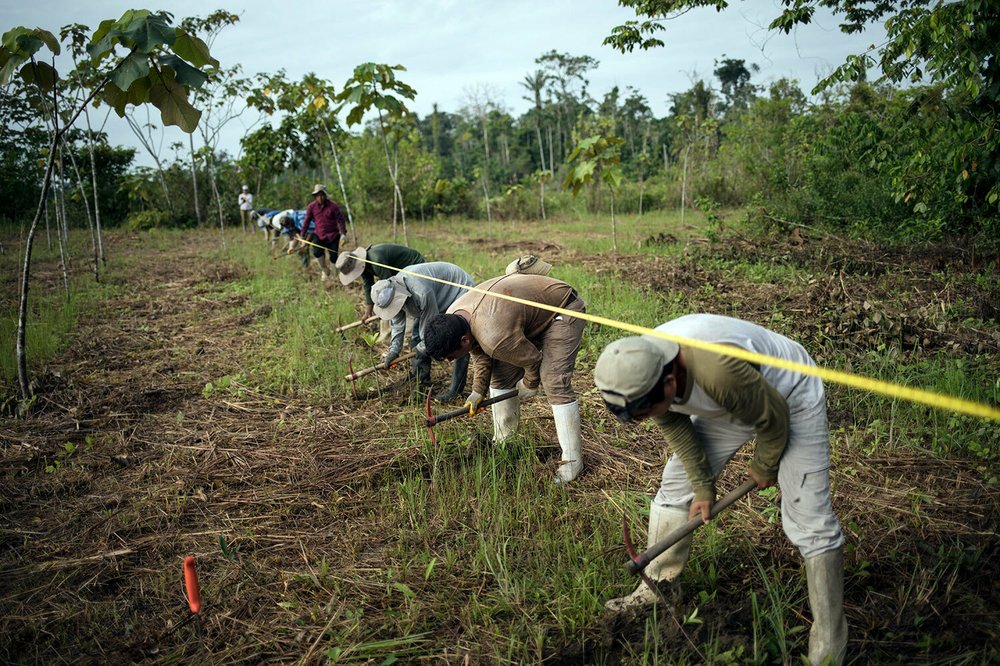
Note the planning element – we can appreciate that as project managers! There is more project management intrigue here as well. Agile prototyping Silman’s team (if you remember, this refers to Miles Silman, the conservation biologist at Wake Forest University who uttered the bad word that gave Part 1 its PG-13 rating) has been growing test plots of more than 75 plant species to guide the reforestation push. The scientists are tracking how the plants perform in a variety of conditions; some prefer flat terrain with direct sun, whereas others need shade or very moist soil. The team’s results suggest that adding charcoal — or a similar substance called biochar — to the soil bolsters plant growth and survival. “We want to give people options, so that we aren’t just planting trees that are going to die,” Silman says.
Done is better than perfect Stuart Pimm is an ecologist at Duke University in Durham, North Carolina. But rather than worrying too much about trying to recreate what was there before, Pimm says that scientists and the government should get some plants in the ground and let nature take its course. “Just getting some forest cover is something they can probably do,” he says, “and it’s going to be a hell of a lot better than a barren landscape with some toxic puddles in the middle.”
The reversal of an expletive and a transition to the (very) long term As you recall, in part one, when Miles Silman saw the devastation, his first words were (appropriately) nasty ones. I close this post with the way the story in Nature closes – hopeful and thoughtful, focused on the future, not the past or present. You can see some of this project work in this rather beautiful article (and photos and videos) from APNews. Here is how the article in Nature ends: As Silman and his colleagues wrapped up their day of field work in June, the sun was setting — and La Pampa was coming alive. Ducks were on the move, and fish in ponds began rising to feed on insects. Silman has little doubt that plants and animals will recolonize this largely empty space over hundreds or thousands of years. The question, he says, is whether scientists can help to accelerate that recovery, or whether La Pampa will remain little more than a monument to human stupidity over the coming decades. There is a lesson here also for PMs – focus not just on the project, but past its results and years, even decades – or in this case, even centuries – into the future. |
|
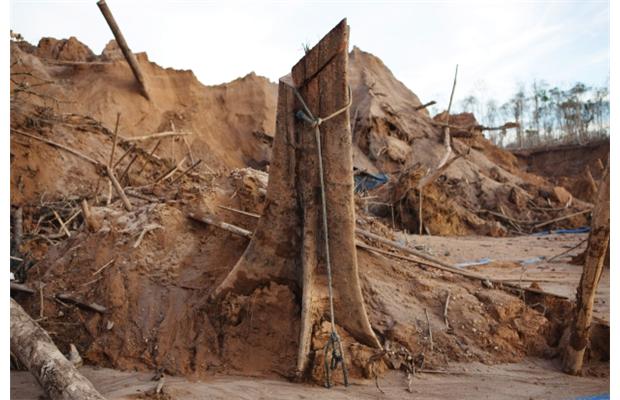
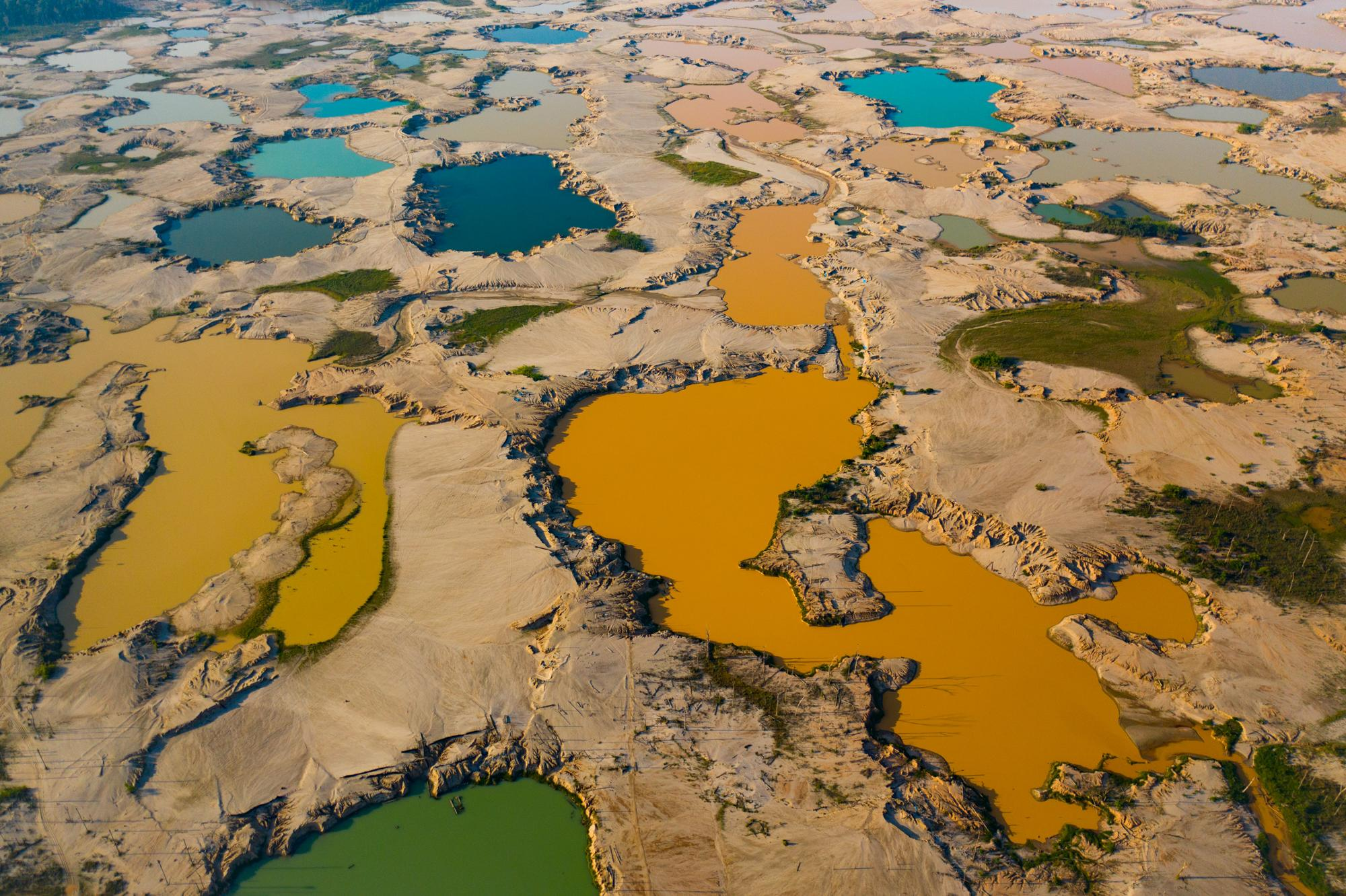
Photo: Rodrigo Abd, AP First up: a quick geography quiz: Most of us know that the Amazon rainforest is mostly in Brazil. That is true… but the question is -True or false: The Amazon also extends into Peru. Answer: Very much true. In fact, only 60% of the Amazon rainforest is in Brazil. The next largest chunk is in Peru (13%), Colombia contains 10%, and the Amazon also extends into Venezuela, Ecuador, Bolivia, Guyana, Suriname and French Guiana. Why this question? I was intrigued by an article in Nature’s most recent edition called “Can A Rainforest Destroyed By Gold-Miners Bounce Back?”. That forced me to better understand the extent of the Amazon, since the article is about gold mining in Peru, and its effects on the Amazon. About the blog post’s title The title of this blog post is a slight take-off (one letter away) from the first telegraph message sent by Samuel F.B. Morse in 1844. The PG-13 is there because of an expletive in the first sentence of the Nature article. Who knew that a respected science journal would start off this way? But I sort of like it – and when you read about it, you will see that it fits. So here is how the article starts: “Holy shit!” Miles Silman gasped as his motorized rickshaw rattled out of the forest and onto a desolate beach. All traces of the trees, vines and swamps that once covered this patch of the Amazon had vanished. In their place were sun-baked dunes and polluted ponds created by illegal gold-mining. Silman, a conservation biologist at Wake Forest University in Winston-Salem, North Carolina, was there to document the carnage. The size of the area is not trivial – we’re talking 5 and a half Manhattans. It’s big, and it’s ugly. How would one describe this? Photographer Jason Houston of the International League of Conservation Photographers, describes it this way: “The temperature as we left the Interoceanic Highway at km98 was climbing towards 101 and the humidity was almost as high, hinting at the hellish landscape I was about to witness. A few hundred yards drive from the main road, through back alleys lined with squatter’s quarters and makeshift sundries shops, we came to a wall of black sandbags and a corrugated metal gate. Beyond this militarized guard post was one of the main tracks into the infamous, lawless, otherworldly gold mining region of La Pampa. A short ride in a three-wheeled cargo cart through some leftover forest, the view exploded open and I entered the belly of a beast that I’d dreamed of exploring since my first, crushing introduction to the region in 2015.” The reason I’m writing about this in a project management blog is simply that the concepts of project management are threaded throughout. NOTE: to best understand this two-part blog post, it’s best if you start with some background and context. I highly recommend you start with this article from The Guardian. That article starts like this: Located along a jungle highway in the Amazon around 60 miles from the nearest city, La Pampa was a place you entered at your own risk. At night it was a riot of neon lights and pulsating cumbía music from “prostibar” brothels, frequented by roaming groups of men flush with cash. Neither authorities nor outsiders – and particularly not journalists – were welcome. This modern-day gold-rush town, home to about 25,000 people, was both a hub for organised crime and people trafficking and a gateway into a treeless, lunar landscape pocked with toxic pools created by illegal gold mining, stretching far into one of the Amazon’s most treasured reserves. But if you are a visual learner (like many of us project managers) you will actually do better looking at some pictures with a bit of narrative.
Photo by Jason Houston / iLCP - see much more here.
This site gives not just ‘pictures’, but amazing, detailed, professional imagery that will make this very, very compelling to you. Visit this ‘storymap’ provided by the aforementioned iLCP, the International League of Conservation Photographers. It’s worth it. Then come back here. A project that will become a Portfolio of Programs and Projects After the Peruvian government raided the area to rid it of illegal miners, it began an initiative – you could think of it as a Portfolio. From the article, the initiative includes: a major reforestation effort — as well as the jobs that it might produce. Working with CINCIA, Peru’s park service and environment ministry have already launched their pilot reforestation project on 30 hectares of the Tambopata National Reserve. The agencies are planning to replicate that work across more than 750 hectares in the reserve. Baselining Mercury One of the problems with gold mining is the use of mercury to bind the gold. Anyone can collect the local silt, which contains gold dust. Even a ‘beginner’ can mix in mercury, to recover as much as several hundred dollars’ worth of gold a day. So the restoration project needs to start with an identified baseline of where the mercury is, and how it got there – so that risk can be properly identified. Risk Risk – and cause/effect – is really a theme throughout this story. In fact, the entire situation of ruined land is a matter of doing this mining without thinking of consequences. But it goes beyond that. In the restoration project itself, project risks (threats and opportunities) are rife. Here’s an example: “What happens if the price of gold is very, very high?” (Silman) asks. “Maybe the illegal miners come back to La Pampa, and there will be conflict with the people who are working in reforestation.” The government would like to make this land useable again. That means farming and fishing. To do that, the land and water must be safe (for example clear of mercury), because if not, the fish from the ponds will contain mercury as well – a major health threat. So far the testing indicates that the land is safe but the ponds are heavily contaminated with mercury. <><><><><><><><><><><><><><><><><><><><><><><><><><><><><><><><><><> Part 1 has focused on the cause (the mining) and the effect (the poisoning and destruction to the Amazon). Part 2 will go much further into the restoration project. |
|
"If you can't convince them, confuse them." - Harry S. Truman |