


Project Success and Your Voice - Part 3


|
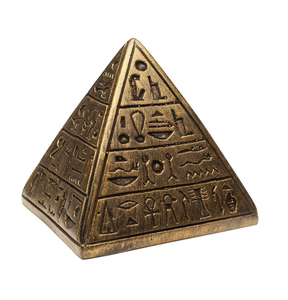
I would like to continue discussing project success as I find the simple fact that this is now “front-and-center” in our practice – I find that to be inspiring. This has been a topic of discussion for decades, or centuries - or even millennia. In fact, my guess is that if you were to go through the archives of the hieroglyphs in ancient Egypt, you would see the equivalent of a rap battle between (1) those who thought the Pyramids were done if they finished on time and under budget and were shaped like a pyramid, and (2) those who felt they were only a success if the spirit of the Pharaoh made it safely to their afterlife. Triple Constraint vs. Triple Bottom Line. Triangles! Pyramids and the afterlife... that’s an odd metaphor - but hey – we’re Project Managers – we love triangles and pyramids, so it works! And, speaking of triangles, the entire idea represented in the Maximizing Project Success report is that long-term (afterlife?) performance of a project’s product seems to be something that actually makes the project itself better. Andy Jordan covers this in his recent article, “What Drives Project Performance?” (read it here – it’s outstanding). What Andy points out, and what inspired me to create a GPT (a chatbot, or AI agent) on the topic, is the idea that ‘execution measures’ – those related to the triangle we know and love called the Triple Constraint – do not show up as a top predictors of project success at all – the top indicators are related to ‘outcome measures’. In the Report, check out Page 22, in which the very top predictor of project success is Sustainability and Social Impact. The triple bottom line... yep: another pyramid! This is a striking finding. An inspiring finding. What does this say? It says what many of us have been saying since … well, maybe since the time of the Pyramids. Effort and thinking and planning spent on what the project’s outcomes, benefits, and value are all about is worthwhile, and will make the project itself more successful – in the true sense of the word “success”. In this way it is very much like some of the research done by thought leaders like Jeff Pinto and Alexandra Chapman, both of whom are also very…inspiring to me. It was inspiring enough for me to create a free GPT (a chatbot) that is based on a mashup of two words: Beyond: meaning thinking holistically about what the project is all about, why it was launched, and who it servers, what benefits it provides, and how it provides value, and even what sorts of negative impacts it will have in the long run. Delivery: the handoff of the project – what we usually think of as the “end” of the project, but what is really the “beginning” of the project’s product’s ‘afterlife’. So: combine those words, and you get “Belivery”. Beyond + Delivery. The chatbot has been (or will soon be) trained with documents from folks like yours truly and Gilbert Silvius, Martina Heumann, Shai Davidov, Alexandra Chapman, Jeff Pinto, and many others I am unintentionally insulting by leaving them off this list. It is populated with examples of projects that have been, perhaps, too “execution-measure” focused at the cost of outcomes, benefits and value. In future posts, I will reflect on how the GPT performs, how it continues to learn, and help project managers take to heart what was published in the PMI report. Think about your projects. The project's product lives on after you turn it over to operations. Do you consider the project's product's ... afterlife? |
Project Success and Your Voice - Part 2 - Eighth Edition
|
Most Likely. First, from Yener Pala, and his post: Below are some reviews and thoughts not just from me but from other informed observers on LinkedIn.
Video by Andrew Ramdayal
Video by Gautham Sudakar Here's an outstanding LinkedIn post by Jose Barato, in which he reviews details of the changes from the 7th to the 8th Edition. Take a look at this: https://www.linkedin.com/pulse/main-changes-pmbok-8th-edition-jose-barato-ou4nf/ I will continue to blog about this in People, Planet, Profits, and Projects especially as the 8th Edition is released. And although it is not my main focus, I’ll discuss how the changes will affect the new PMP (and other certification) exams. I am also (I cannot help it!) blog about the new"IPMA ICB4 Reference Guide on Sustainable Project Management", also recently released. Stay tuned, and be sure to share any comments you have on the 8th Edition PMBOK(R) Guide here in the comments! |

Are we what we do? (Guest Post)
|
Sara Shah We start the year 2025 with a thoughtful post from guest poster, Sustainability Strategist, Sara Shah. Here's her intro:
Sara starts with a very interesting question. Read. Ponder. Act accordingly. ------
Are we what we do? And which part of ‘what we do’ should we be? We spend hours thinking about our jobs, the industries we work in, the markets we appeal to, the future of our company, skills to learn, the impact we want to have, the satisfaction we are or are not getting out of it all, and how to get that promotion and that client. For all the time and attention we focus on our professional lives, we are bound to become more of what we do. As lived experience and the systems and behaviors we interact with, shape our neural pathways and ultimately our identity, who we are as a person, I think we in fact are, largely what we do. So, we should probably be a bit more thoughtful about our choice of profession or consider this in our decision-making for choosing a profession. Then, when we do choose said profession, shouldn’t we do our best to embody it and let it shape us? Should we not do our best to behave in alignment with that? And if that profession happens to be in service of a higher value, such as the environment or the life of all things, shouldn’t we try even harder to conduct ourselves aligned with our values in mind? I wonder how each person comes to arrive at a sustainability-oriented career path. Are you doing optimization as a project manager and suddenly realize, well, I actually AM using resources efficiently, let’s see what else is there? Are you haunted by the numbers and data and news and wildfires and floods and decide to do something about it? Did you grow up in the countryside and have a deep connection to nature ingrained in your psyche? Does it simply make sense? Is it a thing of the heart or of the mind? Or both? I surprise myself as I ask this question in this entry. This is a familiar question that snuck up on me again. Before I even started working on sustainability professionally, when it was a personal question, I would ask this of people: What seed and in what conditions should that seed be planted so one grows up to (how can we put this politely) not leave a giant oil stain in the middle of the ocean? As an Iranian, there are many issues—a long list of things to advocate for or fight against. Quite recently, there was “women, life, freedom.” There is so much struggle within and without to choose from. There are so many different things you can pioneer. In an interesting turn of events, I made the unpopular decision to advocate for nature, plant trees, pick up trash, and learn sustainable management. Among all causes, the environment is a good one to go for. It is so vastly encompassing of so many things. If you want to do it right, chances are that you get to cover human rights to a good extent. If we have come to such a place of maturity and compassionate intelligence where we realize ‘the environment’ as the living space of all things and decide to spend money on renovating and redesigning our systems into ones that are in harmony with that space, we probably recognize other humans and animals and all living things as inherently valuable by virtue of carrying life. This is the holistic view that leaders should take. For me, working on the environment is not only essential (because I’d like to have a place to live) but also a kind of practice that ensures if we’re doing "this", we’re probably getting ahead on covering other bases. It is the kind of field of work where I am bound to take a course on workforce transition and educate myself on how human rights must be practiced in a sustainable community. For example, if we’re shutting down a steel plant in one city because of water scarcity and half the people of that city are actively working for that factory while the rest of the people depend on it for their livelihood, we certainly need to be more mindful in making such decisions than were the morons who built a steel factory in an arid area. Last week, I went to the environmental exhibition in Tehran. There were a lot of cars claiming to use less fuel, a lot of single-use packaging for people’s lunches, a few small and rural businesses and NGOs showcasing their activities, and a LOT of single-use plastic on the panelists’ tables. I attended the circular economy panel. It was good news to see it being discussed and getting some traction. Specifically, in Mashhad, the waste management department had done a lot of good. As I stood up to speak about circular business models, I was bound to mention all the unnecessary single-use plastic items on the tables, which brought a shy, acknowledging smile to everyone’s face. The plastic cups on that table were not the most evil of all things but the stared back at me as representatives of all systemic contradictions. Immediately after, I faced another contradiction in behavior. Someone—a sustainability manager, no less—reached out to me on LinkedIn, talked a lot about values and humanity and fresh air, and then behaved disrespectfully toward me. They used sexist language, demanded free labor, stated that I am dispensable, and neglected and undermined the value of my time and work. Thankfully, they did it clearly enough that I could easily recognize and end that line of communication quickly, but all of this makes me question so much. How can one advocate for life of all things and people and tell one person to their face, that they don't matter? Does our imperfections negate the validity of the work we have done? What is the intention/action importance ratio? As it is, as sustainability advocates, life is quite hard. To begin with, it is a challenge to speak about the “environment” and be taken seriously. If that is managed and whatever company is concerned about their sustainability reports and is seeking a professional with expertise in sustainability, they are most often in it up until compliance and triple bottom line, and hardly would they take steps as far as regeneration and circularity and further redesign. As individuals, does our behavior carry more weight into the impact we are after in the field of sustainable development? How proper and zero waste should we actually be? Then I wonder, how does one bridge the gap in mentality? Where is the common ground on which we can connect? Are you bound to be a jerk like that sustainability manager of an oil company that I encountered? Have the oil fumes gone into your head or is it just cultural background? Must one be a jerk to work in a polluting industry? Does this go hand-in-hand, or can you be a change agent within an industry that – by its nature – is a bit… jerky? It’s quite like being religious. If you wear your religion like a slogan and preach it, it’s kind of more iffy if you go ahead and act in a way that outright breaks fifty rules in that religion’s book. You are likely to discredit yourself as a representative of that religion and also be bad PR for that school of thought. There have been instances where people have questioned me as an advocate of nature about my smoking or wearing makeup, to which I have responded, “No one is perfect, and I’m on a journey, the system is broken.” Although said in a humorous tone, it is not devoid of truth. I do have an addiction that I’m trying to kick, and I am on the lookout for a sustainable makeup brand but still am not ready to give up the Clinique® mascara. What is the compass and guide to balance between the ideals and practicality? Is neglecting or exploiting a group of people impacted by your business in the same department as cigarette butts? This is not a rhetorical question, I am genuinely asking, because I wonder if the same mechanics of being blind to a cigarette butt are the same as a larger enterprise and the people in it, do you just build a higher tolerance for being a jerk and get better at it? As Gil Friend is quoted in the introduction of Maltzman/Shirley’s book Green Project Management, you don’t have to choose between making money and making sense. These stories all somehow mirror each other. Certainly, no one is perfect, no system has it all figured out, and the most solid thing we have to go on in the way of creating a harmonious world is a vision and an intention. That is no small thing, though. Everything we live in has been imagined by someone (often a very short-sighted someone, in my opinion), so renovation is absolutely not impossible. The challenge isn't perfection, it's progress. As much as I dream of sustainability, I promote practicality. As much as I speak of moral conduct and higher values, I know individuals are fallible and encourage taking any action that is available to you. In any of these discussions, obsession is a corrosive virus we should look out for. Still, there is a point of optimization and balance: between professional excellence and ethical behavior, between zero-waste lifestyles and convenience, between industrial progress and clean air, between acknowledging and processing emotions and having logical discussions about the environment, and between dreaming big and taking small, imperfect steps. --- Thank you for sharing this, Sara. You gave us much to think about - and act on!
If you are interested in writing a guest post, respond in the comments or contact me on LinkedIn.
|

Project Success and Your Voice
|
As we round out 2024 and head into 2025, I think it’s important to recognize the progress PMI has made in reframing the practice of project management - into what I call project leadership. In particular, the expanded view of our work from focusing only on scope, cost, and time (which are indeed important) to a long-term, holistic outlook past the end of the projects end date – that’s laudable and really the driving force behind this blog. In particular, I would like to point your attention to their “Maximizing Project Success” thought leadership report published recently (Click Here). And as we approach the New Year, I also would like you to note that the 8th Edition of the PMBOK® Guide is now in the comments period. I’m going to encourage you to chime in and add your comments to the 8th Edition – let your voice be heard! Maximizing Project Success Pierre Le Manh, CEO and President of PMI, captures the essence of the report (well, the part that I like the most) here in the very introduction to the document: "Expand perspective: Ultimately the goal of this research and the call we are making to project professionals is to expand our perspective. All projects have impacts beyond just the scope of the project itself. We all must consider the broader picture and how the project fits within the larger business, goals or objectives of the enterprise, and, ultimately, our world." Part of the document – an important and useful one, is focused on redefining project success. The new definition of project success – and this is strikingly simple and powerful – is: Project Success Definition: Delivered value that was worth the effort and expense. Notice that this is so different from definitions that focus only project efficiency – which you could call project management success - being on time, delivering what was promised at point of payment, and doing it under budget. At the heart of that definition is the concept of project value – which is delivered AFTER the project end date. Thinking about that long-term, operational value of the PRODUCT of the project – this has been the theme of this blog all along, and it is music to my ears to hear this being spoken (loudly!) by PMI. There is so much here – 45 pages worth – so it is worth a read. There are measurements proposed including a Net Project Success Score, and research… but it also has practical learnings you can apply (quoting below):
Moving this forward - The 8th Edition PMBOK® Guide – Comment Period Open As mentioned above, the 8th Edition is now available for comments. You can go there right now here: https://publiccomment.pmi.org/guide-project-management-body-knowledge-pmbok%C2%AE-guide-0 You will have to log in via your PMI account to comment. I suggest that readers of this blog take the time to help PMI’s own words as spelled out in the “Maximizing Project Success” report get into the PMBOK® Guide. It’s worth the time to get your voice heard. You have until 1700 (Boston, MA, USA time) on 19-Jan to submit your comments. Maybe even make it a New Year’s Resolution!
|


Don't Be Project Iceworm
|
In April of this year, NASA scientist Chad Greene was cruising along in a NASA Gulfstream III (see below) with a team of engineers, monitoring a sophisticated radar system (see below) as it probed the Greenland Ice Sheet below.
At one point in the flight, Greene took a photo from the aircraft’s window showing the vast, barren expanse of the ice sheet’s surface. Not much there. But it holds surprises – a big one in this case. The radar unexpectedly detected something buried within the ice. “We were looking for the bed of the ice…,” said Alex Gardner, a cryospheric scientist at NASA’s Jet Propulsion Laboratory (JPL), who helped lead the project. “We didn’t know what it was at first.” Fortunately for this team (and maybe for all of us), the Gulfstream was carrying, NASA’s UAVSAR (Uninhabited Aerial Vehicle Synthetic Aperture Radar) mounted to the belly of the aircraft. The system looks downward and toward the side, not just straight down as previous systems. This produces maps with more depth and dimensionality. The image turned out to be a lost city. Yes – a lost city, with a cinema, a post office, and housing for 200 people. Do I have your interest? A lost city, buried under ice, in a vast expanse of desolate land in Greenland? The story is covered nicely by this short video clip. From this Smithsonian article, here’s a summary of Camp Century: Dubbed the “city under the ice,” Camp Century was a military base built into the Greenland ice sheet by the U.S. Army Corps of Engineers in 1959. At the time, it was near the surface layer—now, after snow and ice accumulated over the decades, it’s buried at least 100 feet deep. Back then, Camp Century was advertised as a polar research site, per Popular Science’s Andrew Paul. Its scientists did collect the world’s first ice core samples, which are still referenced in research today, but the facilities also hosted a much darker venture: a top-secret Cold War mission called Project Iceworm. The classified effort aimed to house and launch a system of missiles within a network of tunnels beneath the ice. The weapons, a type of nuclear missile known as “Iceman,” could launch through the ice sheet, per Space.com’s Brett Tingley. Their potential target was the Soviet Union. You will find a well-assembled 50-minute documentary about Camp Century in the video linked below: Left Behind When the camp was abandoned, the reactor was taken. However, left behind were 9,200 tons of physical waste (building infrastructure), 200,000 liters of diesel fuel, 24,000,000 liters of biological waste, and 1,200,000,000 Bq (unit of radioactivity) of radioactive material were left at Camp Century. Experts believe that the continued degradation of ice sheets will create conditions where this liquid waste will be able to permeate deeper into the ice, possibly into aquifers within the ice sheet, and even the sea. Project connection This effort for Camp Century was built under the name Project Iceworm. A project. With a defined start and end date. With a scope, a schedule and a budget. And with an eye towards the future, including its deconstruction and disposal. Well, not really. The plan was that when the Camp was abandoned in 1967, it would remain under ice and the biological and radioactive wastes would stay there forever. At that time, there was little thought given to melting ice. The assumption made was incorrect. In the not-too-distant future, this camp may be (literally) exposed and those wastes (as above) may make it back into aquifers. What goes around… Long-term and holistic thinking is important for every project. Don’t make your project a Camp Century! Key takeaway: Be a project LEADER and think through your project to its use, the use of the product of your project, and even the disassembly and disposal of your project’s infrastructure. For more information: https://earthobservatory.nasa.gov/images/153616/new-view-of-the-city-under-the-ice https://cires.colorado.edu/news/greenland-and-legacy-camp-century Paper: https://agupubs.onlinelibrary.wiley.com/doi/full/10.1002/2016GL069688 |




