Project Success and Your Voice - Part 3
From the People, Planet, Profits & Projects Blog
by Richard Maltzman,
Dave Shirley

View Posts By:
Richard Maltzman
Dave Shirley
Recent Posts
What is AI doing to the sustainability of our profession???
Stepwells – Insight from a Particularly Valid Angle
Climb-it Change: Pre-Interview Connector
Climb-it Change: New Relevance for the Stepwells of India
A PATH to more equitable health - via AI project leadership
Categories
6th,
6th Edfition,
6th Edition PMBOK,
7th Edition,
7th Edition PMBOK,
8th Edition PMBOK,
8th Edition PMBOK Guide,
Activism,
actuarial,
actuary,
adapt,
addition by subtraction,
Africa,
africa,
agriculture,
airforce,
ajaita,
Alaska,
amazon,
analogous,
analytics,
ancient,
and more power,
antarctica,
anti-science,
apple,
apps,
architecture,
arctic,
arrakis,
Artificial Intelligence,
asch paradigm,
Assistant,
asthma,
astronomy,
automobile,
automotive,
autonomous cars,
b,
bankhar,
Banksy Crypto,
basalt,
baseball,
bats,
batter,
beauty products,
benefit,
benefits,
Benefits Realization,
beyond epica,
biases,
bicycle,
big data,
big dfata,
big dig,
bike,
biodiversity,
biomedicine,
birdhouse,
blockchain,
blood,
blue blood,
blue trees,
bluefin,
bluefin tuna,
book review,
boston,
boston university,
Boyce,
Brazil,
brazil,
Breakdown Structures,
BS,
building,
buildings,
built environment,
built environment,
bumblebee,
cake,
capacitor,
car,
Carbon,
carbon,
carbon capture,
carbon negative,
carbon neutral,
carbon pool,
carbon sequestration,
carbonate,
careers,
CEO,
ChatGPT,
chatGPT,
chatgpt,
chatgpt,
chess,
China,
china,
chopsticks,
citrus,
cli-fi,
climate,
climate change,
climate resilience,
climeworks,
Clumsy,
CO2,
co2,
CO2 Utilization,
coalition,
cobalt,
coffee pods,
cognition,
cognitive,
Collabortion,
colombia,
concrete,
Conflict,
construction 5.0,
cool projects xyloscope,
cooling,
coral,
corn,
cost of good quality,
cost of poor quality,
cost of quality,
crazy,
criticism of project management,
cryptocurrency,
CSR,
csr,
data,
data analytics,
data privacy,
datacenter,
dataset,
death spiral,
Decision Making,
decomposition,
Defense and Climate,
definition of a project,
deforestation,
dependencies,
dependency,
desert,
DIKW,
dikw,
dimopoulos,
disposal,
dna,
DOD,
dogs,
dolphins,
dream,
drilling,
drink,
dune,
dune,
dutch,
early start,
earth,
eatlocal,
eco-tourism,
ecological,
economic,
economics,
EKC,
electric grid,
electricity,
electronics,
elysis,
embodied carbon,
emerging technologies,
empower,
Energy,
energy efficiency,
environmental degradation,
escalate,
escalation,
ESG,
extreme weather,
fallacy,
FARC,
farming,
finance,
fish,
fish brains,
fishing,
fix,
fixing the earth,
flint water,
Flint Water Supply,
flood,
flooding,
Food supply chain,
food waste,
forest,
forest for the trees,
forestation,
forrestgump,
frank herbert,
Fruitcake,
fungus,
fusion,
Galvao,
garage,
gas,
gasoline,
geese,
gender equality,
gender partnerships,
generational differences,
Generative AI,
gladwell,
gold,
Goodness,
google,
Government,
GPT,
great pacific garbage patch,
green,
green building,
green buildings,
green energy,
green iguana,
green project,
green project management,
greening,
guest post,
gyre,
harkonnen,
Harvesting Benefits,
hawasina,
hedgehogs,
heursitics,
historical data,
hlb,
holitsic,
holland,
horseshoe crab,
human-caused climate change,
hydrogen,
hydrology,
ice,
iceland,
ignition,
iguana,
imagery,
impact,
india,
inequality,
information,
initiatives,
injection,
insurance,
intelligence,
interacting risk,
internal combustion engine,
invasive species,
investment,
isomer,
issue escalation,
issues,
ITER,
jobs,
Jupiter,
justification,
kids,
kill point,
knowledge,
koch brothers,
Kuznets,
laboratory,
LAL,
landscape mode,
lapampa,
launch,
LCA,
Leadership,
Leadership,
life cycle analyses,
life cycle analysis,
lifecycle,
Linkedin,
liquid,
lizard,
local,
long term,
long-term,
long-term thinking,
look up,
loud,
maintenance,
maker,
makermovement,
malcolm gladwell,
management,
marathon,
marine biology,
market,
mars,
Martin Luther King,
mean,
megawatt,
MeHg,
melting,
mercury,
metal,
Microgrid,
microplastics,
migration,
military,
millennial,
mindset,
minerals,
mission,
mitigate,
MLK,
mongolia,
museum,
museum of london,
nature,
nematodes,
net gain,
Net Project Success Score,
net zero,
netherlands,
network,
New book,
New Jersey,
New Practitioners,
new york,
NFT,
nitrogen,
noise,
noreaster,
norway,
nova,
NPSS,
NREL,
ocean,
ocean cleanup,
ocean life,
oil rig,
oil rigs,
oklahoma,
oman,
only murders in the building,
opportunity,
overall risk,
oxygen,
packaging,
pareto,
PBS,
permafrost,
persistence,
peru,
Pharmaceutical,
planet,
planet.com,
planning,
plant,
plasma,
plastic,
playground,
pm,
pm education,
pmbok,
pmbok guide,
pmnetwork,
PMXPO-2018,
podcast,
pollutants,
pollution,
poop,
poor,
portfolio,
power,
power skills,
privacy,
privacy concerns,
professors,
program,
Program Management,
project,
project leader,
project leadership,
project management,
project management 3.0,
project on fire,
project progress,
Project Success,
project success,
projecticity,
projectleadership,
projectmanagement,
projects,
psychology,
pulse of the profession,
purple bacteria,
purpose,
quiet,
rainforest,
rationale,
reef,
refugees,
renewable,
renewables,
Repair,
repair,
repeatable process,
repeatable processes,
repurpose,
research,
resource breakdown strucuture,
Resource Management,
reversing climate change,
revisionist history,
rich,
rigs2reefs,
ripe,
risk,
risk avoidance,
Risk Management,
risk mitigation,
risk response,
risk responses,
river,
robots,
rocks,
rules of thumb,
rural,
rural India,
russia,
Sarcasm/Irony,
satellite,
saudi,
schedule,
sci-fi,
Science,
science,
science-fiction,
scientific american,
screaming monkeys,
sea,
sea life,
Sea-Level Rise,
sea-level rise,
seagreens,
seawall,
seawater,
seawater temperature,
seaweed. beat;es. farming,
secondary risk,
selena gomez,
sequestration,
shipping,
skyscraper,
SLR,
smart cities,
smart city,
smelting,
social,
social pressure,
soil,
solar,
solar panels,
solar perovkites,
solar saheli,
sonic,
sponge cities,
SRI,
stage-gate,
stagegate,
stakeholder,
stakeholder management,
steward,
stewardship,
storage,
strategy,
stupid,
success,
suffer,
sulphur,
sunk cost,
supercapacitor,
supply chain,
survey,
Sustainability,
sustainability,
Sustainable Investing,
Sustainable Tourism,
sybiosis,
symbiosis,
system 03,
TBL,
temperature,
terraform,
terraforming,
test,
threat,
threats,
totem,
touchscreen,
tour,
tower,
Trains,
transparency,
transportation,
trash,
tree,
tree species,
trees,
trillion,
triple bottom line,
triple constraint,
truth to power,
UMass,
us army corps of engineers,
USDA,
vacuum,
value,
venus,
vision,
voice,
voltage optimization,
vw scandal,
washing machine,
waste,
wastewater,
water,
we mean business,
whales,
Whirlpool,
wind,
wisdom,
women,
Women in Project Management,
wood wide web,
woonerf,
Work Breakdown Structures (WBS),
world breakdown structure,
worms,
xian,
xylotron,
Yale
Date
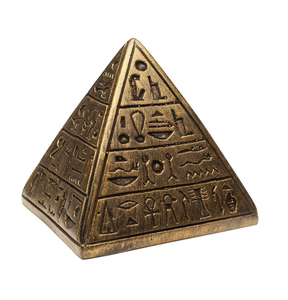
I would like to continue discussing project success as I find the simple fact that this is now “front-and-center” in our practice – I find that to be inspiring.
This has been a topic of discussion for decades, or centuries - or even millennia. In fact, my guess is that if you were to go through the archives of the hieroglyphs in ancient Egypt, you would see the equivalent of a rap battle between (1) those who thought the Pyramids were done if they finished on time and under budget and were shaped like a pyramid, and (2) those who felt they were only a success if the spirit of the Pharaoh made it safely to their afterlife.
Triple Constraint vs. Triple Bottom Line. Triangles!
Pyramids and the afterlife... that’s an odd metaphor - but hey – we’re Project Managers – we love triangles and pyramids, so it works!
And, speaking of triangles, the entire idea represented in the Maximizing Project Success report is that long-term (afterlife?) performance of a project’s product seems to be something that actually makes the project itself better.
Andy Jordan covers this in his recent article, “What Drives Project Performance?” (read it here – it’s outstanding).
What Andy points out, and what inspired me to create a GPT (a chatbot, or AI agent) on the topic, is the idea that ‘execution measures’ – those related to the triangle we know and love called the Triple Constraint – do not show up as a top predictors of project success at all – the top indicators are related to ‘outcome measures’. In the Report, check out Page 22, in which the very top predictor of project success is Sustainability and Social Impact. The triple bottom line... yep: another pyramid!
This is a striking finding. An inspiring finding.
What does this say? It says what many of us have been saying since … well, maybe since the time of the Pyramids. Effort and thinking and planning spent on what the project’s outcomes, benefits, and value are all about is worthwhile, and will make the project itself more successful – in the true sense of the word “success”. In this way it is very much like some of the research done by thought leaders like Jeff Pinto and Alexandra Chapman, both of whom are also very…inspiring to me.
It was inspiring enough for me to create a free GPT (a chatbot) that is based on a mashup of two words:
Beyond: meaning thinking holistically about what the project is all about, why it was launched, and who it servers, what benefits it provides, and how it provides value, and even what sorts of negative impacts it will have in the long run.
Delivery: the handoff of the project – what we usually think of as the “end” of the project, but what is really the “beginning” of the project’s product’s ‘afterlife’.
So: combine those words, and you get “Belivery”. Beyond + Delivery.
The chatbot has been (or will soon be) trained with documents from folks like yours truly and Gilbert Silvius, Martina Heumann, Shai Davidov, Alexandra Chapman, Jeff Pinto, and many others I am unintentionally insulting by leaving them off this list. It is populated with examples of projects that have been, perhaps, too “execution-measure” focused at the cost of outcomes, benefits and value.
In future posts, I will reflect on how the GPT performs, how it continues to learn, and help project managers take to heart what was published in the PMI report.
Think about your projects. The project's product lives on after you turn it over to operations. Do you consider the project's product's ... afterlife?
Posted
by
Richard Maltzman
on: February 19, 2025 11:49 AM |
Permalink
Comments (5)
Please login or join to subscribe to this item
Very interesting, thanks for sharing

Aaron Porter
 Community Champion
IT Director| Blade HQ
Payson, UT, United States
TL;DR - interesting idea. I suggest you also look into PMI's Benefits Realization Management Practice Guide for content to train your GPT on. The rest of this more about the triple constraint and measuring success.
I've been saying for years that project success and product success are two different things. A PM can do everything right, meeting or beating the triple constraint, and the product can still fail. Likewise, a project can come in late, over budget, be missing some features that were part of the initial plan, and the product can still be successful. As PMs, we should care about product success and do what is within our power to make sure there is a plan for value/benefits realization.
I can't speak for all PMs, but at most company's I've worked for, within a week of all but the largest projects completing, I've been assigned to a new project (on top of the 5-9 already in progress). Product success was as out of my hands as much as project selection was. There have been projects where we learned, during planning or execution, that there was no longer value in delivering the product (not enough ROI or demand) and the project was cancelled. I've also worked at a company where finishing the project was considered success, and ALL projects were finished, no matter what.
I recall reading, somewhere, that the triple constraint is not a KPI. It's how you gauge what the sponsor or organization values and you use it to guide decisions when changes to the plan are needed. The project is going over schedule? If cost and scope are more important, that may be okay.
I'd like to close with a quick, minor tangent. When we talk about the evolution of project management, one area where I can see the PM role evolving is in benefits realization management, with PMs more involved with tracking product success and identifying when things are off track and corrective action is needed. At my last employer, where I helped stand up the PMO, I worked with Accounting to establish our approach for project/product ROI, and our PMO was involved in reporting on product success, to a limited extent. I don't think this will be a universal change for all project managers everywhere, but I can see it becoming more common.

SUKUMARAN SUBARAMANIYAN
Senior Manager| Malaysia Rapid Transit Corporation Sdn Bhd
Petaling Jaya, Selangor, Malaysia
Thank you for the information.
Please Login/Register to leave a comment.
|
'Human existence must be a kind of error. It may be said of it: "It is bad today and every day it will get worse, until the worst of all happens."'
- Arthur Schopenhauer
|







