Après les Jeux Olympiques


|
The Paris Olympics are over. Medals have been awarded. Folks are generally pleased with a well-organized program. Given that it was in Paris (a city I have been lucky enough to visit many times) I’m sure that food was considered an important element in that success. Indeed millions and millions of meals were consumed... and not everyone was a 'clean-plater'. There was food 'left over'. This post is about the way the Paris Olympic Committee considered, right from the start – actually way, way BEFORE the start - what would happen AFTER the Olympics, with respect to food waste. After all, there are over 10,000 very, very hungry athletes, and a whole mess (pun intended) of spectators. We’re talking about 13 million meals provided each day of the Games- the largest catering project in the world. From this excellent article from the Associated Press They’ve tried to reduce food waste both preventively, when the menus were being drawn up, and during the Games — signing an agreement with three groups so that uneaten food is collected and redistributed. No project (or in this case, program) will be successful in this endeavor without a vision. Of course a plan and execution is needed, but without the vision and the thoughtfulness involved, nothing happens. In the case of the Paris Games, that vision was made clear. The visionary document is here for your review:
In summary: “The games pledged the recovery of 100% of food that’s not consumed, executed by either redistributing it to charities, converting it to animal feed, or turning it into compost.” This comes from a document created two years before the Games. It’s a good read for any project manager who wants to make that shift to a project leader by thinking long-term, thinking holistically, thinking beyond the bounds of a start and stop date and a scope statement focused on a product and its set of requirements. Here's a nice summary of the story. |


Bookin' it: The Green PMO
| This is just a short post to celebrate the availability of a book which is the result of a collaborative effort of nearly 40 project leaders. Eman Deabil took on the challenge of overseeing these project leaders. As someone whose career involved a few decades of supervising project managers, I can tell you from hard-earned experience that managing project managers, to put it in highly academic terms, ain't easy. But she did it! The book (my copy pictured below) is “Green PMO: Leading the Sustainable Project Revolution”. Remarkable in its breadth and depth, the book covers a huge range of topics. The foreword is written by Antonio Nieto-Rodgiquez, a PMI Fellow and past Chair. As an co-author myself of two books (14 or so years ago!) on the intersection of project management and sustainability, it’s great to see that that this book is not only contributed to by so many respected authors, such as Dr. Gilbert Silvius, Dr. Tony Prensa, and Dr. Mustafa Hafizoglu, but that it is aimed at the PMO level. This ‘aim higher’ philosophy is something my co-author (Dave Shirley) and I had to discover the hard way – and it’s the topic of my chapter of Green PMO. Although a strong bottom-up transformation is required, with individual project managers understanding the role they (can) play in sustainable development, the real motivation, and really, the place ‘where the action is” is the PMO. Program and Portfolio Managers need to buy-in to the ideas of ESG and triple-bottom-line thinking, and they are best-equipped to do so, because they should have the long-term and more holistic viewpoint which might be more absent in the ‘get-r-done’ focus of project managers.
I highly recommend the book (I have no financial interest in it) and also steer you towards Eman's 1-hr webinar, “The Green PMO – Creating an ESG-driven PMO”. I invite those of you who HAVE read this book to comment below. Sustainable thinking in PM is finally gaining purchase with project managers – at least those who want to be considered project leaders, and this book literally documents that transformation. Time for you to get on board! |

Garbage In, Wisdom Out
|
I’ve posted before (I think) about Boston University’s Center for Computing and Data Science – affectionately known in the Boston area as the “Jenga Building”, due to its odd (but cool!) design. If I’ve missed doing that, or you have no idea why I am talking about a Jenga building, you may enjoy this video in which Boston University students react to the building. And, although this may make you dizzy, have a 5-minute, really cool drone tour of the building’s interior and the local campus which is my stomping grounds with this video: In any case, the building is known well on campus (and in the city of Boston, where it is strikingly visible from across the Charles River by folks at Harvard and MIT) because of its shape, and somewhat because of its LEED Platinum rating. No gas is plumbed into the building. There are 31 boreholes, each 1,500 feet deep, under the building. This is TWICE AS DEEP as Boston’s John Hancock Tower is tall. So if you know Boston, that’s 31 very, very deep wells, which provide the heating and cooling for the building. The system provides over 300 tons of heating/cooling capacity. Heat pumps use the temperature differential the earth provides (ground temperatures are constant at about 55 degrees Fahrenheit) to draw heat from the ground in the winter and to expel heat in the summer. But this post is not about those aspects of the building in particular. It is instead, focused on … garbage. We all know the old adage, Garbage In, Garbage Out – GIGO. It’s particularly apropos in today’s age of AI. Ask AI to schedule and budget your project, and have a decimal point missing or mistype a year’s last digit and AI will dutifully provide you with a beautifully-wrong calendar and aesthetically-pleasing pie and donut charts (now I am hungry!) that are way, way, off. At the BU Center for Computing and Data Science, the Garbage In is actual garbage. And the idea is to measure what sorts of garbage are going in using a uniform set of 234 bins for collection – and eliminating bins in each room of the building. The analytics from all of this garbage data provided information, knowledge, understanding, and wisdom (The DIKUW Pyramid as promoted by the folks at AI Today!) about waste which can be used to make decisions on processing that waste, and even to provide a means to change the behavior of individuals to improve recycling. Much of this is covered in this tremendous article called “Waste Watchers” – summarized in this video:
Here’s an extract: “Everybody talks about the geothermal wells and the no fossil fuels, but we’re also striving to be a TRUE zero-waste–certified building,” says Sam Moller, BU Sustainability assistant director of communications. “That’s arguably harder than getting an LEED certification because zero waste is all about human behavior.” TRUE zero-waste designation requires a facility to divert a baseline 90 percent of its waste away from landfills and incinerators and ensure that “contamination”—aka incorrectly disposed-of items—is under 10 percent. The 90 percent number comes from the fact that in general, about 90 percent of the waste we generate could be “recycled, composted, reduced, or eliminated altogether,” Moller says. (The TRUE designation requires a year’s worth of data before a facility can be certified.) And that’s where the interns (the three ‘waste-watchers’ featured in the article) come in. Each bin has a sensor that tracks the weight of its contents. But as for what those contents include? Cue Shotland, Palmer, and Lagomarsino. They make the rounds every shift with their phones, photographing bins throughout the building’s 17 floors to see what’s being put where and to see who needs a little lesson in proper disposal. (The photos and weight data go to Spare-It, a Boston-based waste technology company partnering with BU Sustainability.) Spare-it is an interesting company and probably worth a blog post on its own. It’s the partner that is helping to process the garbage into good data, using their platform (see figure below). With the advent of AI, and improvements in data analytics, the garbage in is NOT garbage out. It’s more like our title – Garbage In, Good Data (and Information, Knowledge, Understanding, and Wisdom) Out.
|


Risk Response to Greening
|
In this post, I discuss two very different risk responses to a devastating threat that has an oh-so-friendly name. The threat is “Greening”, and if you have anything to do with the farming of citrus, you are very familiar with this threat. From this US Department of Agriculture site: “ Citrus greening, also called Huanglongbing (HLB), is a bacterial infection of citrus plants, caused by the bacterial pathogen, Candidatus Liberibacter asiaticus (CLas). It is one of the most serious citrus diseases in the world. Once infected, most trees die within a few years. There is no cure.” The effects of this threat are stunning. Since 2005, HLB, first detected in the USA in Florida, has spread throughout that state, killing countless trees and devastating orchards, reducing citrus production by 75%, and more than doubling production costs. Unfortunately, it was not contained, and the disease has now progressed westward to Louisiana, Texas, and even California. Here’s a video describing the insect vector for the bacterial infection (the Asian citrus psyllid): One risk response: Avoid The Avoid threat response means NOT doing whatever it was that admitted the threat into the picture. So in this case, that means not planting citrus. Instead, farmers have used their fields to plant the Pongamia tree, an ancient Indian tree (Hindi name ???? karanj). This is a fascinating tree with uses as far-flung as using its twigs as a toothbrush to curing scorpion bites. But in this case, the tree provides a boost to the farmers affected by Greening by giving them a profitable crop that is healthy, durable and – ironically helps with the other sort of “greening” – because its pressed berries/seeds produce an oil that can be used (for example) as jet fuel, with the remaining product can be used as flour and other plant-based proteins. Vendors also sell the oil as cures for… well, you name it. Below are images of the tree, its flowers, berries, and examples of products made from it:
This video from the Associated Press sums up the Avoid response:
The other risk response: Mitigate Remember (my students will tell you that this is a grade-crushing pet peeve of mine) that Mitigate is not a synonym for Response. Many textbooks and papers on project management talk about risk response as mitigation. Sure, mitigation is a common response – it involves reducing the likelihood and/or probability of a threat; but it is NOT by any means the only way to respond to risk. You just saw, above how Avoid is another risk response strategy, as is Transfer, and Escalate, for example. So, in this case the mitigation is to reduce the probability of the infection and the impact if infected. To that end, (from this USDA site) “researchers at the ARS Crop Improvement and Genetics Research (CIGR) unit in Albany, CA, have discovered a way to augment the tree’s natural immune response to pathogens so that it recognizes HLB. According to James Thomson, a geneticist at CIGR, transgenic plants that produce receptor proteins that can recognize pathogens are able to activate a plant’s own immune response when exposed to Clas. Previously, the best ways to deal with HLB were to remove affected trees from orchards and kill the ACPs that were spreading HLB. Those efforts ranged from spraying pesticides to cloaking trees in tents. Transgenic trees with a boosted immune system that responds to Clas could potentially help citrus growers fight citrus greening.” Takeaways for project managers:
|





Concrete Tinker
|
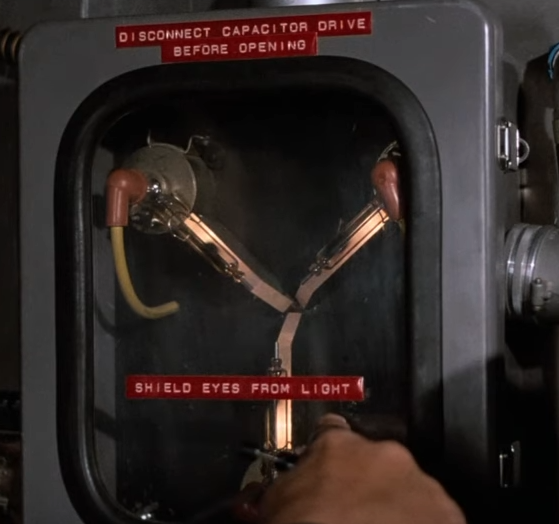
That’s not a typo. The word play is on the phrase concrete thinker – but this is about tinkering with concrete to make it do more than…sit there. I’d like to transition from the DunEcology series to regular (if you can call my posts “regular”!) posts. This one still involves sand, so there is still a connection to Dune. However, this sand is in the mix of a material we all know: concrete. What we may NOT know is that concrete may be a source of power. A recent feature story from BBC’s “Future” series (recommended!) is titled, “How The Concrete In Your House Could Be Turned Into A Battery”. Previously I have blogged about the idea of using roads (well, the pavement on roads) to power vehicles. It was a two-part series, recalling the fantastical "flux capacitor", called "Doc Brown Would Be Proud". Side note: could THAT be a real thing? See this video.
Now back from Hollywood, California to Cambridge, Massachusetts... This is about the use of concrete as a potential power source. It’s about supercapacitors, a much, much larger version of the little disc-like or cylindrical components (you know them if you are a ham radio enthusiast, electronics engineer or general-purpose tinkerer) that force us to unplug our routers for 20 seconds because there is a stored charge. Quoting the article’s interview with MIT researcher Damian Stefaniuk: carbon-cement supercapacitors could make an important contribution to efforts to decarbonize the global economy. "If it can be scaled up, the technology can help solve an important issue – the storing of renewable energy," he says. Don’t get your expectations too high now, though. The concrete supercapacitor can store around 0.3 KwH per cubic yard – enough to power a 10-watt LED lightbulb for 30 hours. You won’t be running your AC system on that. However, there is plenty of promise with the technology. According to the article, a foundation with 1,060-1,410 cubic feet of concrete could be sufficient to meet the daily energy needs of a residential house", says Stefaniuk. "Given the widespread use of concrete globally, this material has the potential to be highly competitive and useful in energy storage." And that’s with the current materials. Developments in material science and a focus on the Built Environment may yield leaps and bounds in the storage capacity of concrete and other building materials. To be fair, I’d like to present two views of this idea, one from the MIT researcher Damian Stefaniuk, and one from the (amazingly named Thinker and Tinker) video channel Robert Murray-Smith, who sees this only as a headline-grabber. Being the arbitrator that I am, I appreciate both views and imagine that the truth is somewhere in the middle. Here is the optimistic view by the researchers: And here is the ‘debunk’, by Robert Murray-Smith: I invite you to decide. Either way, there is a lot to learn and anticipate in terms of energy storage, the role of research, and the contributions to energy storage from the Built Environment. |