DunEcology: Sand Worming Its Way Back To Sand


|
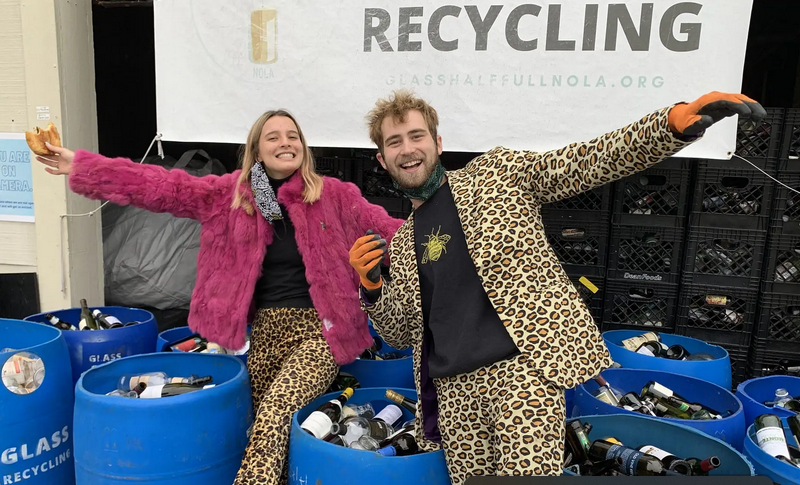
I thought I would bring us back to our world from Arrakis in this final posting of my series on Dune, by taking us very intentionally to New Orleans, Louisiana. That’s actually perfect, because if you know that city, you know it’s (justifiably) recognized for its food, including the beignets at Café du Monde. And what does Café du Monde mean? Café of the World. Our world - Earth. On Arrakis, most of the planet’s surface is sand. The ecology is based on sand, the very lack of water, and the giant sandworms that cruise through (and under) the sand. Here on Earth, sand is the basic ingredient of glass. Glass is the basic ingredient of wine and beer bottles, and wine and beer (and whisky, and bourbon...) are basic ingredients of New Orleans. After all, one famous expression from the city is "Laissez les bons temps rouler" - let the good times roll! What happens to all of those bottles when there is no recycling program in the state of Louisiana? And that brings us to Glass Half Full Louisiana. From their “About” page, here’s what this organization is about: As seniors at Tulane University in 2020, we were disappointed and frustrated with the lack of glass recycling in New Orleans. One night, over a bottle of wine that we knew would end up at the landfill unless we did something about it, we hatched a plan to combat this problem. Specifically, we wanted a system that was transparent, accessible, and most importantly, actually recycled glass into something functional. Instead of trying to take on the task of reforming the current system, we decided to look at the ‘glass half full’ by implementing our own grassroots glass recycling program. So they started their own grassroots recycling program, offering multiple free drop-off hubs across the city, where they collect glass “waste” from residents throughout Louisiana. This was all destined for landfill. Instead, they (see photos below)
This provides them with the ability to make gravel or (you guessed it!) sand. What happens to the sand? Ironically, one of the issues faced by Louisiana is erosion, caused, at least in part, by rising water levels and a greater quantity of and more intense hurricanes. In fact, the forecast for the 2024 season is very foreboding. In a press release from just a couple of days ago, the US National Oceanographic Atmospheric Administration (NOAA) is forecasting 17 to 25 total named storms (winds of 39 mph or higher). Of those, 8 to 13 are forecast to become hurricanes (winds of 74 mph or higher), including 4 to 7 major hurricanes (category 3, 4 or 5; with winds of 111 mph or higher). Forecasters have a 70% confidence in these ranges. The other causes of beach erosion serve as a good example of secondary project risk. Flood control structure projects have a good rationale but have caused significant problems in the long term. Project managers should be thinking not only of the short-term outputs and outcomes of their initiatives but also of what happens in the years or decades that follow. From the Glass Half Full website: Louisiana has lost a quarter of its wetlands since the 1930s as a result of flood control structures designed to protect communities and businesses from flooding. While well-intentioned, such structures have prevented the deposition of sediment into barrier islands and wetland areas by the Mississippi River’s spring floods, a natural process critical to the preservation of coastal areas. Consequently, land is disappearing much faster than it can regenerate. So the sand can be use for re-establishing beaches as well as many other purposes. From the Glass Half Full website: New Orleans wastes millions of tax dollars per year dumping recyclables in landfills (we pay per pound that's discarded) and on importing millions of pounds of sand. Turning glass back into sand saves money on both ends (less dumping, less importing of sand). I find this inspiring and a project (turned operation) worth our attention, and a solid example of how we can be more sustainability-oriented project leaders. For those of you who are more visual, here’s a video that describes this initiative: |
DunEcology: Just fill out this terraform...
|
In Frank Herbert’s novels, the Fremen of Dune (formal name: Arrakis) are at work on a multi-generational project (or rather portfolio of projects) to transform Arrakis into a more habitable, temperate - even forested - planet. This was being done under the guidance of a planetologist (Liet-Kynes), who aimed to transform Arrakis into a livable world. NOTE TO READER: There's a great glossary of terms here if you're getting distracted by (or are curious about) the 'lingo' here. The process of making a world (or moon) habitable for humans is called terraforming. You can read more about it here: https://www.earth.com/earthpedia-articles/terraforming/ The idea of doing this very same thing to Mars – or Venus – or moons of the larger planets, for human habitation, is covered in this fascinating article which relates back to Dune’s ecology: https://www.sciencefocus.com/future-technology/dune-could-we-terraform-mars
Robert Zubrin, the founder of the Mars Society has proposed (and continues to propose) terraforming Mars with a mission called Mars Direct. Check it out here: https://www.marssociety.org/concepts/mars-direct/, and in his paper here: https://www.researchgate.net/publication/4702054_Mars_Direct_A_Simple_Robust_and_Cost_Effective_Architecture_for_the_Space_Exploration_Initiative In fact, this started me down a ‘rabbit hole’ of research on terraforming and it’s not just science fiction – there are serious projects (programs – or portfolios, really) that have been proposed: Research on terraforming https://www.researchgate.net/publication/234376372_Possibilities_of_Terraforming_Mars Back to Arrakis Doing this terraforming on Dune, however, dooms the sandworm. Water is poisonous to the this huge creature. Yet, the sandworm provides the basis (through its production of Spice) of the planet’s economic well-being, as well as a being worshiped by the Fremen. In this ironic twist, ecology defeats economy. On earth, a focus on a carbon-based economy – at least some say - could defeat the ecology. For the Fremen, they have to think about a long-term view (many generations terraforming their planet to be more habitable) and a hugely long-term view (they may destroy a creature they worship, which provides the planet with its main source of income, and which enables space travel). And now, back to Earth How about Earth? If you believe in the Anthropocene (see the link for details), we humans are doing the opposite of terraforming (anyone have a suggestion for a name? Terradissolution?). I think that anything we’re doing (starting with being conscious of our impact on the planet) to reduce the effects that humans have on the planet is important to avoid terradissolutioning the earth. I find the project/program/portfolio aspects of these initiatives fascinating in and of themselves, because they are such sweeping, huge, literally interplanetary efforts involving disciplines as far-flung as chemistry, aerospace, urban planning, and ethics. Maybe one day you will find yourself (if not on Mars) part of a terraforming portfolio! |

DunEcology - Principle 1
|
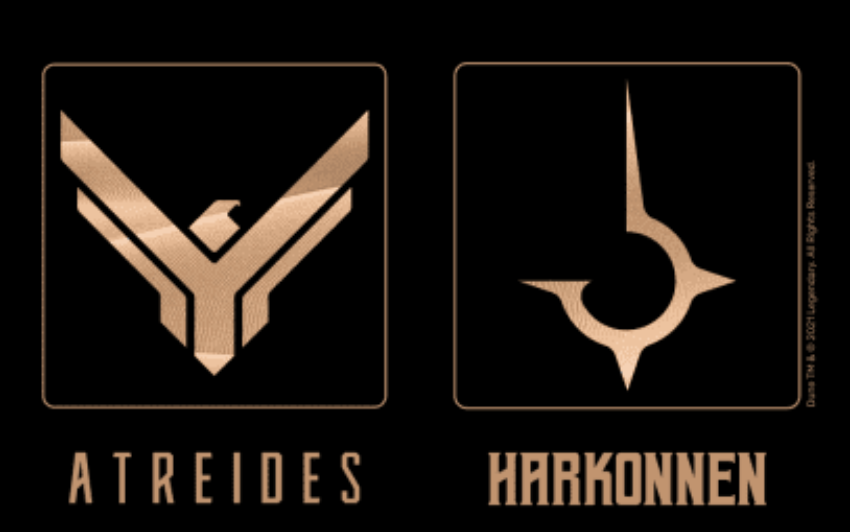
Photo Credit: Warner Bros. In the previously referenced story from Fast Company, we know that “Frank Herbert’s masterpiece also helped Afrofuturist novelist Octavia Butler imagine a future of conflict amid environmental catastrophe; it inspired Elon Musk to build SpaceX and Tesla and push humanity toward the stars and a greener future; and it’s hard not to see parallels in George Lucas’s Star Wars franchise, especially their fascination with desert planets and giant worms. And yet when Herbert sat down in 1963 to start writing Dune, he wasn’t thinking about how to leave Earth behind; he was thinking about how to save it.” This blog series now shifts to discuss how project managers can learn from some of the basic principles from Dune and strives to connect what we do as project managers that can make us project leaders if we apply these principles. Since this blog posting is a series, I am going to hold off on the many ecological aspects and how they connect with project sustainability thinking, and instead focus on a Dune Principle of project leadership. Don’t worry: the environmental themes are too important to leave out – they will be covered! Dune Principle 1: Servant Leadership and Empathy One of the most important themes of the book (and the series, and the movies) is the way that the House Harkonnen rule Dune (the planet Arrakis, where most of the story takes place), compared with the way that the House Atreides operates. For those unfamiliar with Dune, a House is “a dynastic seat of power, sometimes limited to a world and sometimes spanning several worlds. Numerous Houses existed within the imperial hierarchy, and collectively they formed the Landsraad” What’s a Landsraad? It’s basically a council of landowners, except that ‘land” could mean one or more entire planets. The symbols (thanks to Dream Artworks) of the two Houses are shown below.
So how did the two Houses’ leadership styles differ? Ask the Fremen. Or, note the way that the Harkonnens are portrayed in the film. Well, in short, one could say that House Harkonnen used Command and Control, and House Atreides embraced Engage and and Empower – at least in general. Things do change in battle. This whole dynamic is actually the subtitle of good friend Gordon Mackay’s excellent book which I use in my course, Project Communications and Leadership at Boston University. You can find the book here, and as you read it, think of those two Houses. I’ll summarize a little bit below. In his book, Gordon says: “…‘project management’ is, increasingly, a contradiction in terms. Managerial ‘command and control’ does not inspire or, engage, nor does it foster the synergy of collaborative working. The function of delivery to cost, time, quality and scope remains. But, the function in delivery is to adopt a form fit for purpose in increasingly VUCA external and internal delivery environments. This chapter expands on the new function of project leadership – what it seeks to achieve as underpinned by relevant contemporary theory. It is followed by a structured approach for the aspirant and unctiong project leader to apply, in order to establish effective project leadership. The function of project leadership is to empower and facilitate the realisation of individual and team potential, and the emergence of collaborative team synergy. Just as the function and form of ‘stakeholder management’ shifts towards ‘stakeholder engagement’ , so too, now, successful project delivery requires a move from ‘project management ’ to a function and congruent form resulting in a fully ‘engaged’, collaborative team. What ‘engages’ the team, and all project stakeholders? Gordon has been a guest in my courses several times. A further example of his wisdom can be found in this one-hour video: This applies, of course, to project leadership, and it has not gone unnoticed in the world of overall HR and leadership. In fact, I found an excellent blog post which covers the Houses as well as the Bene Gesserit by Luis Querido, right here. Here’s Luis’ summary of the two Houses: “House Atreides exemplifies ethical leadership, characterized by integrity, honor, and a profound sense of justice. Duke Leto Atreides, the patriarch, is revered not only for his strategic acumen but also for his compassionate and principled approach to governance. He places a high value on loyalty, trust, and the well-being of his people, which in turn inspires deep loyalty from his subjects and followers. This leadership style underlines the importance of ethical considerations in decision-making and the long-term benefits of fostering a positive organizational culture.” House Harkonnen represents authoritarian leadership, marked by power, manipulation, and greed. Baron Vladimir Harkonnen’s rule is defined by fear, exploitation, and treachery, focusing on the accumulation of power and wealth at the expense of others. This approach highlights the dangers of leadership that prioritizes personal gain over the collective good, often leading to resentment, rebellion, and eventual downfall. The main character of Dune’s initial trilogy, Paul Atreides, spends much of his time building trust with the Fremen, through logic, authenticity, and empathy. NOTE: those very specific words come from this foundational article on trust-building, team-building, and communications-strengthening from the Harvard Business Review. It is in this way that he is able to build an alliance that will enable House Harkonnen to generate (spoiler alert!) an unlikely victory over House Harkonnen. Can your leadership style evolve from Command and Control to Engage and Empower? Watch the movie (or read the books) and consider if there is some learning there. I assert that there is. |

DunEcology - Part 0
Categories:
dune,
arrakis,
desert,
planet,
terraform,
construction 5.0,
frank herbert,
science-fiction,
sci-fi,
cli-fi
Categories: dune, arrakis, desert, planet, terraform, construction 5.0, frank herbert, science-fiction, sci-fi, cli-fi
|
In this first “teaser” post, I want to address and explore the connections between sustainability (or at least the environmental pillar of the Triple Bottom Line) and the wildly popular movie franchise Dune. Or, more accurately, I want to make readers aware of the connection between Frank Herbert’s novel from the novel first serialized in 1963 – before many of you were born, and perhaps before many of your parents were born! At that time, ecology was not really a ‘thing’. Gas (petrol) cost US$0.30 per gallon. The PMBOK(R) Guide didn't mention sustainability. I can guarantee that - because there was no PMBOK(R) Guide yet. Indeed, it would be 6 years until the Project Management Institute was founded. I would like to give you the background of the novel (and now the latest rendition of the film) so that you can better appreciate the story and better connect it to projects, programs, and portfolios, and better connect your project work to the realm of sustainability. By the way, for those of you who think it's silly to take a science fiction book and apply it to real-world project management on Earth, have a look at this extract from Science News. Herbert's imagination is scientifically plausible: "Not only did Herbert create a rich fantasy world, he also built a plausible planet, says Alexander Farnsworth, a climate modeler at the University of Bristol in England. A few years ago, Farnsworth and colleagues made a computer simulation of the climate on Arrakis. People could live on the desert planet, the team concluded, but Herbert probably should have relocated his cities closer to the equator than the poles." So, what could ornithopters, and the behaviors, beliefs, and technologies of a people called the Fremen have to do with projects – or sustainability? Quite a bit. Rather than provide a synopsis here, I advise you read this very short summary of the book from Brittanica (WARNING: there are some spoilers here!). Next, consider some of the concepts conveyed by Herbert: planetology, the idea of a Butlerian Jihad, to expunge humanity of Artificial Intelligence (AI), and the resulting creation of human computers (Mentats) who replace all computing devices, the development of clever technologies such as the stillsuit to preserve water in desert conditions, the creation of a body shield impervious to any (fast) motions, even the concept of ‘terraforming’ which could be considered an extreme application of Construction 5.0… all of these could be considered portfolios of projects and programs – and most of them were triggered by ecological changes on the planets in Herbert’s universe. For now, have a look at this extract from an excellent article from Salon which precedes the release of the latest movie series by about 10 years: Gerry Canavan, assistant professor of English at Marquette University and co-author of "Green Planets: Science Fiction and Ecology," sums up the novel's legacy well when he writes in an email interview, "'Dune' is really a turning point for science fiction that takes ecology seriously as a concept." Frank Herbert's son would be among the first to agree with that assessment. In "Dreamer of Dune," his 2003 biography of his father, Brian Herbert recounted many instances that demonstrated his father's interest in environmental issues, including his backyard experiments with solar and wind power. In a telephone interview from his home near Seattle, the younger Herbert said, "In 1970, on the First Earth Day, Frank Herbert spoke to 30,000 people in Philadelphia and he told them, 'I don't want to be in the position of telling my grandchildren, 'I'm sorry, there's no more Earth left for you. We've used it all up.'" As I mentioned, this is only a ‘teaser’ post. I haven’t even mentioned Dune’s giant Sandworms and the economic impact of Spice yet. But that’s coming, and there are some elements of that that fall directly into that intersection between project leadership and sustainability. So have your crysknife ready as we’ll soon slice and dice these concepts together!
|

The Power of Awkwardness
| The Power of Awkwardness
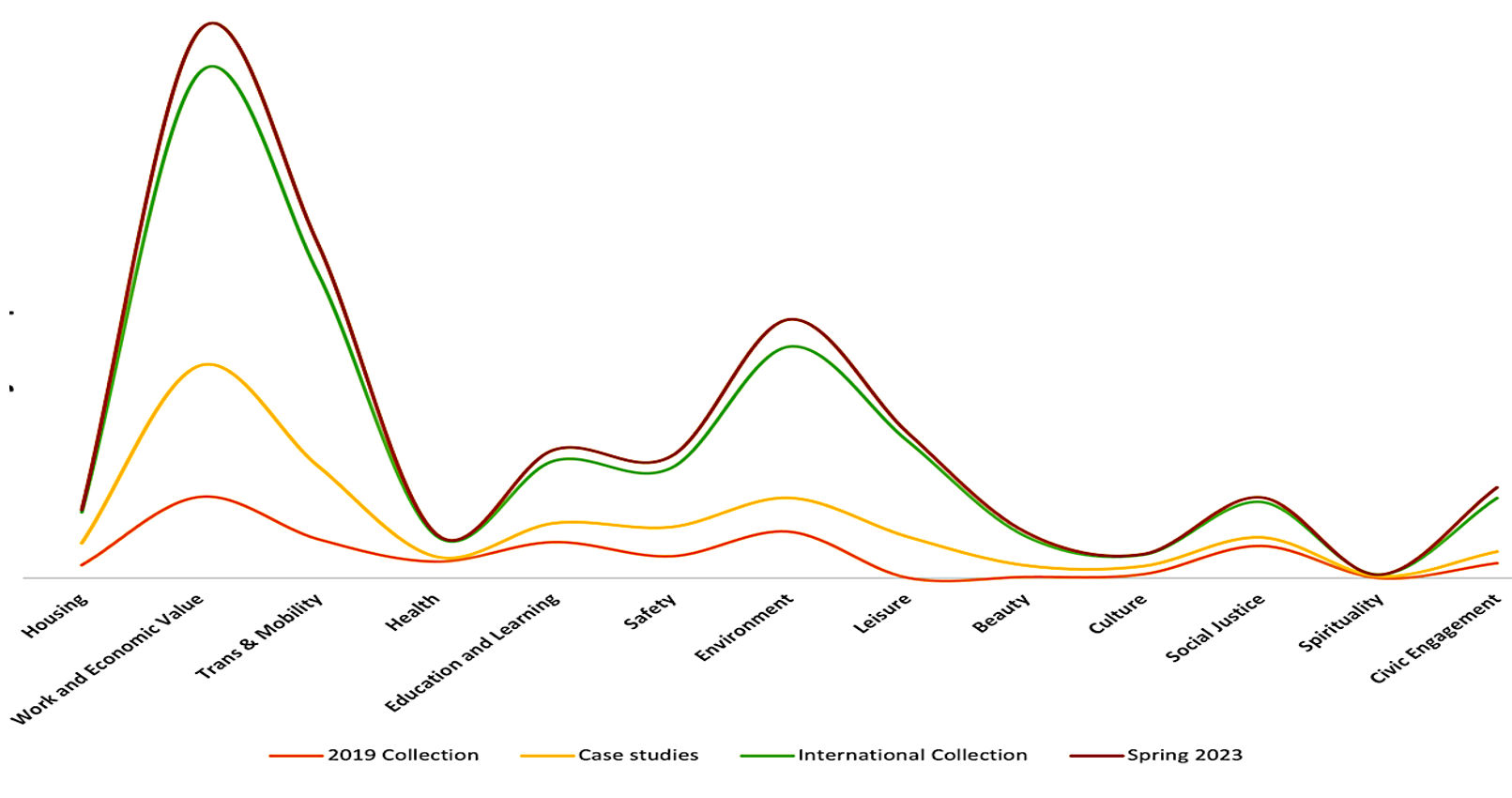
International women’s day. A day in the calendar considered a key moment for the global community to highlight issues, initiatives and progress concerning women’s equality. Not today. This, my first blog in this new series concerning smart city projects, is about awkwardness. Specifically, the discomfort ‘achieved’ in interviews for my recent smart city project research. I offer these comments to highlight how difficult moments revealed enormous areas for growth and as of yet untapped potential. Smart projects that, if achieved, will contribute to the quality of women— and perhaps more genders – who seek it every day and not just on March 8th. (A bit of context… about six years ago, I redirected my project management research career. I had had a satisfying practitioner and research experiences, but wanted to be more socially responsible in these domains. I turned toward smart cities and finished a second PhD [read: labour of love] this past fall. My own blog series soon to appear on projectmanagement.com will reflect some of those observations.) Were any considerations given to gender, I asked. It’s been well documented that the experiences of women navigating streets, neighbourhoods and even city-based services were different than another gender doing the same. I had struck a small chord. No, he said. Balance was achieved by working with people who had volunteered for the projects. There was not a “real demand” to a dedicated approach on this topic. With deference, I pushed a tiny bit further. Okay… And in your international experience? Do you imagine looking through gender lens when influencing smart city projects? Of course. When going to a smart city conference, the majority are still men. There is a demand to increase and to push the gender balance. The awkwardness had become undeniable. Even though I had only one or two more questions, the interview had come to an end. Afterwards, I realised the truth within that awkwardness. And a new point of analysis in my doctoral research had revealed itself. The goal of my doctoral research was to answer the question… How do projects contribute to quality of life in smart cities? My answer is represented in the figure below. I call it the smart city heartbeat (LUB dub, LUB dub J). Across 13 essential themes, smart city projects were distributed. More commentary will be offered in future blogs, but today the focus will remain on women.
How do projects affect quality of life in smart cities? (Pasian, 2024) I studied eight cities and more than 1000 projects. Ten projects were specifically and explicitly designed for women and girls. The city of Utrecht, the Netherlands had one of those projects men — particularly focused on the needs of migrants and refugees. The Neighbourhood Academy was set up to provide a safe space for women to meet and support each other. Many cities have their own versions, including Amsterdam, Berlin, Oslo, Milan, Birmingham, Gothenburg, Leipzig, and Munich. A lack of specific gendered-focus smart city projects can be seen elsewhere. Motivated by my case, study analysis, I moved onto a larger collection of projects. Using a few city ranking schemes, I drew a sample list of cities from Western Europe, North America, Australia, and New Zealand. Another 3000 projects were compiled from the period 2021-2023. A few dozen specifically addressed the needs of women and girls. They included: GEAC - (Girls Empowered Against Crime) Bromley & Croydon Women’s Aid (#RelationshipGoals) Agents for Change Young Women’s Project will deliver group writing and performance workshops and one-to-one mentoring from award-winning women writers to young women aged 13-18 who live in Hounslow and are on the fringes of gangs or criminal groups. The project empowers marginalized young women to find their voices, become agents for change, writing about their lives and issues faced by young women, and publishing and presenting their work to young people to inspire them. SafeCityYEG is a web-based mapping tool that allows Edmontonians to report where they feel unsafe or safe in their communities and why. Women4Climate Mentorship Program matches young women who are taking action on climate, with mentors. Greater Copenhagen Cleantech Impact Accelerator: In the project, existing networks in Skåne and Själland will be opened up and made more accessible at the same time as new network platforms are developed to meet needs that are not met today. A special network for women in the cleantech industry will be started. We do this to create a more cohesive community for environmental technology throughout the Greater Copenhagen area and to make it easier for companies to know where to turn to take advantage of available services. W4RES: Scaling up the involvement of women in supporting an accelerating market uptake of renewable energy sources for heating and cooling. To wrap up this first blog, I’d like to recall another conversation in another interview as part of my research. It was with project manager and we were talking about the secondary outcomes associated with a lighting installation in a parking garage. It was a point of pride for the city in question. The technology integration and data collection was state of the art and serving long-term needs of the city. I asked about safety. Quizzically looking at me, he asked what I meant. I said lighting installations can serve multiple purposes. Beautification being one, safety another. The quizzical expression remained. What if your daughter was using that parking garage? Would she be impressed or even aware of the data collection potential? Would the aesthetic appeal matter? Or would she be more concerned with the coverage of the lighting that would make her walk from the office or an evening with her friends safer? I recognised the vibe. Awkwardness had re-emerged. Unlike the first conversation, this one didn’t end quickly. Bringing up a family member in a professional setting is often and rightfully dismissed. Such things are typically out of bounds. But before a morning stand-up meeting and after the week’s celebratory drinks ending a project, the project manager is also a citizen. My question was disarming and revelatory without being threatening. It was utterly relatable. He thanked me for the question and the thoughts it provoked. Women’s equality is an ongoing and unachieved goal in smart cities and associated projects. Awkwardness surrounding the same projects is similarly ongoing, and regularly achieved. Both have value. The question is… How can projects and project managers use one to achieve the other? |