

 While being a local story to those of us in Maine, it really has been and is a national story about projects that are green by intent. This project in particular, and the other projects both locally and nationally, is also about the triple bottom line, people, planet (and fish) and profits.
 In our book,




Guessing is not a strategy: How to build decision velocity with AI and real-time data
June 10, 2026 | Live Webinar

You Can't Get They-ah From Hee-yah
Floating an idea into reality: the other side of the AI Project Paradox
The Environment of the Built Environment: an AI Paradox
6th, 6th Edfition, 6th Edition PMBOK, 7th Edition, 7th Edition PMBOK, 8th Edition PMBOK, 8th Edition PMBOK Guide, Activism, actuarial, actuary, adapt, addition by subtraction, Africa, africa, agriculture, airforce, ajaita, Alaska, amazon, analogous, analytics, ancient, and more power, antarctica, anti-science, apple, apps, architecture, arctic, arrakis, Artificial Intelligence, asch paradigm, Assistant, asthma, astronomy, automobile, automotive, autonomous cars, b, bankhar, Banksy Crypto, basalt, baseball, bats, batter, beauty products, benefit, benefits, Benefits Realization, beyond epica, biases, bicycle, big data, big dfata, big dig, bike, biodiversity, biomedicine, birdhouse, blockchain, blood, blue blood, blue trees, bluefin, bluefin tuna, book review, boston, boston university, Boyce, Brazil, brazil, Breakdown Structures, BS, building, buildings, built environment, built environment, bumblebee, cake, capacitor, car, Carbon, carbon, carbon capture, carbon negative, carbon neutral, carbon pool, carbon sequestration, carbonate, careers, CEO, ChatGPT, chatGPT, chatgpt, chatgpt, chess, China, china, chopsticks, citrus, cli-fi, climate, climate change, climate resilience, climeworks, Clumsy, CO2, co2, CO2 Utilization, coalition, cobalt, coffee pods, cognition, cognitive, Collabortion, colombia, concrete, Conflict, construction 5.0, cool projects xyloscope, cooling, coral, corn, cost of good quality, cost of poor quality, cost of quality, crazy, criticism of project management, cryptocurrency, CSR, csr, data, data analytics, data privacy, datacenter, dataset, death spiral, Decision Making, decomposition, Defense and Climate, definition of a project, deforestation, dependencies, dependency, desert, DIKW, dikw, dimopoulos, disposal, dna, DOD, dogs, dolphins, dream, drilling, drink, dune, dune, dutch, early start, earth, eatlocal, eco-tourism, ecological, economic, economics, EKC, electric grid, electricity, electronics, elysis, embodied carbon, emerging technologies, empower, Energy, energy efficiency, environmental degradation, escalate, escalation, ESG, extreme weather, fallacy, FARC, farming, finance, fish, fish brains, fishing, fix, fixing the earth, flint water, Flint Water Supply, flood, flooding, Food supply chain, food waste, forest, forest for the trees, forestation, forrestgump, frank herbert, Fruitcake, fungus, fusion, Galvao, garage, gas, gasoline, geese, gender equality, gender partnerships, generational differences, Generative AI, gladwell, gold, Goodness, google, Government, GPT, great pacific garbage patch, green, green building, green buildings, green energy, green iguana, green project, green project management, greening, guest post, gyre, harkonnen, Harvesting Benefits, hawasina, hedgehogs, heursitics, historical data, hlb, holitsic, holland, horseshoe crab, human-caused climate change, hydrogen, hydrology, ice, iceland, ignition, iguana, imagery, impact, india, inequality, information, initiatives, injection, insurance, intelligence, interacting risk, internal combustion engine, invasive species, investment, isomer, issue escalation, issues, ITER, jobs, Jupiter, justification, kids, kill point, knowledge, koch brothers, Kuznets, laboratory, LAL, landscape mode, lapampa, launch, LCA, Leadership, Leadership, life cycle analyses, life cycle analysis, lifecycle, Linkedin, liquid, lizard, local, long term, long-term, long-term thinking, look up, loud, maintenance, maker, makermovement, malcolm gladwell, management, marathon, marine biology, market, mars, Martin Luther King, mean, megawatt, MeHg, melting, mercury, metal, Microgrid, microplastics, migration, military, millennial, mindset, minerals, mission, mitigate, MLK, mongolia, museum, museum of london, nature, nematodes, net gain, Net Project Success Score, net zero, netherlands, network, New book, New Jersey, New Practitioners, new york, NFT, nitrogen, noise, noreaster, norway, nova, NPSS, NREL, ocean, ocean cleanup, ocean life, oil rig, oil rigs, oklahoma, oman, only murders in the building, opportunity, overall risk, oxygen, packaging, pareto, PBS, permafrost, persistence, peru, Pharmaceutical, planet, planet.com, planning, plant, plasma, plastic, playground, pm, pm education, pmbok, pmbok guide, pmnetwork, PMXPO-2018, podcast, pollutants, pollution, poop, poor, portfolio, power, power skills, privacy, privacy concerns, professors, program, Program Management, project, project leader, project leadership, project management, project management 3.0, project on fire, project progress, Project Success, project success, projecticity, projectleadership, projectmanagement, projects, psychology, pulse of the profession, purple bacteria, purpose, quiet, rainforest, rationale, reef, refugees, renewable, renewables, Repair, repair, repeatable process, repeatable processes, repurpose, research, resource breakdown strucuture, Resource Management, reversing climate change, revisionist history, rich, rigs2reefs, ripe, risk, risk avoidance, Risk Management, risk mitigation, risk response, risk responses, river, robots, rocks, rules of thumb, rural, rural India, russia, Sarcasm/Irony, satellite, saudi, schedule, sci-fi, Science, science, science-fiction, scientific american, screaming monkeys, sea, sea life, Sea-Level Rise, sea-level rise, seagreens, seawall, seawater, seawater temperature, seaweed. beat;es. farming, secondary risk, selena gomez, sequestration, shipping, skyscraper, SLR, smart cities, smart city, smelting, social, social pressure, soil, solar, solar panels, solar perovkites, solar saheli, sonic, sponge cities, SRI, stage-gate, stagegate, stakeholder, stakeholder management, steward, stewardship, storage, strategy, stupid, success, suffer, sulphur, sunk cost, supercapacitor, supply chain, survey, Sustainability, sustainability, Sustainable Investing, Sustainable Tourism, sybiosis, symbiosis, system 03, TBL, temperature, terraform, terraforming, test, threat, threats, totem, touchscreen, tour, tower, Trains, transparency, transportation, trash, tree, tree species, trees, trillion, triple bottom line, triple constraint, truth to power, UMass, us army corps of engineers, USDA, vacuum, value, venus, vision, voice, voltage optimization, vw scandal, washing machine, waste, wastewater, water, we mean business, whales, Whirlpool, wind, wisdom, women, Women in Project Management, wood wide web, woonerf, Work Breakdown Structures (WBS), world breakdown structure, worms, xian, xylotron, Yale


|
It is about removing a dam on Maine’s longest river, the Penobscot, to allow “endangered and dwindling species to return to their historic spawning grounds.” When the project is completed, approximately 1,000 miles of habitat will be accessible for spawning for species like the Atlantic salmon and the short-nosed sturgeon. This project is unique in another way because the direct stakeholders include the Penobscot Indian Tribe, state, local and non-profit entities like the “Penobscot River Restoration Trust, which bought the dams for $24 million two years ago and is overseeing their demolition.” From the article on Boston Globe.com: “Like other rivers in the region, such as the Kennebec, Androscoggin, Merrimack, and Connecticut, the Penobscot had massive fish runs until the early 1800s, when the nation began installing dams and log drives, mill waste, and other pollution began making many rivers into the equivalent of industrial dumps. There were as many as 100,000 salmon, 6 million American shad, and some 20 million river herring that migrated every year from the ocean to well north of Bradley to spawn. There are now fewer than 1 percent that many fish of most of the 11 species that inhabit these waters, with less than 500 salmon counted this year, environmental advocates say. Most were bred in a hatchery. For years, the advocates prodded dam owners to build better fish ladders to allow the salmon to cross safely. But they found improved fish ladders didn’t do enough. The only answer, they decided, was to remove the three dams in the river’s lower 10 miles. The salmon population is now on life support, and it’s a miracle that we’re still finding all species that historically inhabited the river,’’ said Andy Goode, vice president of the Atlantic Salmon Federation in Brunswick, noting that many salmon die while trying to pass through the dams. “We think this is the last best chance to save the Atlantic salmon from extinction. They’ve already been lost on many other rivers.’’ Like other rivers in the region, such as the Kennebec, Androscoggin, Merrimack, and Connecticut, the Penobscot had massive fish runs until the early 1800s, when the nation began installing dams and log drives, mill waste, and other pollution began making many rivers into the equivalent of industrial dumps. There were as many as 100,000 salmon, 6 million American shad, and some 20 million river herring that migrated every year from the ocean to well north of Bradley to spawn. There are now fewer than 1 percent that many fish of most of the 11 species that inhabit these waters, with less than 500 salmon counted this year, environmental advocates say. Most were bred in a hatchery. For years, the advocates prodded dam owners to build better fish ladders to allow the salmon to cross safely. But they found improved fish ladders didn’t do enough. The only answer, they decided, was to remove the three dams in the river’s lower 10 miles.” So that is the planet piece, but what about the “people and profit” pieces? Well, I am glad you asked. “The project, estimated to cost $62 million, will allow six other dams that will remain on the Penobscot and its tributaries to produce more electricity. Together, they will generate an estimated 50 megawatts of power, enough for about 25,000 homes.” That is the profit piece and "Among the beneficiaries are members of Penobscot Nation, which has a reservation on an island in the middle of the river near the Milford Dam. The historic fish runs long had cultural and nutritional importance for the tribe. “This watershed has provided the means for survival for tribal members for thousands of years,’’ said John Banks, the tribe’s natural resources director. “We feel this project is somewhat precedent-setting in that it brings folks together from diverse backgrounds and interests to restore the ecological values of this river, while maintaining generating capacity. So it’s really a win-win for everybody.’’” Projects that are “win-win” have a much better chance of meeting or exceeding stakeholder expectations, and that works for projects with the element of sustainability especially well. To read the entire article please go to here. |
|
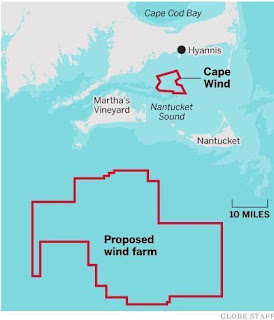
Yeah, okay, okay, so it's Rhode Island. Still, Today's Boston Globe is reporting that ten developers are lined up to potentially build what would be a wind energy area larger than the US State of Rhode Island. We blog about this for two main reasons. 1. This is huge. Literally. Many project managers may gain employment from the project as it is conceived and built. 2. The connection to PM planning - especially in light of the Cape Wind project and its delays, this is huge. Figuratively. Number 1 above is so obvious, given the cpacity of 4 Gigawatts of power, that we'll leave that to your imagination.
Here is what we do not want to leave to your imagination: the importance of stakeholder management and its deep connection to project risk identification, analysis, and response. See, you thought this post was going to be all about renewable energy and Mother Earth, and butterflies and unicorns, didn't you? But there are hardcore PM lessons to be learned in the area of sustainability and PM, and many of them are in play based on this article alone. Here is an introductory snippet from the article: "The wind farms would be built in an expanse of federal waters larger than Rhode Island, about 14 miles south of Martha’s Vineyard and identified by the US Bureau of Ocean Energy Management as an ideal place for such development. After more than two years of talks with local and state officials, environmentalists, fishermen, and tribal leaders..." You see? The tribal leaders were included up front, as were environmentalists and the fishing industry. This was not the case with Cape Wind. Here is another piece: Developers say wind energy areas will also be the proving ground for the next generation of wind turbines, each capable of generating 5- to 7-megawatts worth of power and being located far enough offshore so they would not be visible to many people. The prospect of turbine towers visible to Cape Cod landowners sparked much of the opposition to Cape Wind. Our favorite overall quote is here - indicating the benefit of long-term thinking when identifying risk and stakeholders, and how the two go hand-in-hand: “The federal government is working with the state to try and ensure that by investing a lot of their energy on the front end, it will be easier for a company to take a project through the permitting and approval process". What they are saying is that by doing a thorough job of identifying a wide variety of stakeholders, and through that expanded list of stakeholders fully and deeply identifying their areas of concern, we have a more intelligenlty articulated set of risks (both threats and opportunities) that we can analyze and respond to properly, rather than uncover haphazardly as we start (trying to do) the construction of the project. Note the comments from Tommy Beaudreau, director of the Bureau of Ocean Energy Management: "one of the main goals of designating the wind energy areas is to streamline the approval process for offshore wind projects". Beaudreau’s agency was particularly deliberate in determining the wind energy area off Massachusetts in an effort to minimize conflicts like those experienced by Cape Wind, which faced a decade of opposition and legal fights before winning federal and state approval in 2010. The project still faces appeals. “It’s really about trying to design or make available areas up front that have buy-in from the states and communities,’’ Beaudreau said. “There are a lot of takeaways from Cape Wind.’’ We're sure you read that like we did. Takeaways = Lessons Learned. Do a better job of stakeholder identification. This will enable you to do an exponentially better job of risk identification, which will yield a significantly better job of risk analysis and response. And what that means is that the project - whether it be something as important as this and as large as a US state - or a new deck for your back yard, has a much better chance of getting done, and getting done properly. |
|
Recently we read an interesting article about the efforts of Levi Strauss & Company to take that next step and develop their own LCA tools, to better measure their unique inputs, outputs and to better understand and track the impacts of products from the design stage to end-of-life. “Levi’s is working to take LCA out of the sustainability silo and into the design room. The company's clothing designers are using its Evaluate tool on a daily basis to make decisions about things like fabric choices, washes and dyes.” They are using their tool “Evaluate to reach down to the material level to assess the impacts of various components” to be able to make informed decisions. Levi designers are evaluating fabric sustainability early in the process to be able to make choices prior to the design process. According to Paul Dillinger, senior director of global design for Levi's Dockers brand, “Now we have 16 core fabrics we'll put through the tool to further hone the assortment -- so all that information will be available to us prior to the design process. Rather than audit our choices later, this gives us a chance to start off with the right fabrics." As we have always said, like quality, greenality needs to be planned in, not inspected in. Levi’s is not unique, other companies like Canon, Kraft and Mazda are also doing work in the LCA arena prior to product design. In our book, we used Proctor and Gamble as an example of a company using LCA tools to view their products holistically. Nike is another company who is using, and has been using for a while, LCA in the apparel industry. When you look at Kraft – food industry, Levis and Nike – apparel industry, and P&G in the consumer goods industry, the use of these tools is wide-spread and pervasive, a good thing. Chapter 10 of our book is about waste reduction and our 4-Ls, Lean, Learn, Linked and Lasting. The aforementioned companies make the same connections we do, between LCA and the 4-Ls. They are approaching sustainability in a holistic way, considering their entire footprint. One example of this approach is Levi’s use of “Waterless Jeans” process. According to the company it has saved 172 million gallons of water since introducing the process in 2010. We certainly are encouraged with these holistic, LCA, approaches to sustainability. These are all projects and the more familiar today’s project manager is with these processes the better. We believe that Green Project Management is the future and we, as PM ourselves, want to be on the leading edge of it. |
|
Do you know that there are 800 pound gorillas driving sustainability? Why do they do that? The answer is, because they can. Walmart is a good example of an 800 pound gorilla driving sustainability into their vendors. They are examining looking at product lifecycle assessment “…from materials used in making them, to the factories or farms where they are made, to how they are used as an end-product (our emphasis).” Walmart is also committed to providing their customers the best value for their money, and “When it comes to sustainability, we’re dedicated to providing that same value.” Some additional efforts include:
Being the 800 pound gorilla, Walmart could have stopped with driving sustainability into their supply chain. But they didn’t. Instead they’ve made a commitment to become 100% supplied by renewable energy, create zero waste, as well as selling products that sustain people and the environment. To that end, we read about a local project that advances Walmart’s commitment. It is definitely a “green by intent” project. They are planning to install solar panels on top of more than ½ of their 50 stores in Massachusetts as early as August of this year. The stores are in the engineering and permitting stages, but the target is to provide a total of about 10.5 megawatts, equivalent of powering 2,600 homes. It should provide 10-15% of each store’s power requirements. Because they are the 800 pound goilla, you might ask so what is in it for them? There are a couple of things at work here. (1) It is a giant step toward a better perception of corporate responsibility for a company may not be well liked, especially in the smaller towns of America. (2) Forecasts indicate that there is money to be saved in the long run. Whatever the motivation, the momentum of a company the size of Walmart can have a positive influence on the entire retail community. |
|
One of the most frequently asked questions at our webinars and conferences is “How do we sell the idea of sustainability?” Our answer is; because it makes cents (sense). One of the reasons projects are undertaken is to help the organization's bottom-line. In the case of the New Hampshire Society for the Prevention of Cuelty to Animals (NHSPCA) executing projects that will make their facilities more sustainable will help the bottom-line and help the animals. "NHSPCA Embraces Renewable Energy and Saves Big?” is a headline on the most recent NHSPCA Newsletter. “It’s all about pets here at the NHSPCA, where the goal is to put all the money possible into saving animal’s lives.” While looking at their operating budget for 2009-2010 season, to operate the Adoption and Learning Center, the noted that it was costing them over $55,000 in oil expense. They equated that with 35,000 pounds of dog and cat food. That can feed a lot of animals. Projects began to take shape designed to increase efficiency through lighting audits and upgrades as well as upgrading the heating and ventilation controls. While executing those projects, they “learned of a more significant project through the Community Loan Fund and the Office of Energy and Planning.” There was a stimulus program called the Enterprise Energy Fund. “With stimulus money available for grants and low interest loans our conversion to renewable energy systems began in earnest.” The first thing the people at NHSPCA did was hire a consultant for an energy audit project. That audit looked at insulating efficiency, hot water usage, space heating needs, etc. and made recommendations showing efficiency gains vs. potential costs, projected savings, and pay back periods. It allowed the NHSPCA to choose which projects had the most “bang for the buck.” Out of the many possible projects, they chose 3; insulating and air sealing the basements and attics, solar thermal collectors to preheat the vast amount of hot water they use on a daily basis, and wood pellet boilers as renewable heat sources. Bottom-line, and we all care about the bottom-line, it is projected that 80% of the oil used (11,000 gallons) will be offset by the pellet heating. Not only is there a considerable cost savings for the equivalent number of BTUs used, since the burn is very clean, the carbon foot print is reduced, and estimated offset of almost 3 million lbs of CO2. Finally, the pellets are purchased from a company that harvests locally (profits, planet, and people). “We will be continuing to work with the Jordan Institute, (“The Jordan Institute is comprised of uniquely motivated staff whose collective experience includes energy policy, residential construction, engineering, project management, education, and architecture.”) to examine the existing mechanical systems to determine other efficiencies and continue to look for additional sources of energy savings. We are tracking and recording our energy consumption so stayed tuned to see our actual energy savings!” Be sure, we will and let you know how the projects pay off. |
|
"There's a Mr. Bartlett to see you, sir." - Graham Chapman, Monty Python's Flying Circus |