


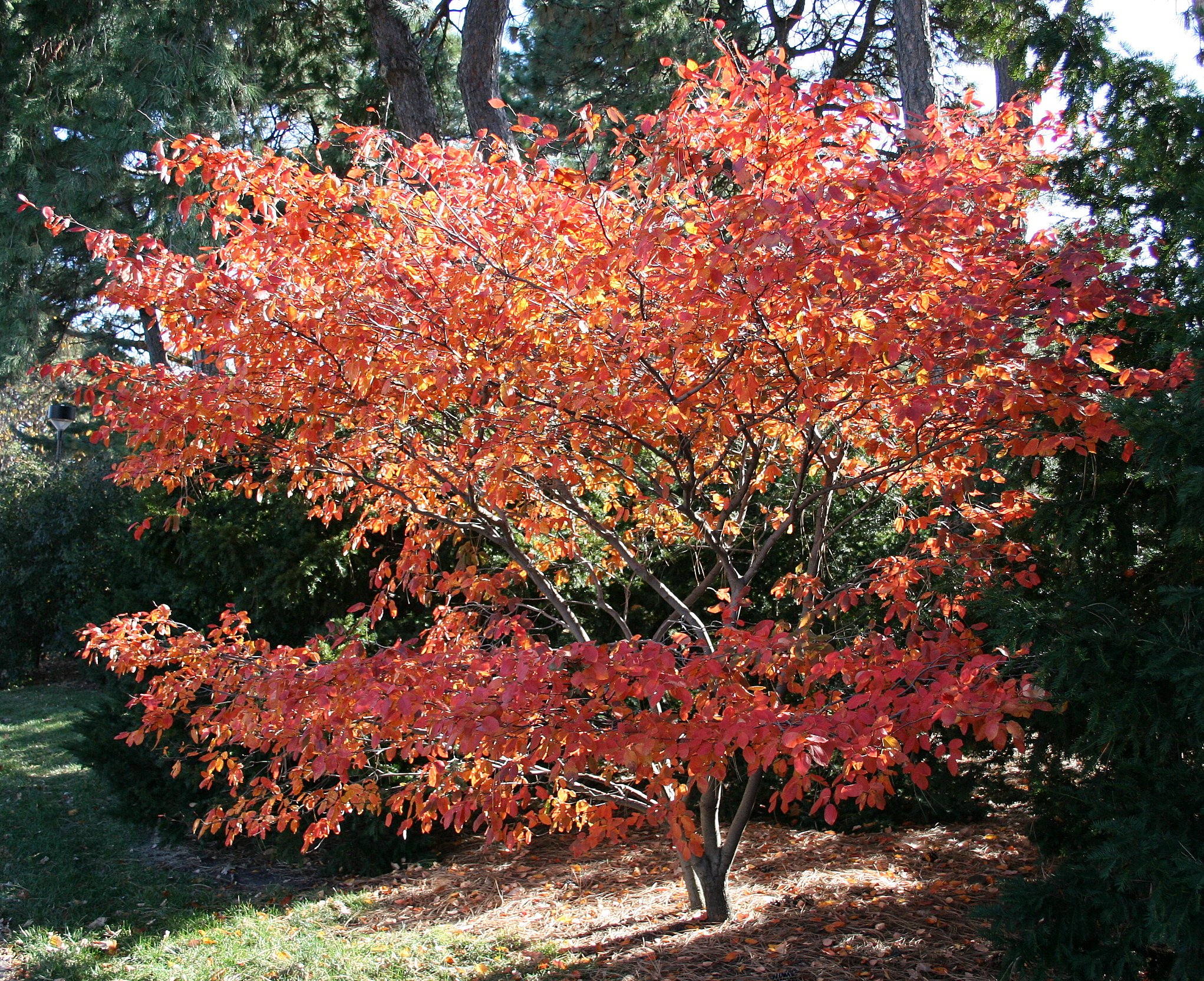
Here is Part III of my 2-part series that focuses on trees and communications. I know… I know… I have violated two rules here – (1) having a third part of a two-part series, and (II) mixing Roman and Hindu-Arabic numbering. Forgive me, and call it poetic (or bloggetic) license.
I would like to introduce you to the serviceberry tree. Other common names for this tree are: Juneberry, shadbush, shadblow, and shadwood, (with the 'shad' reference alluding to the fish that runs and spawn at the same time these plants bloom). Other names you may see are sugarplum, Indian pear, May cherry, saskatoon, sarvisberry, wild pear, wild plum, and chuckley pear. Better Homes and Gardens magazine says:
"This small tree thrives through all four seasons and offers so much to any garden. Abundant white blooms in spring are followed by delicious berries in summer, fiery foliage in fall, and silver bark in winter.
Serviceberry trees display white blooms just before their foliage emerges in early spring, offering some of the earliest sources of nectar for pollinators. The five-petaled flowers closely resemble apple blossoms but with skinnier petals.
After the show of these blooms, clusters of edible berries form. As summer begins, berry colors ripen to a deep red then purple color. The berries make a wonderful substitute for blueberries and can be eaten fresh or made into jams and jellies. Birds also enjoy them.
Serviceberry foliage has an open and loose habit. This allows dappled light to shine through, which creates a space for part-shade plants to sit below the base of serviceberry trees. As nights cool down in autumn, blue-green foliage transforms into beautiful shades of orange and red."
Here is a closeup of the serviceberries themselves: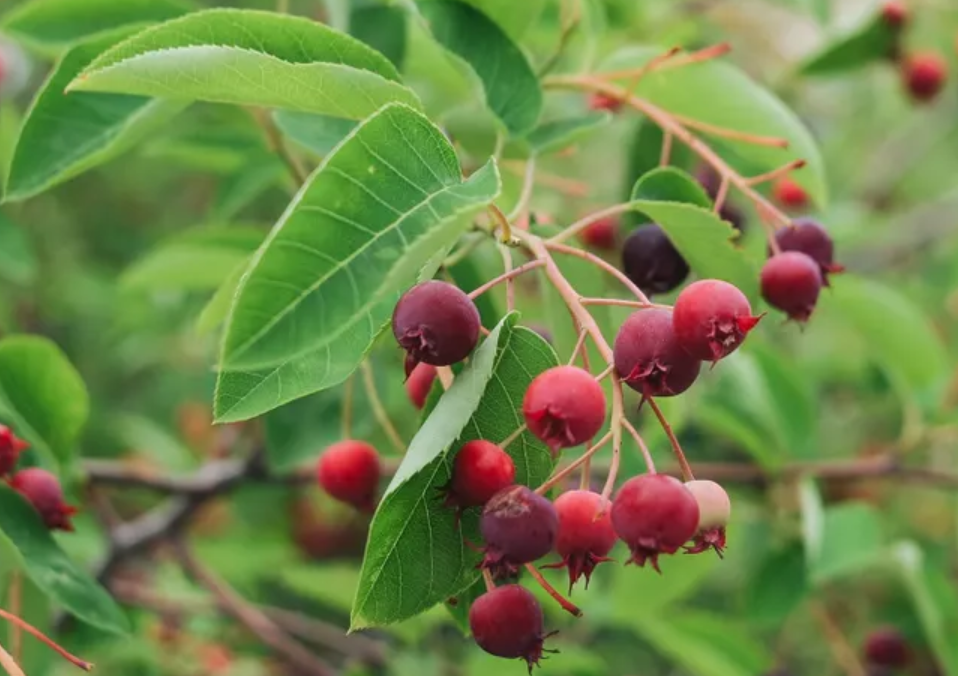
I first read about serviceberries and how they connect with a gift-based economy in this article from Emergence magazine. The article, An Economy of Abundance, by Robin Wall Kimmerer. The article focuses on economics, but I found interesting because of the idea of the importance of ‘gifting’, especially during this Holiday season (after all, I am publishing this on Christmas Day, 2020).
So – what does this have to do with project communications? It’s actually more about negotiation in this case. The communications piece lies only in what the serviceberry tree is ‘communicating’ to us about a gift-based economy and zero-sum games. We (should have) learned in our PM training that a negotiation style based on a zero-sum game is usually the least-preferred. It has its place, but it should be avoided unless needed. We tend to go with the “Getting to Yes” philosophy of looking to ‘expand the pie’. And I wondered – could this pie be a serviceberry pie? Sure - that’s a thing. In fact, here’s a picture, and a recipe.
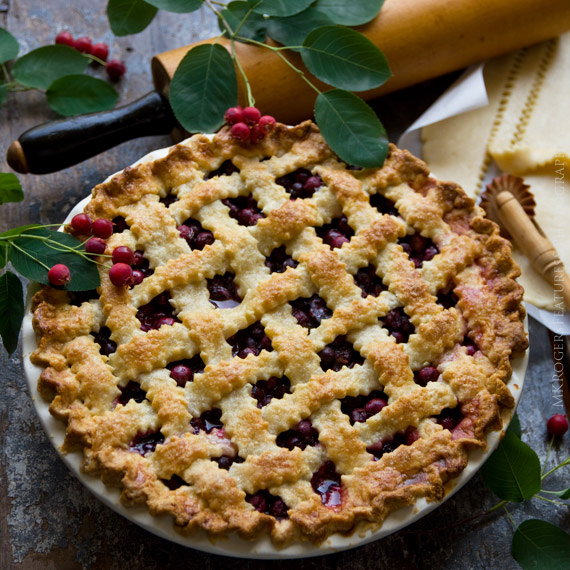
Turns out the fruit taste like (from the article above), “a blueberry crossed with the satisfying heft of an apple, a touch of rosewater and a miniscule crunch of almond-flavored seeds. They taste like nothing a grocery store has to offer: wild, complex with a chemistry that your body recognizes as the real food it’s been waiting for.” Wow, I certainly can’t wait to try that pie!
The author of the article is a registered member of the Potawatomi people. In Potawatomi, the serviceberry is called Bozakmin, which is a superlative: the best of the berries.
She says,
…the most important part of that word is “min,” the root word for “berry.” It appears in our Potawatomi words for Blueberry, Strawberry, Raspberry, even Apple, Maize, and Wild Rice. The revelation in that word is a treasure for me, because it is also the root word for “gift.” In naming the plants who shower us with goodness, we recognize that these are gifts from our plant relatives, manifestations of their generosity, care, and creativity. When we speak of these not as things or products or commodities, but as gifts, the whole relationship changes. I can’t help but gaze at them, cupped like jewels in my hand, and breathe out my gratitude.
So she feels that she has learned a great deal from the serviceberry tree. How?
What might Serviceberry teach us here? She replies, “Serviceberry, or shadbush as I learned it, provides a model of interdependence and coevolution that is the heart of ecological economics. Serviceberry teaches us another way to understand relationship and exchange. With a serviceberry economy as our model, it prompts the opportunity for articulation of the value of gratitude and reciprocity as essential foundations for an economy.” Reciprocity—not scarcity.
During our Holidays we are busy buying and receiving gifts. How does a gift change a ‘thing’? It makes us more interdependent on each other and to feel more like a community. Could we consider the Earth as a gift to us? Would it change the way we think about using resources? Ms. Kimmeler thinks so:
To name the world as gift is to feel one’s membership in the web of reciprocity. It makes you happy—and it makes you accountable. Conceiving of something as a gift changes your relationship to it in a profound way, even though the physical makeup of the “thing” has not changed. A wooly knit hat that you purchase at the store will keep you warm regardless of its origin, but if it was hand knit by your favorite auntie, then you are in relationship to that “thing” in a very different way: you are responsible for it, and your gratitude has motive force in the world. You’re likely to take much better care of the gift hat than the commodity hat, because it is knit of relationships. This is the power of gift thinking. I imagine if we acknowledged that everything we consume is the gift of Mother Earth, we would take better care of what we are given. Mistreating a gift has emotional and ethical gravity as well as ecological resonance.
She even talks of the “monster”” in Potawatomi storytelling. The monster is called Windigo and its trait is taking too much and sharing too little. The Windigo is not a pretty creature. It is described as “gaunt to the point of emaciation, its desiccated skin pulled tightly over its bones. With its bones pushing out over its skin, its complexion the ash gray of death, and its eyes pushed back deep into the sockets, the Windigo looked like a gaunt skeleton recently disinterred from the grave. What lips it had were tattered and bloody… Unclean and suffering from suppurations of the flesh, the Windigo gave off a strange and eerie odor of decay and decomposition, of death and corruption.”1
By the way, this is not the decomposition we learn about when building a Work Breakdown Structure! This is the biological, stinky one.
You can learn more about the Windigo here. (Warning: graphic content)
Below is one of the least-scary images of the Windigo that I could find.

Scary creatures. Moving words. To come back to negotiation, especially ‘zero-sum game’ negotiation, perhaps we are focused too much on competition as a driver. Is that the best way to go? Again, referencing “Getting to Yes”, perhaps not. In the author’s words:
…since competition reduces the carrying capacity for all concerned, natural selection favors those who can avoid competition. Oftentimes this is achieved by shifting one’s needs away from whatever is in short supply, as though evolution were suggesting “if there’s not enough of what you want, then want something else.” This specialization to avoid scarcity has led to a dazzling array of biodiversity, each avoiding competition by being different. Diversity in ways of being is an antidote to scarcity-induced competition.
I encourage you to read the article with an open mind and consider it as you give – and receive – during this holiday season.
1Legends of the Nahanni Valley, Hammerson Peterson, 2018, Mysteries of Canada




