


Think about hot cities. Not 'hot' as in 'popular' or 'desirable' , or 'interesting. We're talking physically hot cities. What comes to mind? For me, I close my eyes and picture wavy heat lines coming up from the ground in places like Timbuktu, Mali, Kuwait City, Yuma, Arizona, Quito, Ecuador, Xi’an, China, or Cochin, India.
Then I open my eyes, and see that Boston, Massachusetts is making news for developing a (say, what!?) Heat Plan. A heat plan? For Boston, Massachusetts? The one with the swan boats, snowstorms, and Fenway Paaahk?
Climate change, believe it or not, real or not (it is), has real project consequences. Project managers will be taking the heat. Literally. Boston, Massachusetts is, in fact, already facing increasing temperatures not seen before, and is preparing to deal with it.
The key word here, in fact, is “change”. It’s not that Boston is a particularly hot city. It’s that the change to a warmer climate is going to cause hardships, and more so for some communities than others. Boston is one of the cities with the highest rate of change in temperatures already under its belt and with one of the highest forecast increases - in the world. Project Managers as change agents are going to be needed to facilitate – better said, to lead - the response to that change - by adding resilience and solutions to deal with it - and with efforts to help reduce the change in the first place. This post is about the resilience-to-change part.
In Boston, Mayor Michelle Wu (pictured below) has launched a program called Heat Resilience Solutions for Boston. Just that name itself is a bit (excuse the irony here) chilling.

Boston Mayor Michelle Wu
As a reminder, we are talking about climate change here. Not temperature changes by the hour, or day, or week – that’s WEATHER. Changes that accrue over time – years, or decades – that’s climate.
The heat plan consists of 26 strategies, which we’ll of course approach from a Portfolio, Program, and Project management perspective in this blog.
Here are the 26 strategies – categorized in to 5 … well, I will call them Program workstreams, which I’ll cover from an implementation perspective in future posts.
1. OPERATIONS AND COMMUNICATIONS
1.1 Boston Extreme Temperatures Response Task Force
1.2 Pre-heat-wave Resources Mobilization
1.3 Heat Sensor Networks
2. COOLING OFF DURING HEAT WAVES
2.1 Pop-up Heat Relief
2.2 Enhanced and Expanded
2.3 Citywide Cooling Network
3. LOOKING OUT FOR NEIGHBORS
3.1 Expanded Community Climate Leadership
3.2 Extreme Temperature Plans for Outdoor Workers
4. AWARENESS, EDUCATION, AND TRAINING
4.1 Heat Resilience Public Education Campaign
4.2 Heat Survey
4.3 Expansion of Green Workforce Development for Heat Resilience
5. BUILDINGS
5.1 Home Cooling Resources Distribution
5.2 Cool Roofs Program
5.3 Home Energy Retrofits
5.4 Affordable Housing Resources and Retrofits
5.5 Cool Schools
6. PARKS, TREES, AND OUTDOOR SPACES
6.1 Enhanced Cooling in Pocket Green Spaces and Street-to-Green Conversions
6.2 Increased Shade on Municipal Sites
6.3 Expanded Drinking Fountain Network
6.4 Planning for Future Parks
7. TRANSPORTATION AND INFRASTRUCTURE
7.1 Cool Commutes
7.2 Energy Resilience Upgrades and Microgrids
7.3 Cool Main Streets
8. PLANNING, ZONING, AND PERMITTING
8.1 Updated Climate Resiliency Checklist
8.2 Heat Resilience Best Practice Guidelines
8.3 Zoning Revisions to Support Cooler Neighborhoods
Interestingly, the plan is focused on environmental justice communities that are hotspots in Boston and experience greater burdens as temperatures increase: Chinatown, Dorchester, East Boston, Mattapan, and Roxbury.
The heat plan is actually part of a larger Portfolio of programs I talk about in my classes, and have blogged about here, called Climate Ready Boston.
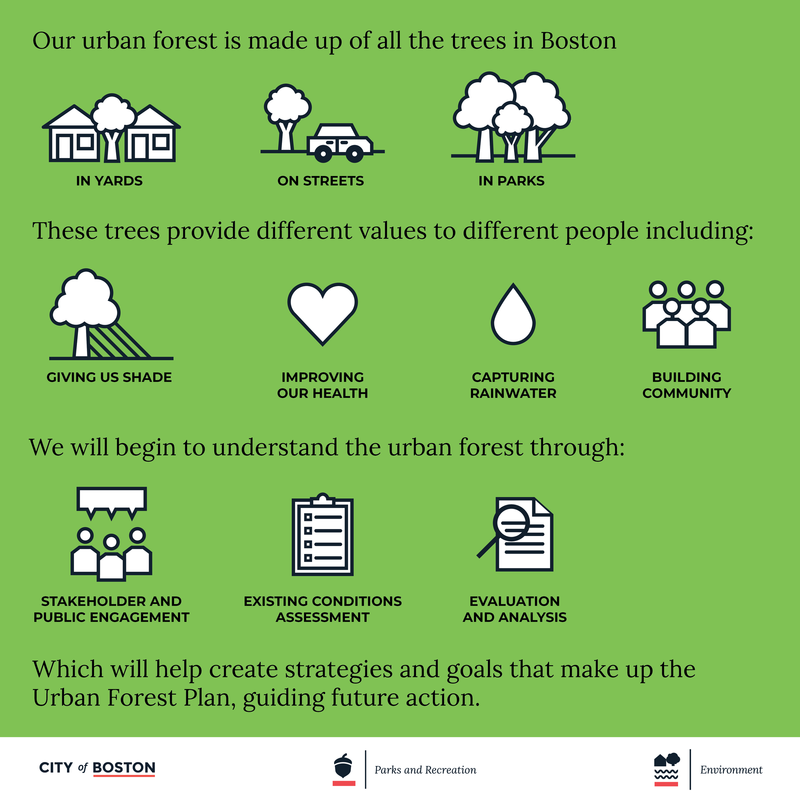
The project management aspect of this initiative is gigantic. For example, as I teach in my courses at Boston University, Programs are all about related projects (and perhaps other programs). This heat plan (which I will call a Program) is intertwined with, and has dependencies on (amongst others), Boston’s Urban Forest Plan, which has as objectives to improve tree protection, stewardship, and new plantings for nature-based cooling solutions. Worthy of a blog post or two of its own (which it may soon get), the Urban Forest Plan is described well by this graphic:
But let’s get back to the Heat Plan.
The motivation – the rationale - for this is simple. Temperatures in Boston are rising. Again, not by the hour or the day, but over time. The Plan reference this NOAA data:
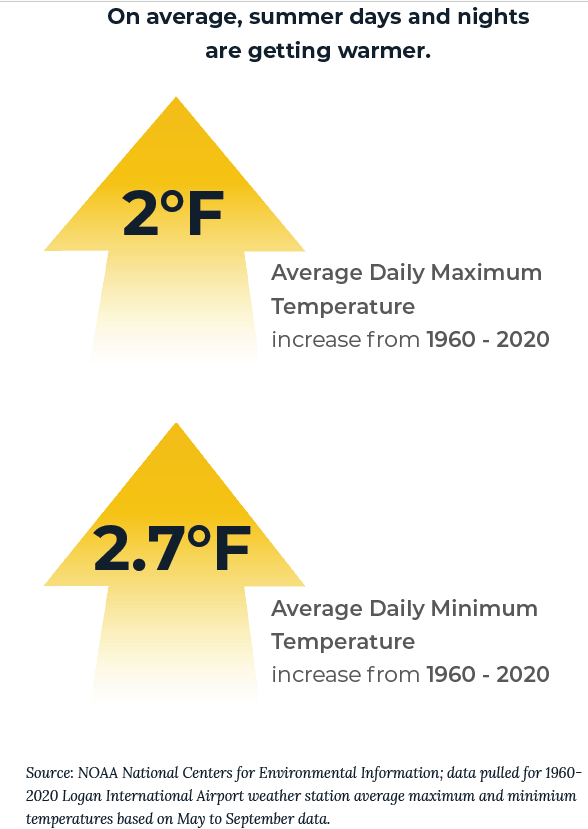
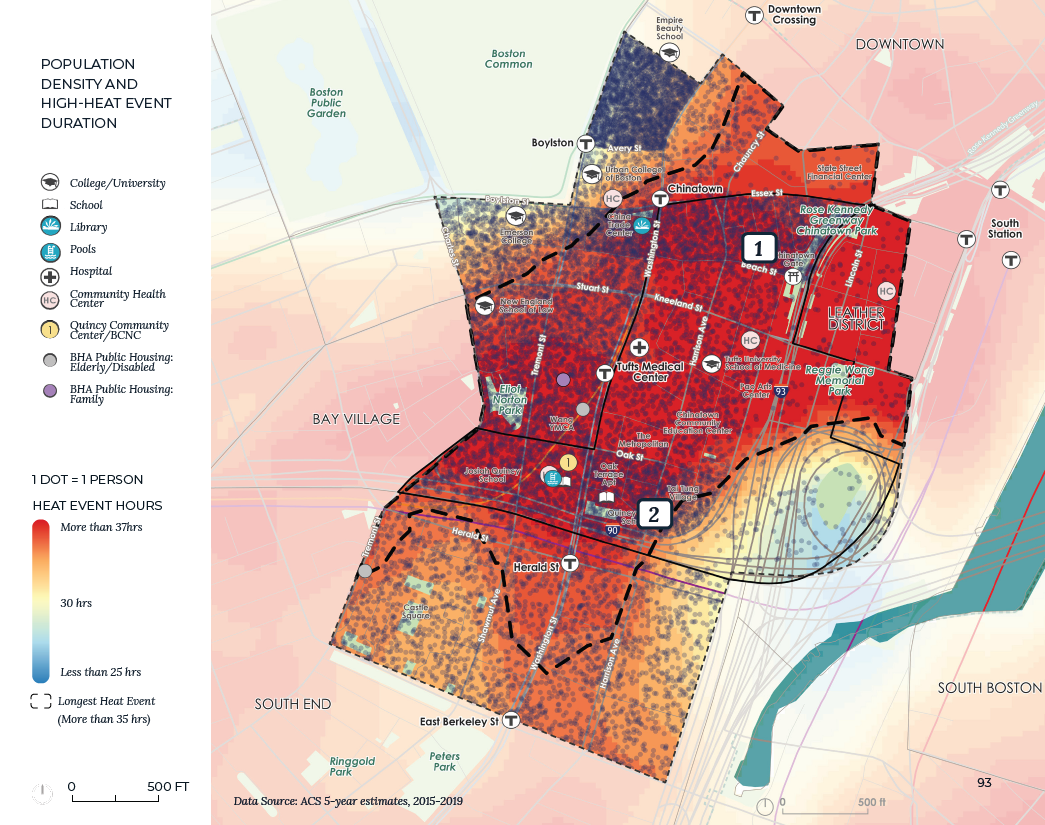
And the forecasts for 2070 are striking, making Boston's weather more like Atlanta or Miami by then. What is important here is not just “rising temperatures” but the effect on people, and indeed, the effect on people who are less able to deal with the heat due to their economic situation and living conditions. The image below is one of many in the report which provides scientific data that has been intelligently advanced into knowledge – this one showing population density and temperature levels, which shows the true concentration of problem areas and therefore the places that need the most attention from the program.
Like any good program, it starts with the vision of the Mayor’s office:
Our mission is to provide executive leadership, as well as set priorities and goals for the City and its neighborhoods.
And then gives a purpose to the Program itself (although it calls itself a project):
We are preparing Boston for extreme heat and its impacts, both today and in the coming decades. The Heat Plan provides a citywide framework for heat resilience. Out work focuses on overburdened communities that will be most impacted by rising temperatures in Boston.
The project to develop the Heat Plan was divided into three phases (this is sourced at the Heat Plan):
PHASE 1: ANALYSIS AND EXISTING INFORMATION REVIEW
The first phase included data gathering, review of previous and ongoing planning efforts, and developing a citywide heat analysis. This phase included two stages of extreme heat analysis: citywide and neighborhood-level patterns. The neighborhood-level analysis focused on Chinatown, Dorchester, East Boston, Mattapan, and Roxbury. The purpose of the neighborhood-level analysis was to evaluate how current day heat impacts vary across the city, identify temperature hot spots within environmental justice neighborhoods, and assess how racism, inequality, historic urban planning decisions, and other policies have influenced existing heat exposure and vulnerability. This phase also included the first community open house and the formation of the Community Advisory Board (CAB) to guide the planning process.
PHASE 2: HEAT RESILIENCE STRATEGIES
The second phase included drafting guiding principles for heat resilience based on community feedback from the first phase. The primary focus of the second phase was developing a series of draft strategies for heat resilience informed by findings from the citywide heat analysis and stakeholder and community perspectives. This phase explored considerations for heat resilience citywide and neighborhood specific applications of strategies within the five neighborhood focus areas.
PHASE 3: IMPLEMENTATION ROADMAP AND FINAL REPORT
The final phase of the project focused on refining the strategies, developing a benefit-cost analysis (BCA) for cooling homes, schools, and streets; creating a neighborhood-scale heat simulation to model the effectiveness of the physical heat reduction strategies; and developing an implementation roadmap.
Here is the roadmap for the creation of the plan:
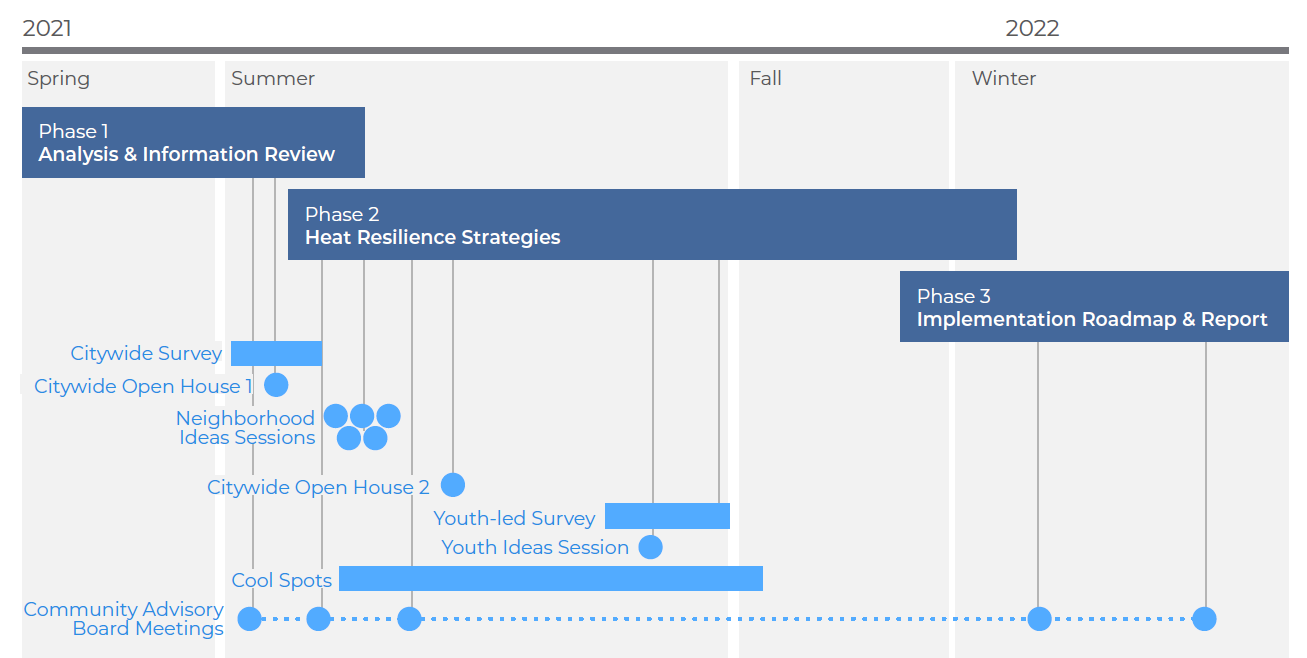
Note that the report is 351 pages. So far, all I’ve covered is the overarching program plan. In future posts, I will discuss their plan for stakeholder engagement and, of course, the all-important implementation roadmap.
I admire the way that this team has structured the planning process and clarified the phases of planning with clear linkage to the purpose of the Program. I’d even suggest that students of Project, Program, and Portfolio management look at the Heat Plan as a good example. As mentioned, I’ll be continuing to review this initiative in future posts.
The heat is on!




