(the expression "to have a gas", as the image implies, means to have a great time. This post is about green hydrogen... and we think the opportunities abound for many interesting projects in which project managers can.... have a gas, literally and figuratively)
Now that we traipsed through the spectrum of colors of hydrogen (see previous post), I’d like to talk about projects and programs to make one particular “color” of hydrogen: green.
There’s some news here to start off with – as covered by PV magazine, the world’s first offshore green hydrogen pilot was just announced a couple of days ago. That project, by Lhyfe, is an 18-month offshore green hydrogen pilot project in France. According to the article:
The pilot has the capacity to produce up to 400 kg of renewable green hydrogen a day, equivalent to 1MW of power,” said the France-based hydrogen producer. The 18-month wind-powered pilot in Saint-Nazaire, France, will operate near the shore for the first six months, before it is moved to a site 20 kilometers off the coast of Le Croisic. The project will be installed less than 1 km from the floating wind turbine. It will use wind power to pump, desalinate and purify seawater.
In the video interview below with Creamer Media, Technical Director Thomas Créach reviews the where, when, how, and why of this pilot project.
I found the ideas and mission of the start-up company Lhyfe very inspiring. Here’s a quick interview with their founder, Matthieu Guesne.
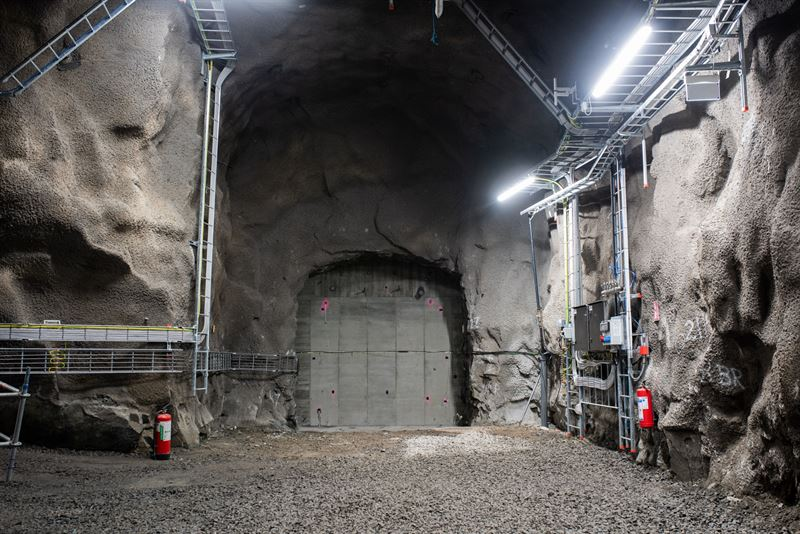
There is more in the news however, besides this project itself. Another green-hydrogen-related story is about storing that hydrogen. In a cave. In Sweden. That piece of news is summarized here:
“SSAB, LKAB, and Vattenfall have commissioned the HYBRIT pilot facility, which will store fossil-free hydrogen gas in Luleå, Sweden. “The rock cavern storage facility is the first of its kind in the world for storing fossil-free hydrogen gas,” wrote Vattenfall. After initial pressure tests with water in June, the 100-cubic-meter storage facility was filled with hydrogen gas and reached a maximum operating pressure of 250 bar. The two-year test period will continue with test campaigns to collect data until 2024. “HYBRIT technology will be used for the production of fossil-free sponge iron on a large scale at a first demonstration facility in Gällivare,” said Lars Ydreskog, director of strategic projects at LKAB.”
The HYBRIT initiative was launched in 2016 by the three owners; SSAB, LKAB and Vattenfall.
Objective: create a completely fossil-free value chain from mine to finished steel, with fossil-free pellets, fossil-free electricity and hydrogen.
In May 2021, construction began on a storage facility for fossil-free hydrogen gas on a pilot scale next to HYBRIT’s pilot facility for direct reduction in Luleå, the storage facility began operation in late summer 2022.
Hybrit Development AB is a research and technology development company that will deliver
The steel industry today accounts for 7 percent of total global carbon dioxide emissions. Using HYBRIT technology, SSAB can help reduce Sweden’s carbon dioxide emissions by 10 per cent and Finland’s by 7 per cent.
This transition will reduce emissions in the global steel industry by 40–50 million tonnes of carbon dioxide a year. This corresponds to all of Sweden’s annual greenhouse gas emissions.
Wow! But that’s not the end. In fact it’s just a beginning.
Further, the referenced article also closes with two eye-popping stories regarding a flurry of projects related to green hydrogen:
“The US Department of Energy (DoE) has opened applications for a $7 billion program to create regional clean hydrogen hubs (H2Hubs) across the United States. The project is part of the $8 billion hydrogen hub program funded through President Joe Biden's Bipartisan Infrastructure Law (covered in a People, Planet, Profits and Project blog post last month). The DoE aims to select six to 10 hubs. Concept papers are due by Nov. 7, 2022, and full applications are due by April 7, 2023.
The European Commission has approved a second Important Project of Common European Interest to support research, industrial deployment, and construction of relevant infrastructure in the hydrogen value chain. Austria, Belgium, Denmark, Finland, France, Greece, Italy, the Netherlands, Poland, Portugal, Slovakia, Spain, and Sweden are participating in the project, and will benefit from up to €5.2 billion in public support. “We will also increase our financial participation in Important Projects of Common European Interest,” said Commission President Ursula von der Leyen.”
Looking at the numbers in these initiatives should raise the interest of project managers who would like to work on projects that are oriented directly towards sustainability. Of course, the theme of this blog post has been that all projects need to consider the long-term, holistic outcomes, benefits, and value of their projects’ products, so really any project manager – or at least a project leader – has a say in sustainable PM. But the initiatives around green hydrogen, well, they are directly sustainable projects.
Project Leaders – in the future, you may have a gas!
Very interesting initiatives in different countries and with different approaches enriching the context of hydrogen production also by the aspect of financial resources in commitment to the cause (sustainability). Congrats for the extensive and restless research on the subject, as well thanks for sharing, Mr. Maltzman.